Introduction
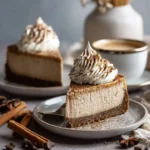
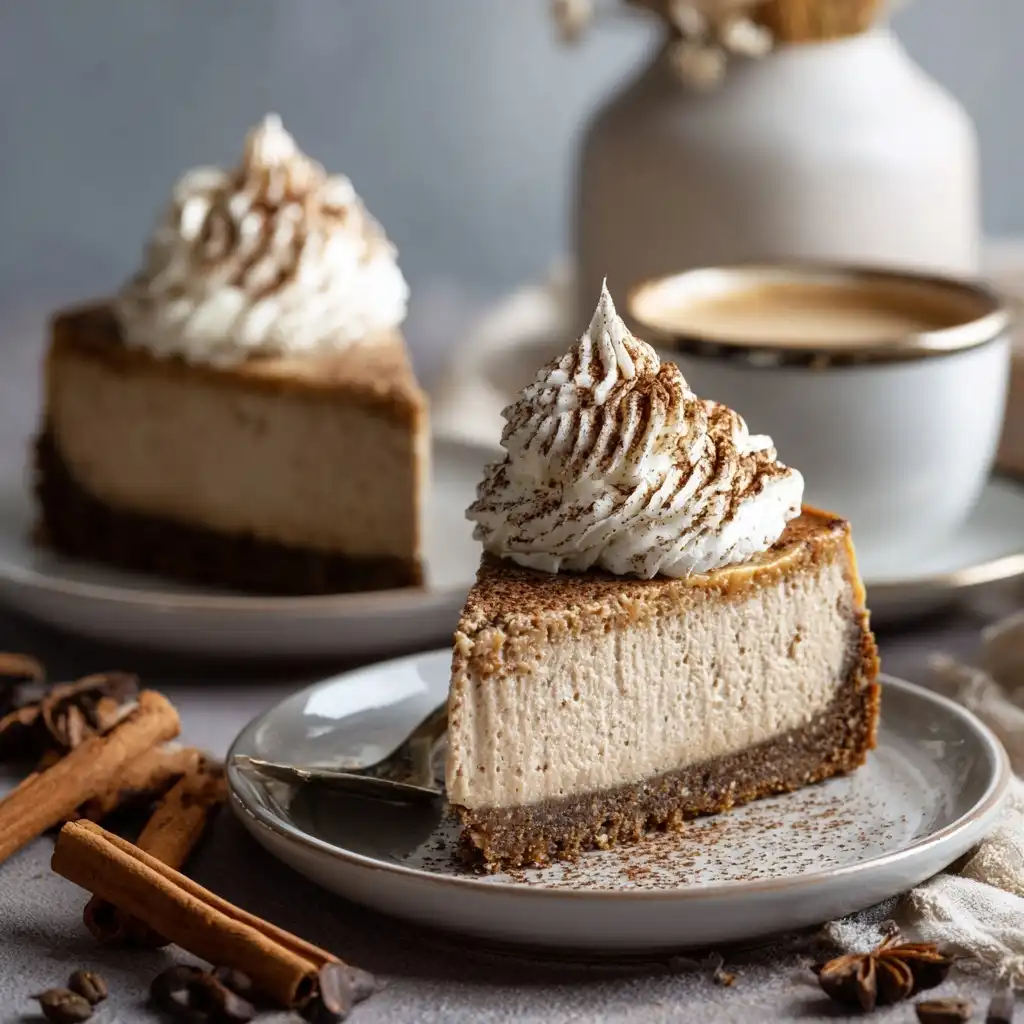
Chai Spice Cheesecake is a luxurious fusion dessert that marries the rich, velvety decadence of New York–style cheesecake with the warm, aromatic complexity of traditional Indian masala chai. This isn’t just a flavored cheesecake—it’s an immersive sensory experience where cardamom’s citrusy floral notes, cinnamon’s sweet-woody warmth, ginger’s zesty bite, cloves’ pungent depth, and black pepper’s subtle heat all harmonize within a luxuriously creamy, tangy, and perfectly set cream cheese base. Topped with a spiced ghee caramel drizzle, crushed chai-infused shortbread crumb, or even a delicate saffron-kissed chantilly, this dessert bridges culinary traditions with elegance and intention. Whether served at a festive Diwali gathering, a cozy winter dinner party, or as a bold twist on classic holiday baking, Chai Spice Cheesecake invites curiosity, honors heritage, and delivers unforgettable flavor balance—creamy yet vibrant, comforting yet sophisticated.
The History
The evolution of Chai Spice Cheesecake reflects a broader narrative of global gastronomic cross-pollination. Cheesecake itself traces back over 2,000 years—to ancient Greece, where simple versions made with honey, flour, and fresh cheese were served to athletes at the first Olympic Games in 776 BCE. It later traveled through Rome, medieval Europe, and into America via Philadelphia-style cream cheese (invented in 1872 by William Lawrence), culminating in the dense, oven-baked New York style we know today. Meanwhile, chai—Sanskrit for “tea”—has been brewed across the Indian subcontinent for over 5,000 years, originally as an Ayurvedic herbal decoction (kadha) of spices, herbs, and water. Black tea and milk were added only in the early 20th century under British colonial influence, catalyzing the modern masala chai we cherish. The fusion began tentatively in the late 1990s with artisanal chai lattes in Pacific Northwest cafés, then accelerated in the 2010s as chefs like Floyd Cardoz (of NYC’s Tabla) and cookbook authors such as Priya Krishna and Raghavan Iyer championed Indian-American dessert innovation. Chai Spice Cheesecake emerged as a signature item in boutique bakeries from Brooklyn to Bangalore—first as a seasonal special, then as a year-round cult favorite. Its rise parallels growing appreciation for layered spice profiles, functional ingredients (like anti-inflammatory ginger and turmeric), and desserts that tell cultural stories—not just satisfy sweet cravings.
Ingredients Breakdown
Every element of this Chai Spice Cheesecake is purposefully chosen—not only for flavor synergy but also for texture integrity, structural stability, and authentic spice expression:
- Graham Cracker Base (Enhanced): While classic graham crackers provide structure, this version uses a blend of honey graham crumbs, toasted almond flour, and a touch of finely ground black peppercorns—adding nuttiness, crunch, and a whisper of heat that echoes chai’s finish.
- Cream Cheese: Full-fat, brick-style, room-temperature Philadelphia or Vermont Creamery—never low-fat or whipped. Cold cream cheese causes lumps; overly soft cheese risks curdling. Its high fat content ensures richness and prevents cracking.
- Sour Cream & Heavy Cream: Sour cream adds tang and moisture without thinning the batter; heavy cream (not half-and-half or milk) contributes fat for silkiness and helps regulate oven spring and cooling contraction.
- Full-Bodied Eggs: Large, room-temperature eggs bind and leaven gently—too cold = uneven emulsification; too many = rubbery texture. We use four whole eggs plus one extra yolk for extra tenderness and golden hue.
- Granulated Sugar: Not just for sweetness—sugar stabilizes the protein matrix and aids in smooth aeration during mixing. A portion is reserved for the crust to balance its inherent bitterness.
- Real Vanilla Bean Paste: Far superior to extract—contains actual vanilla seeds and concentrated pod essence, adding floral depth that complements cardamom and clove without competing.
- The Chai Spice Blend (Homemade & Toasted): This is the soul of the cake. We toast whole spices—green cardamom pods (crushed to release seeds), Ceylon cinnamon sticks (not cassia), dried ginger slices, whole cloves, black peppercorns, and star anise—then grind them *fresh* in a dedicated spice grinder. Pre-ground spices lose volatile oils within weeks; freshly ground chai spice retains brightness, nuance, and aromatic lift. Optional additions include a pinch of fennel seed (for licorice lift) or a grating of fresh nutmeg (for creamy warmth).
- Steeped Chai Concentrate: Not tea bags! We brew a potent, reduced infusion using Assam or Nilgiri black tea leaves steeped 5 minutes in hot (not boiling) whole milk + cream (3:1 ratio), then strained and cooled. This infuses dairy fat with tannins and essential oils—deepening flavor without excess water or bitterness.
- Lemon Zest & Juice: Fresh zest adds bright top notes that cut through richness; juice provides acidity to balance sweetness and enhance spice perception—especially cardamom’s citrus facet.
Step-by-Step Recipe
- Prepare the Chai Spice Blend: In a dry skillet over medium-low heat, toast 12 green cardamom pods (lightly crushed), 1 two-inch Ceylon cinnamon stick, 1 tsp dried ginger pieces, 6 whole cloves, ½ tsp black peppercorns, and 1 star anise pod for 2–3 minutes until fragrant and lightly golden. Cool completely, then grind to a fine, uniform powder using a mortar & pestle or spice grinder. Measure out 2 tbsp for the filling and reserve 1 tsp for the crust. Store extras in an airtight jar away from light.
- Make the Spiced Graham Crust: Pulse 1 ½ cups honey graham cracker crumbs, ¼ cup toasted almond flour, 2 tbsp brown sugar, 1 tsp reserved chai spice, ¼ tsp flaky sea salt, and 6 tbsp melted unsalted butter (cooled) in a food processor until cohesive. Press firmly into the bottom and 1 inch up the sides of a 9-inch springform pan lined with parchment. Chill 45 minutes (or freeze 15) to set.
- Brew & Reduce the Chai Milk: Heat 1 cup whole milk and ⅓ cup heavy cream to 185°F (do not boil). Remove from heat, add 2 tbsp loose-leaf Assam tea, cover, and steep 5 minutes. Strain through a fine-mesh sieve, pressing solids. Return liquid to saucepan and simmer gently until reduced to ¾ cup (~6–8 min). Cool to room temperature—refrigerate if needed to speed cooling.
- Preheat & Prep Oven: Position rack in center of oven. Preheat to 325°F. Wrap the *outside* of the springform pan tightly with two overlapping layers of heavy-duty aluminum foil to prevent water seepage.
- Prepare Water Bath: Place pan inside a larger roasting dish. Fill roasting dish with hot tap water to reach halfway up the springform sides.
- Mix Cream Cheese Base: In stand mixer with paddle attachment, beat 24 oz full-fat cream cheese (cut into 1-inch cubes, room temp) on medium-low 2 minutes until smooth and lump-free. Scrape bowl. Add 1 cup granulated sugar and beat 2 more minutes until pale and fluffy. Add 1 cup sour cream, ½ cup heavy cream, 1 tbsp lemon juice, 1 tbsp lemon zest, and 1 tsp vanilla bean paste—mix on low until just combined. Scrape bowl thoroughly.
- Incorporate Eggs Gently: Add eggs one at a time on lowest speed, mixing *just until yolk disappears* after each addition (≈10 seconds per egg). Overmixing incorporates air → cracks. Add extra yolk last. Scrape bowl. Fold in 2 tbsp homemade chai spice with a silicone spatula until fully dispersed—no streaks.
- Add Chai Milk Gradually: With mixer on lowest setting, slowly drizzle in cooled chai milk in three additions, pausing to scrape bowl between each. Batter should be thick, glossy, and homogenous—no separation.
- Pour & Tap: Pour batter into chilled crust. Tap pan sharply on counter 3 times to release air bubbles. Smooth top with offset spatula.
- Bake Low & Slow: Carefully place roasting dish with water bath into oven. Bake 1 hour 20 minutes—cake should be set at edges but retain a 2-inch wobble in center. Turn off oven, crack door open 1 inch with wooden spoon, and let cool inside for 1 hour.
- Chill Overnight: Remove from water bath. Run thin knife around edge to loosen. Refrigerate uncovered at least 12 hours (ideally 24–48) before serving—this allows flavors to meld and texture to fully set and mature.
Tips
- Temperature Is Non-Negotiable: All dairy and eggs must be truly room temperature (68–72°F)—take cream cheese out 3 hours ahead; eggs sit in warm water for 10 minutes. Cold ingredients cause lumps, curdling, and uneven baking.
- Scraping Is Sacred: Scrape the bowl, paddle, and spatula after *every* addition. Unmixed pockets of spice or sugar create bitter or gritty spots.
- No Substitutions for the Water Bath: Skipping it guarantees cracks, dry edges, and uneven doneness. Use a tea kettle to pour hot water into the roasting pan *after* placing the springform inside—prevents splashing.
- Patience During Cooling: That 1-hour oven cooldown mimics a bain-marie’s gentle descent—preventing thermal shock and surface fissures. Rushing = cracked top.
- Chill Time Is Flavor Time: Don’t slice early—even if firm, the cheesecake needs 24 hours to hydrate starches, mellow acidity, and allow chai oils to permeate every bite. Texture improves dramatically on Day 2.
- Perfect Slicing Technique: Dip a long, thin knife in hot water, wipe dry, slice cleanly, then repeat. For clean presentation, serve at 45°F—not straight from fridge.
- Crust Reinforcement Trick: After chilling the crust, brush lightly with beaten egg white and return to freezer 10 minutes. Creates a moisture barrier against soggy bottoms.
- Spice Bloom Tip: For ultra-intense aroma, bloom 1 tsp chai spice in 1 tbsp melted ghee over low heat for 1 minute before stirring into batter—adds roasted depth and mouth-coating richness.
Variations and Customizations
This recipe is a canvas—thoughtfully adaptable for dietary needs, regional preferences, and creative flair:
- Vegan Chai Cheesecake: Substitute cashew-soaked cream cheese (blended raw cashews + lemon + maple syrup + coconut oil), coconut cream for sour cream/heavy cream, and a date-oat-walnut crust. Infuse chai spices directly into warmed coconut milk, then strain.
- Gluten-Free Version: Use certified GF gingersnaps or oat crackers for crust; ensure all spices are GF-certified (some blends contain wheat fillers). Add 1 tsp xanthan gum to batter for elasticity.
- Decadent Toppings: Drizzle with spiced dulce de leche (simmer chai spice into condensed milk), chai-infused dark chocolate ganache, rosewater-poached pears, or candied ginger–cardamom brittle.
- Layered Chai Cheesecake: Swirl in ½ cup chai-spiced raspberry coulis before baking—or layer baked crust, chilled chai cheesecake, and a cloud-like chai mascarpone mousse.
- Mini Mason Jar Cheesecakes: Portion into 4-oz sterilized jars. Reduce bake time to 25–30 minutes in water bath. Perfect for gifting or portion control.
- Chai-Spiced No-Bake Version: Whip 2 cups cold heavy cream to stiff peaks, fold into softened cream cheese–sugar–chai mixture, and set with 2 tsp unflavored gelatin (bloomed in chai milk). Chill 6+ hours.
- Regional Twists: South Indian: Add ¼ tsp roasted cumin and a pinch of curry leaf powder. Punjabi: Stir in 1 tbsp rose petal jam. Kashmiri: Infuse saffron strands in warm chai milk. Bengali: Fold in 2 tbsp date molasses (khejur gur) and crushed pistachios.
- Alcoholic Infusion: Replace 2 tbsp chai milk with 2 tbsp spiced rum or chai-infused bourbon—adds warmth and complexity (reduce baking time by 5 minutes).
Health Considerations and Nutritional Value
While Chai Spice Cheesecake is inherently indulgent, thoughtful formulation enhances its functional profile and mindful enjoyment:
- Spice Benefits Amplified: Cardamom supports digestion and oral health; cinnamon helps modulate blood glucose response; ginger reduces nausea and inflammation; cloves contain eugenol—a natural antimicrobial and antioxidant; black pepper increases bioavailability of other nutrients (especially turmeric, if added).
- Nutrient-Dense Swaps: Almond flour in the crust adds vitamin E and magnesium; lemon zest contributes flavonoids and vitamin C; full-fat dairy provides fat-soluble vitamins A/D/K2—essential for calcium absorption in the cheese.
- Reduced Refined Sugar Options: Up to 25% of granulated sugar can be replaced with coconut sugar (lower glycemic index) or monk fruit–erythritol blend (zero-calorie, non-glycemic) without sacrificing texture—though flavor brightness may lessen slightly.
- Portion Mindfulness: One standard slice (1/12 of cake) contains approx. 420–460 kcal, 32g fat (19g sat), 31g carbs (22g sugar), 7g protein. Serving with fresh figs or poached apples adds fiber and polyphenols, slowing sugar absorption.
- Dairy Sensitivity Alternatives: Lactose-intolerant? Use lactose-free cream cheese and sour cream—the enzymes are pre-digested, preserving texture and tang. For casein sensitivity, explore A2 milk-based cheeses (from grass-fed Jersey cows).
- Notable Absences: Contains no artificial colors, preservatives, or hydrogenated oils. Free from common allergens *except* dairy, eggs, and gluten (easily modified as noted above).
- Functional Pairing Suggestion: Serve with a small cup of plain, unsweetened masala chai—its tannins and spices further aid digestion and create a holistic, palate-cleansing ritual.
Ingredients
For the Chai Spice Graham Crust:
- 1 ½ cups honey graham cracker crumbs (about 10 full sheets)
- ¼ cup finely ground toasted almond flour
- 2 tablespoons packed light brown sugar
- 1 teaspoon homemade chai spice blend (see breakdown above)
- ¼ teaspoon flaky sea salt
- 6 tablespoons unsalted butter, melted and cooled
For the Chai Spice Cheesecake Filling:
- 24 ounces (three 8-oz bricks) full-fat brick-style cream cheese, cut into 1-inch cubes, room temperature
- 1 cup granulated sugar
- 1 cup full-fat sour cream, room temperature
- ½ cup heavy cream (36–40% fat), room temperature
- 1 tablespoon fresh lemon juice
- 1 tablespoon finely grated lemon zest (from 1 large organic lemon)
- 1 teaspoon pure vanilla bean paste (or 1 scraped vanilla bean)
- 2 tablespoons homemade chai spice blend
- 4 large eggs + 1 large egg yolk, room temperature
- ¾ cup cooled, reduced chai-infused milk (see Step-by-Step)
For Serving (Optional but Recommended):
- Chai-spiced crème fraîche (whip ½ cup crème fraîche with 1 tsp chai spice and 1 tsp honey)
- Toasted slivered almonds or crushed pistachios
- Fresh edible rose petals or candied ginger
- Warm spiced caramel (simmer ½ cup evaporated milk, ½ cup brown sugar, 2 tbsp butter, 1 tsp chai spice, pinch salt—cook to 220°F)
Directions
- Toast and grind spices: In a small skillet over medium-low heat, toast cardamom pods, cinnamon stick, dried ginger, cloves, peppercorns, and star anise until deeply fragrant (2–3 min). Let cool completely, then grind into fine powder. Measure 2 tbsp for filling, 1 tsp for crust.
- Prepare crust: In food processor, pulse graham crumbs, almond flour, brown sugar, 1 tsp chai spice, and salt. Add melted butter; pulse until moist clumps form. Press evenly into bottom and 1″ up sides of 9″ springform pan lined with parchment. Chill 45 min.
- Brew chai milk: Heat milk and cream to 185°F. Off heat, add tea leaves; cover and steep 5 min. Strain, pressing solids. Simmer strained liquid until reduced to ¾ cup. Cool completely.
- Preheat oven to 325°F. Wrap outside of springform pan tightly with 2 layers heavy-duty foil.
- Beat cream cheese: Using stand mixer with paddle, beat cream cheese on medium-low 2 min until smooth. Add sugar; beat 2 min until pale and fluffy. Scrape bowl.
- Add dairy & aromatics: Add sour cream, heavy cream, lemon juice, lemon zest, and vanilla paste. Mix on low until just combined. Scrape bowl.
- Incorporate eggs: Add eggs one at a time on lowest speed, mixing just until blended (≈10 sec each). Add extra yolk last. Scrape bowl thoroughly.
- Fold in spices: Gently fold in 2 tbsp chai spice with spatula until no streaks remain.
- Add chai milk: With mixer on lowest speed, slowly drizzle in cooled chai milk in 3 parts, scraping bowl between each. Batter should be thick and glossy.
- Fill & bake: Pour into crust. Tap pan sharply 3x. Place in roasting pan; add hot water to halfway up sides. Bake 1 hr 20 min—edges set, 2″ center wobbles.
- Cool gradually: Turn off oven, crack door open 1″, leave cake inside 1 hr. Remove from water bath. Run knife around edge. Chill uncovered ≥12 hrs (ideally 24–48 hrs).
- Serve: Release springform. Slice with hot, wiped knife. Top with chai crème fraîche, nuts, and caramel.
FAQ
- Can I make this without a water bath?
- No—omitting the water bath significantly increases risk of cracking, dry edges, and uneven baking. If you’re determined to skip it, reduce oven temp to 300°F and extend bake time by 20 minutes—but expect less creamy texture and higher failure rate. A slow cooker liner placed inside the roasting pan makes cleanup effortless.
- Why does my cheesecake crack even when I follow the recipe?
- Most cracks stem from temperature shock (opening oven too soon, cooling too fast) or overmixing eggs. Ensure eggs are *truly* room temp, mix eggs on lowest speed, and never open the oven during first 75 minutes. The post-bake oven cooldown is critical—don’t rush it.
- Can I use chai tea bags instead of loose-leaf?
- You can—but results suffer. Most commercial chai tea bags contain flavor oils, sugar, and filler spices that mute nuance and add bitterness. If using bags, choose high-end, whole-leaf varieties (e.g., Smith Teamaker or Rishi) and double the quantity. Steep longer (6–7 min) and reduce liquid slightly.
- How long does it keep? Can I freeze it?
- Refrigerated (well-wrapped): up to 5 days. Frozen (whole or sliced, double-wrapped in plastic + foil): up to 3 months. Thaw overnight in fridge—never at room temp—to preserve texture. Slight texture softening occurs upon thaw, but flavor remains exceptional.
- My crust is soggy. What went wrong?
- Sogginess usually comes from under-toasting the crust (it must be deep golden and fragrant before chilling) or adding warm filling to a cold crust. Also ensure your chai milk is fully cooled—residual heat steams the base. Brushing crust with egg white before chilling creates an effective moisture barrier.
- Can I reduce the sugar without affecting structure?
- Sugar plays a functional role beyond sweetness—it stabilizes the protein network and controls moisture migration. Reducing by more than 20% risks graininess and poor set. For lower sugar, consider erythritol-monk fruit blends formulated for baking—they mimic sugar’s bulk and behavior.
- What if I don’t have a spice grinder?
- A clean coffee grinder works well—but dedicate it to spices only. Alternatively, crush toasted spices in a mortar & pestle until fine. Avoid blenders—they generate heat and yield inconsistent grind.
- Is there caffeine in this cheesecake?
- Yes—but very little. A typical slice contains ≈3–5 mg caffeine (vs. 47 mg in an 8-oz cup of chai). Most caffeine remains in the strained tea solids; the infused milk carries only trace amounts.
- Can I make individual portions ahead for an event?
- Absolutely. Bake in lined muffin tins (sprayed with nonstick) for 22–26 minutes. Chill 8+ hours. They hold beautifully for 3 days refrigerated—and their uniform size makes service seamless.
- Why use lemon zest *and* juice?
- Zest delivers volatile citrus oils—bright, floral, aromatic top notes that lift the heavy spices. Juice provides acidity—balancing sweetness and enhancing perception of cardamom and ginger. Together, they create multidimensional brightness no single ingredient achieves alone.
Summary
Chai Spice Cheesecake is a masterful, culturally resonant dessert that transforms centuries-old traditions—Indian masala chai and Mediterranean cheesecake—into a single, stunningly balanced creation defined by aromatic depth, velvety texture, and intentional craftsmanship.
From its toasted-spice crust and slow-baked, water-bathed filling to its overnight chill and elegant garnishes, every step honors both technique and terroir—delivering not just sweetness, but story, spice, and soul in every silken, spiced bite.