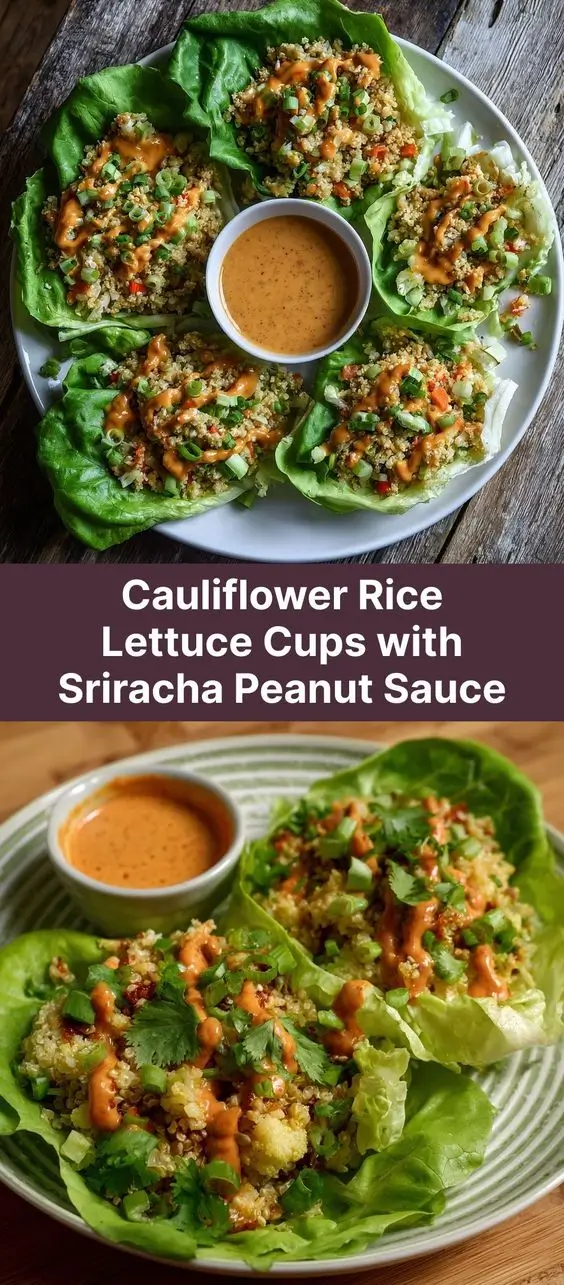
Cauliflower Rice Lettuce Cups with Sriracha Peanut Sauce
Introduction
Welcome to a culinary adventure that marries health, flavor, and creativity—Cauliflower Rice Lettuce Cups with Sriracha Peanut Sauce. This vibrant dish is more than just a meal; it’s a celebration of fresh ingredients, bold Asian-inspired flavors, and mindful eating. Perfect for lunch, dinner, or even as an elegant appetizer at your next gathering, these lettuce cups are light yet satisfying, packed with nutrients, and bursting with umami from the creamy, spicy-sweet peanut sauce.
Ideal for those following low-carb, keto, paleo, or gluten-free lifestyles, this recipe offers a guilt-free way to enjoy the textures and tastes of traditional rice bowls without the heaviness. The crisp romaine or butter lettuce provides a refreshing crunch, while the cauliflower rice base absorbs all the aromatic seasonings like a dream. Topped off with a luscious Sriracha Peanut Sauce that balances heat, sweetness, and richness, each bite delivers complexity and comfort in one neat little package.
Whether you’re a seasoned home cook or just beginning your journey into plant-forward cooking, this recipe is approachable, customizable, and sure to become a staple in your weekly rotation. So let’s dive deep into the world of these delicious, nutritious, and incredibly flavorful Cauliflower Rice Lettuce Cups.
The History
The concept of using leafy greens as edible vessels dates back centuries across various cuisines. In many East and Southeast Asian cultures, large lettuce leaves have long been used to wrap savory fillings—a practice seen in dishes like Vietnamese Gỏi Cuốn (fresh spring rolls) or Korean BBQ, where diners often wrap grilled meats and ssamjang in lettuce for a fresh contrast.
Lettuce wraps gained modern popularity in Western cuisine during the 1980s and 1990s, particularly through restaurants like P.F. Chang’s, which introduced its famous “Mongolian Chicken Lettuce Wraps.” These became iconic for their convenience, freshness, and lower-calorie appeal compared to fried or breaded alternatives.
Fast forward to the 2010s, when the health and wellness movement surged, bringing with it innovations like riced cauliflower—a clever substitute for grain-based rice developed by chefs and food scientists aiming to reduce carbohydrate intake without sacrificing texture or satisfaction. Inspired by traditional stir-fries and Buddha bowls, cauliflower rice quickly became a pantry staple for health-conscious eaters and those managing dietary restrictions.
Meanwhile, peanut sauces rooted in Thai and Indonesian cuisine—such as satay sauce—have traveled globally, evolving with local tastes. Adding sriracha transforms these creamy sauces into spicy, tangy powerhouses beloved in fusion cooking. Combining all these elements—the ancient art of wrapping food in leaves, the modern twist of grain-free bases, and globally inspired sauces—we arrive at today’s star: Cauliflower Rice Lettuce Cups with Sriracha Peanut Sauce. It’s not just trendy—it’s a harmonious blend of tradition, innovation, and flavor evolution.
Ingredients Breakdown
To create the perfect balance of textures and flavors in this dish, every ingredient plays a vital role. Here’s a detailed look at what goes into making these delightful lettuce cups:
For the Cauliflower Rice Filling:
- 1 medium head of cauliflower (or 4 cups riced cauliflower): The foundation of the dish. When pulsed in a food processor or grated, it mimics the texture of cooked rice while adding fiber, vitamins C and K, and antioxidants.
- 1 tablespoon coconut oil or avocado oil: A healthy fat that supports sautéing without burning, enhancing flavor absorption.
- 1 small onion, finely diced: Adds natural sweetness and depth when caramelized slightly.
- 2 cloves garlic, minced: Provides aromatic warmth and antimicrobial benefits.
- 1-inch piece of fresh ginger, grated: Imparts bright, zesty notes and aids digestion.
- 1 red bell pepper, finely chopped: Brings color, crunch, and a boost of vitamin C.
- 1 medium carrot, julienned or shredded: Contributes subtle sweetness and beta-carotene.
- 1 cup edamame or peas (shelled): Plant-based protein and fiber boosters with a mild, nutty taste.
- 2 green onions, sliced: For freshness and mild onion flavor, added at the end.
- 2 tablespoons tamari or soy sauce (gluten-free if needed): Umami-rich seasoning that enhances overall savoriness.
- 1 tablespoon rice vinegar: Brightens the mixture and balances saltiness.
- 1 teaspoon sesame oil: Deep, toasted flavor that elevates the entire dish.
- Salt and freshly ground black pepper to taste: Essential for seasoning balance.
For the Sriracha Peanut Sauce:
- ¼ cup smooth natural peanut butter: Creamy base rich in healthy fats and protein. Choose unsalted and sugar-free varieties for best control over flavor.
- 2 tablespoons warm water: Thins the sauce to drizzling consistency.
- 1 tablespoon tamari or soy sauce: Salty-umami backbone.
- 1 tablespoon maple syrup or honey: Natural sweetener to counteract heat and acidity.
- 1 tablespoon lime juice (freshly squeezed preferred): Zesty acidity that lifts the sauce.
- 1–2 teaspoons sriracha sauce: Adjustable heat level depending on preference. Start with one and build up.
- 1 clove garlic, minced or pressed: Extra punch of flavor.
- ½ teaspoon grated fresh ginger: Complements the filling and adds warmth.
- Optional: ½ teaspoon toasted sesame seeds or crushed peanuts: For garnish and texture.
For Assembly:
- 1 large head of butter lettuce, romaine, or iceberg: Choose crisp, cup-shaped leaves that can hold the filling without tearing easily.
- Garnishes (optional but recommended): Chopped cilantro, sliced red chili, extra green onions, microgreens, or crushed roasted peanuts for added visual appeal and flavor dimension.
Step-by-Step Recipe
Now that we understand the components, let’s walk through how to make this restaurant-quality dish right in your kitchen—from prep to plating.
- Prepare the Lettuce Leaves:
Carefully separate the lettuce leaves from the core. Wash them thoroughly under cold running water and pat dry with a clean kitchen towel or paper towels. Arrange them on a serving platter, cup-side up, ensuring they’re sturdy enough to hold the filling. Chill until ready to use—this keeps them crisp. - Rice the Cauliflower:
If using a whole cauliflower, remove the leaves and stem. Cut the florets into chunks and pulse in a food processor in batches until they resemble rice grains. Be careful not to over-process into mush. Alternatively, use pre-riced frozen cauliflower—thaw and squeeze out excess moisture using a clean cloth or paper towel. - Sauté the Aromatics:
Heat coconut oil in a large skillet or wok over medium heat. Add the diced onion and cook for 3–4 minutes until translucent. Stir in the minced garlic and grated ginger, cooking for another 30 seconds until fragrant—be careful not to burn. - Cook the Vegetables:
Add the chopped red bell pepper and shredded carrot. Sauté for 4–5 minutes until tender-crisp. Then stir in the edamame or peas and cook for an additional 2 minutes. - Add the Cauliflower Rice:
Increase the heat to medium-high and add the riced cauliflower to the skillet. Cook for 6–8 minutes, stirring frequently, until most of the moisture has evaporated and the “rice” is heated through and lightly golden in spots. Overcrowding can cause steaming instead of browning, so give it space! - Season the Mixture:
Reduce heat to low. Stir in tamari, rice vinegar, sesame oil, salt, and pepper. Mix well to combine. Taste and adjust seasoning—you may want a touch more acid, salt, or sweetness. Remove from heat and fold in sliced green onions. - Make the Sriracha Peanut Sauce:
While the filling cooks, prepare the sauce. In a small bowl, whisk together peanut butter, warm water, tamari, maple syrup, lime juice, sriracha, garlic, and ginger until smooth and creamy. Add more water (½ tsp at a time) if too thick. Set aside. - Assemble the Lettuce Cups:
Spoon a generous amount of the warm cauliflower rice mixture into each lettuce cup—about 2–3 tablespoons per leaf. Drizzle generously with Sriracha Peanut Sauce. - Garnish and Serve:
Top each cup with chopped cilantro, sliced green onions, crushed peanuts, and optional chili slices. Serve immediately on a platter family-style or individually plated.
Tips
- Dry Your Cauliflower Well: Excess moisture is the enemy of good texture. Whether homemade or frozen, always squeeze out water before cooking to prevent soggy “rice.”
- Don’t Skip the Browning: Let the cauliflower sit briefly in the pan between stirs to develop a slight golden crust—it adds major flavor.
- Balancing the Sauce: Taste as you go! If the peanut sauce is too thick, thin with water. Too spicy? Add more sweetener. Too sweet? Boost lime or tamari.
- Prep Ahead: Chop vegetables and make the sauce up to 2 days in advance. Store separately in airtight containers in the fridge. Reheat filling gently before serving.
- Use Fresh Garlic and Ginger: Avoid powdered versions here—they lack the brightness essential for authentic flavor.
- Keep Lettuce Cold: Refrigerate leaves until serving to maintain crunch and structural integrity.
- Double the Sauce: You’ll likely want extra for dipping or drizzling over leftovers.
- Warm the Lettuce (Optional): For a softer texture, briefly blanch the leaves in hot water (10 seconds), then shock in ice water. Pat dry before filling.
Variations and Customizations
This recipe shines because of its versatility. Feel free to tailor it to your taste preferences, dietary needs, or what you have on hand.
Protein Additions:
- Grilled Chicken: Shred or dice leftover grilled chicken breast and mix into the cauliflower rice.
- Shrimp: Sauté peeled shrimp with garlic and chili flakes, then layer on top or mix in.
- Tofu or Tempeh: Use cubed firm tofu or crumbled tempeh, pan-seared until crispy. Marinate in soy sauce and sesame oil first for extra flavor.
- Ground Turkey or Pork: Brown with garlic, ginger, and five-spice powder for a heartier version reminiscent of lettuce wraps.
- Chickpeas: Roasted or mashed chickpeas add plant-based protein and texture.
Veggie Variations:
- Swap bell peppers for zucchini, mushrooms, snap peas, baby corn, or water chestnuts.
- Add kale or spinach—wilt into the mixture at the end for extra greens.
- Include mango or pineapple for tropical flair and natural sweetness.
Sauce Swaps:
- Almond Butter or Sunflower Seed Butter: Great alternatives for nut allergies or variety.
- Spicy Mayo Version: Mix mayo with sriracha and a splash of soy sauce for a creamier, milder alternative.
- Curry-Inspired: Add ½ teaspoon curry powder or turmeric to the peanut sauce for an Indian twist.
- Thai Basil Lime: Replace peanut sauce with a dressing of lime juice, fish sauce, chopped Thai basil, and chili.
Lettuce Alternatives:
- If lettuce isn’t available, try napa cabbage leaves, collard greens (blanched), endive spears, or even nori sheets for sushi-style wraps.
Dietary Tweaks:
- Keto-Friendly: Ensure no added sugars in peanut butter or sauces. Use erythritol or monk fruit instead of maple syrup.
- Vegan: Use maple syrup instead of honey in the sauce.
- Nut-Free: Substitute sunflower seed butter and omit peanut garnishes.
- Low-Sodium: Use low-sodium tamari or coconut aminos.
Health Considerations and Nutritional Value
One of the standout features of this dish is its impressive nutritional profile. Designed with whole, minimally processed ingredients, it supports balanced energy, gut health, immune function, and long-term wellness.
Key Health Benefits:
- Cauliflower: Low in calories and carbohydrates, high in fiber, vitamin C, vitamin K, and glucosinolates—compounds studied for potential anti-cancer properties.
- Peanut Butter (in moderation): Rich in monounsaturated fats, which support heart health, along with plant-based protein and niacin (vitamin B3).
- Fresh Vegetables: Provide a rainbow of phytonutrients, antioxidants, and digestive enzymes. Bell peppers offer triple the vitamin C of an orange!
- Garlic & Ginger: Known for anti-inflammatory, antimicrobial, and circulation-boosting effects.
- Lettuce: Hydrating (up to 95% water), low-calorie, and rich in folate and vitamin A.
- Sesame Oil: Contains sesamin and sesamolin—lignans with antioxidant activity.
Nutrition Per Serving (Approximate, based on 4 servings):
| Nutrient | Amount |
|---|---|
| Calories | ~220 kcal |
| Total Fat | 15g |
| Saturated Fat | 3g |
| Carbohydrates | 16g |
| Dietary Fiber | 5g |
| Sugars | 7g (mostly natural) |
| Protein | 8g |
| Sodium | 500–700mg (varies with tamari) |
| Vitamin C | 90% DV |
| Vitamin A | 70% DV |
| Iron | 15% DV |
Note: Values may vary based on specific ingredients and portion sizes. Using reduced-sodium soy sauce or less sweetener can lower sodium and sugar content further.
Dietary Notes:
- Gluten-free (if using tamari or certified GF soy sauce)
- Dairy-free
- Egg-free
- Suitable for vegetarian and vegan diets (with honey substitution)
- Kid-friendly (adjust spice levels accordingly)
Caution: Those with peanut allergies should avoid this recipe unless substituting safely. Cross-contamination is a concern in shared kitchens.
Ingredients
For the Cauliflower Rice Filling:
- 1 medium head cauliflower, riced (about 4 cups)
- 1 tbsp coconut oil or avocado oil
- 1 small onion, finely diced
- 2 cloves garlic, minced
- 1-inch piece fresh ginger, grated
- 1 red bell pepper, finely chopped
- 1 medium carrot, shredded
- 1 cup shelled edamame or peas
- 2 green onions, sliced
- 2 tbsp tamari or soy sauce
- 1 tbsp rice vinegar
- 1 tsp sesame oil
- Salt and pepper to taste
For the Sriracha Peanut Sauce:
- ¼ cup smooth natural peanut butter
- 2 tbsp warm water
- 1 tbsp tamari or soy sauce
- 1 tbsp maple syrup or honey
- 1 tbsp fresh lime juice
- 1–2 tsp sriracha (to taste)
- 1 clove garlic, minced
- ½ tsp grated fresh ginger
For Assembly:
- 1 head butter lettuce, romaine, or iceberg
- Optional garnishes: chopped cilantro, crushed peanuts, sliced chilies, sesame seeds
Directions
- Wash and dry lettuce leaves. Arrange on a platter and refrigerate until ready to serve.
- In a food processor, pulse cauliflower florets until they resemble rice. Set aside.
- Heat oil in a large skillet over medium heat. Add onion and sauté for 3–4 minutes.
- Add garlic and ginger; stir 30 seconds until fragrant.
- Add bell pepper and carrot; cook 4–5 minutes until softened.
- Add edamame and cauliflower rice. Cook 6–8 minutes, stirring occasionally, until tender and lightly browned.
- Stir in tamari, rice vinegar, sesame oil, salt, and pepper. Cook 1 minute more.
- Remove from heat; mix in green onions.
- In a small bowl, whisk all sauce ingredients until smooth. Adjust thickness with water if needed.
- Spoon filling into lettuce cups. Drizzle with sauce.
- Garnish and serve immediately.
FAQ
Can I make this ahead of time?
Yes! Prepare the filling and sauce separately up to 2 days in advance. Store in airtight containers in the refrigerator. Reheat the filling before assembling. Assemble just before serving to keep lettuce crisp.
Can I freeze this dish?
The cauliflower rice filling freezes well for up to 3 months. Cool completely, store in freezer-safe bags, and reheat in a skillet. However, lettuce and fresh garnishes should never be frozen.
Is this recipe kid-friendly?
Absolutely! Kids love the fun, hand-held format. Reduce or omit sriracha for younger palates, and consider adding sweet corn or diced apples for extra appeal.
How do I prevent watery filling?
Squeeze excess moisture from riced cauliflower after thawing or processing. Also, cook uncovered over medium-high heat to allow steam to escape.
Can I bake the cauliflower rice?
You can roast riced cauliflower on a baking sheet at 425°F (220°C) for 20–25 minutes, tossing halfway, for deeper flavor. But sautéing gives faster, stir-fry-like results.
What can I use instead of peanut butter?
Tahini, almond butter, cashew butter, or sunflower seed butter work well. Each will change the flavor slightly but still deliver creaminess.
Are there carb counts for keto dieters?
Yes—cauliflower rice contains about 5g net carbs per cup. Total net carbs per serving (with sauce) are approximately 10–12g, making it suitable for moderate keto plans.
Can I turn this into a bowl?
Definitely! Skip the lettuce and serve over a bed of spinach, kale, or even more cauliflower rice. Top with sauce and enjoy as a deconstructed bowl.
Summary
Cauliflower Rice Lettuce Cups with Sriracha Peanut Sauce are a vibrant, nutrient-dense dish that combines crunchy vegetables, aromatic spices, and a creamy-spicy sauce wrapped in crisp lettuce leaves.
Perfect for meal prep, healthy eating goals, or impressing guests, this recipe delivers big flavor with minimal effort and maximum customization potential.