Introduction
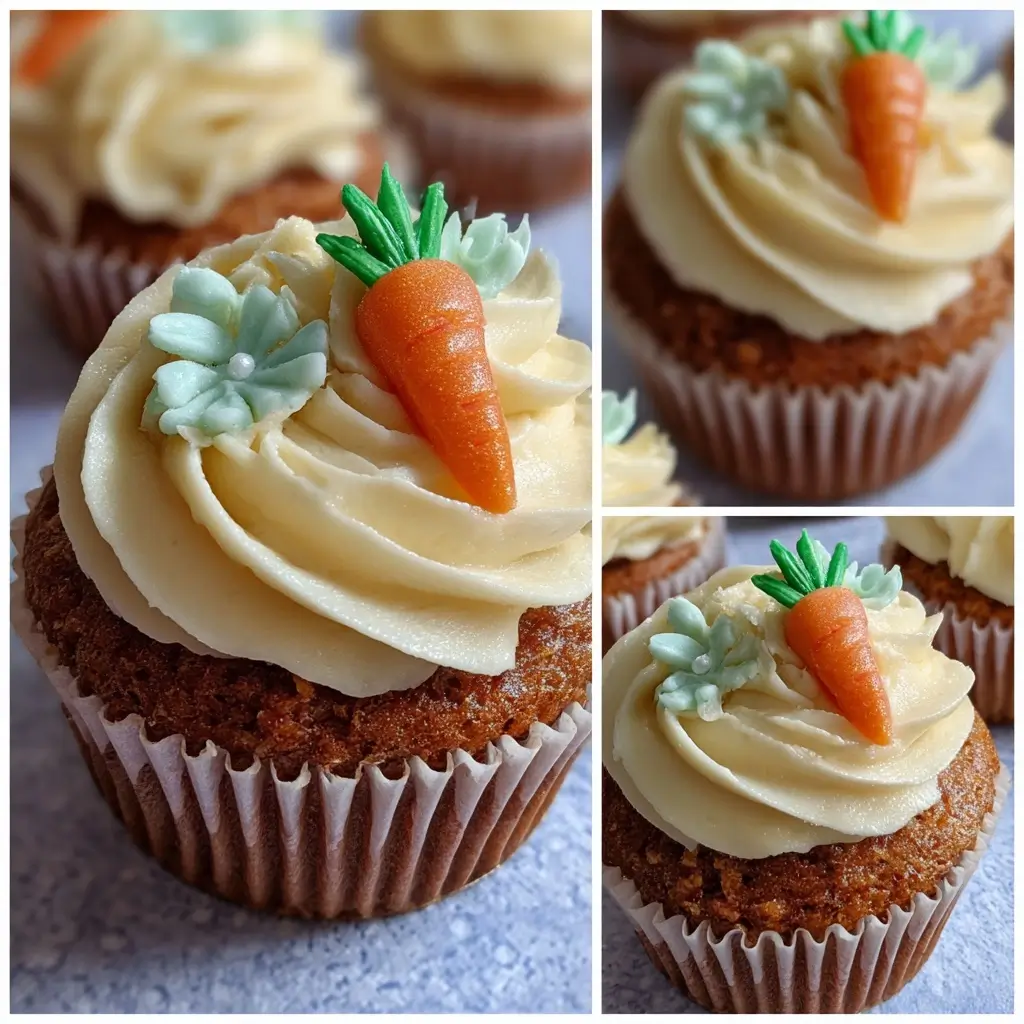
Carrot Cake Cream Cheese Cupcakes are the beloved, bite-sized embodiment of comfort, nostalgia, and seasonal sophistication—all wrapped in a delicate paper liner. These moist, warmly spiced cupcakes deliver the unmistakable earthy sweetness of freshly grated carrots, the tender crumb of a perfectly balanced cake, and the luxurious tang-sweet finish of velvety cream cheese frosting. Unlike traditional layer cakes that demand precision, time, and presentation finesse, these cupcakes offer approachability without compromise—ideal for bake sales, Easter brunches, birthday parties, office potlucks, or even an indulgent solo treat with afternoon tea. Their visual charm—golden-orange crumb peeking through snowy frosting, often adorned with candied carrots, toasted walnuts, or a delicate cinnamon-dusted swirl—invites both the eye and the palate. More than just dessert, they represent a harmonious fusion of humble pantry staples and artisanal technique, transforming simple roots into something celebratory, comforting, and deeply satisfying.
The History
The origins of carrot cake stretch back centuries—long before cupcake tins existed. Medieval European cooks, facing sugar shortages during wartime (particularly in England during World War II), turned to naturally sweet vegetables like carrots, parsnips, and beets to lend moisture, density, and subtle sweetness to baked goods. Carrots were abundant, affordable, and nutrient-rich—making them an ideal substitute for scarce refined sugar and eggs. Early versions resembled dense, steamed puddings or spice-laden loaves, often flavored with ginger, cinnamon, and cloves—spices readily available via trade routes and associated with preservation and warmth. By the 19th century, American settlers adapted these recipes using local ingredients, incorporating brown sugar, buttermilk, and nuts. The iconic cream cheese frosting emerged in the early 20th century, following the commercial success of Philadelphia Cream Cheese (introduced in 1872) and its growing popularity in frostings by the 1920s–30s. The cupcake format gained traction mid-century as home baking evolved with standardized measuring tools, reliable ovens, and the rise of decorative baking culture. By the 1970s and ’80s, carrot cake surged in popularity across North America and the UK—elevated from wartime necessity to gourmet staple—and the cupcake adaptation followed naturally: portion-controlled, portable, and endlessly customizable. Today, Carrot Cake Cream Cheese Cupcakes stand as a testament to culinary resilience, regional adaptation, and the enduring allure of warm spices paired with rich, creamy contrast.
Ingredients Breakdown
Every exceptional Carrot Cake Cream Cheese Cupcake begins with intentionality—not just measurements, but understanding *why* each ingredient matters:
- Grated Carrots: Not just flavor and color—they’re the soul of moisture and natural sweetness. Use fresh, medium-to-large carrots (about 3–4 medium), peeled and coarsely grated on the large holes of a box grater or food processor. Avoid pre-shredded carrots (they’re too dry and contain anti-caking agents that inhibit moisture absorption). The high water content softens during baking, yielding tenderness while contributing subtle earthiness and beta-carotene richness.
- Oil (Neutral-Flavored): Vegetable, canola, or light olive oil is preferred over butter for superior moisture retention and shelf life. Oil remains liquid at room temperature, creating a more supple, less crumbly crumb and preventing rapid staling—a critical advantage for cupcakes meant to stay fresh for 2–3 days.
- Brown Sugar + Granulated Sugar: Brown sugar (preferably dark) adds molasses depth, acidity, and hygroscopic properties (it attracts and holds moisture). Granulated sugar provides structure and fine texture. Together, they create a complex sweetness profile and optimal browning.
- Eggs: Large, room-temperature eggs emulsify the batter, trap air for lift, and contribute protein for structure. Don’t skip the extra yolk—it enhances richness and tenderness.
- Leaveners (Baking Powder & Baking Soda): Baking powder provides initial lift; baking soda reacts with acidic components (brown sugar, buttermilk if used, vinegar in frosting) to create additional rise and neutralize bitterness. Using both ensures maximum height and open crumb.
- Spices (Cinnamon, Ginger, Nutmeg, Cloves, Allspice): Toasted and freshly ground spices yield exponentially more aroma and warmth than pre-ground. Cinnamon anchors the blend; ginger adds zing; nutmeg lends floral depth; cloves and allspice provide warm, almost peppery complexity. Balance is key—too much clove overwhelms.
- Walnuts or Pecans (Optional but Traditional): Toasted, chopped nuts add textural contrast, buttery richness, and complementary tannins. Pecans offer caramel notes; walnuts bring a slight bitterness that balances sweetness. Always toast first—to deepen flavor and remove raw edge.
- Pineapple or Applesauce (Optional Additions): Unsweetened crushed pineapple (well-drained) or unsweetened applesauce further boosts moisture, adds subtle fruit acidity, and tenderizes the crumb. Pineapple also contributes natural enzymes that enhance tenderness.
- Cream Cheese Frosting Base: Full-fat, brick-style cream cheese (not spreadable or low-fat) is non-negotiable. Its high fat content and firm structure create stability, richness, and proper mouthfeel. Paired with unsalted butter (also at cool room temperature), powdered sugar for sweetness and smoothness, and pure vanilla extract for aromatic lift—the result is luxuriously thick, tangy-sweet, and pipeable.
- Sour Cream or Greek Yogurt (in Frosting or Batter): Adds tang, moisture, and fat—enhancing creaminess without heaviness. In frosting, it improves spreadability and balances sweetness; in batter, it tenderizes and amplifies flavor.
Step-by-Step Recipe
- Prep Work (15 minutes): Preheat oven to 350°F (175°C). Line two standard 12-cup muffin tins with high-quality parchment or foil cupcake liners (buttercream adheres better to parchment). Toast 1 cup chopped walnuts or pecans on a dry skillet over medium heat for 5–7 minutes until fragrant and lightly golden; cool completely. Peel and coarsely grate 3 cups (about 4–5 medium) carrots—do not squeeze dry. Measure all dry ingredients (flours, sugars, spices, leaveners, salt) into separate bowls. Bring eggs and cream cheese to true room temperature (68–72°F)—this takes 60–90 minutes out of the fridge and is essential for emulsion stability.
- Mix Dry Ingredients (3 minutes): In a large bowl, whisk together 2 cups (250g) all-purpose flour, 1 cup (120g) whole wheat flour or oat flour (for nuttiness and fiber), 2 tsp ground cinnamon, 1½ tsp ground ginger, ½ tsp ground nutmeg, ¼ tsp ground cloves, ¼ tsp ground allspice, 1½ tsp baking powder, 1 tsp baking soda, and 1 tsp fine sea salt. Whisk vigorously for 30 seconds to aerate and evenly distribute leaveners and spices.
- Cream Wet Ingredients (4–5 minutes): In the bowl of a stand mixer fitted with the paddle attachment (or use a hand mixer), beat 12 oz (340g) full-fat brick cream cheese and ¾ cup (170g) unsalted butter on medium speed for 2 minutes until pale, fluffy, and completely smooth—scraping bowl frequently. Add 1¾ cups (350g) packed dark brown sugar and ½ cup (100g) granulated sugar; beat 3 more minutes until light and airy. Add 4 large room-temperature eggs, one at a time, beating well after each addition (30 seconds per egg), then add 1 extra yolk and 2 tsp pure vanilla extract; mix until fully incorporated.
- Combine Wet & Dry (2 minutes): With mixer on low, gradually add the dry mixture in three parts, alternating with ⅔ cup (160ml) neutral oil and ⅓ cup (80ml) sour cream or plain Greek yogurt. Begin and end with dry ingredients. Mix only until *just combined* after each addition—do not overmix. Scrape bowl thoroughly. Gently fold in grated carrots, toasted nuts, and optional additions (e.g., ½ cup well-drained crushed pineapple or ¼ cup raisins soaked in warm rum) using a silicone spatula with 10–12 gentle folds.
- Portion & Bake (22–25 minutes): Use a 3-tablespoon ice cream scoop or measuring spoon to fill liners ⅔ full (≈¼ cup batter each). Tap pans firmly twice on counter to release air bubbles. Bake on center rack for 22–25 minutes—rotating pans front-to-back at 14 minutes—until a toothpick inserted into the center of a cupcake comes out clean or with *moist* crumbs (not wet batter). Avoid overbaking—the edges should be lightly golden and spring back when gently pressed.
- Cool Completely (1 hour minimum): Let cupcakes cool in pans for 15 minutes. Then transfer carefully to wire racks—do not frost while warm! Steam trapped under frosting causes sogginess and sliding. Cool fully (ideally 60–90 minutes) until bottoms are room temperature to touch.
- Prepare Frosting (10 minutes): While cupcakes cool, beat 16 oz (454g) full-fat cream cheese and ½ cup (115g) unsalted butter on medium until ultra-smooth (2 min). Sift in 4 cups (480g) powdered sugar in three additions, beating on low between each until incorporated. Add 2 tsp vanilla, 1 tbsp heavy cream or milk, and ¼ tsp fine salt. Increase speed to medium-high for 3–4 minutes until glossy, airy, and stiff enough to hold peaks. For extra tang, fold in 2 tbsp sour cream at the end.
- Frost & Decorate (10 minutes): Fit a piping bag with a large closed-star tip (Wilton #1M or Ateco #829). Fill with frosting. Hold bag vertically, touch tip to cupcake center, and pipe in a continuous swirling motion outward and upward to form a generous, tall rosette. Optional garnishes: a single toasted walnut half, microplaned orange zest, a tiny candied carrot slice, or a dusting of cinnamon or edible gold luster.
Tips
- Carrot Grating Matters: Grate carrots just before mixing—oxidation dulls flavor and color. Use the large holes of a box grater (not a food processor’s “shred” setting, which compacts fibers and releases too much juice).
- Room-Temperature Is Non-Negotiable: Cold cream cheese or butter creates lumpy, broken frosting. Cold eggs cause batter to curdle. Plan ahead—remove dairy and eggs from fridge 90 minutes before baking.
- Don’t Overmix—Ever: Once dry ingredients meet wet, mix only until no streaks remain. Overmixing develops gluten = dense, tough cupcakes. Fold in carrots/nuts gently.
- Fill Liners Consistently: Use a scoop for uniform size, rise, and bake time. Underfilled = dry edges; overfilled = domed overflow and uneven baking.
- Test for Doneness Correctly: Insert toothpick in the *center* of the cupcake—not near the edge where it bakes faster. Look for moist crumbs—not wet batter—but definitely not dry/crumbly.
- Cool Before Frosting—Religiously: Warm cupcakes melt frosting, cause condensation, and make piping impossible. If rushed, chill fully baked cupcakes for 20 minutes in fridge—but never frost cold.
- Frosting Texture Control: Too soft? Chill bowl & beaters 10 minutes. Too stiff? Add cream ½ tsp at a time. For ultra-stable frosting (for warm climates or events), substitute 2 tbsp of the butter with shortening.
- Storage Wisdom: Unfrosted cupcakes freeze beautifully for up to 3 months (wrap individually in plastic + foil). Frosted cupcakes keep 3 days refrigerated in an airtight container—but bring to room temperature 30 minutes before serving for best texture and flavor.
- Make-Ahead Friendly: Bake cupcakes 1 day ahead. Frost day-of. Or prepare frosting 2 days ahead—store covered in fridge, re-whip 2 minutes before piping.
- High-Altitude Adjustment (3,000+ ft): Reduce baking powder by ⅛ tsp, increase liquid by 2 tbsp, raise oven temp to 360°F, and reduce bake time by 1–2 minutes—monitor closely.
Variations and Customizations
These cupcakes are a canvas for creativity—honoring tradition while inviting personal expression:
- Gluten-Free: Substitute 1:1 gluten-free all-purpose flour blend (with xanthan gum) for both flours. Add ½ tsp xanthan gum if blend doesn’t include it. Use certified GF oats if including oat flour.
- Vegan: Replace eggs with 4 flax eggs (4 tbsp ground flaxseed + 10 tbsp warm water, rested 10 min); use vegan butter and full-fat coconut cream cheese; replace sour cream with unsweetened soy or coconut yogurt; ensure sugar is vegan.
- Lower-Sugar: Reduce granulated sugar by ¼ cup; replace 1 cup brown sugar with ⅔ cup date paste or coconut sugar. Add 1 tbsp apple cider vinegar to activate baking soda. Use monk fruit–erythritol blend in frosting (reduce by 25% vs. powdered sugar).
- Spiced Citrus Twist: Add 2 tsp finely grated orange zest and 1 tbsp fresh orange juice to wet ingredients. Swap half the cinnamon for cardamom. Garnish with candied orange peel.
- Maple-Pecan: Replace brown sugar with dark maple syrup (reduce oil by 2 tbsp); use toasted pecans; infuse frosting with 1 tbsp real maple syrup and a pinch of flaky sea salt.
- Coconut-Carrot: Add ½ cup unsweetened shredded coconut to batter; use coconut oil instead of neutral oil; top frosting with toasted coconut flakes and a drizzle of coconut caramel.
- Chai-Spiced: Replace spice blend with 2 tsp chai spice blend (cinnamon, ginger, cardamom, black pepper, star anise, cloves) + ¼ tsp ground black pepper. Steep 1 tbsp loose-leaf chai in ¼ cup hot milk, cool, and add to batter.
- Chocolate-Carrot: Add ⅓ cup unsweetened cocoa powder to dry ingredients; reduce flour by 2 tbsp. Fold in ½ cup dark chocolate chunks. Frost with chocolate-cream cheese frosting (melt 2 oz dark chocolate, cool, fold in).
- Mini Cupcakes: Fill mini liners ½ full; bake 11–14 minutes. Perfect for bridal showers or appetizer-style desserts.
- Carrot Cake Whoopie Pies: Bake as 3-inch rounds; sandwich with cream cheese frosting and roll edges in chopped nuts.
Health Considerations and Nutritional Value
While undeniably indulgent, Carrot Cake Cream Cheese Cupcakes offer meaningful nutritional benefits when thoughtfully prepared—far surpassing many commercially frosted treats:
- Vitamin A Powerhouse: One cup of grated carrots delivers over 400% of the Daily Value (DV) of beta-carotene—a potent antioxidant converted to vitamin A in the body, crucial for vision, immune function, and skin health.
- Fiber-Rich Foundation: Whole wheat or oat flour adds soluble and insoluble fiber—supporting digestive regularity, satiety, and stable blood sugar. Carrots themselves contribute ~2g fiber per cup.
- Healthy Fats: Nuts provide monounsaturated fats, vitamin E, magnesium, and plant sterols linked to heart health. Oil (especially canola or avocado) supplies omega-6 and vitamin E.
- Reduced Refined Sugar Options: Using naturally sweet ingredients (carrots, pineapple, applesauce) allows for up to 30% less added sugar without sacrificing moisture or flavor—lowering glycemic impact.
- Calcium & Probiotics (Frosting Boost): Full-fat cream cheese offers calcium and, if made with live cultures, beneficial probiotics supporting gut microbiome health.
- Considerations & Moderation: The cream cheese frosting is calorie- and saturated fat–dense (approx. 180–220 kcal per generous swirl). Portion control is wise—enjoying one cupcake mindfully satisfies cravings better than two half-hearted bites. Those managing diabetes should monitor total carbs (~35–42g per cupcake) and pair with protein/fat (e.g., a handful of almonds) to slow glucose response. Gluten-free or vegan versions require careful label-checking for hidden sugars, gums, or processed oils.
- Nutrient-Dense Swaps Summary: Opt for whole-grain flours, reduce sugar by ¼–⅓, use Greek yogurt instead of sour cream, choose walnuts over pecans for higher ALA omega-3s, and skip artificial food dyes—relying on carrot’s natural hue.
Ultimately, these cupcakes exemplify “nutrient synergy”—where whole foods work together to enhance bioavailability (e.g., fat in oil/nuts helps absorb fat-soluble vitamin A from carrots). Enjoyed occasionally as part of a balanced diet, they’re not just dessert—they’re nourishment with joy built in.
Ingredients
For the Carrot Cake Cupcakes:
- 2 cups (250g) all-purpose flour
- 1 cup (120g) whole wheat flour or certified gluten-free 1:1 blend
- 1¾ cups (350g) packed dark brown sugar
- ½ cup (100g) granulated sugar
- 2 tsp ground cinnamon
- 1½ tsp ground ginger
- ½ tsp ground nutmeg
- ¼ tsp ground cloves
- ¼ tsp ground allspice
- 1½ tsp baking powder
- 1 tsp baking soda
- 1 tsp fine sea salt
- 12 oz (340g) full-fat brick cream cheese, room temperature
- ¾ cup (170g) unsalted butter, room temperature
- 4 large eggs, room temperature
- 1 extra large egg yolk
- 2 tsp pure vanilla extract
- ⅔ cup (160ml) neutral oil (canola, vegetable, or light olive)
- ⅓ cup (80ml) full-fat sour cream or plain Greek yogurt
- 3 cups (330g) peeled, coarsely grated carrots (4–5 medium)
- 1 cup (115g) toasted walnuts or pecans, coarsely chopped
- (Optional) ½ cup well-drained crushed pineapple or ¼ cup rum-soaked raisins
For the Cream Cheese Frosting:
- 16 oz (454g) full-fat brick cream cheese, room temperature
- ½ cup (115g) unsalted butter, room temperature
- 4 cups (480g) powdered sugar, sifted
- 2 tsp pure vanilla extract
- 1 tbsp heavy cream or whole milk
- ¼ tsp fine sea salt
- (Optional) 2 tbsp full-fat sour cream or Greek yogurt, for extra tang and silkiness
Garnishes (Optional):
- Toasted walnut or pecan halves
- Freshly grated orange or lemon zest
- Candied carrot ribbons (simmer thin ribbons in ½ cup sugar + ¼ cup water until translucent, cool)
- Pinch of ground cinnamon or cardamom
- Edible gold dust or luster
Directions
- Preheat oven to 350°F (175°C). Line two 12-cup muffin tins with parchment or foil cupcake liners. Set aside.
- In a large bowl, whisk together both flours, brown sugar, granulated sugar, cinnamon, ginger, nutmeg, cloves, allspice, baking powder, baking soda, and salt. Whisk for 30 seconds until fully blended and aerated.
- In the bowl of a stand mixer fitted with paddle attachment, beat cream cheese and butter on medium speed for 2 minutes until smooth, pale, and fluffy. Scrape bowl.
- Add brown and granulated sugars; beat on medium-high for 3 minutes until light and airy. Scrape bowl.
- Add eggs one at a time, beating for 30 seconds after each addition. Add extra yolk and vanilla; beat 30 seconds more until fully incorporated.
- With mixer on low, add dry ingredients in three parts, alternating with oil and sour cream in two parts—beginning and ending with dry ingredients. Mix only until just combined after each addition. Do not overmix.
- Using a silicone spatula, gently fold in grated carrots, toasted nuts, and any optional additions (e.g., pineapple or raisins) with 10–12 folds until evenly distributed.
- Divide batter evenly among lined cups—fill each ⅔ full (≈¼ cup or use a #20 scoop). Tap filled pans firmly twice on countertop to release air bubbles.
- Bake on center rack for 22–25 minutes, rotating pans front-to-back at 14 minutes, until a toothpick inserted in the center comes out clean or with moist crumbs.
- Cool cupcakes in pans for 15 minutes. Carefully transfer to wire racks. Cool completely (60–90 minutes) before frosting.
- While cupcakes cool, make frosting: Beat cream cheese and butter on medium until ultra-smooth (2 min). Sift in powdered sugar in three additions, beating on low between each. Add vanilla, cream, and salt; beat on medium-high for 3–4 minutes until glossy and stiff.
- Frost cooled cupcakes using a piping bag fitted with a large closed-star tip (#1M). Pipe a generous swirl onto each cupcake.
- Garnish as desired. Store unfrosted cupcakes at room temperature up to 2 days; frosted cupcakes refrigerated in airtight container up to 3 days. Bring to room temperature 30 minutes before serving.
FAQ
- Can I make these cupcakes gluten-free?
- Yes—substitute both flours with a high-quality 1:1 gluten-free all-purpose blend (like King Arthur or Bob’s Red Mill) that contains xanthan gum. Add ½ tsp additional xanthan gum if your blend doesn’t include it. Ensure oats (if used) are certified GF.
- Why did my cupcakes sink in the middle?
- Common causes: opening oven door too early (before 18 min), underbaking, expired leaveners, or overmixing batter. Always test with a toothpick at recommended time—and never skip the cooling-in-pan step.
- Can I use pre-shredded carrots?
- Not recommended. They’re dehydrated, coated with anti-caking agents, and lack moisture—resulting in dry, bland cupcakes. Freshly grated is essential for texture and flavor.
- How do I prevent cream cheese frosting from melting or weeping?
- Use full-fat, brick-style cream cheese—not spreadable. Ensure butter and cream cheese are truly room temperature (not warm). Chill piped cupcakes for 20 minutes before serving in warm environments. Never frost warm cupcakes.
- Can I freeze these cupcakes?
- Absolutely. Unfrosted cupcakes freeze beautifully for up to 3 months—wrap individually in plastic wrap, then place in freezer bag. Thaw overnight in fridge or at room temperature 2 hours before frosting. Frosted cupcakes can be frozen—but texture may soften slightly upon thawing.
- My frosting is too thin—how can I fix it?
- Chill the bowl and beaters for 10 minutes, then re-beat on medium-high for 2–3 minutes. If still soft, add 2–3 tbsp more sifted powdered sugar and beat until stiff. Avoid adding more liquid.
- Can I make these dairy-free?
- Yes—with substitutions: use vegan butter and full-fat coconut or cashew-based cream cheese; replace sour cream with unsweetened soy or coconut yogurt; use flax or chia eggs; ensure milk/cream is plant-based. Flavor and texture will differ slightly but remain delicious.
- What’s the best way to store leftover frosting?
- Transfer to an airtight container and refrigerate up to 1 week. Before reusing, let sit at room temperature 30 minutes, then re-whip with mixer for 2 minutes until fluffy and smooth.
- Can I bake these as a sheet cake or layer cake?
- Yes—pour batter into two greased and floured 9-inch round pans or a 9×13-inch pan. Adjust bake time: rounds take 30–35 min; sheet cake takes 35–42 min. Cool completely