Introduction
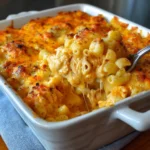
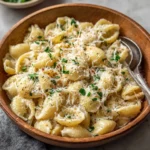
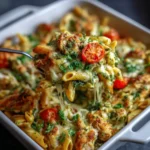
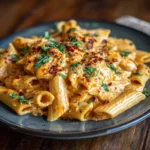
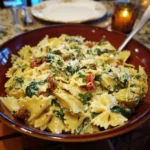
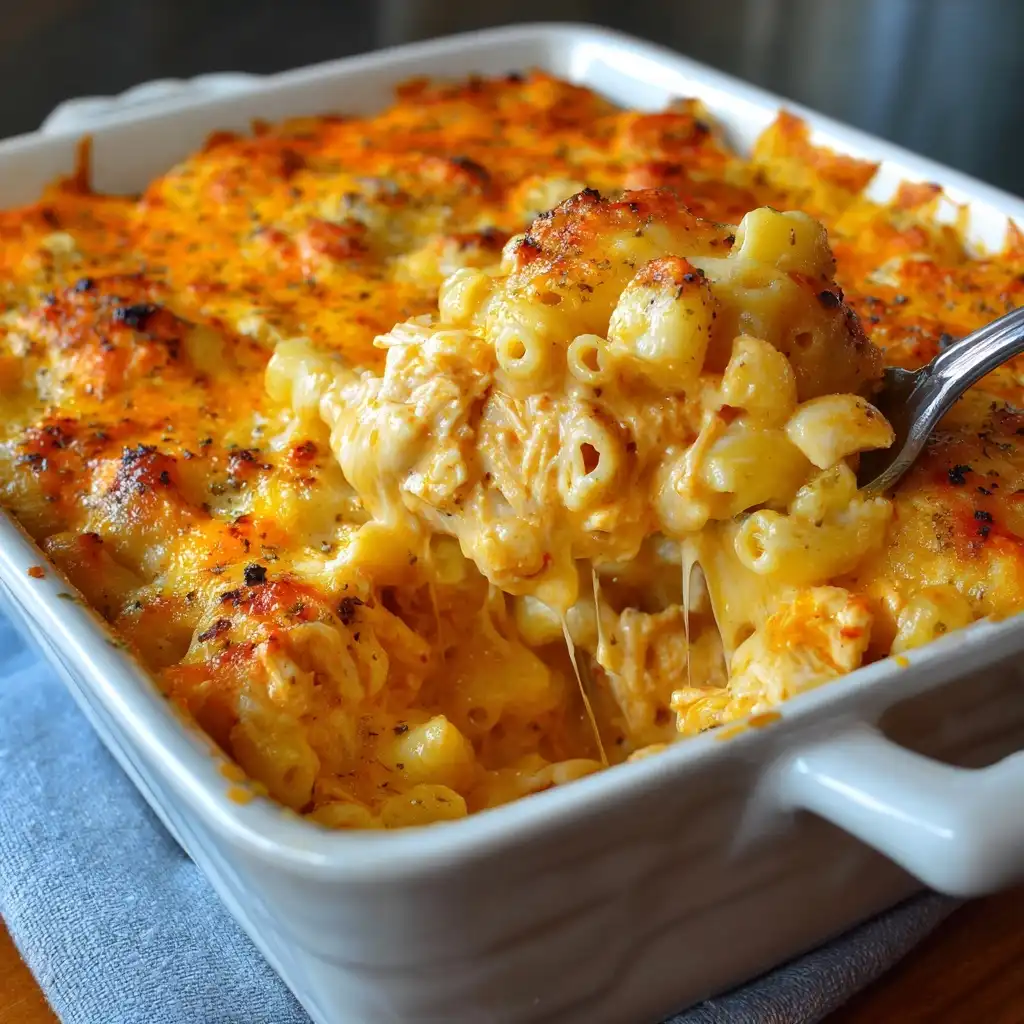
Buffalo Chicken Mac and Cheese is the ultimate comfort food fusion—a bold, creamy, tangy, and indulgent marriage of two American classics: rich, velvety macaroni and cheese and fiery, zesty Buffalo-style chicken. This dish transcends traditional mac and cheese by layering tender, slow-simmered or grilled chicken tossed in authentic Buffalo sauce—typically made from cayenne-infused hot sauce, melted butter, and a touch of vinegar—into a luxuriously cheesy, oven-baked pasta matrix. It satisfies cravings for heat, creaminess, saltiness, and umami all at once, making it a perennial favorite at game-day gatherings, potlucks, weeknight dinners, and even upscale casual dining menus. Whether you’re seeking a hearty family meal, a crowd-pleasing centerpiece for tailgates, or a gourmet twist on childhood nostalgia, Buffalo Chicken Mac and Cheese delivers maximum flavor with comforting familiarity—and just enough kick to keep things exciting.
The History
The origins of Buffalo Chicken Mac and Cheese lie not in a single inventor or kitchen, but in the deliciously inevitable collision of two iconic regional American dishes. The story begins in 1964 at the Anchor Bar in Buffalo, New York, where Teressa Bellissimo famously deep-fried chicken wings, tossed them in her homemade cayenne-based hot sauce and butter mixture, and served them with celery and blue cheese dressing—thus birthing the legendary “Buffalo wing.” Simultaneously, macaroni and cheese has deep roots in early American culinary history: Thomas Jefferson encountered pasta dishes in Europe, imported a pasta machine from Paris in 1789, and later served a version of mac and cheese at a White House dinner in 1802—helping cement its status as a refined yet accessible staple. By the mid-20th century, Kraft’s boxed mac and cheese (introduced in 1937) democratized the dish nationwide. The fusion of these two icons began gaining traction in the late 1990s and early 2000s, propelled by food network shows, celebrity chef experimentation (notably Emeril Lagasse’s “Bam!”-infused takes), and the rise of “extreme comfort food” culture. Restaurants like Dave & Buster’s and Buffalo Wild Wings started offering elevated mac and cheese sides topped with Buffalo chicken, and home cooks soon adapted the concept into fully integrated, baked casseroles. Social media—especially Instagram and Pinterest—catapulted its popularity in the 2010s, with viral photos of golden-crusted, cheese-pulled, saucy masterpieces inspiring countless variations. Today, it stands as a symbol of modern American culinary remix culture: deeply traditional in technique, unapologetically bold in flavor, and endlessly adaptable across dietary preferences and regional palates.
Ingredients Breakdown
Every exceptional Buffalo Chicken Mac and Cheese hinges on thoughtfully selected, high-quality components working in harmony. Below is a detailed breakdown—not just of what goes in, but why each ingredient matters:
- Pasta: Elbow macaroni remains the gold standard due to its hollow, curved shape that traps sauce and cheese beautifully—but cavatappi, shells, penne, fusilli, or even gluten-free brown rice pasta can be used for textural variation or dietary needs. Undercooking pasta by 1–2 minutes is essential, as it continues cooking in the oven and absorbs residual liquid.
- Chicken: Boneless, skinless chicken breasts or thighs are ideal. Thighs offer superior moisture, richness, and flavor retention—especially important when bathing in acidic Buffalo sauce. Rotisserie chicken is a brilliant time-saving shortcut, though freshly cooked chicken yields better texture control and sauce adhesion.
- Buffalo Sauce: Authenticity starts here. Frank’s RedHot Original Cayenne Pepper Sauce is the canonical base (it was used at the Anchor Bar), combined with unsalted butter for richness and emulsification. The ratio is critical: too much butter dulls heat; too little makes sauce greasy or thin. Optional enhancements include a splash of apple cider vinegar for brightness, a pinch of garlic powder for depth, or a dash of Worcestershire for umami complexity.
- Cheese Blend: A multi-cheese strategy ensures balance: sharp cheddar provides tang and meltability; Monterey Jack adds creaminess and stretch; Gouda contributes nutty sweetness; fontina lends silkiness; and a small amount of blue cheese crumbles (or gorgonzola dolce) pays homage to the original Buffalo wing pairing. Pre-shredded cheeses contain anti-caking agents that hinder melting—always grate fresh for optimal creaminess.
- Base Sauce (Béchamel Foundation): A roux-based white sauce forms the structural backbone. All-purpose flour and butter create thickening power, while whole milk (or half-and-half for extra luxury) delivers smoothness. Mustard powder (not Dijon) is a secret weapon—it enhances cheese flavor without tasting “mustardy,” thanks to its enzymatic interaction with dairy proteins. A splash of hot sauce or cayenne in the béchamel subtly layers heat throughout, rather than just on the surface.
- Aromatics & Seasonings: Sautéed yellow onion and garlic build savory depth. Dry mustard, smoked paprika (for warmth, not smoke), freshly cracked black pepper, and fine sea salt round out seasoning. A whisper of cayenne—even if your Buffalo sauce is mild—ensures dimensional heat.
- Topping Elements: Panko breadcrumbs toasted in butter add crunch and textural contrast; a final dusting of grated Parmesan or Romano boosts umami and browning. Optional garnishes include crumbled blue cheese, thinly sliced green onions, pickled red onions for acidity, or micro cilantro for freshness.
Step-by-Step Recipe
- Prep & Preheat: Adjust oven rack to center position and preheat oven to 375°F (190°C). Lightly grease a 9×13-inch baking dish (or two 8×8-inch dishes for portion control) with butter or nonstick spray.
- Cook Pasta Al Dente: Bring 4–6 quarts of heavily salted water to a rolling boil. Add 16 oz (about 450g) elbow macaroni and cook for 1 minute less than package directions. Drain thoroughly—do not rinse—to preserve starch for sauce adhesion. Toss lightly with 1 tbsp neutral oil to prevent sticking.
- Prepare Chicken: While pasta cooks, poach, bake, or pan-sear 2 lbs (900g) boneless, skinless chicken thighs (or breasts). For poaching: simmer gently in low-sodium chicken broth with onion, garlic, bay leaf, and thyme for 18–22 minutes until internal temp reaches 165°F (74°C). Cool slightly, then shred using two forks into bite-sized pieces. Alternatively, grill or air-fry for smoky char notes.
- Make Buffalo Sauce Toss: In a large bowl, combine ¾ cup Frank’s RedHot Original, ½ cup (1 stick) unsalted butter, 1 tsp apple cider vinegar, ½ tsp garlic powder, and ¼ tsp Worcestershire. Microwave in 20-sec bursts or warm gently on stove until butter melts and emulsifies. Stir in shredded chicken and toss until evenly coated. Let marinate 10–15 minutes—this allows flavors to penetrate and prevents sauce separation later.
- Build Béchamel Base: In a heavy-bottomed Dutch oven or large saucepan, melt ½ cup (1 stick) unsalted butter over medium-low heat. Whisk in ½ cup all-purpose flour and cook, stirring constantly, for 2–3 minutes until golden and fragrant (do not brown). Gradually whisk in 3 cups whole milk (room temperature prevents lumps), 1 tsp dry mustard, ½ tsp smoked paprika, 1 tsp cayenne (adjust to taste), 1 tsp fine sea salt, and ½ tsp black pepper. Cook, whisking continuously, until thickened to coat the back of a spoon (~8–10 minutes). Remove from heat.
- Layer Cheese Sauce: Gradually whisk in cheese, one cup at a time, allowing each addition to fully melt before adding more: start with 2 cups shredded sharp cheddar, then 1½ cups Monterey Jack, 1 cup Gouda, ½ cup fontina, and finally ¼ cup crumbled blue cheese (optional but recommended). Stir until luxuriously smooth and glossy. Taste and adjust salt/heat.
- Combine Everything: In a very large mixing bowl, combine drained pasta, Buffalo chicken (with all sauce), and cheese sauce. Fold gently but thoroughly with a silicone spatula or wooden spoon until every noodle glistens and shreds are evenly distributed. Avoid overmixing to prevent gumminess.
- Transfer & Top: Pour mixture into prepared baking dish, smoothing top with spatula. For crunch: melt 3 tbsp butter, mix with 1 cup panko and ¼ cup grated Parmesan, and sprinkle evenly over surface. Optional: dot with tiny pats of butter for extra browning.
- Bake to Perfection: Bake uncovered for 25–30 minutes, until edges bubble vigorously and top is golden-brown and crisp. Rotate dish halfway through for even heating. For deeper browning, broil 1–2 minutes at end—watch closely!
- Rest & Serve: Remove from oven and let rest for 12–15 minutes before serving. This crucial step allows starches to set, prevents scalding, and lets cheese redistribute for clean, creamy slices. Garnish with blue cheese crumbles, sliced green onions, and celery sticks on the side for authenticity and palate cleansing.
Tips
- Texture Control: If your sauce seems too thick after combining, stir in ¼–½ cup reserved pasta water or warm milk—one tablespoon at a time—until desired consistency is reached. Too thin? A quick stovetop simmer (2–3 min) will reduce and tighten it.
- Heat Management: Buffalo sauce intensity varies wildly between brands. Always taste your sauce before tossing chicken—and remember: heat intensifies slightly during baking. For milder versions, use ½ cup sauce + ¼ cup butter and supplement with roasted red pepper purée for color and sweetness.
- Cheese Melting Mastery: Grate cheese while cold, but let it sit at room temperature 10 minutes before adding to hot sauce—cold cheese can cause clumping or graininess. Never use pre-shredded “salad blend” cheeses—they contain cellulose and won’t melt smoothly.
- Sauce Adhesion Hack: After tossing chicken in Buffalo sauce, spread it on a parchment-lined sheet pan and refrigerate for 20 minutes. This firms up the coating so it clings better to pasta instead of pooling at the bottom.
- Oven Accuracy Matters: Use an oven thermometer—many home ovens run hot or cold. An inaccurate temp leads to scorched tops or undercooked centers. Also, avoid opening the oven door for first 20 minutes to maintain consistent heat.
- Leftover Brilliance: Store cooled leftovers in airtight containers for up to 4 days. Reheat gently in oven (325°F, covered with foil, 20–25 min) or skillet with splash of milk to revive creaminess. Microwaving tends to make it rubbery.
- Make-Ahead Magic: Assemble up to 24 hours ahead—cover tightly and refrigerate unbaked. Add 5–8 minutes to bake time. For freezer prep: assemble in foil-lined dish, freeze solid, wrap in double plastic + foil, and bake from frozen (add 25–30 minutes, cover first 20 min with foil).
- Acidity Balance: If dish tastes flat or overly rich, a final squeeze of fresh lemon juice or splash of apple cider vinegar stirred in just before serving brightens everything instantly.
- Crust Secrets: For an ultra-crisp topping, toast panko in butter until golden *before* sprinkling—or swap half the panko for crushed Ritz crackers or potato chips for nostalgic crunch.
- Serving Wisdom: Always serve with cooling accompaniments: chilled blue cheese dressing, ranch, extra celery sticks, carrot ribbons, or a simple arugula salad with lemon vinaigrette to cut through richness.
Variations and Customizations
This recipe is a canvas—not a cage. Here’s how to personalize it for every palate, occasion, and pantry:
Dietary Adaptations
- Gluten-Free: Use certified GF elbow pasta (brown rice, corn, or lentil-based), GF all-purpose flour (like Bob’s Red Mill 1-to-1), and verify Buffalo sauce is GF (most Frank’s varieties are, but always check labels).
- Dairy-Free/Vegan: Substitute cashew-based “cheese sauce” (soaked raw cashews, nutritional yeast, lemon, miso, garlic, plant milk), coconut oil or vegan butter, and vegan Buffalo sauce (Annie’s or Noble Made). Use hearts of palm or jackfruit for “chicken” texture.
- Low-Carb/Keto: Replace pasta with cauliflower florets (roasted until tender-crisp) or shirataki noodles (rinsed and dry-sautéed). Boost cheese volume and add heavy cream to sauce. Skip breadcrumb topping or use almond flour + parmesan.
- High-Protein Boost: Stir in 1 cup cooked white beans or lentils, or fold in ½ cup crumbled cooked bacon or pancetta with the chicken.
Flavor & Heat Twists
- Smoky Chipotle: Replace half the Buffalo sauce with chipotle adobo purée; add 1 tsp ground cumin and ½ tsp cocoa powder to béchamel for mole-inspired depth.
- Honey-Thai: Swap Buffalo sauce for Thai chili sauce + lime zest + honey + fish sauce; use coconut milk in béchamel and top with chopped peanuts and cilantro.
- Green Chile Verde: Use roasted poblano and jalapeño purée instead of Buffalo sauce; incorporate Oaxaca and pepper jack cheeses; finish with cotija and pickled red onions.
- Truffle Umami: Infuse butter in béchamel with black truffle oil; fold in porcini mushroom powder; top with shaved truffle (optional luxury).
Textural & Visual Upgrades
- Loaded Topping: Before baking, scatter crumbled crispy fried shallots, crushed pretzels, or candied pecans over the panko layer.
- Vegetable Integration: Sauté 1 cup diced bell peppers, zucchini, or spinach and fold in with pasta. Roasted broccoli or caramelized onions add earthy sweetness.
- Breakfast-Inspired: Stir in 4 scrambled eggs and ½ cup crumbled breakfast sausage before baking; top with chives and a fried egg per serving.
- Gourmet Presentation: Bake in individual ramekins, garnish with edible flowers, microgreens, and a drizzle of Buffalo aioli (mayo + Buffalo sauce + lemon).
Cultural Fusions
- Korean BBQ Style: Marinate chicken in gochujang, soy, brown sugar, sesame oil, and garlic; use mozzarella + provolone; top with kimchi and sesame seeds.
- Indian-Inspired: Use tandoori-spiced chicken, ghee in béchamel, paneer + aged cheddar, and garnish with mango chutney and cilantro.
- Mexican Street Corn: Add elote-style elements: roasted corn, cotija, lime crema, chili powder, and pickled jalapeños.
Health Considerations and Nutritional Value
While undeniably indulgent, Buffalo Chicken Mac and Cheese can be thoughtfully adapted to support balanced nutrition—without sacrificing soul-satisfying appeal. A standard 1-cup serving (approx. 320g) of the classic recipe contains roughly:
- Calories: 580–650 kcal
- Protein: 32–38g (from chicken and cheese—excellent for satiety and muscle maintenance)
- Fat: 30–36g (predominantly unsaturated from chicken thighs and cheese; butter contributes saturated fat—moderation advised)
- Carbohydrates: 38–44g (mostly complex carbs from pasta; fiber ~2g unless whole grain used)
- Sodium: 950–1,200mg (high due to cheese, sauce, and seasoning—reducing added salt and using low-sodium broth helps)
- Vitamins & Minerals: Rich in calcium (cheese), vitamin B12 (dairy/chicken), selenium (chicken), and phosphorus. Adding vegetables boosts vitamins A, C, and K.
Nutritionist-Approved Tweaks:
- Boost Fiber & Nutrients: Use whole wheat or legume-based pasta (adds 4–6g fiber/serving); stir in 1 cup finely chopped kale or spinach (wilted first); top with roasted Brussels sprouts or broccoli.
- Reduce Saturated Fat: Opt for skinless chicken breast, low-fat milk (though whole milk improves texture), and limit butter to essential amounts—replace some with olive oil in roux.
- Lower Sodium Smartly: Choose no-salt-added canned tomatoes (if adding), low-sodium chicken broth, and reduced-sodium cheese. Make your own Buffalo sauce with cayenne, vinegar, and minimal butter.
- Portion Mindfulness: Serve in smaller portions (¾ cup) alongside a large, vibrant salad (mixed greens, cherry tomatoes, cucumber, lemon-tahini dressing) to increase volume and nutrient density without excess calories.
- Consider Glycemic Load: For blood sugar management, pair with protein/fiber-rich sides and avoid sugary sauces—many commercial Buffalo sauces contain high-fructose corn syrup. Homemade versions give full control.
- Allergen Notes: Common allergens include dairy (cheese, butter, milk), eggs (if using egg-washed topping), wheat (pasta, flour), and soy (in some cheeses/sauces). Always verify labels for hidden sources.
Remember: Occasional enjoyment of rich, flavorful foods supports psychological well-being and sustainable eating habits. Focus on quality ingredients, mindful preparation, and joyful sharing—not perfection.
Ingredients
- 16 oz (450g) elbow macaroni (or preferred short pasta)
- 2 lbs (900g) boneless, skinless chicken thighs (or breasts)
- 1½ cups low-sodium chicken broth (for poaching)
- 1 medium yellow onion, quartered (for poaching)
- 3 garlic cloves, smashed (for poaching)
- 2 bay leaves (for poaching)
- 1 tsp fresh thyme leaves (for poaching)
- ¾ cup Frank’s RedHot Original Cayenne Pepper Sauce
- ½ cup (1 stick) unsalted butter, divided
- 1 tsp apple cider vinegar
- ½ tsp garlic powder
- ¼ tsp Worcestershire sauce
- ½ cup (1 stick) unsalted butter (for béchamel)
- ½ cup all-purpose flour
- 3 cups whole milk, room temperature
- 1 tsp dry mustard powder
- ½ tsp smoked paprika
- 1 tsp fine sea salt (plus more to taste)
- ½ tsp freshly ground black pepper
- ¼ tsp cayenne pepper (adjust to preference)
- 2 cups shredded sharp cheddar cheese
- 1½ cups shredded Monterey Jack cheese
- 1 cup shredded Gouda cheese
- ½ cup shredded fontina cheese
- ¼ cup crumbled blue cheese (optional but recommended)
- 1 cup panko breadcrumbs
- ¼ cup grated Parmesan cheese
- For garnish: extra blue cheese crumbles, sliced green onions, celery sticks, blue cheese or ranch dressing
Directions
- Preheat oven to 375°F (190°C). Grease a 9×13-inch baking dish.
- Bring 4–6 quarts water to boil. Add 1 tbsp salt and pasta. Cook 1 minute less than package instructions. Drain, rinse briefly with cool water, toss with 1 tsp neutral oil. Set aside.
- In a large pot, combine broth, onion, garlic, bay leaves, and thyme. Bring to gentle simmer. Add chicken, submerge, reduce heat to low, cover, and poach 18–22 min until 165°F internally. Remove chicken, cool 5 min, then shred with forks.
- In bowl, whisk together Frank’s, ½ cup butter, vinegar, garlic powder, and Worcestershire until smooth. Add shredded chicken and toss. Let sit 10–15 min.
- In Dutch oven, melt ½ cup butter over medium-low. Whisk in flour; cook 2–3 min until golden. Gradually whisk in milk, mustard, paprika, salt, pepper, and cayenne. Cook 8–10 min, whisking, until thickened.
- Remove from heat. Gradually whisk in cheeses, one cup at a time, until fully melted and smooth. Stir in blue cheese crumbles.
- In large bowl, combine pasta, Buffalo chicken (with all sauce), and cheese sauce. Fold gently until uniform.
- Pour into prepared dish. In small bowl, melt remaining 3 tbsp butter, mix with panko and Parmesan. Sprinkle evenly over top.
- Bake uncovered 25–30 min until bubbly at edges and top is golden. Rotate at 15 min. Optional: broil 1–2 min for extra crispness.
- Let rest 12–15 min before serving. Garnish generously and serve with celery and dressing.
FAQ
- Can I use rotisserie chicken?
- Absolutely—and it’s highly recommended for weeknight ease! Use 3 cups shredded meat (about one 2-lb bird). Skip poaching steps; toss warm or room-temp chicken directly with Buffalo sauce. Reduce sauce by 1–2 tbsp if chicken is very moist.
- Why does my mac and cheese turn grainy?
- Graininess usually comes from overheating cheese sauce, using cold cheese, or adding cheese to boiling liquid. Always remove béchamel from heat before adding cheese. Let cheese sit at room temp 10 min before grating. Stir gently—don’t boil after cheese is added.
- Can I make this ahead of time?
- Yes! Assemble completely (unbaked), cover tightly, and refrigerate up to 24 hours. Add 5–8 min to bake time. For longer storage, freeze unbaked casserole up to 3 months—thaw overnight in fridge before baking.
- What’s the best Buffalo sauce brand?
- Frank’s RedHot Original is the authentic, balanced choice—vinegary, moderately spicy, and formulated to emulsify with butter. Avoid “extra hot” or “wicked” versions unless you prefer extreme heat. For craft options, try Queen Majesty Habanero or Secret Aardvark.
- How do I reheat leftovers without drying them out?
- Oven method is best: cover dish with foil, add 2 tbsp milk or broth, bake at 325°F for 20–25 min. Stovetop: low heat in nonstick skillet with splash of milk, stirring gently. Avoid microwaving uncovered—it accelerates moisture loss.
- Can I add vegetables?
- Yes! Sauté 1–2 cups diced veggies (bell peppers, mushrooms, spinach, broccoli) until tender-crisp, then fold in with pasta. Roasted vegetables add deeper flavor. Just avoid watery veggies like zucchini unless pre-salted and drained.
- Is there a way to make it spicier?
- Boost heat with ½ tsp crushed red pepper flakes in béchamel, a dash of ghost pepper sauce in Buffalo mix, or pickled jalapeño brine instead of vinegar. Serve with extra hot sauce on the side for heat seekers.
- What if I don’t have all those cheeses?
- Use what you love! A simple blend of 3 cups sharp cheddar + 1 cup Monterey Jack works beautifully. Avoid very young or very aged cheeses alone—they lack meltability or balance.
- Can I cook this on the stovetop only (no oven)?
- Yes—prepare as directed, transfer to large skillet, top with panko, and cook covered over low heat 12–15 min until heated through and top is crisp. Uncover last 2–3 min to brown.
- Why rest before serving?
- Resting allows starches to fully hydrate and set, preventing a soupy or separated texture. It also lets temperatures equalize—so the first bite isn’t scalding hot while the center is cool. Plus, it gives cheese time to re-emulsify for perfect pull.
Summary
Buffalo Chicken Mac and Cheese is a masterclass in bold American comfort food—meld