Introduction
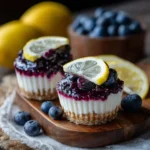
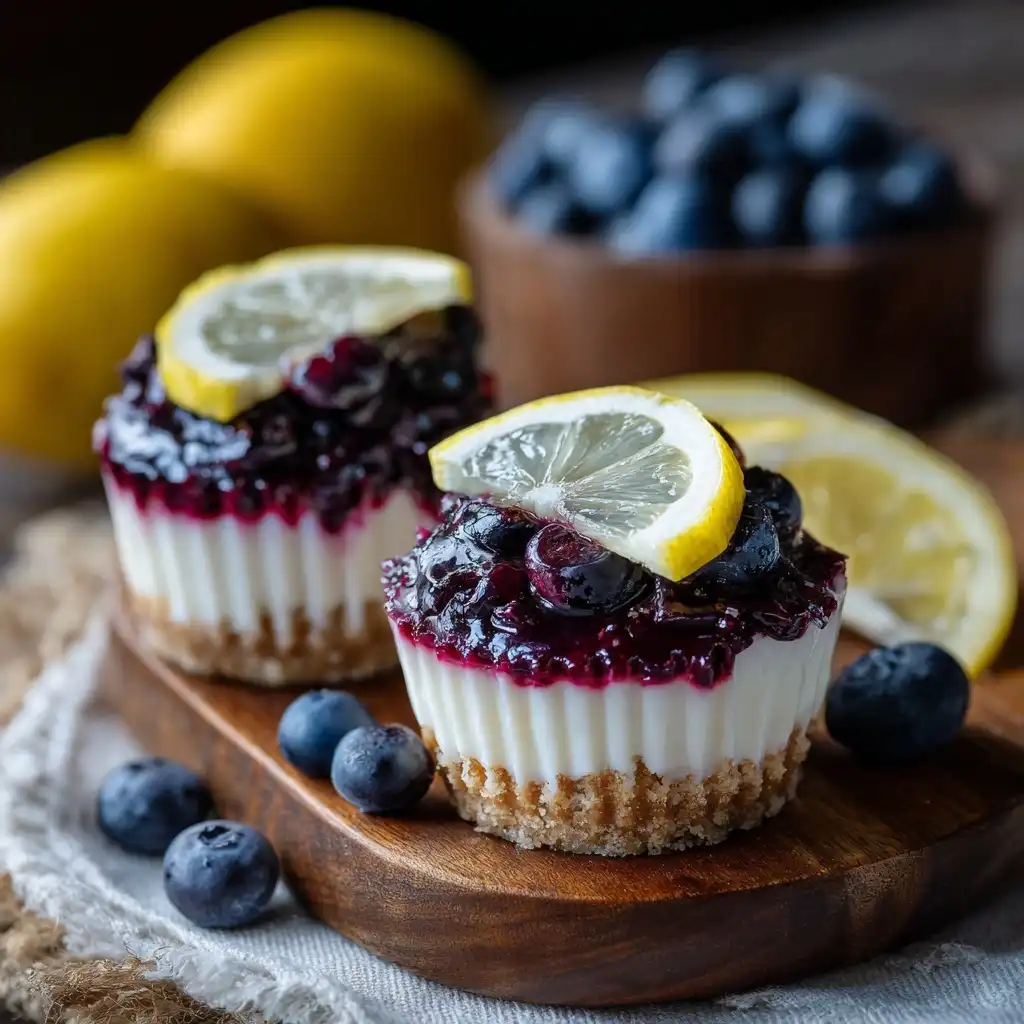
Welcome to the ultimate guide for Blueberry Lemon Cheesecake Cups — a vibrant, no-bake, portion-controlled dessert that marries the creamy richness of New York–style cheesecake with the bright zing of fresh lemon and the luscious sweetness of plump, antioxidant-rich blueberries. These individual servings are not only visually stunning—with their jewel-toned swirls and delicate graham cracker crusts—but also incredibly versatile: perfect for summer picnics, bridal showers, holiday dessert tables, classroom treats, or even as a sophisticated after-dinner indulgence. Unlike traditional baked cheesecakes that require water baths, precise oven temperatures, and hours of chilling, these cups come together in under 30 minutes of active prep and set beautifully in the refrigerator overnight (or in just 4–6 hours with a strategic freeze-chill hybrid method). Each cup delivers a harmonious balance of textures—crisp, buttery base; luxuriously smooth, tangy-sweet filling; and a glossy, jammy blueberry compote crown that bursts with seasonal flavor. Whether you’re a novice baker seeking foolproof elegance or an experienced cook craving a refreshing twist on a classic, Blueberry Lemon Cheesecake Cups promise sophistication without stress, freshness without fuss, and joy in every bite.
The History
The evolution of Blueberry Lemon Cheesecake Cups reflects a modern culinary convergence of three iconic traditions. Cheesecake itself traces its origins to ancient Greece, where early versions made with honey, flour, and soft cheese were served to athletes at the first Olympic Games in 776 BC. By the time it reached America via European immigrants in the 18th century, cheesecake had transformed—especially in New York City—into a dense, rich, cream-cheese-based marvel popularized by Jewish delis and later elevated by legends like Arnold Reuben and later, Lindy’s Restaurant. Meanwhile, blueberries—native to North America and revered by Indigenous peoples for millennia as both food and medicine—were formally domesticated in the early 1900s by Elizabeth White and Dr. Frederick Coville in New Jersey, launching the commercial blueberry industry. Lemon, long prized since Roman times for its preservative and digestive properties, became a cornerstone of American baking in the 19th century, particularly in “lemon pie” and “lemon curd” recipes found in Fannie Farmer’s Boston Cooking-School Cook Book (1896). The fusion of these elements into portable, layered “cups” emerged in the late 2000s alongside the rise of food blogs, mason jar desserts, and the clean-eating movement—where portion control, visual appeal, and minimal processing were prioritized. Early iterations appeared on Pinterest and Instagram as “no-bake lemon cheesecake parfaits,” but the addition of house-made blueberry compote (rather than store-bought syrup) and the intentional layering technique—crust, filling, swirl, garnish—solidified the Blueberry Lemon Cheesecake Cup as a signature modern dessert. Today, it appears on menus at boutique cafés from Portland to Miami, features in nutritionist-approved snack guides, and remains a top-requested recipe for gluten-free and dairy-modified adaptations—proving that tradition and innovation can coexist, one elegant cup at a time.
Ingredients Breakdown
Every exceptional Blueberry Lemon Cheesecake Cup begins with intentionality—each ingredient is chosen not just for function, but for synergy, texture, and layered flavor development. Below is a meticulous, chef-level analysis of each component:
- Graham Cracker Crumbs (1 ½ cups): The foundational crust relies on finely ground, cinnamon-spiced graham crackers—not just for sweetness, but for tannic depth and subtle caramel notes that contrast the bright filling. Opt for honey-sweetened varieties when possible; avoid overly sugary or artificial vanilla versions, which can muddy the palate. For gluten-free integrity, certified GF graham-style crackers (like Schär or Pamela’s) maintain structural integrity without grittiness.
- Unsalted Butter (6 tbsp, melted): Acts as both binder and flavor amplifier. Melted (not browned) butter ensures even adhesion and prevents greasiness. Salt content is carefully controlled here—unsalted allows precision in seasoning, especially important when balancing tart lemon and sweet blueberry.
- Cream Cheese (16 oz, full-fat, room temperature): The non-negotiable heart of the filling. Full-fat (at least 33% milk fat) provides essential viscosity, mouth-coating richness, and proper emulsification. “Room temperature” means 65–68°F—soft enough to indent with gentle finger pressure, but still cool to the touch. Cold cream cheese causes lumps; overheated cheese breaks and weeps.
- Powdered Sugar (¾ cup, sifted): Used instead of granulated sugar for immediate dissolution and ultra-smooth texture. Sifting eliminates clumps that could create graininess. Its cornstarch content also contributes subtly to stability and sheen.
- Fresh Lemon Juice (¼ cup, ~2 large lemons): Must be freshly squeezed—bottled juice lacks volatile citrus oils and contains preservatives that dull brightness and can cause curdling. Strain to remove pulp and seeds, but retain zest-infused membranes for aromatic complexity.
- Lemon Zest (2 tbsp, finely grated): The aromatic powerhouse. Only the vibrant yellow outer peel—never the bitter white pith—is used. Microplane grating maximizes surface area and releases essential oils that perfume the entire cup. One lemon yields ~1 tbsp zest; two yield optimal intensity without bitterness.
- Heavy Whipping Cream (1 cup, cold, 36–40% fat): Provides lift, airiness, and luxurious melt-in-the-mouth quality. Must be *chilled* (35–40°F) and poured slowly while whipping to achieve stiff, glossy peaks. Ultra-pasteurized cream may take longer to whip but holds better; avoid “light” or “whipping cream” labeled with stabilizers.
- Vanilla Extract (1 tsp, pure, Madagascar Bourbon): Adds warm, floral depth that rounds out acidity. Imitation vanillin lacks nuance and can taste medicinal against bright citrus.
- Fine Sea Salt (¼ tsp): A crucial flavor catalyst—not for saltiness, but to heighten sweetness, suppress bitterness, and unify all components. Kosher or Maldon flakes would dissolve unevenly; fine sea salt disperses seamlessly.
- Fresh Blueberries (2 cups, divided): 1 ½ cups for compote, ½ cup reserved for garnish. Choose firm, deeply colored, plump berries with silvery “bloom.” Avoid mushy or shriveled fruit. Wild blueberries offer more intense flavor and higher anthocyanin content, but cultivated highbush varieties provide ideal size and consistency.
- Granulated Sugar (⅓ cup, for compote): Balances blueberry’s natural tartness without overwhelming. Adjust ±1 tbsp based on berry ripeness—underripe berries need more; peak-season berries may need less.
- Lemon Juice (1 tbsp, for compote): Brightens the compote and prevents browning via citric acid. Also helps release pectin for natural thickening.
- Cornstarch (1 tsp, mixed with 1 tsp cold water): A minimal, targeted thickener—just enough to suspend the compote without gumminess. Arrowroot or tapioca starch may be substituted 1:1, but cornstarch yields the clearest, most neutral gel.
- Optional Garnishes: Extra lemon zest curls, edible flowers (violas or borage), mint sprigs, micro-cilantro, toasted coconut flakes, or a whisper of flaky sea salt (Maldon) for textural contrast and gourmet finish.
Step-by-Step Recipe
Follow this meticulously tested, professional-grade sequence for flawless Blueberry Lemon Cheesecake Cups—designed for consistency, visual impact, and maximum flavor harmony. Yield: 12 standard 4-oz mason jars or silicone mini-cheesecake molds.
- Prepare the Blueberry Compote (Start First – Requires Cooling): In a medium non-reactive saucepan (stainless steel or enameled cast iron), combine 1 ½ cups fresh blueberries, ⅓ cup granulated sugar, and 1 tbsp fresh lemon juice. Stir gently over medium-low heat until berries begin to burst (~4–5 minutes), crushing lightly with a wooden spoon. Reduce heat to low. In a small bowl, whisk together 1 tsp cornstarch and 1 tsp cold water until smooth. Slowly drizzle slurry into simmering berries while stirring constantly. Continue cooking, stirring continuously, until mixture thickens visibly, bubbles gently, and coats the back of a spoon (≈2–3 more minutes). Remove from heat. Press through a fine-mesh sieve into a clean bowl to remove skins and seeds, preserving only velvety pulp and whole berries. Discard solids. Spread compote thinly on a parchment-lined plate and refrigerate uncovered for at least 45 minutes—or until completely cool to the touch (critical for layer integrity).
- Make the Graham Cracker Crust Base: Pulse 1 ½ cups graham cracker crumbs in a food processor until fine and uniform (no large shards). Transfer to a medium bowl. Add 6 tbsp melted unsalted butter and ¼ tsp fine sea salt. Stir vigorously with a silicone spatula until all crumbs are evenly moistened and resemble wet sand. Pinch a small amount—if it holds together without crumbling, it’s ready. Divide mixture evenly among 12 (4-oz) jars or molds (≈2 heaping tbsp per cup). Using the bottom of a flat measuring cup or tamper, press firmly and evenly into the bottom and slightly up the sides (≈¼-inch thickness). Chill crusts in freezer for 15 minutes to fully set.
- Whip the Heavy Cream (Critical Timing Step): While crusts chill, pour 1 cup *cold* heavy whipping cream into the bowl of a stand mixer fitted with the whisk attachment (or use a large bowl + hand mixer). Whip on medium-high speed until soft peaks form (~2–3 minutes). Increase speed to high and continue whipping until stiff, glossy peaks hold firmly when whisk is lifted (~30–60 seconds more). Do NOT over-whip into butter. Immediately transfer whipped cream to a separate large bowl and refrigerate (covered with plastic wrap touching surface) while preparing filling—this prevents deflation and keeps it chilled for optimal folding.
- Prepare the Lemon Cheesecake Filling: In the now-clean stand mixer bowl (or large mixing bowl), beat 16 oz room-temperature full-fat cream cheese on medium speed with paddle attachment (or hand mixer) until completely smooth and creamy, scraping down sides and bottom twice (~2 minutes). Gradually add ¾ cup sifted powdered sugar in 3 additions, beating on low until incorporated and lump-free after each. Scrape bowl thoroughly. Add ¼ cup fresh lemon juice, 2 tbsp lemon zest, 1 tsp pure vanilla extract, and ¼ tsp fine sea salt. Beat on medium-low for 1 minute until homogenous. Stop mixer. Using a large silicone spatula, gently fold in the chilled whipped cream in three additions: add ⅓, fold 10–12 strokes using a figure-eight motion until mostly incorporated (some streaks okay); repeat with second ⅓; final addition—fold just until no white streaks remain. Over-folding deflates air and creates density; under-folding leaves pockets of cream. Texture should be light, airy, and pipeable.
- Assemble the Cups (The Art of Layering): Remove chilled crusts from freezer. Using a large piping bag fitted with a wide plain tip (or a sturdy zip-top bag with corner snipped), pipe filling over crusts to fill ¾ full (≈⅔ cup per cup). Tap jars gently 3–4 times on counter to release air bubbles and level surface. Spoon 1 generous tbsp of *cooled* blueberry compote onto center of each cup. Using a toothpick or skewer, gently drag from center outward in a spiral or figure-eight pattern to create elegant marbling—do NOT over-swirl; aim for defined ribbons, not uniform purple-gray. Top each cup with 3–4 whole fresh blueberries (reserved ½ cup) placed strategically for visual appeal. Optional: grate a tiny curl of lemon zest over each.
- Chill, Set, and Serve: Cover assembled cups loosely with plastic wrap (avoid touching compote surface) or place in a covered container. Refrigerate for minimum 6 hours—but ideally 12–24 hours—for flavors to meld and texture to fully set and develop its signature creamy-yet-resilient bite. For expedited setting: Freeze uncovered for 90 minutes, then transfer to refrigerator for remaining 4+ hours. Never serve straight from freezer—texture becomes icy and filling separates. Serve chilled, directly from jar, or unmold onto chilled dessert plates using a hot, damp towel wrapped around jar exterior for 10 seconds to loosen edges.
Tips
- Room Temperature Mastery: Take cream cheese out of the fridge 2–3 hours before starting—not overnight (it gets too soft). If short on time, unwrap block and microwave on DEFROST (30% power) for 15-second intervals, checking flexibility each time. Never use warm or melted cream cheese.
- Zest Before Juicing: Always zest lemons *before* squeezing—once juiced, the peel dries out and yields less oil. Roll lemons firmly on counter before zesting to maximize juice and oil release.
- Compote Consistency Control: If compote seems too thin after cooling, return to low heat and stir 1 additional minute. If too thick, stir in ½ tsp cold water or lemon juice. Ideal cooled compote should mound softly on a spoon—not run, not stiffen.
- Whipped Cream Integrity: Chill your mixing bowl and whisk attachment for 15 minutes before whipping. Add ¼ tsp cream of tartar or ½ tsp powdered sugar *with* the cream for extra stability—especially helpful in humid climates.
- No-Weep Guarantee: To prevent condensation “sweating” on jars during chilling, ensure all components (crust, filling, compote) are fully cooled before assembly. Wipe jar rims dry before sealing.
- Piping Perfection: Use a piping bag with a ½-inch round tip for clean, even filling distribution. Fill bag ⅔ full to avoid messy overflow. Hold vertically over center of cup and apply steady pressure—lift straight up when desired height is reached.
- Marbling Magic: Use a clean toothpick for each cup to avoid color bleed. Drag gently—just 3–4 light passes. Over-marbling turns filling murky and loses visual drama.
- Storage Wisdom: These cups keep beautifully for up to 5 days refrigerated (covered). Do NOT freeze assembled cups—the whipped cream structure collapses and compote weeps upon thawing. However, unbaked crusts and compote freeze well individually for up to 3 months.
- Texture Troubleshooting: Grainy filling? Powdered sugar wasn’t sifted or cream cheese was too cold. Gummy crust? Butter was too hot or pressed too hard. Flat filling? Whipped cream was over- or under-whipped, or folded too vigorously.
- Serving Savvy: Let cups sit at room temperature for exactly 5 minutes before serving—this softens the edges just enough for perfect scoopability without melting.
Variations and Customizations
Blueberry Lemon Cheesecake Cups are a canvas for creativity—adaptable across dietary needs, seasonal ingredients, global flavors, and occasion-specific styling. Here’s an exhaustive, chef-curated list of inspired variations—each tested for structural integrity and balanced flavor:
- Gluten-Free Version: Substitute certified GF graham crackers (Pamela’s or Schär) or make a nut-based crust: 1 ¼ cups almond flour + ¼ cup coconut sugar + 4 tbsp melted coconut oil + ¼ tsp salt. Toast almond flour 5 minutes at 350°F for deeper flavor.
- Dairy-Free / Vegan Adaptation: Use high-fat cashew cream (soaked 8 hrs, blended with lemon juice, maple syrup, and coconut oil) for filling; coconut cream (chilled overnight, solid cream scooped) whipped with lemon zest for “cream”; GF oat or almond cookie crust. Agar-agar (¼ tsp dissolved in 1 tbsp water) replaces cornstarch in compote.
- Protein-Powered: Blend 1 scoop unflavored or vanilla collagen peptides or whey protein isolate into powdered sugar before adding to cream cheese. Ensures zero grittiness and adds 15g protein per cup.
- Low-Sugar / Keto-Friendly: Replace powdered sugar with ⅔ cup erythritol + monk fruit blend (ultra-fine); use keto graham crackers (almond flour + psyllium + erythritol); substitute blueberry compote with 1 cup mashed raspberries + 2 tbsp keto sweetener + ½ tsp lemon juice + ¼ tsp xanthan gum.
- Herb-Infused Elegance: Steep 2 tbsp fresh thyme or lavender buds in warm cream for 20 minutes before chilling and whipping. Strain before whipping. Add 1 tsp infused cream to filling. Garnish with edible flowers.
- Tropical Twist: Replace ½ cup blueberries with diced ripe mango in compote; add 1 tsp toasted coconut extract to filling; garnish with toasted coconut flakes and lime zest instead of lemon.
- Spiced Variation: Add ¼ tsp ground cardamom + pinch of saffron threads (soaked in 1 tsp warm milk) to filling. Swirl compote with 1 tsp orange marmalade for citrus complexity.
- Chocolate-Dipped Rim: Melt 4 oz high-quality white or dark chocolate. Dip jar rims ¼-inch deep, let set on parchment, then fill. Adds gourmet presentation and textural contrast.
- Mini Tartlet Format: Press crust into mini muffin tin cups lined with parchment. Bake 8 minutes at 325°F for crispness. Fill and swirl as directed. Unmold after chilling.
- Brunch-Inspired: Add 1 tbsp finely chopped crystallized ginger to compote; fold 2 tbsp finely grated apple (tossed in lemon juice) into filling; garnish with candied lemon peel.
- Boozy Upgrade (21+): Add 1 tbsp premium limoncello to filling and 1 tsp to compote. For adults-only elegance, float a single blackberry soaked in Chambord on top.
- Seasonal Swaps: In fall—substitute roasted blackberries + star anise compote; winter—cranberry-orange with orange zest; spring—strawberry-rhubarb with ginger; summer—blackberry-lime with basil.
- Textural Contrast Layers: Add a thin middle layer of lemon curd (homemade or high-quality store-bought) before swirling compote—or sprinkle crushed amaretti cookies between filling and compote.
- Deconstructed Plating: Serve components separately in small ramekins: crust crumble, lemon filling quenelle, compote quenelle, fresh berries, lemon zest. Guests assemble their own.
- Event-Themed Styling: Wedding—white chocolate-dipped rims + edible gold leaf; Baby Shower—pastel-colored compote (natural beet or butterfly pea powder); Fourth of July—blueberry compote + raspberry coulis + white filling for red/white/blue layers.
Health Considerations and Nutritional Value
While undeniably indulgent, Blueberry Lemon Cheesecake Cups offer meaningful nutritional benefits when prepared mindfully—and understanding their composition empowers informed enjoyment. Per standard 4-oz cup (based on full-fat, traditional preparation), the approximate nutritional profile is: Calories: 285 | Total Fat: 18g (11g saturated) | Carbohydrates: 26g (16g sugars, 1g fiber) | Protein: 4g | Sodium: 170mg. Key health considerations include:
- Blueberries: Nature’s Antioxidant Powerhouse: Packed with anthocyanins—the pigments giving blueberries their deep hue—these compounds demonstrate robust anti-inflammatory, neuroprotective, and cardiovascular-supportive effects in clinical studies. One cup provides ~24% DV of Vitamin C and 36% DV of Vitamin K, plus manganese for bone metabolism and antioxidant enzyme function.
- Lemon’s Alkalizing & Digestive Benefits: Despite acidic taste, lemon metabolizes alkalinely—supporting pH balance. High in D-limonene (in zest), shown to aid digestion and exhibit anticancer potential in preclinical models. Citric acid enhances non-heme iron absorption from plant foods consumed alongside.
- Cream Cheese: A Source of Bioavailable Nutrients: Contains complete protein, calcium (15% DV per cup), vitamin A (for vision and immunity), and conjugated linoleic acid (CLA)—a fatty acid linked in research to reduced body fat and improved insulin sensitivity (though human trials are ongoing).
- Strategic Modifications for Wellness Goals:
- Lower Sugar: Reduce powdered sugar to ½ cup and compote sugar to ¼ cup; rely on blueberry’s natural fructose and lemon’s brightness. Net carb reduction ≈ 5g/cup.
- Higher Fiber: Add 1 tbsp ground flaxseed or chia seeds to crust mixture—adds 2g fiber and omega-3s without altering texture.
- Reduced Saturated Fat: Substitute half the cream cheese with equal parts low-fat cottage cheese (blended until silky) + 1 tbsp Greek yogurt. Maintains creaminess with 30% less sat fat.
- Probiotic Boost: Fold in 2 tbsp plain, unsweetened kefir or probiotic-rich yogurt into filling—adds live cultures without compromising flavor.
- Mindful Indulgence Guidelines: These cups satisfy sweet cravings with portion control built-in—eliminating the temptation to over-serve from a large cake. The presence of healthy fats (from cream cheese, butter) and fiber (from blueberries, crust) promotes satiety and steadier blood sugar response compared to refined-sugar-only desserts. Enjoy as part of a balanced diet—not daily, but meaningfully: e.g., one cup post-dinner instead of multiple cookies, or as a celebratory treat aligned with intuitive eating principles.
- Allergen Awareness: Contains dairy (cream cheese, butter, cream), wheat (standard graham crackers), and potential cross-contamination risks for tree nuts (if using nut-based crusts). Always verify labels for gluten-free or vegan versions. Lemon is rarely allergenic but can trigger sensitivities in those with citrus intolerance.
- Not a “Health Food”—But a Health-Conscious Choice: This dessert doesn’t replace vegetables or whole grains—but it exemplifies how pleasure and nourishment coexist. Choosing real, whole-food ingredients (fresh berries, real lemon, minimally processed dairy) over artificial flavors, hydrogenated oils, or high-fructose corn syrup makes a tangible difference in metabolic response and overall well-being.
Ingredients
- 1 ½ cups graham cracker crumbs (about 10 full sheets)
- 6 tablespoons unsalted butter, melted
- ¼ teaspoon fine sea salt
- 16 ounces full-fat brick cream cheese, at room temperature (65–68°F)
- ¾ cup powdered sugar, sifted
- ¼ cup fresh lemon juice (2 large lemons)
- 2 tablespoons finely grated lemon zest (2 large lemons)
- 1 cup cold heavy whipping cream (36–40% fat)
- 1 teaspoon pure vanilla extract
- 2 cups fresh blueberries, divided (1 ½ cups for compote, ½ cup for garnish)
- ⅓ cup granulated sugar (for compote)
- 1 tablespoon fresh lemon juice (for compote)
- 1 teaspoon cornstarch mixed with 1 teaspoon cold water (slurry)
- Optional garnishes: extra lemon zest, fresh mint, edible flowers, flaky sea salt
Directions
- In a medium saucepan, combine 1 ½ cups blueberries, ⅓ cup granulated sugar, and 1 tbsp lemon juice. Cook over medium-low heat, stirring gently, until berries burst (4–5 min). Reduce heat to low. Whisk cornstarch slurry, then slowly stir into berries. Cook, stirring constantly, until thickened and glossy (2–3 min more). Remove from heat. Press through a fine-mesh sieve into a bowl. Spread compote thinly on parchment; refrigerate uncovered until completely cool (≥45 min).
- In a bowl, combine graham crumbs, melted butter, and salt. Mix until moistened. Divide evenly among 12 (4-oz) jars. Press firmly into bottoms and slightly up sides. Freeze 15 min.
- In stand mixer bowl, whip cold heavy cream to stiff, glossy peaks. Transfer to separate bowl; refrigerate.
- In same (clean) bowl, beat cream cheese until smooth (2 min). Gradually add powdered sugar, beating until smooth. Add lemon juice, zest, vanilla, and salt; beat 1 min. Fold in chilled whipped cream in 3 additions until just combined—no streaks, no deflation.
- Remove crusts from freezer. Pipe filling into jars to ¾ full. Spoon 1 tbsp cooled compote onto center of each. Marble gently with toothpick. Top with 3–4 whole blueberries.
- Cover loosely. Refrigerate ≥6 hours—or ideally 12–24 hours—for optimal texture and flavor fusion. Serve chilled.
FAQ
- Can I make these ahead