Introduction
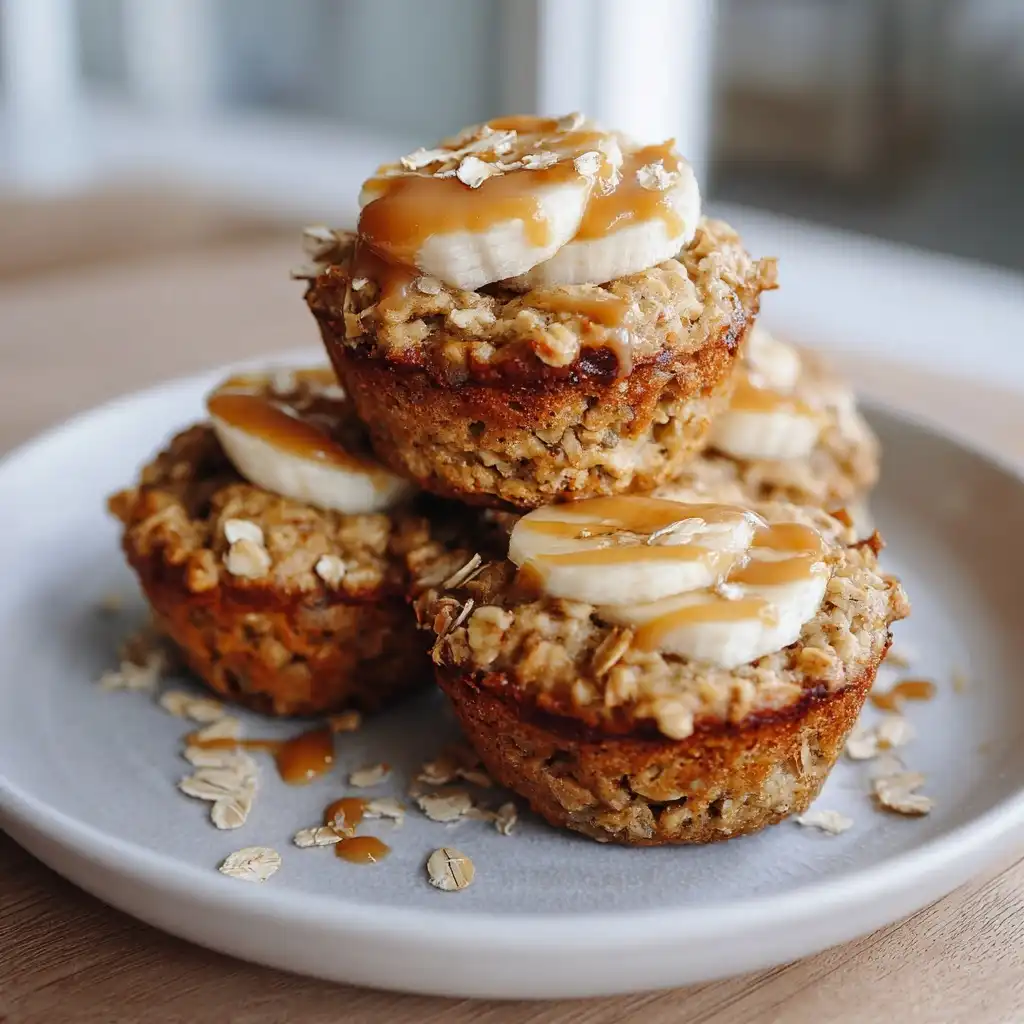
Welcome to the ultimate guide for Banana Oatmeal Breakfast Muffins — a wholesome, naturally sweetened, fiber-rich morning staple that bridges comfort food and nutritious fuel. These muffins are more than just a quick grab-and-go option; they’re a thoughtfully crafted fusion of pantry staples and nourishing ingredients designed to satisfy cravings while supporting sustained energy, digestive health, and mindful eating. Whether you’re a busy parent juggling school drop-offs, a remote worker seeking a brain-boosting snack, a fitness enthusiast prioritizing clean carbs and plant-based protein, or someone simply looking to reduce refined sugar without sacrificing flavor and texture, these muffins deliver on every front. With no artificial preservatives, minimal added sweeteners, and built-in versatility, they’re a foundational recipe worth mastering — and returning to, again and again.
The History
The origins of banana oatmeal muffins trace back to mid-20th-century American home kitchens, where resourceful bakers sought creative ways to rescue overripe bananas before they spoiled — a practice rooted in wartime frugality and post-war domestic ingenuity. Early iterations appeared in community cookbooks and women’s magazines like Good Housekeeping and Ladies’ Home Journal, often framed as “waste-not” recipes that transformed bruised fruit into tender, aromatic treats. Oats entered the scene shortly thereafter, gaining popularity during the 1970s natural foods movement as whole grains rose in esteem for their heart-healthy beta-glucan and satiating fiber profile. By the 1990s, health-conscious adaptations began replacing white flour with whole wheat or oat flour, swapping butter for applesauce or yogurt, and reducing granulated sugar in favor of mashed banana, maple syrup, or brown sugar. Today’s banana oatmeal muffin is a globally beloved evolution — embraced by registered dietitians, meal-prep enthusiasts, gluten-free advocates, and plant-based communities alike — standing at the intersection of nostalgia, nutrition science, and modern culinary adaptability.
Ingredients Breakdown
Each ingredient in this recipe serves a distinct functional and nutritional purpose — far beyond mere flavor contribution:
- Ripe Bananas (3 large, ~1½ cups mashed): Provide natural sweetness, moisture, potassium, vitamin B6, and resistant starch (especially when slightly under-ripe), acting as both binder and leavening catalyst when combined with baking soda. Their enzymatic activity also enhances browning and caramelization.
- Old-Fashioned Rolled Oats (1¾ cups): Deliver soluble fiber (beta-glucan) linked to cholesterol reduction and stable blood sugar response. They add hearty texture, gentle chew, and mild nuttiness. Avoid instant oats (too finely ground → gummy texture) or steel-cut oats (too coarse → gritty, under-baked centers).
- Whole Wheat Flour (¾ cup): Supplies B vitamins, iron, magnesium, and additional fiber. Its higher protein content supports structure, while its nutty depth complements banana beautifully. Can be substituted with white whole wheat flour for milder flavor or oat flour for 100% grain-free options (see Variations).
- Baking Soda (1 tsp) + Baking Powder (1 tsp): A dual-leavening system ensures optimal rise: baking soda reacts immediately with banana’s acidity for early lift and browning, while baking powder provides secondary, heat-activated lift for consistent dome formation and airy crumb.
- Ground Cinnamon (1½ tsp) & Nutmeg (¼ tsp): Warm spices not only enhance aroma and complexity but also offer anti-inflammatory polyphenols (e.g., cinnamaldehyde) and may support insulin sensitivity — synergistic with the muffins’ low-glycemic profile.
- Salt (½ tsp): Critical for balancing sweetness and amplifying all other flavors — even in small amounts, it prevents flatness and improves mouthfeel cohesion.
- Unsweetened Applesauce (⅓ cup): Adds moisture and binding power without added fat. Contains pectin, which aids structure and contributes trace antioxidants like quercetin. Opt for unsweetened to control sugar content precisely.
- Pure Maple Syrup (⅓ cup) or Raw Honey (for non-vegan): Provides nuanced sweetness, trace minerals (zinc, manganese), and humectant properties that keep muffins moist for days. Unlike granulated sugar, liquid sweeteners improve shelf life and tenderness.
- Large Eggs (2, room temperature): Act as emulsifiers, structural scaffolds, and protein sources. Egg whites provide lift; yolks enrich flavor, color, and moisture retention. For vegan versions, flax or chia “eggs” replicate binding effectively (see Variations).
- Vanilla Extract (1½ tsp, pure): Enhances perception of sweetness and rounds out the spice-banana profile with vanillin’s calming aromatic compounds.
- Optional Add-Ins: Chopped walnuts or pecans (omega-3s, crunch, satiety), ground flaxseed (fiber + lignans), dark chocolate chips (flavanol-rich antioxidants), or blueberries (anthocyanins + natural tartness to cut sweetness).
Step-by-Step Recipe
- Preheat & Prep: Position oven rack in the center position. Preheat oven to 350°F (175°C). Line a standard 12-cup muffin tin with parchment paper liners or generously grease with coconut oil or butter. Optional: lightly dust liners with oat flour to prevent sticking.
- Mash Bananas: In a large mixing bowl, use a fork or potato masher to thoroughly mash 3 ripe bananas until mostly smooth with small lumps remaining — do not over-mix into a watery puree, as texture affects crumb density.
- Wet Ingredients: To the mashed bananas, add applesauce, maple syrup (or honey), eggs, and vanilla. Whisk vigorously for 45–60 seconds until fully emulsified and slightly frothy — this incorporates air for lightness.
- Dry Ingredients: In a separate medium bowl, whisk together rolled oats, whole wheat flour, baking soda, baking powder, cinnamon, nutmeg, and salt. Ensure even distribution of leaveners and spices — sifting is optional but recommended if flour shows signs of clumping.
- Combine Gently: Pour dry mixture over wet mixture. Using a flexible silicone spatula, fold together with 12–15 slow, broad strokes — just until no dry streaks remain. Do not overmix: Overdevelopment of gluten leads to tough, dense, tunnelled muffins. It’s perfectly fine (and ideal) to see a few faint flour patches — residual mixing occurs during scooping and baking.
- Add Mix-Ins (Optional): If using nuts, seeds, or chocolate, gently fold in now — ½ cup total is ideal for even distribution without weighing down batter.
- Portion Evenly: Divide batter among 12 muffin cups using a ¼-cup ice cream scoop or measuring cup. Fill each liner ¾ full (~3.5 oz per muffin) for uniform baking and classic domed tops. Smooth tops lightly with damp fingers or spatula for even browning.
- Bake Strategically: Place tin in preheated oven. Bake for 18 minutes, then rotate tin front-to-back for even heat exposure. Continue baking 5–7 more minutes, or until a wooden toothpick inserted into the center of a center muffin comes out clean or with *moist* crumbs (not wet batter). Total bake time typically ranges 23–25 minutes — avoid overbaking, which dries out the delicate oat-banana crumb.
- Cool Completely: Remove tin from oven and let muffins rest in pan for exactly 5 minutes — this allows steam to redistribute and structure to set. Then transfer muffins to a wire cooling rack. Cool for at least 25–30 minutes before serving. Warm muffins are fragile; premature handling causes crumbling. Fully cooled muffins develop optimal texture and slice cleanly.
Tips
- Select Bananas Wisely: Use bananas with deep brown-speckled or nearly black skins — they’re at peak sweetness, softness, and amylase enzyme activity (which breaks down starches into simple sugars). Green or yellow bananas lack sufficient moisture and natural sugar for ideal results.
- Measure Oats Correctly: Spoon oats into measuring cup and level off — never pack or scoop directly from container, which compacts them and adds up to 20% excess, leading to dry, crumbly muffins.
- Room-Temperature Eggs: Cold eggs can cause batter to seize or create uneven emulsion. Let eggs sit in warm water for 5 minutes if forgotten.
- Don’t Skip the Rest: Allowing batter to rest 10–15 minutes before portioning hydrates the oats and flour, resulting in plumper, moister muffins with improved rise and reduced tunneling.
- Rotate That Pan: Most home ovens have hot spots. Rotating halfway ensures golden, evenly risen muffins — especially critical for convection ovens.
- Test Doneness Accurately: Insert toothpick in the *centermost* muffin — edge muffins bake faster and may mislead. If toothpick has glossy, wet batter, continue baking 2 minutes; if it has dry crumbs, they’re done. Moist crumbs = perfect.
- Cooling Is Non-Negotiable: Cutting into warm muffins releases trapped steam, collapsing structure and creating gummy texture. Patience yields tender, springy, sliceable results.
- Freeze Like a Pro: Once fully cooled, place muffins on a parchment-lined tray and freeze uncovered for 2 hours (flash freeze), then transfer to airtight freezer bags. They’ll keep for up to 3 months. Thaw at room temp for 1 hour or reheat frozen in a 325°F oven for 10–12 minutes.
- Revive Stale Muffins: Lightly wrap in damp paper towel and microwave for 15 seconds — steam restores softness instantly.
- Scale With Confidence: This recipe doubles seamlessly — use two tins or bake in batches. Tripling is possible but requires careful batter management to prevent overmixing fatigue.
Variations and Customizations
This base formula is remarkably adaptable — here are 12 tested, dietitian-approved variations to suit diverse needs and preferences:
- Gluten-Free: Replace whole wheat flour with certified GF oat flour (blend 1¼ cups rolled oats in blender until fine) + ¼ tsp xanthan gum. Ensure oats are labeled gluten-free (cross-contamination risk is real).
- Vegan: Substitute eggs with 2 flax “eggs” (2 tbsp ground flaxseed + 6 tbsp warm water, rested 10 mins), and use maple syrup (not honey). Add 1 tbsp almond milk if batter seems thick.
- Protein-Packed: Stir in 2 scoops unflavored or vanilla plant-based protein powder (pea/rice/hemp blend) + 2 extra tbsp oat milk to compensate for absorption. Reduce oats by ¼ cup to maintain ratio.
- Lower-Sugar / Diabetic-Friendly: Omit maple syrup entirely — rely solely on 4 very ripe bananas + 1 tbsp coconut sugar. Add 1 tsp lemon juice to brighten and balance perceived sweetness.
- Blueberry Burst: Fold in 1 cup fresh or frozen (do not thaw) wild blueberries. Toss berries in 1 tsp flour first to prevent sinking.
- Apple-Cinnamon Swirl: Replace ½ cup mashed banana with ½ cup unsweetened shredded apple. Swirl in 2 tbsp cinnamon-apple butter before baking.
- Chocolate Peanut Butter: Add ⅓ cup natural creamy peanut butter to wet mix; fold in ⅔ cup mini dark chocolate chips and 2 tbsp chopped roasted peanuts.
- Pumpkin Spice Edition: Replace ½ cup mashed banana with ½ cup canned pumpkin purée; increase cinnamon to 2 tsp, add ½ tsp ginger, ¼ tsp cloves, and 1 tbsp molasses.
- Savory Herb & Cheddar: Omit cinnamon/nutmeg/maple syrup. Add ½ cup sharp cheddar, 2 tbsp chopped fresh chives, 1 tsp garlic powder, and ¼ tsp black pepper. Serve with avocado slices.
- Overnight Oat Muffin Cups: Prepare batter the night before, refrigerate covered. Bake straight from fridge — add 2–3 minutes to bake time.
- Mini Muffins: Portion into 24-mini muffin cups. Bake at 350°F for 11–13 minutes. Perfect for kids’ lunches or portion-controlled snacking.
- No-Bake Energy Bites Version: Skip baking entirely: chill batter 1 hour, roll into 1-inch balls, coat in toasted coconut or cocoa powder, and refrigerate 2+ hours to set.
Health Considerations and Nutritional Value
A single standard-sized Banana Oatmeal Breakfast Muffin (1/12th of the full recipe) delivers approximately:
- Calories: 185–205 kcal (varies slightly with add-ins)
- Carbohydrates: 32–35g (of which 4–5g dietary fiber and 12–14g naturally occurring sugars — zero added sugars if omitting maple syrup)
- Protein: 5–6g (enhanced with eggs, oats, and optional nuts/seeds)
- Fat: 4–5g (predominantly heart-healthy monounsaturated and omega-3 fats from nuts or banana skin compounds)
- Potassium: ~220mg (supports electrolyte balance and blood pressure regulation)
- Magnesium & Iron: ~20mg and ~1.2mg respectively — vital for energy metabolism and oxygen transport
- Antioxidants: Rich in dopamine (from banana), ferulic acid (oats), and polyphenols (cinnamon, nuts) — collectively combat oxidative stress and inflammation.
Key Health Highlights:
- Glycemic Response: Low-to-moderate glycemic load (~8–10) thanks to high fiber, healthy fats, and protein — ideal for sustained energy and blood sugar stability, especially beneficial for prediabetics or those managing PCOS.
- Digestive Support: Soluble fiber from oats forms a gel in the gut, slowing digestion, promoting satiety, feeding beneficial microbiota (prebiotic effect), and supporting regularity.
- Heart Health: Beta-glucan reduces LDL cholesterol absorption; potassium counters sodium effects; cinnamon may improve endothelial function.
- Allergen Notes: Naturally nut-free and dairy-free (if using plant-based options); easily adapted for egg-free and gluten-free diets. Always verify labels on oats, baking powder, and add-ins for allergen safety.
- For Children: Excellent introduction to whole grains and fruit-based sweetness. Omit optional nuts for under-4s; consider mini muffins for easy handling and portion control.
- For Seniors: Soft texture, potassium support, and B-vitamin richness aid muscle maintenance, cognitive function, and fluid balance.
Ingredients
- 3 very ripe bananas (about 1½ cups mashed)
- ⅓ cup unsweetened applesauce
- ⅓ cup pure maple syrup (or raw honey for non-vegan)
- 2 large eggs, room temperature
- 1½ tsp pure vanilla extract
- 1¾ cups old-fashioned rolled oats (certified gluten-free if needed)
- ¾ cup whole wheat flour (or white whole wheat flour)
- 1 tsp baking soda
- 1 tsp baking powder
- 1½ tsp ground cinnamon
- ¼ tsp freshly grated nutmeg
- ½ tsp fine sea salt
- Optional Add-Ins (choose one or combine up to ¾ cup total): ½ cup chopped walnuts or pecans, ¼ cup ground flaxseed, ⅓ cup dark chocolate chips (70%+ cacao), 1 cup fresh or frozen blueberries (tossed in 1 tsp flour)
Directions
- Preheat oven to 350°F (175°C). Line a 12-cup muffin tin with parchment liners or grease well.
- In a large bowl, mash bananas with a fork until mostly smooth. Whisk in applesauce, maple syrup, eggs, and vanilla until fully combined and slightly frothy (~1 minute).
- Pour dry ingredients into wet ingredients. Gently fold with a spatula until *just* combined — about 12–15 strokes. Do not overmix. If adding mix-ins, fold in now.
- Let batter rest 10 minutes (optional but highly recommended for hydration and improved texture).
- Divide batter evenly among 12 muffin cups (fill to ¾ full). Smooth tops.
- Bake for 18 minutes, rotate tin, then bake 5–7 more minutes until toothpick inserted in center comes out clean or with moist crumbs.
- Cool in pan for 5 minutes, then transfer to wire rack. Cool completely before storing or serving (minimum 30 minutes).
FAQ
- Can I use quick oats instead of old-fashioned?
- No — quick oats absorb liquid too rapidly and break down into a pasty, gluey texture. Stick with old-fashioned (rolled) oats for ideal chew and structure. Steel-cut oats are too hard and won’t cook through properly in muffin time.
- Why did my muffins sink in the middle?
- Common causes: overmixing batter (develops too much gluten), underbaking (check with toothpick in center), opening oven door too early (causes thermal shock), or expired leaveners (test baking soda in vinegar — should fizz vigorously).
- How long do they stay fresh?
- At room temperature in an airtight container: 2 days. Refrigerated: up to 1 week. Frozen: up to 3 months (best quality within 2 months). Always store fully cooled to prevent condensation and sogginess.
- Can I make them ahead for the week?
- Absolutely! Bake Sunday evening, cool completely, then store in fridge or freezer. Reheat individual muffins in toaster oven (3 minutes at 325°F) or microwave (20 seconds wrapped in damp paper towel) for best texture.
- Are these suitable for weight loss?
- Yes — when portioned mindfully (1 muffin = ~200 kcal), they provide balanced macros, high fiber, and low added sugar — promoting satiety and reducing cravings. Pair with Greek yogurt or a hard-boiled egg for added protein at breakfast.
- Can I substitute coconut sugar for maple syrup?
- You can, but expect drier, denser muffins — coconut sugar lacks the moisture and binding power of liquid sweeteners. If substituting, add 1 extra tbsp applesauce or mashed banana to compensate.
- My batter seems too thick/thin — what do I do?
- Banana moisture varies wildly. If too thick: add 1 tbsp oat milk or applesauce. If too thin: add 1–2 tbsp oat flour or whole wheat flour. Adjust gradually — 1 tsp at a time.
- Can I bake these in a loaf pan instead?
- Yes! Pour into a greased 8×4-inch loaf pan. Bake at 350°F for 50–60 minutes, tenting with foil at 40 minutes to prevent over-browning. Test with toothpick in center.
- What’s the best way to reheat frozen muffins?
- For crisp exterior and soft interior: unwrap, place on parchment, and bake at 325°F for 10–12 minutes. For speed: microwave frozen muffin on 50% power for 45 seconds, then 30 seconds more if needed.
- Can I add protein powder?
- Yes — but choose unflavored or vanilla isolate (not concentrate, which may cause grittiness). Start with 1 scoop (25g) and add 2 tbsp liquid. Reduce oats by ¼ cup to maintain consistency.
Summary
Banana Oatmeal Breakfast Muffins are a nutritionally dense, naturally sweetened, and endlessly customizable morning essential — combining the comforting familiarity of banana bread with the hearty fiber and staying power of whole-grain oats.
With minimal equipment, pantry-friendly ingredients, and straightforward technique, they empower home cooks of all levels to create wholesome, satisfying, and delicious fuel that supports energy, digestion, heart health, and mindful eating — all before the workday begins.