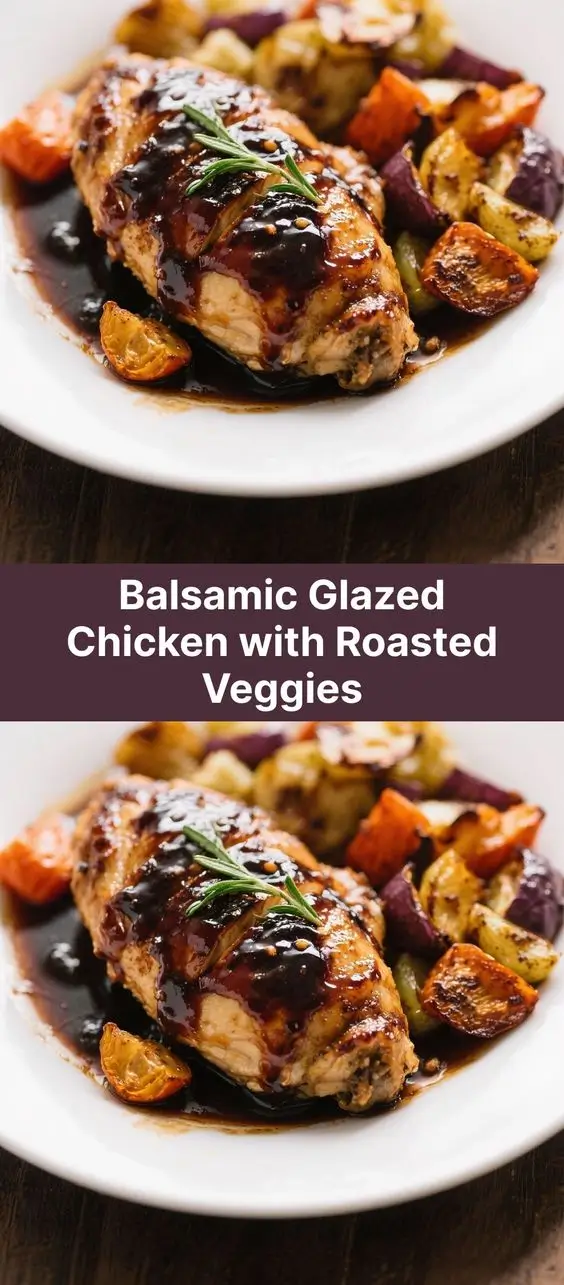
Balsamic Glazed Chicken with Roasted Veggies
Introduction
Balsamic Glazed Chicken with Roasted Veggies is a wholesome, flavorful dish that combines tender, juicy chicken breasts with a rich, tangy balsamic reduction and a medley of vibrant, oven-roasted vegetables. This one-pan meal is not only visually stunning but also nutritionally balanced, making it perfect for weeknight dinners, weekend family meals, or even impressing guests at a dinner party. The natural sweetness of caramelized vegetables pairs beautifully with the bold acidity of balsamic vinegar, creating a symphony of flavors that dance on your palate. With minimal prep time and hands-off cooking, this recipe is ideal for both novice cooks and seasoned home chefs looking for a healthy yet indulgent meal option.
The History
The roots of balsamic glaze trace back to Italy, particularly the Modena region, where traditional aceto balsamico has been crafted for centuries. Originally made from reduced grape must (crushed grape juice), aged in wooden barrels for years, authentic balsamic vinegar was a prized condiment among Italian nobility. Over time, modern adaptations emerged—like balsamic glaze—which involve reducing store-bought balsamic vinegar with sweeteners such as honey or brown sugar to create a syrupy consistency ideal for drizzling over meats and vegetables.
Roasting vegetables, on the other hand, is an ancient cooking method used across cultures to enhance flavor through caramelization. When combined with protein like chicken, roasted vegetable dishes became staples in Mediterranean cuisine, known for their heart-healthy fats, fiber-rich produce, and lean proteins. Balsamic Glazed Chicken with Roasted Veggies represents a fusion of these culinary traditions—bringing together Italian flavor profiles with contemporary American comfort food sensibilities. Today, it’s celebrated globally as a go-to recipe for clean eating, meal prepping, and balanced diets.
Ingredients Breakdown
For the Balsamic Glazed Chicken:
- 4 boneless, skinless chicken breasts – Lean and high in protein, chicken breasts are perfect for absorbing marinades and glazes without becoming greasy.
- ½ cup balsamic vinegar – Provides the signature tartness; choose a good quality brand for better depth of flavor.
- ¼ cup olive oil – Helps carry fat-soluble flavors and keeps the chicken moist during cooking.
- 3 tablespoons honey – Balances the acidity of the vinegar and aids in caramelizing the glaze.
- 3 cloves garlic, minced – Adds aromatic complexity and savory notes.
- 1 teaspoon Dijon mustard – Enhances emulsification and adds a subtle sharpness to the glaze.
- 1 teaspoon dried oregano – Earthy herb that complements both chicken and vegetables.
- Salt and freshly ground black pepper – Essential seasonings to bring out all other flavors.
For the Roasted Vegetables:
- 1 pound baby potatoes, halved – Waxy varieties like Yukon Gold hold their shape well when roasted.
- 1 red bell pepper, sliced – Sweet and colorful, adds vitamin C and texture.
- 1 yellow bell pepper, sliced – Complements red peppers in taste and visual appeal.
- 1 zucchini, sliced into half-moons – Mild in flavor, becomes tender-crisp when roasted.
- 1 pint cherry tomatoes – Burst with juiciness and natural sugars when heated.
- 1 red onion, cut into wedges – Brings a mild heat and beautiful color contrast.
- 3 tablespoons olive oil – Ensures even browning and prevents sticking.
- 1 tablespoon fresh rosemary, chopped (or 1 tsp dried) – Woody herb that enhances earthiness.
- 1 tablespoon fresh thyme leaves (or 1 tsp dried) – Delicate floral note that pairs well with garlic and balsamic.
- Salt and pepper to taste
Optional Garnishes:
- Fresh basil or parsley, chopped
- Shaved Parmesan cheese
- Toasted pine nuts or slivered almonds
- Extra drizzle of balsamic glaze or reduction
Step-by-Step Recipe
- Preheat Oven: Begin by preheating your oven to 400°F (200°C). This ensures consistent roasting temperatures for both chicken and veggies.
- Prepare the Vegetables: In a large mixing bowl, combine baby potatoes, bell peppers, zucchini, cherry tomatoes, and red onion. Drizzle with 3 tablespoons of olive oil, then sprinkle with rosemary, thyme, salt, and pepper. Toss thoroughly until all vegetables are evenly coated.
- Arrange on Baking Sheet: Spread the vegetable mixture onto a large rimmed baking sheet lined with parchment paper or lightly greased foil. Make sure they are in a single layer to allow proper airflow and even roasting. If needed, use two sheets to avoid overcrowding.
- Start Roasting Veggies: Place the tray in the preheated oven and roast for 20 minutes. This initial roasting helps begin the caramelization process before adding the chicken.
- Make the Balsamic Marinade/Glaze: While the vegetables roast, prepare the glaze. In a small saucepan over medium heat, combine balsamic vinegar, honey, olive oil, minced garlic, Dijon mustard, oregano, salt, and pepper. Stir well and bring to a gentle simmer. Reduce heat and let it cook for 6–8 minutes, stirring occasionally, until the mixture thickens slightly and coats the back of a spoon. Remove from heat and set aside—one-third for marinating, two-thirds for basting later.
- Marinate the Chicken: Pat the chicken breasts dry with paper towels. Place them in a shallow dish or resealable bag and pour about one-third of the warm balsamic glaze over them. Let them marinate for at least 15–20 minutes at room temperature (or up to 2 hours in the fridge for deeper flavor).
- Add Chicken to Pan: After the vegetables have roasted for 20 minutes, remove the pan from the oven. Push the veggies to the sides or create spaces in the center to place the marinated chicken breasts. Arrange them skin-side up (if using skin-on) or presentation side up.
- Baste and Bake: Spoon some of the remaining glaze over each chicken breast. Return the entire pan to the oven and continue baking for 20–25 minutes, or until the internal temperature of the chicken reaches 165°F (74°C) when measured with a meat thermometer.
- Flip and Glaze Again (Optional): For extra flavor and browning, flip the chicken halfway through cooking and brush again with more glaze. Be cautious not to burn the glaze—honey can caramelize quickly at high heat.
- Final Broil (Optional): For a golden-brown, slightly crispy top, switch the oven to broil for the last 2–3 minutes. Watch closely to prevent burning.
- Rest the Chicken: Once cooked, remove the pan from the oven. Tent the chicken loosely with foil and let it rest for 5–7 minutes. This allows juices to redistribute, keeping the meat moist.
- Serve: Plate the chicken alongside the roasted vegetables. Drizzle with additional warm balsamic glaze just before serving. Garnish with fresh herbs, shaved Parmesan, or toasted nuts if desired.
Tips
- Uniform Cutting: Cut vegetables into similar sizes to ensure even cooking—nobody wants mushy peppers next to undercooked potatoes!
- Don’t Crowd the Pan: Overlapping ingredients steam instead of roast. Use two pans if necessary for optimal browning.
- Use a Meat Thermometer: Prevents undercooking or drying out the chicken. Insert into the thickest part without touching bone.
- Reduce Glaze Ahead: Prepare the balsamic glaze up to 3 days in advance and store in the fridge. Gently reheat before using.
- Parchment Paper Is Key: Prevents sticking and makes cleanup effortless. Avoid wax paper—it’s not heat-safe.
- Let It Rest: Skipping the resting phase leads to loss of moisture when slicing.
- Double the Glaze: It’s so delicious you might want extra for dipping or drizzling.
- Room Temperature Chicken: Letting chicken sit out for 15–20 minutes before cooking promotes even cooking.
Variations and Customizations
This recipe is highly adaptable based on dietary needs, preferences, and seasonal availability:
- Protein Swaps: Replace chicken with pork tenderloin, salmon fillets, tofu steaks, or tempeh for vegetarian/vegan options.
- Vegetable Variations: Try broccoli florets, Brussels sprouts, carrots, sweet potatoes, eggplant, or asparagus depending on what’s in season.
- Gluten-Free: Naturally gluten-free—just confirm that your Dijon mustard and any store-bought glaze are certified GF.
- Keto/Low-Carb Version: Swap potatoes for cauliflower, radishes, or turnips. Use monk fruit syrup instead of honey.
- Dairy-Free: Already dairy-free unless garnishing with cheese—simply omit or substitute with nutritional yeast.
- Spicy Kick: Add red pepper flakes to the glaze or toss veggies with a pinch of cayenne for heat.
- Herb Twists: Substitute rosemary and thyme with sage, tarragon, or herbes de Provence for different flavor profiles.
- Citrus Infusion: Add orange zest or a splash of lemon juice to the glaze for brightness.
- Sheet Pan Only Method: Skip stovetop glaze reduction—mix all glaze ingredients and pour over raw chicken, roasting everything together (may result in thinner glaze).
Health Considerations and Nutritional Value
Balsamic Glazed Chicken with Roasted Veggies is a nutritionally robust meal offering a balance of macronutrients and micronutrients essential for overall wellness.
Nutritional Highlights (per serving, approx. 1 chicken breast + 1.5 cups veggies):
- Calories: ~420 kcal
- Protein: ~35g – Supports muscle repair, satiety, and metabolic function.
- Fat: ~18g – Mostly unsaturated fats from olive oil, beneficial for heart health.
- Carbohydrates: ~30g – Primarily complex carbs and fiber from vegetables.
- Dietary Fiber: ~6g – Promotes digestive health and stabilizes blood sugar.
- Sugar: ~15g – Naturally occurring from honey, tomatoes, and bell peppers (not added refined sugar).
Vitamins & Minerals:
- Vitamin C: From bell peppers and tomatoes—boosts immunity and collagen production.
- Vitamin A: Found in red/yellow peppers—supports eye and skin health.
- Potassium: Abundant in potatoes and zucchini—helps regulate blood pressure.
- Iron & B Vitamins: Present in chicken—essential for energy metabolism and red blood cell formation.
- Antioxidants: Balsamic vinegar contains polyphenols that may reduce oxidative stress and inflammation.
Health Benefits:
- Heart-Healthy: Olive oil and lean protein support cardiovascular wellness.
- Diabetes-Friendly (when modified): Can be adapted with low-glycemic veggies and sugar substitutes.
- Weight Management: High protein and fiber content promote fullness and reduce snacking.
- Anti-Inflammatory: Herbs, garlic, and balsamic vinegar contribute compounds linked to reduced chronic inflammation.
Considerations:
- Sodium Content: Monitor salt usage, especially if managing hypertension. Use low-sodium seasoning blends if needed.
- Sugar in Glaze: Honey adds natural sugar—moderate intake if limiting sugars. Alternatives include maple syrup or date paste.
- Oxalate Content: Spinach or Swiss chard additions may not be suitable for those prone to kidney stones.
Ingredients
Balsamic Glazed Chicken:
4 boneless, skinless chicken breasts
½ cup balsamic vinegar
¼ cup olive oil
3 tablespoons honey
3 cloves garlic, minced
1 teaspoon Dijon mustard
1 teaspoon dried oregano
Salt and freshly ground black pepper to taste
Roasted Vegetables:
1 lb baby potatoes, halved
1 red bell pepper, sliced
1 yellow bell pepper, sliced
1 medium zucchini, sliced into half-moons
1 pint cherry tomatoes
1 red onion, cut into wedges
3 tbsp olive oil
1 tbsp fresh rosemary, chopped
1 tbsp fresh thyme leaves
Salt and pepper to taste
Garnishes (optional):
Fresh parsley or basil
Shaved Parmesan cheese
Toasted pine nuts
Extra balsamic glaze drizzle
Directions
- Preheat oven to 400°F (200°C). Line a large baking sheet with parchment paper.
- In a large bowl, toss all vegetables with olive oil, rosemary, thyme, salt, and pepper until evenly coated.
- Spread vegetables in a single layer on the prepared baking sheet. Roast for 20 minutes.
- While veggies roast, make the glaze: In a small saucepan, combine balsamic vinegar, honey, olive oil, garlic, Dijon mustard, oregano, salt, and pepper. Simmer over medium heat for 6–8 minutes until slightly thickened. Set aside.
- Pour one-third of the glaze into a dish and add chicken breasts. Marinate for 15–20 minutes.
- After 20 minutes, remove pan from oven. Push veggies aside and place chicken in the center.
- Baste chicken with remaining glaze and return to oven.
- Bake for 20–25 minutes, basting once halfway, until chicken reaches 165°F internally.
- Optional: Broil for 2–3 minutes for a caramelized finish.
- Let chicken rest for 5–7 minutes. Serve over roasted vegetables.
- Drizzle with extra glaze and garnish as desired.
FAQ
Can I make this ahead of time?
Yes! Marinate the chicken and chop vegetables the night before. Store separately in the fridge. Assemble and bake when ready.
Can I freeze leftovers?
Absolutely. Cooked chicken and roasted veggies can be frozen in airtight containers for up to 3 months. Reheat in oven or microwave.
Why did my glaze burn?
Honey and sugar caramelize quickly. If your oven runs hot or you broil too long, the glaze may darken excessively. Keep an eye during final cooking stages.
Can I use frozen vegetables?
Not recommended. Frozen veggies release excess moisture, leading to steaming rather than roasting. Always use fresh for best texture.
Is balsamic vinegar healthy?
In moderation, yes. It contains antioxidants and may help lower blood sugar spikes due to its acetic acid content. Choose brands without added caramel coloring or preservatives.
How do I store leftovers?
Store in an airtight container in the refrigerator for up to 4 days. Reheat gently in the oven or skillet to preserve texture.
Can I grill instead of bake?
Definitely! Grill the marinated chicken over medium heat, basting with glaze. Roast the veggies separately in the oven or on a grill basket.
What sides go well with this dish?
Serve with quinoa, wild rice, couscous, or crusty bread to soak up the delicious glaze. A simple arugula salad with lemon vinaigrette also pairs nicely.
Summary
Balsamic Glazed Chicken with Roasted Veggies is a nutritious, flavorful one-pan meal that brings together tender chicken, a sweet-tart glaze, and caramelized seasonal vegetables.
Easy to customize, rich in protein and antioxidants, it’s perfect for healthy weeknight dinners, meal prep, or elegant gatherings.