Introduction
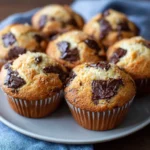
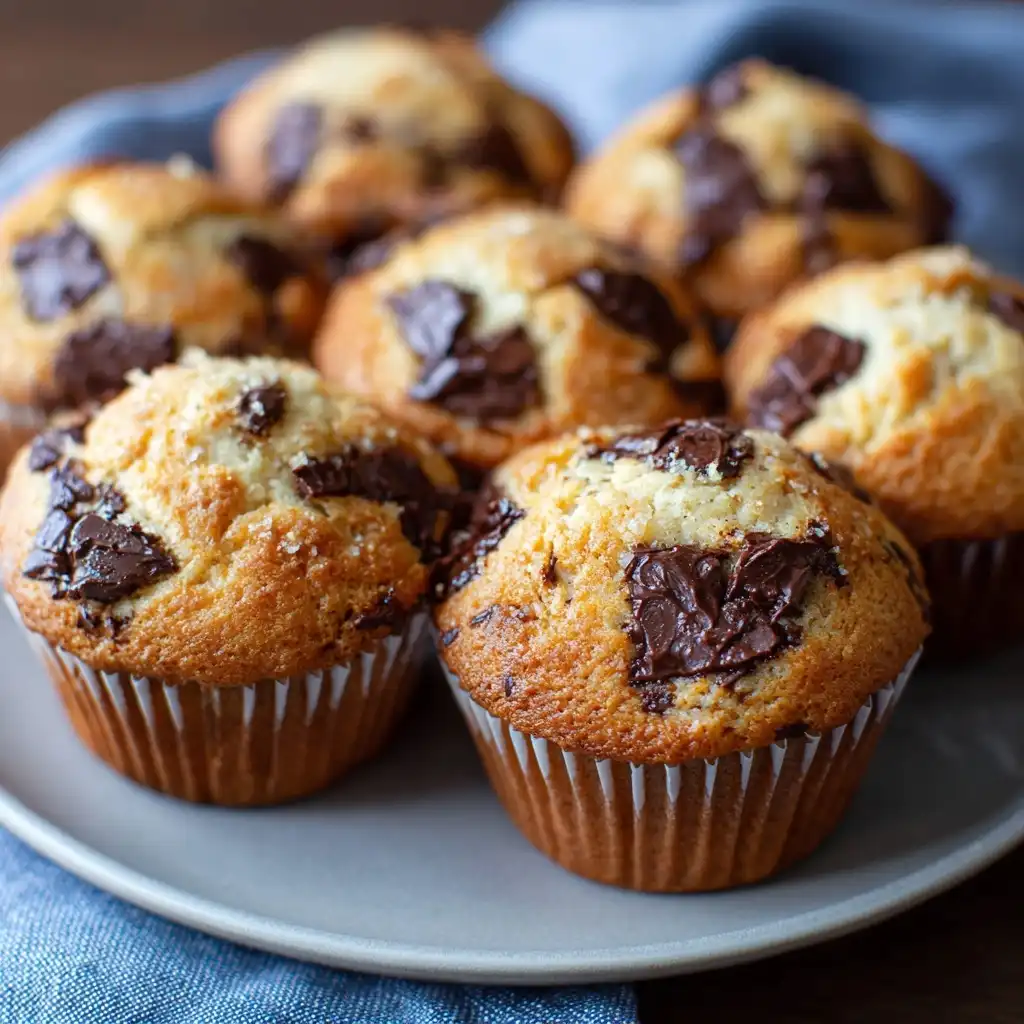
Welcome to the ultimate guide for crafting Bakery-Style Chocolate Chunk Muffins — the kind that boast a towering, bakery-perfect dome, a tender crumb with just the right amount of spring, and generous, melty pockets of rich, uneven chocolate chunks that ooze with every bite. These aren’t your average muffins. They’re engineered for texture contrast: crisp, caramelized edges; a moist, buttery interior studded with real chocolate (not chips); and a subtle golden-brown sugar crust that crackles delicately under the fork. Whether you’re a seasoned home baker or a curious beginner aiming to replicate that unmistakable artisanal bakery experience at home, this comprehensive guide walks you through every nuance — from the science behind the high-rise dome to the exact moment to pull them from the oven for maximum moisture retention.
The History
The humble muffin has undergone a remarkable evolution — from its origins as a British “muffin” (a yeasted, griddle-cooked flatbread) to the American quick-bread version we know today. The modern American muffin rose to prominence in the early 20th century, buoyed by the widespread availability of baking powder and standardized home ovens. However, it wasn’t until the 1980s and ’90s — during the artisanal bakery renaissance — that the chocolate chunk muffin truly came into its own. Unlike uniform chocolate chips, which were designed to hold shape during baking, bakers began deliberately using chopped chocolate bars (often 60–72% cacao dark or high-cocoa milk chocolate) to create irregular, thick shards that melt into luxurious pools and streaks. This “chunk” philosophy — prioritizing mouthfeel, visual appeal, and intense bursts of flavor — became a hallmark of premium cafés like Bouchon Bakery, Levain Bakery (famous for their giant cookies, but influential in chunk-centric baking), and local favorites across Portland, Austin, and Brooklyn. Today’s bakery-style muffin reflects a thoughtful return to ingredient integrity, slower mixing methods, and temperature-controlled batter prep — all in service of that iconic domed crown and café-worthy presence.
Ingredients Breakdown
Every ingredient in this recipe is chosen not just for function, but for sensory impact and structural synergy:
- All-Purpose Flour (unbleached, 360g): Provides gluten structure without toughness. We use unbleached for richer flavor and better browning. A small portion (30g) is reserved for coating chocolate chunks — critical for preventing sinking.
- Granulated Sugar (200g): Adds sweetness, aids in crust formation, and contributes to tenderness via sugar’s interference with gluten development.
- Packed Light Brown Sugar (120g): Brings molasses depth, moisture retention, and enhances caramelization — especially vital for that glossy, slightly sticky top crust.
- Baking Powder (2 tsp) + Baking Soda (½ tsp): A dual-leavening system. Baking powder provides the primary lift, while baking soda neutralizes acidity (from brown sugar and buttermilk) and boosts browning and spread control.
- Fine Sea Salt (1¼ tsp): Enhances chocolate flavor, balances sweetness, and strengthens gluten just enough for optimal rise without density.
- Large Eggs (2, room temperature): Emulsify fat and liquid, add structure, and contribute to lift and richness. Room temperature ensures even incorporation and prevents premature fat solidification.
- Full-Fat Sour Cream (180g) + Whole Buttermilk (120g): The dynamic duo of dairy. Sour cream adds fat, tang, and tenderness; buttermilk delivers acidity (activating leavener), moisture, and subtle tang. Together, they yield an ultra-moist, velvety crumb with exceptional shelf life.
- Unsalted Butter (115g), melted & cooled to 105–110°F (40–43°C): Not just fat — it’s flavor, tenderness, and steam generator. Melting (not clarifying) preserves milk solids for browning; precise cooling prevents cooking eggs or seizing chocolate.
- Vanilla Extract (2 tsp, pure, Madagascar bourbon): Deepens aroma, rounds out bitterness, and harmonizes sweet and bitter notes.
- Chocolate Chunks (340g total): The star. Use *two types*: 225g of high-quality 64% dark chocolate (e.g., Valrhona Guanaja or Ghirardelli Intense Dark), finely chopped into ¼”–⅜” shards, and 115g of 40–45% milk chocolate (e.g., Callebaut Milk 45 or Scharffen Berger Milk), coarsely chopped into ½”–¾” slabs. This dual-chocolate strategy creates layered complexity — deep roast notes from dark, creamy sweetness from milk — plus varied melt profiles for textural interest.
Step-by-Step Recipe
- Prep & Preheat: Position oven rack in the lower third. Preheat oven to 425°F (220°C). Line a standard 12-cup muffin tin with extra-thick parchment liners (or grease + flour if preferred). Let all wet ingredients reach room temperature (68–72°F).
- Coat the Chocolate: In a medium bowl, toss the finely chopped dark chocolate with 15g of the reserved flour until evenly dusted. Set aside. Repeat with milk chocolate and remaining 15g flour. This step is non-negotiable — it prevents sinking and encourages even distribution.
- Dry Whisk: In a large bowl, whisk together remaining flour (330g), granulated sugar, brown sugar, baking powder, baking soda, and salt until fully homogenous and aerated (≈60 seconds). Sift once for insurance — no lumps, no clumps.
- Wet Mix: In a separate medium bowl, whisk eggs until slightly frothy (≈30 sec). Whisk in sour cream, buttermilk, melted butter (verify temp with instant-read thermometer), and vanilla until smooth and emulsified. No streaks — but do not overmix.
- The Muffin Method (Low & Slow): Pour wet mixture into dry. Using a flexible silicone spatula, fold gently in a figure-eight motion — exactly 12 strokes. Stop when just a few dry streaks remain. Overmixing = tunnels and toughness. This is where bakery texture begins.
- Chocolate Fold-In: Add both floured chocolate batches. Fold 8 more times, rotating bowl between folds, until just incorporated — you’ll see visible chocolate shards and slight marbling. Batter will be thick, glossy, and scoopable — like soft-serve ice cream.
- Rest & Chill (Crucial!): Cover bowl tightly and refrigerate batter for 30 minutes minimum, up to 1 hour. This hydrates flour, relaxes gluten, chills butter for better oven spring, and firms batter for higher domes.
- Portion & Top: Remove batter. Scoop 6 oz (170g) per muffin using a #16 disher (or ⅔ cup measure). Fill each liner to the very brim — this ensures dramatic doming. Sprinkle tops generously with coarse turbinado sugar (1 tsp per muffin) and a few extra dark chocolate shards.
- Bake High, Then Lower: Place pan in preheated oven. Bake at 425°F for 5 minutes — this rapid initial heat sets the exterior and triggers explosive oven spring. Without opening the door, reduce heat to 350°F (175°C) and continue baking for 18–21 minutes, rotating pan halfway. Muffins are done when deeply golden, tops spring back lightly, and a skewer inserted *off-center* (not in a chocolate pool) comes out with just a few moist crumbs.
- Cool Strategically: Let muffins cool in the pan on a wire rack for 12 minutes exactly. This allows internal steam to redistribute and structure to set. Then carefully lift each muffin by its liner and transfer to rack to cool completely — at least 45 minutes before slicing. Cutting too soon releases steam and collapses texture.
Tips
- Scale, Don’t Spoon: Flour must be weighed. Spoon-and-level yields inconsistent hydration and dense muffins. If using cups, fluff flour first, spoon gently, then level — but weight is strongly advised.
- Butter Temperature Is Everything: Too hot (>115°F) = scrambled eggs. Too cold (<95°F) = greasy, separated batter. Use an instant-read thermometer — it’s worth it.
- No Substitutions for Sour Cream + Buttermilk: Yogurt is too acidic and thin; heavy cream lacks acidity; milk alone won’t activate leaveners properly. These two work symbiotically.
- Chill Time Cannot Be Rushed: Skipping the rest leads to flatter, paler, less tender muffins. For make-ahead, refrigerate batter up to 24 hours — bring to cool room temp (60°F) before portioning.
- Fill to the Rim — Seriously: Underfilling sacrifices height and crust development. Use a scale or large ice cream scoop for consistency.
- Turbinado Sugar Is Non-Negotiable for Crunch: It doesn’t dissolve fully, creating a shattery, caramelized top layer that mimics bakery patina.
- Rotate & Monitor: Ovens vary. At 18 minutes, start checking. Carryover cooking adds 2–3 minutes off-heat — err on the side of slight underbake.
- Freezing Works Brilliantly: Cool completely, wrap individually in parchment + foil, freeze up to 3 months. Reheat from frozen at 325°F for 12–15 minutes — they’ll taste freshly baked.
Variations and Customizations
This foundational recipe is endlessly adaptable — without sacrificing its bakery DNA:
- Double Chocolate: Replace 30g of flour with unsweetened cocoa powder (Dutch-process preferred). Add 1 tsp espresso powder to enhance chocolate depth.
- Nutty Crunch: Fold in 100g toasted walnuts or pecans (coarsely chopped) with chocolate. Toasting is essential for flavor and crunch longevity.
- Sea Salt & Caramel Swirl: Before portioning, warm 120g thick caramel sauce (e.g., Smucker’s Gooey or homemade) until fluid. Drizzle 1 tbsp into each liner, swirl gently with a toothpick, then fill with batter. Finish with flaky sea salt post-bake.
- Orange-Zested Dark Chocolate: Add 2 tbsp finely grated navel orange zest to dry ingredients. Pair with 70%+ dark chocolate for bright, complex contrast.
- Gluten-Free Adaptation: Substitute 360g King Arthur GF Measure-for-Measure flour + 1 tsp xanthan gum. Increase buttermilk by 15g and chill batter 90 minutes — GF batters benefit from extra hydration and relaxation.
- Vegan Version: Use flax eggs (2 tbsp ground flax + 5 tbsp water, rested 10 min), vegan butter (Miyoko’s or Country Crock Plant Butter), full-fat coconut yogurt (for sour cream), and almond buttermilk (1 tsp apple cider vinegar + 120ml unsweetened almond milk). Increase baking powder to 2¼ tsp.
- Jumbo Bakery Style: Use a 6-cup Texas muffin pan. Portion 10 oz (285g) per cup. Bake at 425°F for 6 min → 350°F for 25–28 min. Rest 15 min in pan.
- Mini Muffins: Portion 1.5 oz (42g) into mini tin. Bake at 425°F for 3 min → 350°F for 9–11 min. Cool 5 min in pan.
Health Considerations and Nutritional Value
While these muffins are undeniably indulgent, thoughtful formulation enhances their nutritional profile without compromising authenticity:
- Reduced Refined Sugar: At 320g total sugars for 12 servings, that’s ≈27g per muffin — significantly less than commercial bakery versions (often 35–45g), thanks to balanced brown/granulated ratio and no added corn syrup.
- Real Ingredients, No Additives: Zero preservatives, artificial flavors, or emulsifiers. Chocolate is 64%+ cacao — delivering flavanols linked to cardiovascular support when consumed regularly in moderation.
- Protein & Fat Profile: Each muffin contains ≈5g protein (eggs, dairy, chocolate) and ≈12g fat — predominantly unsaturated from cocoa butter and dairy fats, supporting satiety and nutrient absorption.
- Fiber Boost Option: Replace 30g flour with toasted oat flour or golden flaxseed meal — adds soluble fiber and nutty depth without altering texture.
- Glycemic Considerations: The combination of fat, acid (buttermilk), and fiber slows glucose absorption. Pairing with Greek yogurt or a hard-boiled egg makes a balanced breakfast.
- Allergen Notes: Contains dairy, eggs, wheat, soy (in most chocolate), and tree nuts (if using variations). Always verify chocolate labels for allergen statements.
- Mindful Enjoyment: These are treats — not daily staples. But their whole-food foundation, absence of hydrogenated oils, and superior ingredient quality make them a far more nourishing choice than highly processed alternatives.
Ingredients
- 360g (3 cups + 2 tbsp) unbleached all-purpose flour, divided
- 200g (1 cup) granulated sugar
- 120g (½ cup packed) light brown sugar
- 2 tsp aluminum-free baking powder
- ½ tsp baking soda
- 1¼ tsp fine sea salt
- 2 large eggs (100g), room temperature
- 180g (¾ cup) full-fat sour cream, room temperature
- 120g (½ cup) whole buttermilk, room temperature
- 115g (½ cup) unsalted butter, melted and cooled to 105–110°F
- 2 tsp pure vanilla extract
- 225g high-quality 64% dark chocolate, finely chopped into ¼”–⅜” shards
- 115g high-quality 40–45% milk chocolate, coarsely chopped into ½”–¾” slabs
- Coarse turbinado sugar, for topping
Directions
- Preheat oven to 425°F (220°C) with rack in lower third. Line 12-cup muffin tin with premium parchment liners.
- In a small bowl, toss dark chocolate with 15g flour; in another, toss milk chocolate with remaining 15g flour. Set aside.
- In large bowl, whisk remaining 330g flour, granulated sugar, brown sugar, baking powder, baking soda, and salt until uniform and lump-free (≈60 sec).
- Separately, whisk eggs until frothy. Whisk in sour cream, buttermilk, melted butter, and vanilla until smooth and emulsified.
- Pour wet into dry. Using silicone spatula, fold gently in figure-eight motion for exactly 12 strokes — stop when only a few dry streaks remain.
- Add floured chocolates. Fold 8 more times, rotating bowl, until just combined with visible shards.
- Cover bowl tightly. Refrigerate batter 30–60 minutes.
- Preheat oven to 425°F again if dropped. Scoop 170g (6 oz) batter per liner, filling to the absolute brim. Top each with 1 tsp turbinado sugar and extra dark chocolate shards.
- Bake at 425°F for 5 minutes. Without opening door, reduce heat to 350°F. Bake 18–21 minutes more, rotating pan at 10 min mark, until deep golden and skewer (inserted off-center) shows moist crumbs.
- Cool in pan on wire rack for exactly 12 minutes. Lift muffins by liners onto rack. Cool completely (≥45 min) before serving.
FAQ
- Why do my muffins sink in the middle?
- Most commonly due to underbaking (structure hasn’t set), opening oven too early, or overmixing batter — which develops excess gluten and traps too much air that collapses on cooling. Ensure accurate oven temp with an oven thermometer and follow the timed bake method precisely.
- Can I use chocolate chips instead of chopping bars?
- You can — but you’ll lose the bakery signature. Chips contain stabilizers (soy lecithin, cocoa butter replacers) that resist melting, yielding uniform, waxy pockets instead of lush, irregular rivers of chocolate. For true bakery style, bar chocolate is essential.
- My batter seems too thick — did I do something wrong?
- No — this is intentional. Bakery-style muffin batter is deliberately thick (≈22–24% hydration by weight) to support dramatic doming and prevent spreading. If it’s runny, check butter temp (too hot) or buttermilk measurement (too much liquid).
- Can I make these dairy-free?
- Yes — see Vegan Variation above. Key is replacing sour cream with full-fat coconut yogurt (not low-fat or flavored) and ensuring buttermilk substitute has acidity (vinegar + plant milk). Texture remains remarkably close with proper chilling.
- How do I store leftovers?
- Cool completely. Store in airtight container at room temperature up to 2 days, or refrigerate up to 5 days. To refresh, wrap in foil and warm at 325°F for 8–10 minutes. Freeze unfrosted muffins up to 3 months — thaw at room temp 1 hour, then warm as above.
- Why the two-stage bake (425° → 350°)?
- The initial blast of heat rapidly expands air and steam, setting the outer crust before the interior fully sets — forcing vertical rise. Lowering temperature afterward ensures even baking without burning the crown or drying the crumb.
- Can I add fruit like blueberries or raspberries?
- Absolutely — but toss 150g fresh or frozen (do not thaw) berries in 1 tbsp of the reserved flour first. Fold in gently with chocolate. Expect slight color bleed — it’s natural and delicious.
- What’s the best way to get that crackly top?
- Three keys: 1) Turbinado sugar — its large crystals don’t dissolve fully, creating crunch; 2) Filling liners to the rim — maximizes surface tension and crust formation; 3) The 425°F start — rapid steam generation lifts and dries the surface quickly.
Summary
These Bakery-Style Chocolate Chunk Muffins deliver an authentically professional result — with a lofty, crackling crown, a tender yet resilient crumb, and decadent, irregular pockets of real chocolate that melt luxuriously into every bite. Every step, from floured chocolate to dual-temperature baking, is calibrated to replicate the texture, flavor, and visual drama of your favorite artisan café — entirely achievable in your home kitchen.
With precise ingredient ratios, temperature discipline, strategic resting, and zero shortcuts on chocolate quality, this recipe transforms the humble muffin into a celebration of craft, comfort, and crave-worthy indulgence — worthy of a chalkboard menu and a line out the door.