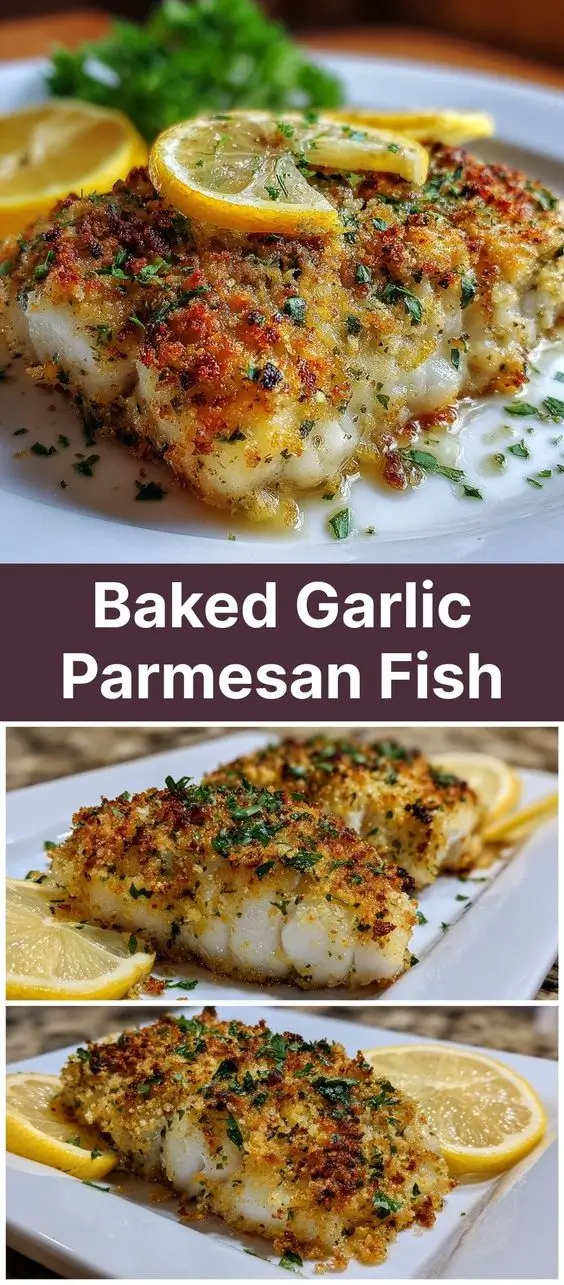
Baked Garlic Parmesan Fish
If you’re looking for a delicious, healthy, and elegant dish that’s easy to prepare and bursting with flavor, Baked Garlic Parmesan Fish is the perfect choice. This recipe combines the delicate texture of white fish fillets with the rich, savory flavors of garlic, butter, Parmesan cheese, and herbs. Whether you’re cooking for a weeknight dinner or entertaining guests on the weekend, this dish delivers restaurant-quality results with minimal effort. Light yet satisfying, it pairs beautifully with vegetables, rice, or a crisp salad, making it an ideal centerpiece for any meal.
The History of Baked Fish in Mediterranean Cuisine
Fish has been a staple food across coastal civilizations for thousands of years, particularly in Mediterranean regions where fresh seafood was abundant. Ancient Greeks and Romans prized fish not only for sustenance but also for its symbolic and cultural significance. They often baked or grilled fish using simple seasonings like olive oil, herbs, salt, and garlic—ingredients still central to modern preparations.
Over time, as trade routes expanded and culinary techniques evolved, cheese such as Parmesan (originally from Parma, Italy) became more widely available and began to be used in seafood dishes. Though traditionally Parmigiano-Reggiano was reserved for pastas and cheeses, creative home cooks started incorporating it into fish coatings to add umami depth and a golden crust. The fusion of garlicky butter sauces with Parmesan breadcrumbs emerged during the 20th century, especially in Italian-American kitchens, where comfort food met fine dining sensibilities.
Baking fish rather than frying gained popularity due to health trends promoting lower-fat cooking methods. Today, Baked Garlic Parmesan Fish stands at the intersection of tradition and modern wellness—a nod to ancestral Mediterranean diets while fitting seamlessly into today’s health-conscious lifestyles.
Ingredients Breakdown: What Makes This Dish Shine?
- Fish Fillets: White fish such as cod, halibut, tilapia, or haddock are ideal. These varieties have mild flavors and firm textures that hold up well when baked without falling apart.
- Garlic: Freshly minced garlic provides a bold, aromatic punch. It mellows slightly when baked, offering a sweet-savory balance instead of raw sharpness.
- Butter: Unsalted butter adds richness and helps carry the flavors of other ingredients. Melted and combined with garlic, it bastes the fish throughout baking.
- Parmesan Cheese: Real Parmigiano-Reggiano or high-quality grated Parmesan gives a salty, nutty complexity. When baked, it forms a light crust on top of the fish.
- Breadcrumbs: Panko breadcrumbs create a crispy outer layer while allowing moisture to stay trapped inside. For gluten-free versions, almond flour or crushed cornflakes work well.
- Fresh Herbs: Parsley, thyme, or dill enhance freshness and provide color contrast. Dried herbs can substitute in a pinch, though fresh ones yield superior aroma.
- Lemon Juice: A splash brightens the entire dish, cutting through the richness of cheese and butter.
- Olive Oil: Used to grease the baking dish and prevent sticking; it also contributes heart-healthy fats and subtle fruitiness.
- Salt & Pepper: Essential seasonings that elevate all components without overpowering them.
Step-by-Step Recipe: How to Make Baked Garlic Parmesan Fish
- Preheat your oven to 375°F (190°C). This ensures even cooking and proper browning.
- Prepare the baking dish: Lightly grease a 9×13-inch glass or ceramic baking dish with olive oil or non-stick spray to prevent sticking.
- Pat dry the fish fillets: Use paper towels to remove excess moisture from each fillet. Dry surfaces help the coating adhere better and promote browning.
- Season the fish: Sprinkle both sides of the fillets lightly with salt and freshly ground black pepper.
- Make the garlic butter sauce: In a small saucepan over low heat, melt 4 tablespoons of unsalted butter. Add 4 cloves of minced garlic and sauté gently for about 1–2 minutes until fragrant but not browned. Remove from heat and stir in 1 tablespoon of fresh lemon juice and 1 teaspoon of dried oregano (or 1 tablespoon fresh).
- Prepare the topping mixture: In a shallow bowl, combine ½ cup panko breadcrumbs, ½ cup finely grated Parmesan cheese, 2 tablespoons chopped fresh parsley, 1 teaspoon garlic powder, and a pinch of paprika (optional for color and warmth).
- Coat the fish: Place each seasoned fillet into the breadcrumb mixture, pressing gently so the crumbs stick. Flip and coat the other side. Arrange coated fillets in the prepared baking dish.
- Drizzle with garlic butter: Spoon the warm garlic butter evenly over the top of each fillet, allowing some to pool around the edges.
- Bake uncovered: Place the dish in the preheated oven and bake for 15–20 minutes, depending on thickness. Thinner fillets (like tilapia) may take only 12–15 minutes, while thicker cuts (such as halibut) might need 18–22 minutes.
- Check doneness: The fish is ready when it flakes easily with a fork and reaches an internal temperature of 145°F (63°C). The topping should be golden brown and crisp.
- Garnish and serve: Remove from oven and let rest for 2–3 minutes. Squeeze a bit more lemon juice over the top if desired, and sprinkle with additional chopped parsley before serving.
Tips for Perfect Baked Garlic Parmesan Fish Every Time
- Use fresh fish: Look for fillets with a clean ocean smell, firm flesh, and no discoloration. If buying frozen, thaw completely in the refrigerator overnight.
- Don’t skip drying the fish: Moisture prevents breading from sticking and causes steaming instead of browning.
- Avoid overbaking: Fish continues to cook slightly after removal from the oven. Take it out just before it looks fully done to avoid dryness.
- Boost crispiness: For extra crunch, broil the fish for the last 2–3 minutes. Watch closely to prevent burning.
- Double the garlic butter: Some of the sauce will soak into the breadcrumbs—making a little extra ensures every bite is flavorful.
- Line the pan: Use parchment paper or foil for easier cleanup, especially if serving directly from the baking dish.
- Layer smartly: If making multiple layers (not recommended), place thicker fillets on the bottom and thinner ones on top to ensure even cooking.
- Let it rest: Allowing the fish to sit for a few minutes after baking helps retain juices and improves texture.
Variations and Customizations
This recipe is highly adaptable based on dietary needs, flavor preferences, or ingredient availability:
- Gluten-Free Option: Replace panko breadcrumbs with gluten-free breadcrumbs, crushed pork rinds, or a blend of almond flour and nutritional yeast for a cheesy, crunchy crust.
- Dairy-Free Version: Substitute butter with vegan butter or olive oil, and use dairy-free Parmesan-style cheese made from nuts or coconut.
- Spicy Kick: Add cayenne pepper, red pepper flakes, or a dash of hot sauce to the garlic butter for heat lovers.
- Cajun Style: Mix Cajun seasoning into the breadcrumb mix for a bold, smoky twist.
- Mediterranean Twist: Add sun-dried tomatoes, Kalamata olives, capers, and feta crumbles on top before baking.
- Cheesy Upgrade: Sprinkle mozzarella or provolone over the top during the last 5 minutes of baking for a melty finish.
- Herb Variations: Swap parsley for dill (great with salmon), basil (for an Italian flair), or cilantro (for a Latin-inspired touch).
- Citrus Infusion: Use orange or lime zest and juice instead of lemon for a different citrus profile.
- Crust Alternatives: Try crushed crackers, cornmeal, or crushed potato chips for a unique texture.
- Sheet Pan Meal: Arrange sliced zucchini, bell peppers, cherry tomatoes, and onions around the fish and toss with olive oil and herbs. Roast everything together for a complete one-pan dinner.
Health Considerations and Nutritional Value
Baked Garlic Parmesan Fish is a nutritious option that supports heart health, brain function, and overall wellness when prepared thoughtfully.
- Lean Protein Source: White fish is low in fat and high in protein, helping maintain muscle mass and promote satiety.
- Omega-3 Fatty Acids: While white fish contain less omega-3s than fatty fish like salmon, they still contribute to cardiovascular and cognitive health.
- Low Carb & Keto-Friendly: With minimal carbohydrates (especially when using low-carb breadcrumbs), this dish fits well within ketogenic and low-carbohydrate diets.
- Calcium and Phosphorus: Parmesan cheese offers bone-supporting minerals, though it should be consumed in moderation due to sodium content.
- Healthy Fats: Olive oil and butter provide energy and aid in nutrient absorption, especially fat-soluble vitamins.
- Garlic Benefits: Known for its antimicrobial and anti-inflammatory properties, garlic may support immune function and reduce blood pressure.
- Watch Sodium Levels: Both Parmesan and butter can be high in sodium. Opt for reduced-sodium cheese and limit added salt if managing hypertension.
- Baking vs. Frying: Baking reduces calorie intake compared to deep-frying, eliminating excess oils and trans fats.
Nutrition Estimate (per 6 oz serving of cod with full coating):
Calories: ~320 | Protein: 35g | Fat: 16g (Saturated: 8g) | Carbohydrates: 9g | Fiber: 1g | Sugar: 1g | Cholesterol: 95mg | Sodium: ~580mg
Ingredients
- 4 white fish fillets (cod, halibut, tilapia, or haddock), about 6 oz each
- 4 tablespoons unsalted butter
- 4 cloves garlic, minced
- 1 tablespoon fresh lemon juice (plus more for garnish)
- 1/2 cup panko breadcrumbs
- 1/2 cup finely grated Parmesan cheese (preferably Parmigiano-Reggiano)
- 2 tablespoons fresh parsley, finely chopped
- 1 teaspoon garlic powder
- 1 teaspoon dried oregano or thyme
- 1/2 teaspoon salt (or to taste)
- 1/4 teaspoon black pepper
- Pinch of paprika (optional)
- Olive oil (for greasing the pan)
Directions
- Preheat oven to 375°F (190°C). Lightly grease a 9×13-inch baking dish with olive oil or line with parchment paper.
- Pat fish fillets dry with paper towels and season both sides with salt and pepper.
- In a small saucepan, melt butter over low heat. Add minced garlic and sauté for 1–2 minutes until fragrant. Stir in lemon juice and oregano. Set aside.
- In a shallow bowl, mix together panko, Parmesan, parsley, garlic powder, salt, pepper, and paprika.
- Dip each fillet into the breadcrumb mixture, pressing gently to adhere. Place in the baking dish.
- Drizzle the garlic butter evenly over the fillets, letting it drip down the sides.
- Bake for 15–20 minutes, or until fish flakes easily and topping is golden brown.
- For extra browning, broil for 2–3 minutes at the end (watch carefully).
- Remove from oven, rest for 3 minutes, then garnish with extra lemon juice and fresh herbs.
- Serve immediately with your favorite sides.
FAQ
Can I use frozen fish fillets?
Yes, but make sure to thaw them completely in the refrigerator first. Pat dry thoroughly before seasoning and coating.
What kind of fish works best?
Firm, mild white fish like cod, halibut, haddock, sea bass, or tilapia work best. Avoid very oily fish unless you’re adapting the recipe for stronger flavors.
Can I make this ahead of time?
You can prep the breadcrumb mixture and garlic butter a day in advance. Assemble the dish up to 2 hours before baking and refrigerate until ready to cook. Do not bake and reheat—it loses crispness.
How do I store leftovers?
Store cooled leftovers in an airtight container in the refrigerator for up to 2 days. Reheat gently in the oven at 300°F to preserve texture. Microwaving may make the fish rubbery.
Can I freeze Baked Garlic Parmesan Fish?
It’s not recommended to freeze once baked. However, you can assemble uncooked coated fillets, wrap individually, and freeze for up to 2 months. Bake from frozen—add 5–10 minutes to cooking time.
Why did my fish turn out dry?
Overcooking is the most common cause. Check early and remember carryover cooking. Also, thicker fillets benefit from tenting with foil halfway through to slow surface browning.
Is this recipe kid-friendly?
Absolutely! Kids love the cheesy, buttery flavor and mild fish taste. You can reduce garlic or omit herbs if picky eaters are involved.
Can I air fry this instead?
Yes! Preheat air fryer to 375°F. Cook coated fillets for 10–12 minutes, flipping halfway through, until golden and flaky.
Summary
Baked Garlic Parmesan Fish is a flavorful, wholesome dish that brings gourmet taste to everyday meals with minimal effort. Packed with protein and rich aromatics, it’s a family favorite that never goes out of style.