Apple Pie: A Timeless Classic
The aroma of a freshly baked apple pie wafting through the kitchen is one of the most comforting and nostalgic experiences in American culinary tradition. Warm, spiced apples nestled in a flaky, golden crust evoke memories of family gatherings, Thanksgiving dinners, and cozy autumn afternoons. Apple pie isn’t just a dessert—it’s a symbol of home, heritage, and heartfelt cooking. In this comprehensive guide, we’ll dive deep into everything you need to know about making the perfect apple pie, from its rich history to ingredient breakdowns, detailed instructions, expert tips, variations, health considerations, and more.
The History of Apple Pie
The origins of apple pie stretch back much further than many realize. While it’s often associated with American culture—famously declared “as American as apple pie”—its roots are actually European. The earliest known written recipe for an apple pie-like dish dates back to 1381 in England, recorded in *The Forme of Cury*, a collection of medieval English recipes. This early version used figs, raisins, pears, and apples, all seasoned with spices and enclosed in a coarse rye crust called a “coffin,” which was not meant to be eaten but served as a cooking vessel.
As apple cultivation spread across Europe, so did variations of apple-filled pastries. The Dutch developed their famous appeltaart, the French perfected the tarte Tatin, and Germans created Apfelstrudel. When European settlers arrived in North America during the 17th and 18th centuries, they brought apple seeds and pie-making traditions with them. Apples thrived in the New World’s climate, particularly in regions like New England, and soon orchards dotted the countryside.
By the 19th century, apple pie had become a staple in American households. It gained symbolic status during times of national pride, especially in the 20th century when it was embraced as a patriotic emblem during both World Wars. Soldiers would say they were fighting “for mom and apple pie.” Though apple pie wasn’t invented in America, the country adopted and refined it into a cultural icon, elevating it from humble peasant fare to a beloved national treasure.
Ingredients Breakdown: What Makes the Perfect Apple Pie?
Crafting a truly exceptional apple pie starts with understanding each component and how it contributes to flavor, texture, and structure. Let’s break down every ingredient:
For the Crust:
- All-Purpose Flour: Provides the structural base for the crust. Its moderate protein content ensures tenderness without toughness.
- Cold Unsalted Butter: The star of a flaky crust. Cold butter creates steam during baking, forming delicate layers. Unsalted allows control over sodium levels.
- Shortening (optional): Often used in combination with butter to enhance flakiness and extend shelf life. It has a higher melting point, helping maintain shape.
- Ice Water: Binds the dough without warming the fats. Too much water makes the crust tough; too little prevents cohesion.
- Salt: Enhances overall flavor and strengthens gluten slightly.
- Granulated Sugar (optional): A small amount can be added for subtle sweetness and improved browning.
For the Filling:
- Apples: The heart of the pie. Use firm, tart varieties that hold their shape when baked—such as Granny Smith, Honeycrisp, Braeburn, Jonagold, or Pink Lady. A blend of two or three types adds complexity.
- Granulated and Brown Sugar: Granulated sugar dissolves cleanly, while brown sugar adds moisture and a caramel-like depth due to molasses content.
- Lemon Juice: Adds brightness, balances sweetness, and prevents apples from browning by lowering pH.
- Ground Cinnamon: The quintessential apple pie spice—warm, sweet, and aromatic.
- Nutmeg and Allspice (optional): Complement cinnamon with warm, earthy notes. Use sparingly to avoid overpowering.
- Vanilla Extract: Deepens flavor and rounds out the spice profile.
- Flour or Cornstarch: Acts as a thickener to absorb excess juice released during baking. Flour gives a matte finish; cornstarch yields a clearer, glossier filling.
- Salted Butter (small pieces on top): Dotting the filling with butter before covering enhances richness and flavor.
Step-by-Step Recipe: How to Make the Ultimate Apple Pie
Follow this detailed method to create a show-stopping apple pie with a crisp, golden crust and tender, flavorful filling.
Makes: One 9-inch pie | Prep Time: 45 minutes (+ chilling) | Cook Time: 50–60 minutes
Ingredients
Double Pie Crust:
- 2 ½ cups (315g) all-purpose flour
- 1 teaspoon salt
- 1 tablespoon granulated sugar (optional)
- 1 cup (2 sticks / 226g) cold unsalted butter, cubed
- ¼ to ½ cup ice water
Apple Filling:
- 6 to 7 medium apples (about 3 pounds), peeled, cored, and sliced ¼ inch thick
- ¾ cup (150g) granulated sugar
- ¼ cup (50g) packed light brown sugar
- 2 tablespoons lemon juice
- 1 ½ teaspoons ground cinnamon
- ¼ teaspoon ground nutmeg
- ¼ teaspoon ground allspice (optional)
- 1 teaspoon vanilla extract
- ¼ cup (30g) all-purpose flour or 2 tablespoons cornstarch
- 2 tablespoons (28g) unsalted butter, cut into small pieces
Directions
- Make the Dough: In a large bowl, whisk together flour, salt, and sugar. Add cold cubed butter and use a pastry cutter or fingers to work it into the flour until the mixture resembles coarse crumbs with pea-sized butter pieces. Gradually add ice water, 1 tablespoon at a time, mixing gently with a fork until the dough begins to clump. Do not overwork.
- Form Discs: Divide the dough into two equal portions, shape into discs, wrap in plastic wrap, and refrigerate for at least 1 hour (or up to 2 days). Chilling relaxes gluten and firms butter, ensuring flakiness.
- Prepare Apples: While dough chills, peel, core, and slice apples uniformly. Place in a large bowl and toss immediately with lemon juice to prevent oxidation. Add sugars, cinnamon, nutmeg, allspice, vanilla, and flour (or cornstarch). Mix gently until evenly coated. Set aside to macerate for 20–30 minutes, allowing juices to develop.
- Preheat Oven: Position rack in the center of the oven and preheat to 375°F (190°C). Place a baking sheet on the rack to catch any drips.
- Roll Out Bottom Crust: On a lightly floured surface, roll one dough disc into a 12-inch circle, about ⅛ inch thick. Carefully transfer to a 9-inch pie dish. Gently press into the bottom and sides without stretching. Trim edges to leave a ½-inch overhang.
- Add Filling: Stir the apple mixture again and pour into the crust, mounding slightly in the center. Scatter pieces of butter over the top.
- Top Crust Options:
- Full Top Crust: Roll out the second disc and place over filling. Trim to match bottom overhang. Crimp edges with fingers or a fork to seal. Cut 4–5 slits in the top to vent steam.
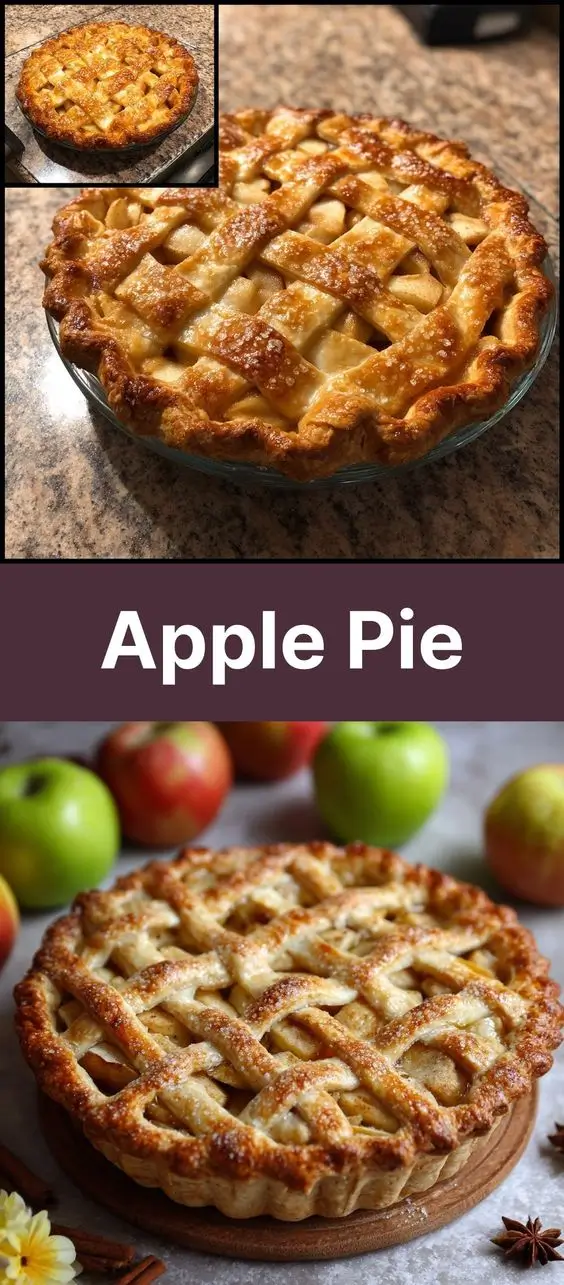
- Lattice Top: Cut rolled dough into ¾-inch strips. Weave over filling in a crisscross pattern. Trim and crimp ends.
- Egg Wash (Optional): Beat 1 egg with 1 tablespoon milk or water. Brush over the top crust for a glossy, golden finish. Sprinkle with coarse sugar for crunch and sparkle.
- Bake: Place pie on preheated baking sheet (to ensure even bottom heat). Bake for 50 to 60 minutes, rotating halfway, until crust is deep golden brown and filling is bubbling through vents. If edges brown too quickly, cover with foil or a silicone shield.
- Cool Completely: Let pie cool on a wire rack for at least 3–4 hours. This allows the filling to set. Cutting too early results in a runny pie.
Tips for the Best Apple Pie
- Keep Ingredients Cold: For the flakiest crust, chill your butter, water, bowl, and even flour if possible. Warm ingredients melt fat prematurely, leading to a dense, greasy crust.
- Don’t Skip the Chill: Resting the dough in the fridge is non-negotiable. It improves workability and final texture.
- Use Tart, Firm Apples: Soft apples like Red Delicious turn mushy. A mix of tart and sweet varieties gives balanced flavor and texture.
- Thicken Properly: Adjust thickener based on apple juiciness. Juicy apples (like Fuji) may need extra cornstarch. Humid environments also require slight increases.
- Vent Well: Steam needs to escape. Without proper venting, the top crust can become soggy or collapse.
- Bake on a Sheet: Always bake pie on a preheated baking sheet. It delivers consistent heat to the bottom crust, preventing sogginess.
- Let It Rest: Cooling allows starches to re-gelatinize, setting the filling. Patience pays off!
- Freeze for Later: Assemble the pie unbaked, wrap tightly, and freeze. Bake straight from frozen—add 15–20 minutes to baking time.
Variations and Customizations
While classic apple pie is timeless, feel free to experiment with creative twists:
1. Maple Bourbon Apple Pie
Replace granulated sugar with pure maple syrup and add 2 tablespoons of bourbon to the filling. The result is deeper, smokier, and sophisticated—perfect for fall entertaining.
2. Cheddar Crust
Incorporate ½ cup shredded sharp cheddar cheese into the crust dough. The salty, tangy contrast with sweet apples is a traditional New England favorite.
3. Oat Crumble Apple Pie
Swap the top crust for a streusel topping: mix ½ cup oats, ¼ cup flour, ⅓ cup brown sugar, ½ tsp cinnamon, and ¼ cup cold butter until crumbly. Sprinkle over filling before baking.
4. Gluten-Free Apple Pie
Use a gluten-free flour blend for both crust and thickener. Add ½ teaspoon xanthan gum per cup of flour to mimic gluten’s binding properties.
5. Vegan Apple Pie
Substitute butter with vegan shortening or coconut oil (refined for neutral taste). Use ice water as usual. For egg wash, brush with almond milk and maple syrup.
6. Mini Hand Pies
Use the same dough and filling to make individual pies. Seal with a fork, vent, and bake at 375°F for 25–30 minutes.
7. Savory Herb Infusion
Add a pinch of fresh thyme or rosemary to the filling for a gourmet twist. Pairs beautifully with aged cheddar on the side.
Health Considerations and Nutritional Value
Apple pie is undeniably indulgent, but it does offer some nutritional benefits when enjoyed in moderation.
Nutritional Highlights (per slice, approx. 1/8 of pie):
- Calories: ~350–450 kcal
- Carbohydrates: 55–65g (including natural sugars from apples and added sugars)
- Fat: 15–20g (mostly from butter; saturated fat predominant)
- Protein: 3–4g
- Fiber: 3–4g (from apples and skin, if left on)
- Vitamins & Minerals: Good source of vitamin C (from apples), potassium, and small amounts of iron and calcium.
Health Tips:
- Reduce Sugar: Cut added sugar by 25–30% without sacrificing flavor, especially when using naturally sweet apples.
- Skip the Top Crust: A single-crust pie reduces calories and fat significantly while still delivering satisfaction.
- Whole Grain Crust: Substitute half the all-purpose flour with whole wheat pastry flour for added fiber and nutrients.
- Limit Portion Size: Serve smaller slices with a dollop of Greek yogurt instead of ice cream to reduce fat and add protein.
- Bake More Often, Buy Less: Homemade pies allow control over ingredients, avoiding high-fructose corn syrup, artificial flavors, and excessive sodium found in store-bought versions.
People managing diabetes should enjoy apple pie occasionally and pair it with protein or healthy fat to slow glucose absorption. Always consult dietary guidelines based on individual health needs.
Frequently Asked Questions (FAQ)
1. Can I use canned apples?
It’s not recommended. Canned apples are already soft and packed in syrup, leading to a mushy texture and overly sweet flavor. Fresh apples provide the best balance of firmness and taste.
2. Why is my pie filling watery?
This usually happens due to insufficient thickener, underbaking, or cutting the pie before it cools fully. Ensure you use enough flour or cornstarch and allow the pie to rest for several hours after baking.
3. Can I prepare the pie ahead of time?
Yes! You can assemble the pie and refrigerate it unbaked for up to 24 hours. Alternatively, freeze it for up to 3 months. Bake from frozen, adding 15–20 minutes to the time. You can also bake it fully and reheat at 325°F for 15–20 minutes before serving.
4. How do I prevent a soggy bottom crust?
Bake on a preheated baking sheet, blind bake the bottom crust for 10 minutes (with weights), or brush the bottom crust with beaten egg white before adding filling to create a moisture barrier.
5. What apples are best for apple pie?
Firm, tart apples like Granny Smith, Honeycrisp, Jonagold, Braeburn, and Winesap hold their shape well. Avoid Red Delicious, Golden Delicious, or Gala unless mixed with firmer varieties.
6. Can I make the crust in a food processor?
Yes, but pulse carefully to avoid overmixing. Process only until the mixture resembles coarse meal with visible butter bits. Then transfer to a bowl and finish with water by hand.
7. Do I need to peel the apples?
Peeling ensures a smoother texture and prevents tough skins from remaining chewy after baking. However, leaving the peel on boosts fiber and nutrients—just slice thinner and expect a rustic look.
8. How long does apple pie last?
Store covered at room temperature for up to 2 days, then move to the refrigerator for up to 5 days total. Reheat gently in the oven. Freeze slices for up to 3 months.
Summary
Apple pie is a cherished dessert with deep historical roots and endless potential for creativity. With the right apples, a flaky homemade crust, and careful attention to detail, you can craft a pie that’s both delicious and memorable.
Whether enjoyed plain, à la mode, or with a slice of cheddar, this timeless treat continues to bring warmth and joy to tables around the world—one golden, bubbling slice at a time.