Introduction
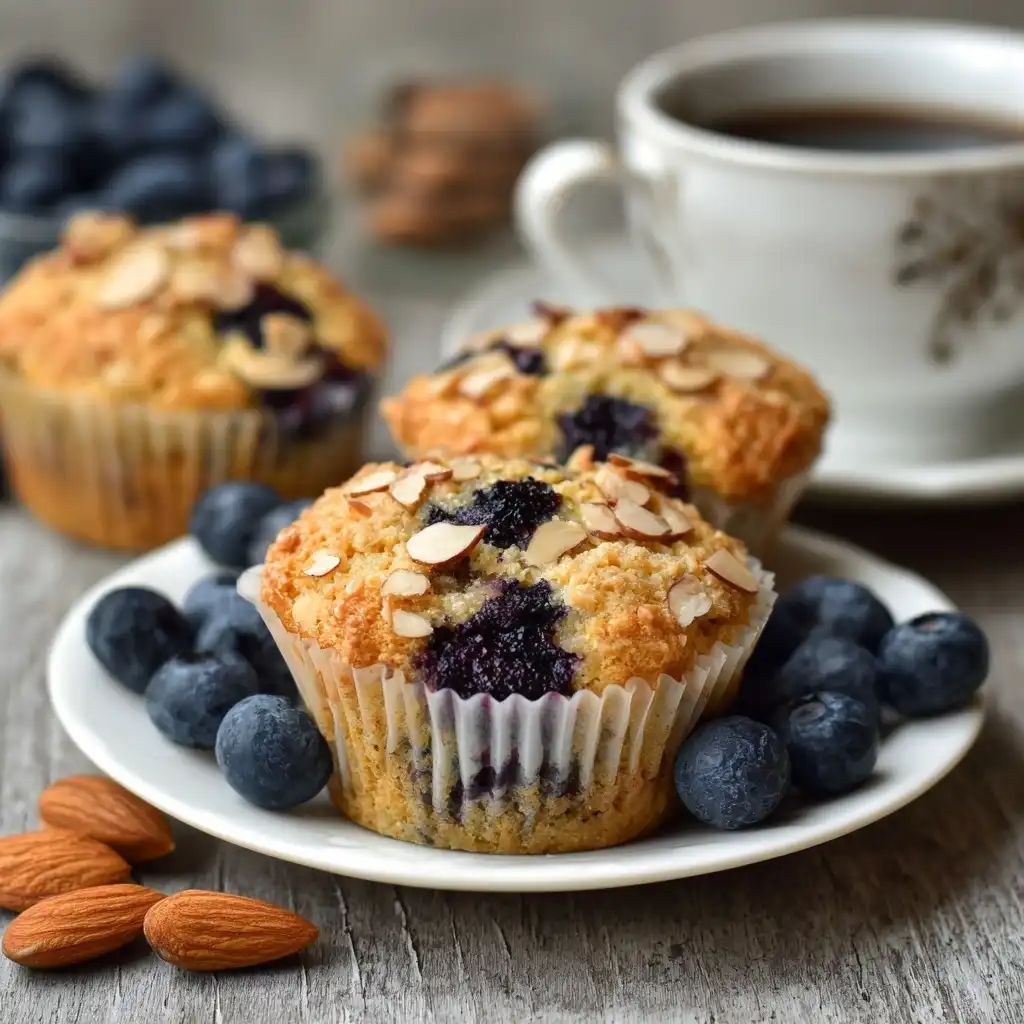
Almond flour blueberry muffins represent a delightful fusion of modern baking sensibilities and timeless flavor—offering a moist, tender crumb with bursts of juicy, tart-sweet blueberries, all wrapped in the rich, nutty aroma of finely ground almonds. Unlike traditional wheat-based muffins, these are naturally gluten-free, grain-free, and lower in net carbohydrates—making them a beloved staple for paleo, keto, low-carb, and gluten-sensitive bakers alike. Their elegant simplicity belies their sophistication: no artificial binders or gums required, thanks to almond flour’s inherent fat content and binding properties, and no refined sugar needed when sweetened thoughtfully with natural alternatives. Whether enjoyed warm from the oven with a dollop of grass-fed butter, packed into lunchboxes, or served at weekend brunches alongside freshly brewed coffee, these muffins embody wholesome indulgence—proof that dietary restrictions need never compromise taste, texture, or joy.
The History
The evolution of almond flour blueberry muffins is a quiet but compelling chapter in the broader narrative of alternative flours and functional baking. Almond flour itself has ancient roots—Moorish and medieval European cuisines used ground almonds in marzipan, tortes, and thickening agents—but its modern resurgence began in earnest during the early 2000s, propelled by the rise of gluten-free and paleo lifestyles. As celiac awareness increased and low-carb diets gained scientific traction, home bakers and nutrition-conscious food developers sought viable wheat replacements that delivered more than just structural mimicry—they wanted nutrient density, flavor integrity, and metabolic friendliness. Blueberries, long revered in North American culinary tradition (especially by Indigenous peoples who used them medicinally and as a food source), became the ideal fruit pairing: small, sturdy enough to hold shape during baking, naturally antioxidant-rich, and perfectly balanced in acidity to complement almond flour’s mild sweetness and subtle bitterness. The first widely circulated almond flour blueberry muffin recipes appeared on pioneering food blogs around 2012–2014—often shared by mothers navigating children’s food allergies or health coaches supporting clients with insulin resistance. Over time, techniques refined: the discovery that resting the batter improved moisture retention, the strategic use of apple cider vinegar to activate baking soda without sourness, and the recognition that frozen wild blueberries often outperformed fresh in both distribution and burst intensity. Today, this muffin stands not as a niche substitute, but as a canonical example of how ancestral ingredients, reimagined with contemporary knowledge, can redefine everyday comfort food.
Ingredients Breakdown
Every ingredient in this recipe serves a precise functional and nutritional purpose—no filler, no afterthoughts:
- Blanched almond flour — Finely ground from skinless almonds, it provides structure, tenderness, healthy monounsaturated fats (oleic acid), vitamin E, magnesium, and fiber. Its lack of gluten means no chewiness—but its high fat content ensures unparalleled moistness and richness. Opt for super-fine, sifted almond flour (not almond meal) for optimal lift and even crumb.
- Fresh or frozen wild blueberries — Smaller, denser, and higher in anthocyanins than cultivated varieties, wild blueberries deliver intense flavor and superior antioxidant capacity. Frozen berries are preferred because they release less juice during mixing and prevent batter discoloration; they also hold shape better and create those coveted jammy pockets when baked.
- Pasture-raised eggs — Act as emulsifiers, leaveners (via trapped air during whisking), and protein-rich binders. Their yolks contribute richness and golden hue; whites add lightness. Omega-3 enriched eggs further boost nutritional value.
- Coconut sugar or monk fruit–erythritol blend — Coconut sugar offers low-glycemic sweetness with trace minerals (iron, zinc, calcium) and subtle caramel notes; monk fruit–erythritol blends provide zero-net-carb sweetness with clean flavor and no aftertaste—ideal for keto adaptations. Both caramelize beautifully without burning.
- Full-fat coconut milk (canned, stirred well) — Adds creaminess, moisture, and lauric acid—a medium-chain fatty acid with immune-supportive properties. Avoid “light” or carton versions, which lack sufficient fat for emulsion stability.
- Unsweetened applesauce (homemade preferred) — A natural binder and moisture enhancer that reduces overall fat needs while adding pectin for gentle structure and prebiotic fiber.
- Pure vanilla extract (alcohol-based, not imitation) — Enhances aromatic complexity and rounds out almond’s nuttiness. Real vanilla contains vanillin and over 200 additional phytochemicals with anti-inflammatory activity.
- Baking soda + apple cider vinegar — A dynamic, aluminum-free leavening duo. The vinegar neutralizes soda’s alkalinity while generating fine, uniform carbon dioxide bubbles—yielding gentle rise without metallic off-notes.
- Sea salt (fine, unrefined) — Not merely for seasoning: salt amplifies sweetness perception, tightens protein networks for better crumb cohesion, and balances the natural tannins in blueberries.
- Optional but recommended: lemon zest — Bright citrus oil cuts through richness, lifts blueberry flavor, and contributes limonene—a terpene shown to support liver detoxification pathways.
Step-by-Step Recipe
- Preheat & Prep — Position oven rack in the center. Preheat oven to 350°F (175°C). Line a standard 12-cup muffin tin with unbleached parchment liners—or grease thoroughly with ghee or coconut oil. For even baking and easy removal, chill liners briefly before filling.
- Whisk Dry Ingredients — In a large bowl, sift together 2½ cups (250g) blanched almond flour, ½ tsp aluminum-free baking soda, and ¼ tsp fine sea salt. Sifting prevents clumping and aerates the flour for lighter texture. Whisk vigorously for 30 seconds to fully incorporate and eliminate any residual lumps.
- Combine Wet Base — In a separate medium bowl, whisk 3 large pasture-raised eggs until slightly frothy (~45 seconds). Add ⅔ cup (135g) coconut sugar (or equivalent keto sweetener), ¼ cup (60ml) full-fat canned coconut milk (stirred well), ¼ cup (60g) unsweetened applesauce, 2 tsp pure vanilla extract, and 1 tsp finely grated lemon zest (if using). Whisk until fully emulsified—no streaks of egg white visible—and slightly thickened (~1 minute).
- Acid Activation — Stir 1 tsp raw apple cider vinegar directly into the wet mixture. You’ll see gentle bubbling—this activates the baking soda *just before* combining, ensuring maximum leavening power. Do not skip or delay this step.
- Combine Wet + Dry — Pour the wet mixture into the dry ingredients. Using a flexible silicone spatula, fold gently in a figure-eight motion—cutting down the center, sweeping across the bottom, and lifting up—just until no dry streaks remain. Avoid overmixing: 12–15 folds max. Overmixing develops fragile protein networks too much, leading to dense or crumbly muffins.
- Integrate Blueberries — Gently fold in 1¼ cups (175g) frozen wild blueberries *still frozen*, tossing quickly (4–5 folds) to coat evenly in batter. If using fresh berries, toss them first in 1 tsp of the almond flour to prevent sinking. Do not thaw frozen berries—they’ll bleed and turn batter purple-gray.
- Rest the Batter — Let batter sit uncovered at room temperature for 15 minutes. This allows almond flour to fully hydrate, starches to swell slightly, and air bubbles to stabilize—resulting in taller, more uniformly risen muffins with tighter crumb.
- Portion & Top — Divide batter evenly among 12 lined cups (a 3-tablespoon scoop works perfectly—≈¼ cup per muffin). Smooth tops lightly. Optional gourmet touch: press 2–3 extra whole frozen blueberries onto each surface, then sprinkle with ¼ tsp coarse turbinado sugar or crushed almonds for crunch and visual appeal.
- Bake with Precision — Place tin in preheated oven. Bake 22–26 minutes—start checking at 22. Muffins are done when tops are deeply golden, spring back lightly when touched, and a toothpick inserted in the center (avoiding blueberries) comes out clean or with *moist crumbs* (not wet batter). Rotate tin front-to-back at 15 minutes for even browning.
- Cool Strategically — Remove tin from oven. Let muffins cool *in the pan* for exactly 8 minutes—this sets the structure and prevents collapse. Then transfer carefully to a wire rack to cool completely (≈45 minutes) before storing or serving. Cutting too soon releases steam and causes gumminess.
Tips
- Almond Flour Quality Is Non-Negotiable — Use only ultra-fine, blanched almond flour from reputable sources (e.g., Wellbee’s, Honeyville, or Thrive Market brand). Grainy, oily, or stale-smelling flour yields greasy, heavy, or rancid-tasting muffins. Store opened flour in an airtight container in the freezer for up to 6 months.
- Freeze Wild Blueberries—Always — Fresh blueberries release excess liquid and sink. Frozen wild ones stay suspended, bake evenly, and intensify flavor. Keep them frozen until the moment you fold them in—do not rinse or thaw.
- Room-Temperature Eggs Are Essential — Cold eggs don’t emulsify properly with fats, causing separation and uneven texture. Pull eggs from the fridge 30 minutes before baking—or place them in warm water for 5 minutes.
- Don’t Skip the Rest — That 15-minute rest isn’t passive—it’s active hydration. Skipping it leads to tunneling (air pockets), uneven rise, and crumb that’s either gummy or dry.
- Measure by Weight, Not Volume — Almond flour compacts easily. A “cup” can range from 80g to 120g depending on scooping method. Use a digital kitchen scale: 1 cup = 96g (for consistency and reproducibility).
- Altitude Adjustments — Above 3,000 ft: reduce baking soda to ¼ tsp, increase almond flour by 1 tbsp, and extend bake time by 2–4 minutes. Lower air pressure accelerates rise and evaporation.
- Oven Thermometer Required — Most built-in oven thermostats are inaccurate by ±25°F. An inexpensive oven thermometer ensures true 350°F—critical for proper set and browning.
- For Maximum Height — Fill cups ¾ full and start oven at 375°F for first 5 minutes (then reduce to 350°F)—the initial blast encourages rapid oven spring before structure sets.
- No Microwave Reheating — It makes them rubbery. Instead, refresh in a 325°F oven for 5–7 minutes—or enjoy at room temperature for best texture.
Variations and Customizations
- Lemon-Blueberry Almond Muffins — Add 2 tsp lemon zest + 1 tbsp fresh lemon juice to wet ingredients; replace 1 tbsp coconut sugar with ½ tsp lemon verbena extract for floral brightness.
- Double-Blueberry Swirl — Reserve ¼ cup blueberries. Heat gently with 1 tsp chia seeds and 1 tsp maple syrup (or keto syrup) until jammy. Swirl into batter before portioning.
- Almond-Blueberry Streusel Muffins — Top with streusel: 2 tbsp almond flour + 1 tbsp cold cubed butter + 1 tbsp sweetener + ¼ tsp cinnamon + pinch of salt—pinch until pea-sized crumbs form.
- Protein-Powered — Add 1 scoop (30g) unflavored collagen peptides or whey isolate (if tolerated) to dry ingredients—adds ~20g protein/muffin without altering texture.
- Spiced Autumn Version — Add ½ tsp ground cinnamon, ¼ tsp ground cardamom, and 1/8 tsp freshly grated nutmeg to dry mix; swap 1 tbsp coconut sugar for blackstrap molasses (adds iron and depth).
- Vegan Adaptation — Replace eggs with 3 “flax eggs” (3 tbsp ground flax + 9 tbsp warm water, rested 10 mins); use almond milk instead of coconut milk; ensure sweetener is vegan-certified. Texture will be denser but still delicious.
- Mini Muffins for Kids or Snacking — Use mini muffin tin. Reduce bake time to 11–14 minutes. Yield: ~36. Perfect for lunchboxes—freeze in single-serve bags.
- Chocolate-Blueberry Fusion — Fold in ⅓ cup sugar-free dark chocolate chips (at least 85% cacao) along with blueberries. The bitterness beautifully offsets blueberry sweetness.
- Savory-Sweet Herb Infusion — Add 1 tbsp finely chopped fresh thyme or rosemary to dry ingredients—unexpected but sophisticated, especially with goat cheese pairing.
Health Considerations and Nutritional Value
Per standard muffin (1/12 of batch, made with coconut sugar and wild blueberries):
- Calories: ~215 kcal
- Total Fat: 16g (mostly heart-healthy MUFA & PUFA; 1.5g saturated from coconut milk)
- Protein: 6.5g (complete amino acid profile from eggs + almond flour)
- Total Carbs: 12g
- Dietary Fiber: 3g (from almond flour, blueberries, and applesauce)
- Net Carbs: ~9g (ideal for moderate low-carb; ~4g with monk fruit–erythritol)
- Sugar: 6g (naturally occurring fructose from blueberries + minimal added sweetener)
- Vitamin E: 4.2mg (28% DV — potent antioxidant for skin and cell membranes)
- Magnesium: 52mg (13% DV — supports muscle function, nerve transmission, and blood sugar regulation)
- Anthocyanins: ~180mg (from wild blueberries — among highest ORAC scores of common fruits; linked to cognitive protection and vascular health)
Key Health Notes:
- Gluten-Free & Grain-Free: Naturally safe for celiac disease, non-celiac gluten sensitivity, and grain-elimination protocols.
- Low Glycemic Impact: With a GI estimated at ~35 (vs. 70+ for wheat muffins), these cause minimal blood sugar spikes—supported by fiber, fat, and protein slowing glucose absorption.
- No Refined Oils or Artificial Additives: Clean-label integrity maintained—no soybean oil, xanthan gum, or preservatives.
- Anti-Inflammatory Profile: Rich in polyphenols (blueberries), tocopherols (almonds), lauric acid (coconut), and quercetin (applesauce)—all clinically associated with reduced systemic inflammation.
- Supports Gut Health: Applesauce provides pectin (a soluble prebiotic fiber); almonds offer microbiota-accessible carbohydrates shown to feed beneficial Bifidobacteria.
- Caution for Nut Allergies: Not suitable for tree nut allergy sufferers. Sunflower seed flour may serve as a rare substitute—but texture and nutrition differ significantly.
Ingredients
- 2½ cups (250g) blanched almond flour, superfine & sifted
- ½ teaspoon aluminum-free baking soda
- ¼ teaspoon fine unrefined sea salt
- 3 large pasture-raised eggs, room temperature
- ⅔ cup (135g) coconut sugar (or ⅔ cup granulated monk fruit–erythritol blend for keto)
- ¼ cup (60ml) full-fat canned coconut milk, stirred well
- ¼ cup (60g) unsweetened applesauce, preferably homemade
- 2 teaspoons pure vanilla extract
- 1 teaspoon finely grated lemon zest (optional but highly recommended)
- 1 teaspoon raw apple cider vinegar
- 1¼ cups (175g) frozen wild blueberries, kept frozen until folding
- Optional topping: 24 whole frozen blueberries + 1 tablespoon turbinado sugar or sliced almonds
Directions
- Preheat oven to 350°F (175°C). Line a 12-cup muffin tin with parchment liners or grease generously with ghee or coconut oil. Chill liners in freezer for 5 minutes before filling for easier release.
- In a large bowl, sift together almond flour, baking soda, and sea salt. Whisk 30 seconds until fully combined and lump-free.
- In a medium bowl, whisk eggs until frothy. Add coconut sugar, coconut milk, applesauce, vanilla, and lemon zest. Whisk 1 minute until smooth and slightly thickened.
- Stir in apple cider vinegar—bubbling will begin immediately. This is your activated leavener.
- Pour wet mixture into dry ingredients. Fold gently with a silicone spatula using a figure-eight motion—12–15 folds only—until just incorporated. No dry patches should remain.
- Add frozen blueberries. Fold 4–5 times just until evenly distributed. Do not overfold.
- Cover bowl loosely and let batter rest at room temperature for 15 minutes.
- Scoop ¼ cup (3 tbsp) batter into each liner. Smooth tops. Press 2–3 extra frozen blueberries onto each muffin top. Sprinkle with turbinado sugar or almonds if desired.
- Bake 22–26 minutes, rotating tin at 15 minutes, until deep golden and toothpick inserted in center (avoiding berries) comes out clean or with moist crumbs.
- Let cool in pan for exactly 8 minutes, then transfer to a wire rack to cool completely before storing.
FAQ
- Can I use almond meal instead of almond flour?
- No—almond meal is coarser, contains skins, and absorbs liquid differently. It yields denser, grittier, and drier muffins. Stick with blanched, superfine almond flour for reliable results.
- Why did my muffins sink in the middle?
- Most commonly: underbaking (pulling them out too soon), opening the oven door before 18 minutes, using expired baking soda, or overmixing the batter. Ensure your oven is properly preheated and calibrated.
- Can I make these dairy-free?
- Yes—they’re already dairy-free if you omit optional butter toppings. Coconut milk and ghee (clarified butter) are both dairy-protein-free, making them compliant for most lactose-intolerant or casein-sensitive individuals.
- How do I store them for maximum freshness?
- Cool completely, then store in an airtight container at room temperature for up to 2 days, in the refrigerator for up to 1 week, or freeze for up to 3 months. Freeze individually on a tray first, then transfer to a labeled, date-marked freezer bag.
- Can I add oats or other grains?
- Not without compromising the gluten-free, grain-free integrity and texture. Rolled oats contain avenin (a gluten-like protein) and absorb excess moisture, leading to toughness. For added fiber, consider ground flax or chia instead.
- My batter seems too thick/thin—what went wrong?
- Too thick usually means almond flour was measured by volume (and packed), or coconut milk wasn’t stirred well (cream separated). Too thin suggests eggs were cold, applesauce was watery, or vinegar was added too early and fizz dissipated. Always weigh flour and stir coconut milk vigorously before measuring.
- Are these suitable for Type 2 Diabetes?
- Yes—when made with a zero-carb sweetener and paired mindfully. With ~4g net carbs per muffin, low glycemic load, and high satiety factor from fat and protein, they’re frequently included in therapeutic diabetes meal plans—though individual carb tolerance varies. Always consult your endocrinologist or dietitian.
- Can I double the recipe?
- Yes—but mix and bake in two separate batches. Doubling increases batter volume and viscosity, disrupting proper aeration and leavening gas distribution. Better to make two full batches sequentially with rested batter each time.
- What’s the best way to thaw frozen muffins?
- Overnight in the fridge for gentle, even moisture redistribution—or straight from freezer to 325°F oven for 8–10 minutes. Never microwave unless reheating a single muffin for ≤15 seconds (risk of rubberiness).
- Can I use other berries?
- Yes—with caveats: raspberries and blackberries work well (use frozen, same quantity), but are more delicate—reduce fold count to 3. Strawberries release too much water; chop finely and pat *very* dry before folding. Cranberries require pre-sweetening and longer bake time.
Summary
Almond flour blueberry muffins are a nutritionally intelligent, chef-worthy breakfast or snack that harmonizes the earthy richness of almond flour with the vibrant, antioxidant-packed tang of wild blueberries—delivering exceptional moisture, structure, and flavor without gluten, grains, or refined sugars.
Baked with precision, customized with intention, and grounded in real-food science, they’re far more than a dietary accommodation—they’re a celebration of how thoughtful ingredient selection and time-honored technique can transform simple pantry staples into daily moments of nourishment and delight.