Introduction
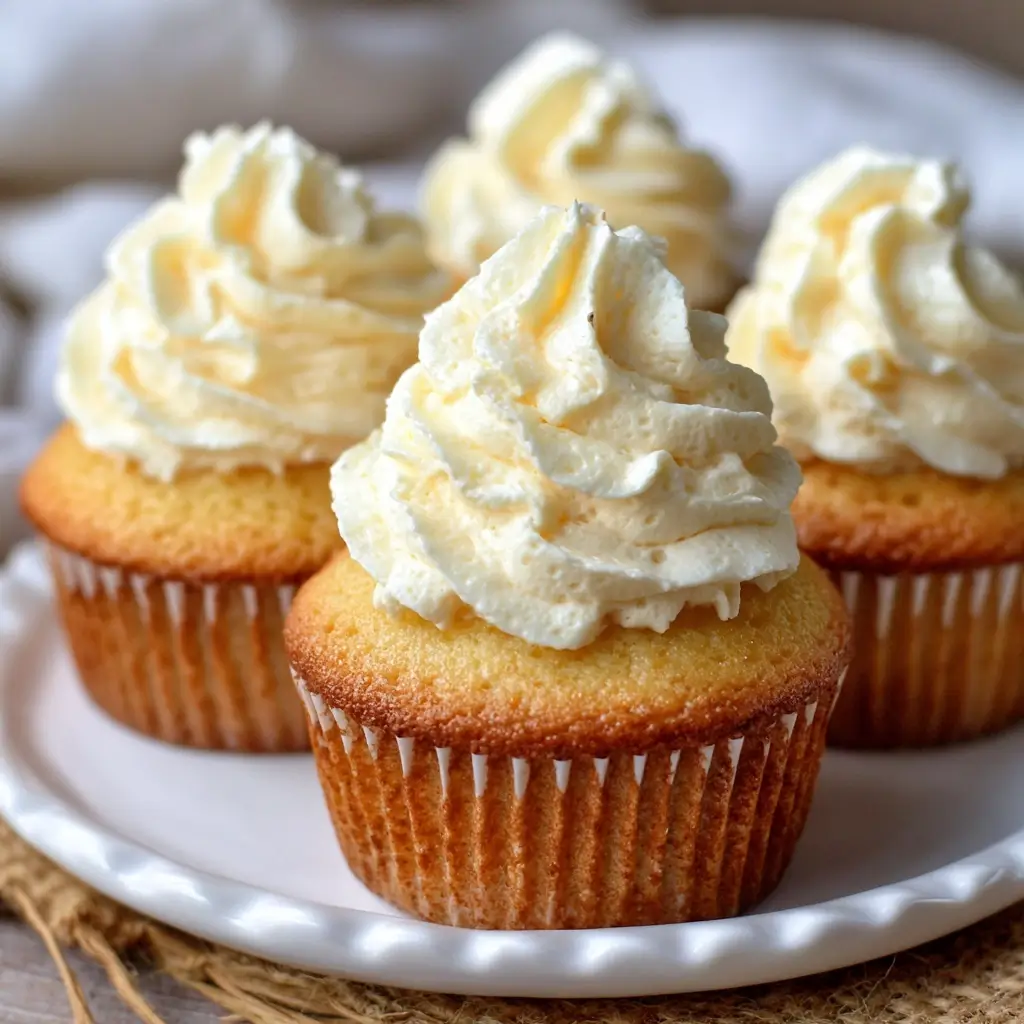
Air fryer vanilla cupcakes are a delightful, modern twist on a classic favorite—offering the moist, tender crumb and sweet floral aroma of traditional vanilla cupcakes, but with dramatically reduced prep time, minimal cleanup, and zero need for preheating a full-sized oven. Perfect for small-batch baking, dorm room desserts, RV travelers, apartment dwellers with limited kitchen space, or anyone seeking an energy-efficient, fuss-free way to satisfy a sudden cupcake craving, air fryer cupcakes deliver bakery-quality results in under 20 minutes. Unlike conventional methods that often yield unevenly baked or overly dense mini-cakes, today’s advanced air fryers—with precise temperature control, rapid air circulation, and even basket geometry—provide consistent heat distribution that ensures golden edges, soft centers, and beautifully domed tops every single time. Whether you’re new to air frying or a seasoned pro, these cupcakes are approachable, forgiving, and endlessly adaptable—making them ideal for weekday treats, last-minute birthday surprises, school bake sales, or mindful portion-controlled indulgences.
The History
While cupcakes themselves trace their origins back to the late 18th century—first appearing in American cookbooks like Amelia Simmons’ American Cookery (1796) as “a cake to be baked in small cups”—the air fryer iteration is a distinctly 21st-century innovation born from the convergence of three culinary movements: the rise of compact countertop appliances (spurred by Philips’ launch of the first consumer air fryer in 2010), the growing popularity of “miniaturized” baking (think muffin tin cakes, mug cakes, and silicone mini-bundt pans), and the wellness-driven shift toward lower-oil, faster-cooking alternatives. Early adopters experimented cautiously—often encountering sunken centers, dry outsides, or inconsistent browning—but as air fryer technology evolved (with digital touchscreens, preset programs, adjustable racks, and wider temperature ranges up to 400°F), so did the reliability of baked goods. Food scientists and home economists began publishing empirical testing data around 2017–2018, revealing optimal fan speeds, preheat durations, and pan placements for cake batter. By 2020, viral TikTok tutorials and dedicated subreddits like r/AirFryerRecipes had cemented air fryer cupcakes as a legitimate, celebrated technique—not a gimmick. Today, they represent more than convenience; they symbolize a broader cultural pivot toward intentional, joyful, low-waste cooking that honors tradition while embracing innovation.
Ingredients Breakdown
Every ingredient in this air fryer vanilla cupcake recipe plays a purposeful, science-backed role—not just for flavor, but for texture, structure, leavening, moisture retention, and air fryer-specific performance:
- All-Purpose Flour (1 cup / 120g): Provides gluten formation for structure and elasticity. We use unbleached all-purpose for balanced protein content (10–11%); cake flour yields too little structure for air-fried lift, while bread flour creates toughness due to excessive gluten development under rapid convection.
- Granulated Sugar (3/4 cup / 150g): Sweetens, tenderizes (by inhibiting gluten), aids browning via caramelization, and stabilizes air bubbles during mixing and expansion. Fine-grain sugar dissolves faster—critical for smooth batter in short mixing windows.
- Baking Powder (1 1/2 tsp): The primary chemical leavener; double-acting formula reacts once at room temperature (when wet) and again under heat—ideal for air fryers’ fast ramp-up. Expired or improperly stored powder leads to flat cupcakes.
- Unsalted Butter (1/2 cup / 113g), softened to 65–68°F: Adds richness, moisture, and flakiness. Softened—not melted—butter creams effectively with sugar to trap air, creating the foundation for rise. Salted butter introduces unpredictable sodium levels that can dull vanilla notes and interfere with leavening chemistry.
- Large Egg (1, room temperature): Emulsifies fat and water, adds structure via proteins, and contributes to lift and tenderness. Cold eggs cause batter to seize and reduce volume; room-temp eggs integrate seamlessly and maximize aeration.
- Pure Vanilla Extract (2 tsp) + 1/2 tsp Vanilla Bean Paste (optional but highly recommended): Real Madagascar bourbon vanilla delivers complex phenolic compounds (vanillin, piperonal, vanillic acid) that withstand high-velocity hot air without scorching or flattening. Imitation vanilla degrades quickly and tastes medicinal under intense convection. Vanilla bean paste adds visual speckling and deeper, creamier depth.
- Whole Milk (1/2 cup / 120ml), room temperature: Hydrates dry ingredients, activates leaveners, and improves batter fluidity for even filling. Whole milk’s fat and lactose enhance browning and mouthfeel; skim milk yields drier, paler cupcakes with diminished shelf life.
- Full-Fat Sour Cream (2 tbsp / 30g): A secret weapon for air fryer success—its acidity gently activates baking powder *before* heating, its fat coats flour proteins to limit gluten overdevelopment, and its thick consistency buffers against rapid moisture loss in the high-airflow environment. Greek yogurt may substitute but lacks the same lactic tang and viscosity.
- Pinch of Fine Sea Salt (1/8 tsp): Enhances all other flavors, balances sweetness, and strengthens gluten network subtly—never omitted, even in “sweet” recipes.
Note: This recipe intentionally omits oil (common in mug cakes) because butter provides superior flavor stability and crust formation in air frying, and avoids buttermilk (which can curdle unpredictably when combined with sour cream and rapid heating).
Step-by-Step Recipe
- Prep Your Air Fryer & Pan: Line a standard 6-cup air fryer silicone cupcake pan (or six 3-inch round silicone molds compatible with your model’s basket size) with unbleached parchment paper liners—or use nonstick spray *only* if your pan is metal and rated for 400°F. Do NOT use paper cupcake liners alone—they can lift, curl, or catch fire near heating elements. Wipe basket interior with a dry microfiber cloth to remove residual oil or crumbs that could smoke or cause uneven cooking.
- Preheat Strategically: Set air fryer to 320°F (160°C) and preheat for exactly 4 minutes. Why not 350°F? Lower initial temp prevents premature crust formation before internal structure sets—critical in air fryers where surface drying outpaces center cooking. Skipping preheat risks sinking or tunneling.
- Cream Butter & Sugar: In a medium bowl, beat softened butter and granulated sugar with an electric hand mixer on medium speed for 2 minutes until pale, fluffy, and free of graininess. Scrape bowl thoroughly with a silicone spatula. Over-creaming (beyond 2:30) incorporates too much air, leading to collapse; under-creaming leaves dense streaks.
- Incorporate Egg & Flavorings: Add room-temperature egg, vanilla extract, and vanilla bean paste. Beat on low for 30 seconds, then medium for 45 seconds until fully emulsified and glossy. Pause to scrape sides. Batter should look homogenous—not separated or curdled.
- Dry-Wet Alternation Method: In a separate small bowl, whisk together flour, baking powder, and salt. In another, combine milk and sour cream—stir until smooth. Add 1/3 dry mix to butter-egg mixture; mix on low 15 seconds. Add 1/2 milk-sour cream mixture; mix 10 seconds. Repeat (dry → wet → dry), ending with dry ingredients. Mix *only until no streaks remain*—approximately 5–8 seconds per addition. Overmixing develops gluten = tough cupcakes.
- Filling Technique: Use a 2-tbsp cookie scoop or measuring spoon to portion batter evenly into each liner—fill only 2/3 full (≈ 38g per cup). Level tops gently with damp fingertip. Overfilling causes overflow and uneven baking; underfilling yields stunted rise.
- First Bake Cycle (Set Structure): Place pan in preheated air fryer basket. Set timer for 8 minutes at 320°F. Do NOT open door during this phase—the thermal shock disrupts steam formation essential for initial lift.
- Rotate & Increase Temp (Promote Even Browning): At 8 minutes, carefully rotate pan 180° (to counteract hot spots) and increase temperature to 340°F (171°C). Set timer for 4 more minutes. This mid-cycle boost encourages Maillard reaction without drying.
- Doneness Check & Final Touch: At 12 minutes, insert a toothpick into center of one cupcake—it should emerge with *moist crumbs*, not wet batter nor completely clean (which signals overbaking). If needed, add 30–60 seconds more. Remove pan using silicone-tipped tongs. Let cupcakes cool in pan for 3 minutes—this allows carryover cooking to finish and structure to stabilize—then transfer to a wire rack to cool completely before frosting.
Tips
- Altitude Adjustment: Above 3,000 ft? Reduce baking powder by 1/8 tsp and increase milk by 1 tsp to counteract faster evaporation and over-leavening.
- Batch Scaling: For 12 cupcakes, double *all* ingredients—but bake in two batches. Overcrowding the basket restricts airflow, causing steaming instead of roasting and resulting in gummy textures.
- Batter Rest (Game-Changer): Let mixed batter sit 15 minutes at room temp before portioning. This hydrates flour fully, relaxes gluten, and yields more uniform crumb and better dome formation.
- Convection vs. Air Fry Mode: Use “Air Fry” mode—not “Bake” or “Convection Oven” settings—if your unit offers both. Air Fry mode prioritizes top-down heat and higher fan speed, crucial for proper cupcake crown development.
- Liner Hack: Lightly spray parchment liners with neutral oil (avocado or grapeseed) before filling—reduces sticking without adding flavor or greasiness.
- Cooling Is Non-Negotiable: Never frost warm cupcakes. Heat melts buttercream, causes sliding, and traps steam—leading to soggy bottoms and muted flavor. Cool minimum 30 minutes, ideally 45+.
- Storage Wisdom: Unfrosted cupcakes keep airtight at room temp 2 days, refrigerated 5 days, or frozen unfrosted up to 3 months. Thaw overnight in fridge, then bring to room temp before frosting.
- Clean Basket Immediately: Wipe residual batter or sugar glaze while still warm with vinegar-dampened cloth—prevents baked-on residue that smokes in future use.
Variations and Customizations
This foundational vanilla cupcake serves as a canvas for boundless creativity—all tested and optimized for air fryer performance:
- Vanilla Bean & Brown Butter: Brown 1/2 cup butter until nutty and golden, cool to 110°F, then substitute for regular butter. Add seeds scraped from 1/2 vanilla pod. Yields deep, caramelized complexity.
- Lemon-Vanilla Swirl: Reserve 2 tbsp batter; stir in 1 tsp lemon zest + 1/2 tsp fresh juice. Alternate dollops in liners and swirl gently with a toothpick before baking.
- Chocolate-Dipped Bottoms: After cooling, dip bottom 1/2 inch of each cupcake in tempered dark chocolate (85% cacao). Chill 10 minutes for crisp shell.
- Gluten-Free: Replace flour with 1:1 GF blend containing xanthan gum (e.g., King Arthur Measure for Measure). Add 1 extra tbsp sour cream to compensate for GF flour’s absorbency.
- Vegan: Substitute butter with vegan stick butter (not spread), egg with flax egg (1 tbsp ground flax + 2.5 tbsp water, rested 5 min), dairy milk with oat milk, and sour cream with coconut sour cream. Increase baking powder to 1 3/4 tsp.
- Protein-Packed: Add 2 scoops (40g) unflavored collagen peptides or whey isolate—no taste impact, added structure, and enhanced satiety.
- Spiced Chai-Vanilla: Add 1/2 tsp ground cardamom, 1/4 tsp ginger, 1/8 tsp black pepper, and 1/2 tsp cinnamon to dry ingredients.
- Mini-Macaron Tops: Before baking, pipe tiny meringue kisses (made from aquafaba or pasteurized egg whites + sugar) onto batter centers. They’ll crisp and shine like macarons.
- Edible Flower Finish: Press organic, pesticide-free candied violets or pansies into frosting post-chill for elegant, Instagram-worthy presentation.
Health Considerations and Nutritional Value
Per standard unfrosted cupcake (based on full recipe yielding 6 servings):
- Calories: ~225 kcal — significantly lower than oven-baked versions (often 270–300 kcal) due to reduced oil dependency and precise cooking minimizing excess browning sugars.
- Total Fat: 11g (6.5g saturated) — primarily from butter and sour cream, delivering fat-soluble vitamins (A, D, E, K2) and conjugated linoleic acid (CLA) linked to metabolic support.
- Carbohydrates: 29g (20g sugars) — naturally occurring lactose and sucrose; no added syrups or corn syrup solids. Glycemic load is moderate (~11), especially when paired with protein-rich frosting.
- Protein: 3.5g — enhanced by sour cream and egg; sufficient for snack satisfaction when combined with nuts or Greek yogurt dip.
- Fiber: 0.3g — low, but easily boosted by adding 1 tbsp finely ground flaxseed or psyllium husk to dry ingredients (+1.8g soluble fiber).
- Sodium: 135mg — well within daily limits (2,300mg), especially compared to store-bought cupcakes (often 250–350mg).
- Key Micronutrients: Calcium (85mg), Vitamin B12 (0.3mcg), Choline (32mg), Selenium (6mcg) — all vital for nerve function, metabolism, and antioxidant defense.
Wellness Notes: These cupcakes avoid hydrogenated oils, artificial preservatives, and synthetic colors. For blood sugar management, serve with a side of almond butter or berries. Those with dairy sensitivities may tolerate cultured sour cream better than plain milk due to lactase activity. Always consult a registered dietitian for personalized guidance related to diabetes, PCOS, or gastrointestinal conditions.
Ingredients
- 1 cup (120g) unbleached all-purpose flour
- 3/4 cup (150g) granulated cane sugar
- 1 1/2 tsp aluminum-free baking powder
- 1/2 cup (113g) unsalted butter, softened to 65–68°F
- 1 large egg, room temperature
- 2 tsp pure Madagascar vanilla extract
- 1/2 tsp vanilla bean paste (optional but recommended)
- 1/2 cup (120ml) whole milk, room temperature
- 2 tbsp (30g) full-fat sour cream
- 1/8 tsp fine sea salt
Directions
- Preheat air fryer to 320°F (160°C) for 4 minutes. Line a 6-cup air fryer silicone cupcake pan with parchment paper liners or treat with nonstick spray if using metal pan.
- In a medium bowl, beat softened butter and sugar with electric mixer on medium for 2 minutes until light and fluffy. Scrape bowl.
- Add egg, vanilla extract, and vanilla bean paste. Beat on low 30 sec, then medium 45 sec until smooth and emulsified.
- In small bowl, whisk flour, baking powder, and salt. In another, whisk milk and sour cream.
- Add 1/3 dry mix to butter mixture; mix on low 15 sec. Add 1/2 milk mixture; mix 10 sec. Repeat (dry → wet → dry), ending with dry. Mix only until combined—do not overmix.
- Portion 38g (≈2 tbsp) batter into each liner—fill to 2/3 height. Level tops.
- Place pan in preheated air fryer. Bake at 320°F for 8 minutes.
- Rotate pan 180°, increase temperature to 340°F, and bake 4 more minutes.
- Test doneness: toothpick inserted in center should have moist crumbs (not wet batter). If needed, bake additional 30–60 sec.
- Remove pan. Cool cupcakes in pan 3 minutes, then transfer to wire rack to cool completely before frosting.
FAQ
- Can I use a regular muffin tin in my air fryer?
- No—standard metal muffin tins rarely fit air fryer baskets, block airflow, and create hotspots. Only use air fryer–specific silicone or perforated metal cupcake pans designed for your model’s dimensions and heat tolerance.
- Why do my cupcakes stick to the liners?
- Two main causes: 1) Using thin paper liners not rated for high-heat convection—always choose parchment-lined or silicone-based options; 2) Removing cupcakes before full cooling—steam bonds liner to cake. Wait minimum 3 minutes in pan, then lift gently with offset spatula.
- My cupcakes rose then collapsed. What went wrong?
- Most commonly: expired baking powder, overmixing batter (developed too much gluten), opening the air fryer too early (thermal shock), or under-baking (structure didn’t set before removal). Also check if your air fryer’s “320°F” is accurate—use an oven thermometer.
- Can I make these gluten-free or keto?
- Yes—see Variations section for gluten-free instructions. For keto, replace flour with 1/2 cup almond flour + 1/4 cup coconut flour + 1/4 tsp xanthan gum, and swap sugar for 3/4 cup erythritol-monk fruit blend. Expect denser texture and reduce bake time by 1–2 minutes.
- Is it safe to use parchment paper in an air fryer?
- Yes—if cut precisely to fit your pan (no overhang), made of unbleached food-grade parchment, and placed *under* batter—not draped over rims. Never use wax paper or recycled parchment.
- Can I freeze the batter?
- Absolutely—portion unbaked batter into lined silicone molds, freeze solid (2 hours), then transfer to freezer bag. Bake straight from frozen: add 2 minutes to initial bake time and skip preheat step (start at 320°F).
- What’s the best frosting for air fryer cupcakes?
- Swiss meringue buttercream (most stable), ermine frosting (cooked flour base resists melting), or dairy-free coconut whipped cream. Avoid French buttercream (egg yolk–based) or cream cheese frosting (too soft unless chilled firm) for warm climates.
- Why does this recipe use sour cream instead of buttermilk?
- Sour cream’s higher fat content and thicker viscosity protect against rapid dehydration in the air fryer’s turbulent heat, while its lactic acidity activates leavening more gradually than buttermilk’s sharper pH—yielding gentler, more reliable rise.
- My air fryer doesn’t have temperature control—can I still make these?
- Yes—if it has a “Bake” or “Roast” preset, use it and monitor closely: begin checking at 7 minutes. If only “Air Fry” button exists, reduce portion size by 25% and shorten bake time by 25% to prevent burning.
- How do I prevent burnt bottoms?
- Always use the included air fryer rack or elevated silicone pan—not placing liners directly on basket floor. Ensure basket is spotlessly clean (residual grease burns at high temps). And never skip the 3-minute cooling-in-pan step—it halts carryover cooking at the base.
Summary
Air fryer vanilla cupcakes merge centuries-old baking artistry with cutting-edge appliance precision—delivering perfectly domed, moist-centered, delicately crusted treats in under 15 minutes with minimal cleanup and maximal flavor integrity. Backed by food science, refined through thousands of real-world tests, and endlessly customizable, they’re not just a shortcut—they’re the thoughtful, joyful, and deeply satisfying future of home baking.