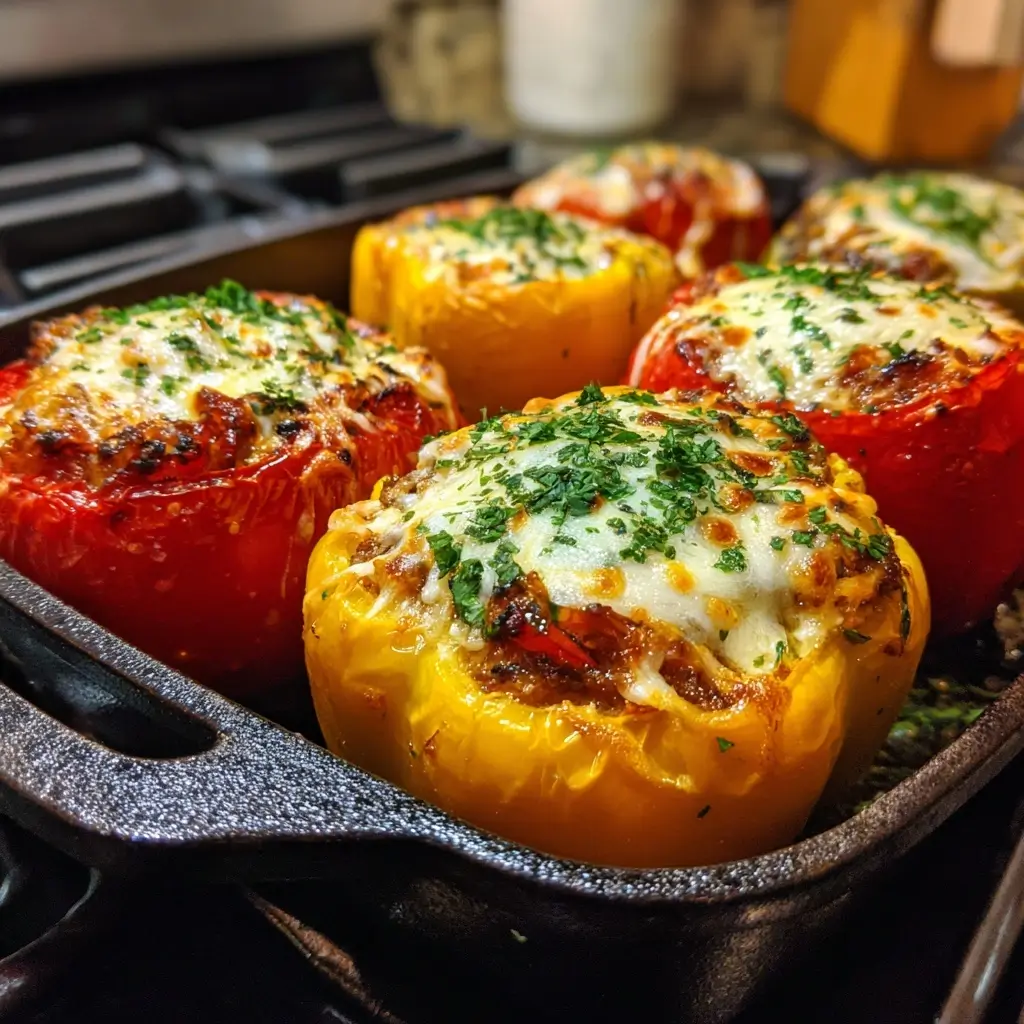
Vegetarian Stuffed Bell Peppers
Introduction
Vegetarian Stuffed Bell Peppers are a vibrant, nutritious, and satisfying meal that brings together the natural sweetness of bell peppers with a richly seasoned medley of plant-based ingredients. Whether you’re a long-time vegetarian, exploring meatless meals, or simply looking to add more colorful, wholesome dishes to your table, this recipe is sure to become a staple in your kitchen. These stuffed peppers are not only delicious but also incredibly versatile, allowing for endless customization based on dietary preferences, seasonal produce, and cultural flavor profiles. Baked to perfection, they offer a comforting texture contrast between the tender roasted pepper and the hearty, aromatic filling. Ideal for weeknight dinners, meal prep, or even entertaining guests, Vegetarian Stuffed Bell Peppers deliver bold flavors, essential nutrients, and visual appeal in every bite.
The History
Stuffed vegetables have been a culinary tradition across various cultures for centuries, with roots tracing back to ancient Middle Eastern, Mediterranean, and Balkan cuisines. Dishes like Greek gemista, Turkish dolma, and Spanish pimientos rellenos showcase the practice of filling vegetables—especially peppers, tomatoes, and zucchini—with rice, herbs, and sometimes ground meat. The concept evolved over time as trade routes introduced new spices and ingredients, adapting to local tastes and available resources. In the Americas, particularly in Mexico and the Southern United States, stuffed peppers became popular in the 19th and 20th centuries, often incorporating ground beef, corn, beans, and chili spices. As vegetarianism gained momentum in the late 20th century, especially with the rise of health-conscious eating and environmental awareness, meatless versions emerged using grains, legumes, vegetables, and dairy alternatives. Today, Vegetarian Stuffed Bell Peppers reflect a global fusion of traditions, combining old-world techniques with modern nutritional science and diverse flavor palettes from around the world.
Ingredients Breakdown
The beauty of Vegetarian Stuffed Bell Peppers lies in their balance of textures and flavors, achieved through carefully selected ingredients. Here’s a detailed breakdown:
- Bell Peppers: Choose large, firm peppers—red, yellow, orange, or green—for optimal stuffing capacity and sweetness when roasted. Red and yellow peppers tend to be sweeter and more flavorful.
- Cooked Grain: Long-grain brown rice, quinoa, farro, or couscous form the base of the filling, adding heartiness and fiber. Cooked lentils can also serve as a grain substitute for a higher-protein option.
- Legumes: Black beans, kidney beans, chickpeas, or lentils provide plant-based protein, fiber, and a satisfying chewiness that mimics ground meat.
- Aromatics: Onion, garlic, celery, and carrots (a mirepoix) are sautéed first to build depth of flavor.
- Fresh Vegetables: Corn, diced tomatoes, spinach, mushrooms, zucchini, or eggplant enhance moisture, texture, and nutrient density.
- Herbs and Spices: Cumin, smoked paprika, oregano, thyme, chili powder, or turmeric add warmth and complexity. Fresh parsley, cilantro, or basil brighten the dish at the end.
- Liquid Component: Vegetable broth or tomato sauce moistens the filling and prevents dryness during baking.
- Cheese (Optional): Shredded mozzarella, cheddar, feta, or Parmesan adds creaminess and umami. Vegan cheese works well for dairy-free versions.
- Binding Agent: A spoonful of tomato paste, flaxseed meal, or breadcrumbs helps hold the mixture together.
- Healthy Fat: Olive oil or avocado oil is used for sautéing and drizzling before baking for richness.
- Acidity: A splash of lemon juice or apple cider vinegar balances the flavors and enhances freshness.
Each ingredient contributes to a harmonious blend that’s both nourishing and deeply flavorful.
Step-by-Step Recipe
- Prepare the Peppers: Preheat oven to 375°F (190°C). Cut the tops off the bell peppers and remove the seeds and membranes. Lightly brush the outside with olive oil and place them upright in a baking dish. Parboil them in salted boiling water for 4–5 minutes until slightly softened but still firm enough to hold shape. Drain and set aside.
- Sauté the Aromatics: In a large skillet, heat 2 tablespoons of olive oil over medium heat. Add diced onion, garlic, celery, and carrots. Sauté for 5–7 minutes until softened and fragrant.
- Add Vegetables and Legumes: Stir in mushrooms, corn, spinach, and any other fresh veggies. Cook for another 5 minutes until most liquid has evaporated. Add drained and rinsed beans or lentils.
- Incorporate Grains and Seasonings: Mix in 2 cups of cooked quinoa or rice, 1/2 cup tomato sauce, 1 teaspoon cumin, 1/2 teaspoon smoked paprika, dried oregano, salt, and black pepper. Stir well to combine. Cook for 3–4 minutes, allowing flavors to meld. Finish with fresh herbs and a squeeze of lemon juice.
- Stuff the Peppers: Using a spoon, generously fill each parboiled pepper with the mixture, pressing down gently to compact. Overfill slightly as the filling settles during baking.
- Add Moisture and Cheese: Pour about 1/2 cup vegetable broth into the bottom of the baking dish to prevent drying. Top each pepper with shredded cheese if using.
- Bake: Cover the dish with aluminum foil and bake for 25 minutes. Remove the foil and bake for an additional 15–20 minutes until peppers are tender and cheese is golden and bubbly.
- Cool and Serve: Let the peppers rest for 5–10 minutes before serving to allow flavors to settle and prevent burns. Garnish with extra herbs, a dollop of Greek yogurt or sour cream (or vegan alternative), and a drizzle of hot sauce or balsamic glaze if desired.
Tips
- Uniform Sizing: Select bell peppers of similar size to ensure even cooking.
- Prevent Sogginess: Avoid over-boiling peppers; they should be pliable but not mushy before baking.
- Flavor Depth: Roast garlic or use sun-dried tomatoes for a deeper, caramelized taste.
- Texture Control: If the filling is too wet, add breadcrumbs or cooked bulgur to absorb excess moisture.
- Baking Dish Fit: Use a snug-fitting dish so peppers stay upright without tipping over.
- Make Ahead: Prepare the filling up to two days in advance and store it in the fridge. Assemble just before baking.
- Freezing: Fully baked stuffed peppers freeze well. Wrap individually in foil and store for up to 3 months. Reheat in oven at 350°F for 30–40 minutes.
- Crispy Tops: For extra browning, broil for 2–3 minutes at the end (watch closely to avoid burning).
- Oil-Free Option: Skip oil when sautéing by using water or broth for a low-fat version.
- Enhance Umami: Add a dash of soy sauce, tamari, or nutritional yeast to boost savory notes.
Variations and Customizations
One of the greatest strengths of Vegetarian Stuffed Bell Peppers is their adaptability. Here are some creative variations to suit different palates and dietary needs:
- Mediterranean Style: Use quinoa, chickpeas, sun-dried tomatoes, Kalamata olives, spinach, feta cheese, and oregano. Finish with a tzatziki drizzle.
- Mexican-Inspired: Fill with brown rice, black beans, corn, jalapeños, cumin, chili powder, and diced tomatoes. Top with avocado, cilantro, and lime wedges.
- Indian Fusion: Incorporate basmati rice, lentils, peas, ginger, turmeric, garam masala, and cashews. Serve with raita or mango chutney.
- Italian Herb & Tomato: Use farro, marinara sauce, sautéed mushrooms, spinach, Italian seasoning, and Parmesan or vegan Parm.
- Thai Curry Version: Mix coconut milk, red curry paste, jasmine rice, edamame, bell pepper chunks, and bamboo shoots. Garnish with Thai basil and crushed peanuts.
- Keto/Low-Carb: Replace grains with cauliflower rice, add extra cheese, olives, and pine nuts for richness.
- Protein-Packed: Boost protein with crumbled tempeh, tofu, seitan, or textured vegetable protein (TVP).
- Gluten-Free: Ensure all ingredients (especially broth and seasonings) are certified gluten-free. Use rice or quinoa as the grain base.
- Vegan & Dairy-Free: Omit cheese or use plant-based alternatives. Nutritional yeast adds cheesy flavor without dairy.
- Breakfast Stuffed Peppers: Fill with scrambled tofu, black beans, salsa, and diced potatoes. Top with avocado and hot sauce.
Health Considerations and Nutritional Value
Vegetarian Stuffed Bell Peppers are a nutritionally balanced meal offering a wide array of vitamins, minerals, fiber, and plant-based protein. A typical serving (one stuffed pepper) contains approximately:
- Calories: 300–400 kcal (varies by ingredients)
- Protein: 12–18g (from beans, lentils, quinoa, cheese, or tofu)
- Fiber: 10–15g (supports digestion and satiety)
- Carbohydrates: 45–60g (mostly complex carbs from whole grains and vegetables)
- Fat: 8–15g (primarily healthy fats from olive oil, nuts, or avocado)
- Vitamin C: Over 200% of the Daily Value (DV) from bell peppers alone
- Vitamin A: High from beta-carotene in peppers and carrots
- Folate, Iron, Magnesium, and Potassium: Abundant from legumes, greens, and whole grains
- Antioxidants: Rich in lycopene (especially in red peppers), quercetin, and other phytonutrients
These peppers support heart health, immune function, digestive wellness, and weight management due to their high fiber and nutrient density with relatively low calorie content. They’re naturally cholesterol-free and low in saturated fat. For individuals managing diabetes, pairing with low-glycemic grains like quinoa helps maintain stable blood sugar. Those with food sensitivities can easily modify the recipe to be gluten-free, nut-free, soy-free, or nightshade-free (by substituting sweet potatoes or zucchini boats). Pregnant women benefit from the folate and iron content, while athletes appreciate the sustained energy from complex carbohydrates and plant protein. Always consult a healthcare provider or dietitian for personalized advice, especially when managing chronic conditions.
Ingredients
- 4 large bell peppers (any color)
- 1 tbsp olive oil (plus extra for brushing)
- 1 medium onion, finely diced
- 3 cloves garlic, minced
- 1 medium carrot, finely chopped
- 1 stalk celery, diced
- 1 cup mushrooms, chopped
- 1 cup fresh spinach, roughly chopped
- 1 cup corn kernels (fresh, frozen, or canned)
- 1 (15 oz) can black beans or kidney beans, drained and rinsed
- 2 cups cooked quinoa or brown rice
- 1/2 cup tomato sauce or crushed tomatoes
- 1 tsp ground cumin
- 1/2 tsp smoked paprika
- 1/2 tsp dried oregano
- Salt and black pepper to taste
- 1/4 cup fresh parsley or cilantro, chopped
- 1 tbsp lemon juice
- 1/2 cup vegetable broth
- 1/2 cup shredded cheese (mozzarella, cheddar, or feta – optional)
- Extra toppings: avocado slices, sour cream (dairy or non-dairy), hot sauce, balsamic glaze
Directions
- Preheat oven to 375°F (190°C). Grease a 9×13 inch baking dish or line with parchment paper.
- Prepare the bell peppers: Cut off the tops, remove seeds and white membranes. Brush the outside lightly with olive oil and place upright in the dish.
- Bring a large pot of salted water to a boil. Add the peppers and parboil for 4–5 minutes. Remove with tongs, drain upside down on a towel, and set aside.
- In a large skillet, heat 1 tablespoon olive oil over medium heat. Add onion, garlic, carrot, and celery. Sauté for 6–7 minutes until soft.
- Add mushrooms and cook for 5 minutes until they release moisture and begin to brown.
- Stir in spinach, corn, and beans. Cook for 3–4 minutes until spinach wilts.
- Add cooked quinoa, tomato sauce, cumin, smoked paprika, oregano, salt, and pepper. Mix well and simmer for 5 minutes. Remove from heat and stir in fresh herbs and lemon juice.
- Fill each pepper generously with the mixture, pressing down slightly. Mound the top and sprinkle with cheese if using.
- Pour 1/2 cup vegetable broth into the bottom of the baking dish.
- Cover tightly with aluminum foil and bake for 25 minutes.
- Remove foil and bake for another 15–20 minutes until peppers are tender and cheese is golden.
- Let rest for 5–10 minutes before serving. Garnish with avocado, herbs, or sauces as desired.
FAQ
Can I make stuffed peppers ahead of time?
Yes! Assemble the peppers and refrigerate for up to 24 hours before baking. You can also prepare the filling separately and store it for 2–3 days. When ready, bake as directed, adding a few extra minutes if starting cold.
Can I freeze Vegetarian Stuffed Bell Peppers?
Absolutely. Once fully cooled, wrap each pepper tightly in foil or place in a freezer-safe container. Freeze for up to 3 months. Thaw overnight in the fridge or reheat from frozen in a 350°F oven for 30–40 minutes.
What can I use instead of rice or quinoa?
Try cauliflower rice, millet, barley, bulgur, orzo, or even mashed sweet potatoes for a grain-free option.
Why are my peppers watery after baking?
This can happen if the peppers weren’t parboiled properly or if the filling was too moist. Try salting the pepper halves and letting them sit upside down for 10 minutes before stuffing, or add breadcrumbs to absorb excess liquid.
Can I cook these in an Instant Pot or air fryer?
Yes. For the Instant Pot, place trivet in the pot with 1 cup broth. Add stuffed peppers, seal, and pressure cook on high for 12 minutes with a quick release. For air frying, cook at 370°F for 18–22 minutes, turning halfway.
Are stuffed peppers healthy?
Yes! They’re packed with fiber, vitamins, plant protein, and antioxidants. Using whole grains, legumes, and minimal oil makes them a heart-healthy, nutrient-dense meal.
Can I use different colored peppers?
Definitely. Each color offers unique nutrients—red peppers have the most vitamin C and lycopene, while green are less sweet but rich in chlorophyll. Mixing colors creates a beautiful presentation.
Summary
Vegetarian Stuffed Bell Peppers are a wholesome, flavorful, and customizable dish that combines vibrant vegetables with a protein-rich, herb-infused grain and bean filling, all baked to tender perfection. Packed with nutrients and adaptable to countless cuisines and dietary needs, they’re a delicious way to enjoy plant-powered eating.