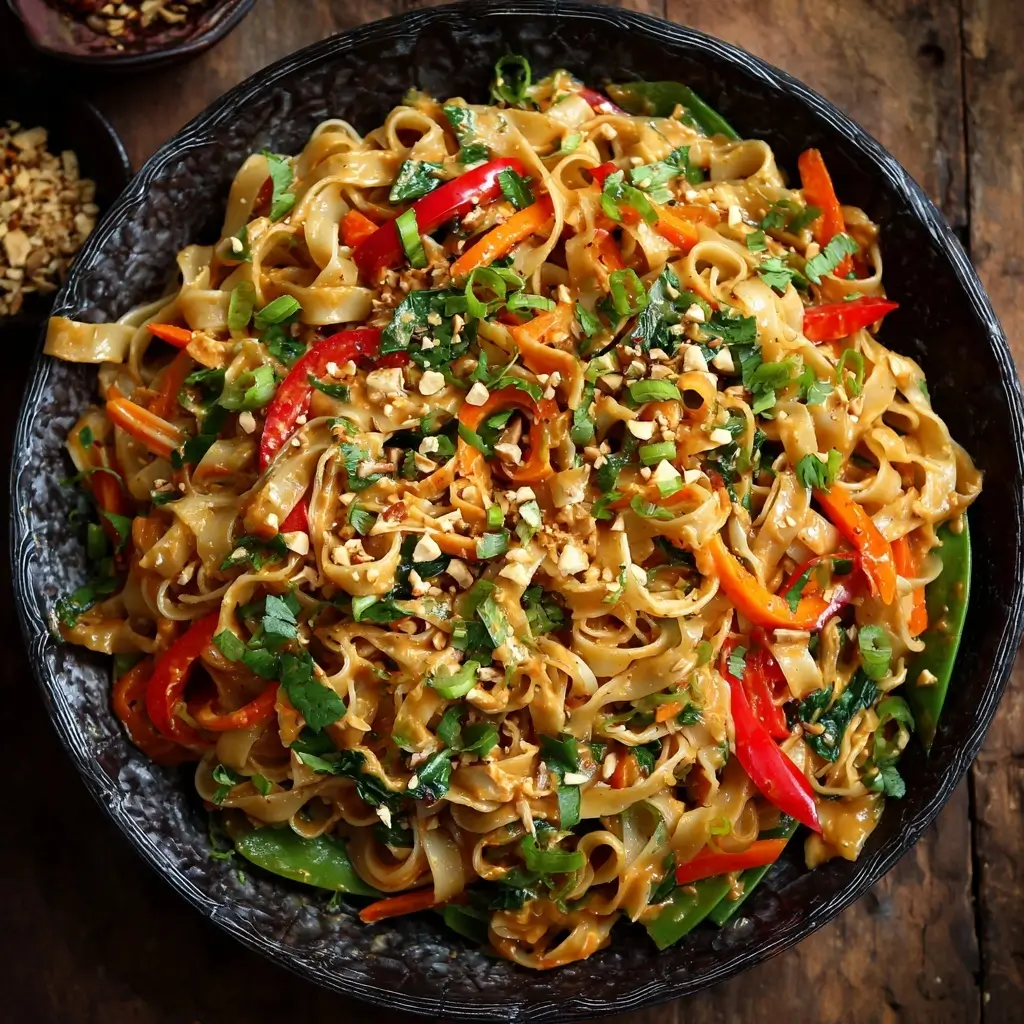
Spicy Peanut Noodles with Vegetables
Introduction
Spicy Peanut Noodles with Vegetables are a vibrant, flavor-packed dish that brings together the rich creaminess of peanut butter with the bold kick of chili and the freshness of crisp vegetables. This recipe is a modern fusion favorite, blending Asian-inspired flavors with Western-style noodle preparation to create a meal that’s both satisfying and nutritious. Whether you’re looking for a quick weeknight dinner, a hearty lunch option, or a plant-based meal full of protein and fiber, these spicy peanut noodles deliver on all fronts. The dish is incredibly versatile, easy to customize, and beloved by vegetarians, vegans, and omnivores alike. With its luscious sauce, colorful veggies, and chewy noodles, every bite offers a symphony of textures and tastes that will leave your taste buds tingling.
The History
The roots of Spicy Peanut Noodles can be traced back to Southeast Asian and Chinese culinary traditions, where peanut-based sauces have long been used in dishes such as Indonesian Gado Gado, Thai Laab, and various Sichuan cold noodle preparations. Peanuts were introduced to Asia via trade routes from South America in the 16th century and quickly became a staple ingredient due to their rich flavor, affordability, and high nutritional value. Over time, regional adaptations emerged, incorporating local spices, herbs, and vegetables. In the United States, peanut sauce gained popularity during the 20th century, especially through Thai and Vietnamese restaurants. The modern version of Spicy Peanut Noodles with Vegetables evolved from these influences, shaped by the farm-to-table movement, global food trends, and the growing demand for plant-forward meals. Today, it’s a beloved staple in health-conscious homes, trendy cafes, and meal-prep routines across the globe.
Ingredients Breakdown
The magic of Spicy Peanut Noodles lies in the harmony of its ingredients, each playing a crucial role in building depth, texture, and balance:
- Peanut Butter: The star of the sauce, providing richness, creaminess, and nutty depth. Opt for natural, unsweetened peanut butter to avoid added sugars and oils.
- Soy Sauce or Tamari: Adds savory umami and saltiness. Tamari is a gluten-free alternative with a slightly smoother flavor.
- Rice Vinegar: Brings brightness and acidity, cutting through the richness of the peanut butter.
- Chili Garlic Sauce or Sriracha: Delivers the signature heat. Adjust quantity based on your spice tolerance.
- Maple Syrup or Honey: Balances the spice and acidity with subtle sweetness. Use maple syrup for a vegan version.
- Garlic and Ginger: Freshly minced for aromatic pungency and warmth—essential for depth of flavor.
- Sesame Oil: A few drops enhance the nutty profile and add complexity to the sauce.
- Warm Water: Used to thin the sauce to the perfect pourable consistency.
- Noodles: Traditionally rice noodles or soba (buckwheat) noodles work best, but spaghetti, udon, or whole wheat pasta can also be used.
- Vegetables: A colorful mix including bell peppers, carrots, cucumbers, broccoli, snap peas, red cabbage, and scallions adds crunch, freshness, and nutrients.
- Toppings: Chopped peanuts, cilantro, lime wedges, sesame seeds, and green onions elevate the dish with texture and zest.
Step-by-Step Recipe
- Cook the Noodles: Bring a large pot of salted water to a boil. Cook your choice of noodles according to package instructions until al dente. Drain and rinse under cold water to stop cooking. Toss with a tiny bit of sesame oil to prevent sticking. Set aside.
- Prepare the Vegetables: While the noodles cook, wash and cut all vegetables. Julienne carrots and bell peppers, thinly slice cucumbers and cabbage, chop broccoli into small florets, and halve snap peas. Keep them raw for crunch or lightly blanch/sauté if preferred.
- Make the Sauce: In a medium bowl, whisk together 1/2 cup natural peanut butter, 3 tablespoons soy sauce (or tamari), 2 tablespoons rice vinegar, 1–2 tablespoons chili garlic sauce (adjust to taste), 1 tablespoon maple syrup, 2 cloves minced garlic, 1 tablespoon grated fresh ginger, 1 teaspoon sesame oil, and 1/4 cup warm water. Whisk until smooth and creamy. Add more water as needed to reach a silky, pourable consistency.
- Combine Noodles and Sauce: In a large mixing bowl, toss the cooled noodles with about 3/4 of the peanut sauce. Mix thoroughly to coat every strand evenly.
- Add Vegetables: Fold in the prepared vegetables, reserving some for garnish if desired. Toss gently to combine.
- Taste and Adjust: Sample the dish and adjust seasoning—add more soy sauce for saltiness, vinegar for tang, chili for heat, or maple syrup for sweetness.
- Serve: Divide into bowls. Drizzle with extra sauce if desired. Top generously with chopped peanuts, sliced green onions, cilantro, sesame seeds, and a squeeze of fresh lime juice.
Tips
- Cook Noodles Al Dente: Overcooked noodles become mushy when mixed with sauce. Rinsing them in cold water stops the cooking process and keeps them firm.
- Bloom the Aromatics: For deeper flavor, sauté minced garlic and ginger in a little sesame oil before adding to the sauce.
- Customize Heat Level: Start with less chili sauce and gradually add more. You can always increase the spice, but you can’t take it away!
- Prep Ahead: Chop vegetables and make the sauce up to two days in advance. Store separately in airtight containers in the fridge.
- Use Warm Water: It helps emulsify the peanut butter and other ingredients more smoothly, preventing clumping.
- Balance Is Key: The perfect sauce strikes a balance between salty, sweet, sour, spicy, and umami. Taste as you go.
- Double the Batch: This dish reheats well and makes excellent leftovers. Just store sauce separately if meal prepping.
Variations and Customizations
One of the greatest strengths of Spicy Peanut Noodles is their adaptability. Here are numerous ways to tailor the dish to your preferences:
- Protein Boost: Add grilled tofu, tempeh, edamame, shredded chicken, shrimp, or a soft-boiled egg for extra protein.
- Dietary Swaps: Make it gluten-free by using tamari and rice noodles; vegan by skipping animal products and using maple syrup instead of honey.
- Noodle Alternatives: Try zucchini noodles (zoodles), sweet potato noodles, or kelp noodles for a low-carb or keto-friendly twist.
- Sauce Variations: Substitute almond butter, cashew butter, or sunflower seed butter for a nut-free version. Add miso paste for extra umami or lime juice for more citrus punch.
- Vegetable Rotations: Swap in seasonal produce like roasted Brussels sprouts, sautéed mushrooms, shredded kale, or pickled radishes.
- International Twists: Add Thai basil and fish sauce for a Thai flair, or toss in kimchi and gochujang for a Korean-inspired version.
- Hot and Sour Style: Increase vinegar and chili while adding a splash of hoisin sauce for a Sichuan-style kick.
- Creamier Texture: Blend in a spoonful of tahini or coconut milk for an even silkier sauce.
Health Considerations and Nutritional Value
Spicy Peanut Noodles with Vegetables offer a well-rounded nutritional profile when prepared with wholesome ingredients:
- Heart-Healthy Fats: Peanut butter contains monounsaturated fats, which support cardiovascular health.
- Plant-Based Protein: Peanuts and legumes (like edamame) contribute substantial protein, making this dish suitable for vegetarian and vegan diets.
- Fiber-Rich: Whole grain noodles and a variety of vegetables provide dietary fiber, aiding digestion and promoting satiety.
- Vitamins and Antioxidants: Colorful vegetables supply vitamins A, C, K, folate, and antioxidants that support immune function and skin health.
- Low in Added Sugar: When made with natural peanut butter and minimal sweeteners, this dish avoids refined sugars common in store-bought sauces.
- Sodium Awareness: Soy sauce can be high in sodium. Use reduced-sodium versions or dilute with water to manage intake.
- Allergen Alert: Contains peanuts—a major allergen. Always label clearly if serving others. Sunflower seed butter is a safe alternative.
- Portion Control: While nutritious, peanut butter is calorie-dense. Stick to recommended serving sizes (about 2 tablespoons per bowl) to keep calories in check.
A typical serving (without added protein) contains approximately: 450–550 calories, 18g protein, 20g fat (mostly healthy), 60g carbohydrates, and 8g fiber, depending on ingredients and portion size.
Ingredients
- 8 oz (225g) noodles (soba, rice, or whole wheat)
- 1/2 cup natural creamy peanut butter (unsweetened, no added oils)
- 3 tbsp low-sodium soy sauce or tamari
- 2 tbsp rice vinegar
- 1–2 tbsp chili garlic sauce (or sriracha)
- 1 tbsp pure maple syrup (or honey)
- 2 cloves garlic, minced
- 1 tbsp fresh ginger, grated
- 1 tsp toasted sesame oil
- 1/4 cup warm water (plus more as needed)
- 1 medium carrot, julienned
- 1 red bell pepper, thinly sliced
- 1 cup cucumber, sliced or spiralized
- 1 cup broccoli florets (raw or blanched)
- 1/2 cup sugar snap peas, halved
- 1/2 cup red cabbage, shredded
- 2 green onions, sliced
- 1/4 cup fresh cilantro, chopped
- 1/4 cup roasted peanuts, chopped
- 1 lime, cut into wedges
- 1 tsp sesame seeds (optional)
Directions
- Bring a large pot of salted water to a boil. Cook noodles according to package directions until tender but firm. Drain, rinse under cold water, and toss with a few drops of sesame oil. Set aside.
- In a large bowl, prepare the sauce: whisk together peanut butter, soy sauce, rice vinegar, chili garlic sauce, maple syrup, garlic, ginger, sesame oil, and warm water until smooth. Adjust thickness with additional water, one tablespoon at a time, until easily pourable.
- In another bowl, combine carrot, bell pepper, cucumber, broccoli, snap peas, and red cabbage. Toss lightly.
- Add the cooled noodles to the sauce and mix until fully coated.
- Gently fold in the vegetables until evenly distributed.
- Taste and adjust seasoning—add more chili for heat, vinegar for tang, or syrup for sweetness.
- Divide among serving bowls. Garnish with green onions, cilantro, chopped peanuts, sesame seeds, and a generous squeeze of lime juice.
- Serve immediately, or chill for 30 minutes for a cold noodle salad effect.
FAQ
Can I make this recipe ahead of time?
Yes! Prepare the sauce and chop vegetables up to 2 days in advance. Cook noodles just before serving to maintain texture. Alternatively, assemble the dish and store in the fridge for up to 3 days—just refresh with a splash of water or extra sauce before eating.
Is this dish gluten-free?
It can be! Use tamari instead of soy sauce and ensure your noodles are certified gluten-free (such as 100% buckwheat soba or rice noodles).
How can I make it spicier?
Add more chili garlic sauce, a dash of cayenne pepper, crushed red pepper flakes, or a drizzle of chili oil on top.
What if I don’t like peanut butter?
Try almond butter, cashew butter, or sunflower seed butter. Each imparts a slightly different flavor but still creates a creamy base.
Can I use frozen vegetables?
Fresh is best for crunch, but you can use thawed and drained frozen vegetables like edamame or stir-fry blends. Avoid overcooking to retain texture.
Are these noodles suitable for weight loss?
When portion-controlled and made with whole grains and minimal added sugar, they can fit into a balanced diet. Focus on loading up on vegetables and using moderate amounts of peanut butter.
Can I bake or fry the tofu for topping?
Absolutely! Press and cube firm tofu, marinate in soy sauce and cornstarch, then pan-fry or bake at 400°F (200°C) for 25–30 minutes until crispy. Add on top before serving.
Summary
Spicy Peanut Noodles with Vegetables are a bold, creamy, and refreshing dish that combines the comfort of noodles with the vibrancy of fresh produce and the kick of chili. Packed with flavor, nutrition, and endless customization options, they’re a must-have in any modern kitchen repertoire.