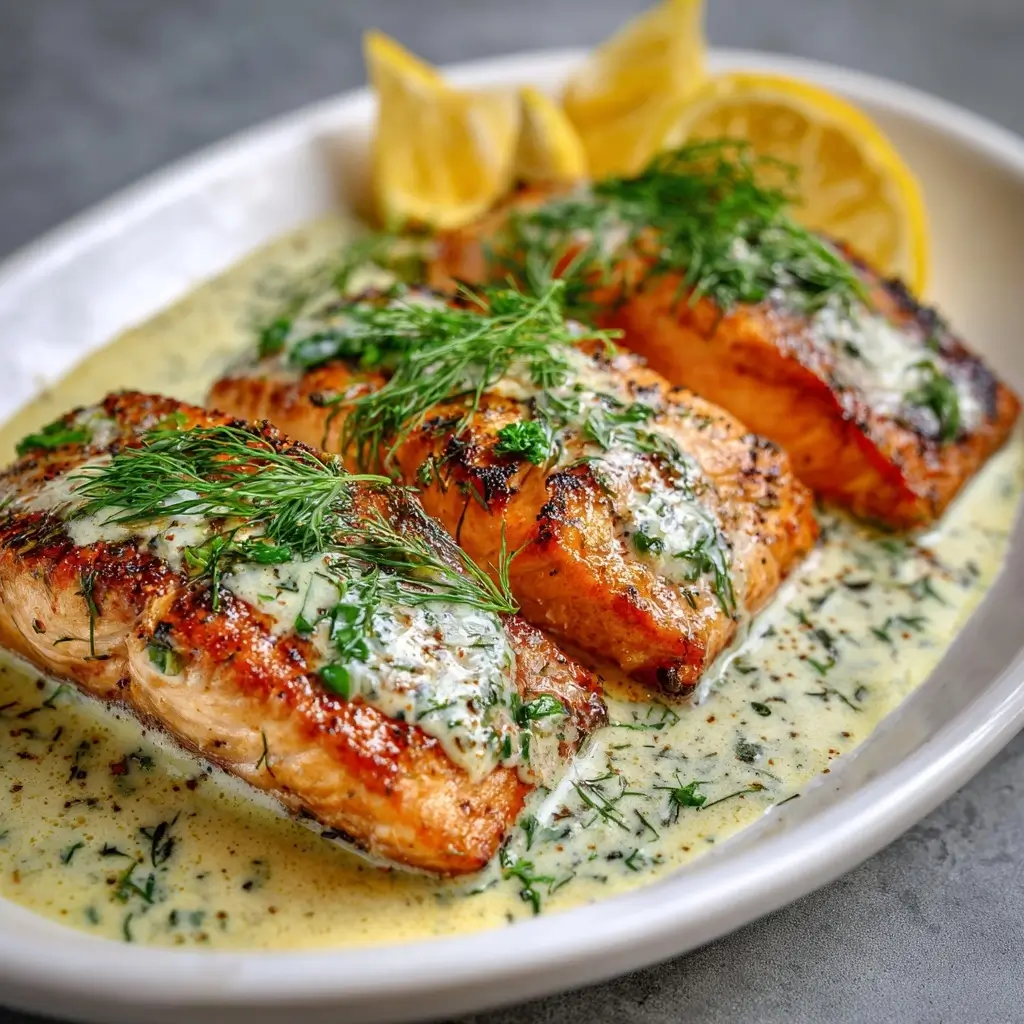
Baked Salmon with Lemon Dill Sauce
Baked Salmon with Lemon Dill Sauce: A Flavorful and Healthy Delight
Baked salmon with lemon dill sauce is a culinary masterpiece that combines the rich, buttery texture of salmon with the bright, zesty flavors of lemon and fresh dill. This dish has become a staple in modern kitchens due to its simplicity, elegance, and health benefits. Whether you’re preparing a weeknight dinner or hosting a special gathering, this recipe delivers gourmet results with minimal effort. Its delicate balance of flavors and textures makes it appealing to both seafood enthusiasts and those new to cooking fish at home.
The History of Baked Salmon with Lemon Dill Sauce
Salmon has long been revered across cultures for its rich flavor and nutritional value. Native populations in the Pacific Northwest have harvested wild salmon for thousands of years, incorporating it into traditional diets and ceremonies. In Nordic countries like Norway, Sweden, and Iceland, salmon is often cured, smoked, or simply grilled with herbs such as dill—a herb native to Eastern Europe and Western Asia that thrives in cooler climates.
The pairing of salmon with dill became especially prominent in Scandinavian cuisine, where dill was used not only for flavor but also as a preservative. Over time, as global palates expanded and interest in heart-healthy foods grew, chefs and home cooks began experimenting with baking salmon rather than smoking or frying it. The addition of lemon brought a refreshing citrus note that cut through the oiliness of the fish, enhancing its natural taste without overpowering it.
Lemon dill sauce emerged as a popular accompaniment in mid-20th century American and European cooking, influenced by French and Mediterranean techniques involving creamy sauces made with yogurt, sour cream, or mayonnaise. Today, baked salmon with lemon dill sauce symbolizes a fusion of tradition and modern wellness trends—honoring ancestral preparation methods while aligning with contemporary desires for nutritious, flavorful meals.
Ingredients Breakdown
The beauty of this recipe lies in its use of fresh, high-quality ingredients that work together harmoniously to elevate the natural richness of salmon. Here’s a detailed breakdown:
- Salmon Fillets: Skin-on, center-cut fillets are ideal because the skin helps protect the flesh during baking, keeping it moist and tender. Look for wild-caught salmon when possible, as it tends to be leaner and more nutrient-dense than farmed varieties.
- Fresh Lemon: Provides two essential components—zest for aromatic intensity and juice for acidity and brightness. Freshly squeezed lemon juice ensures optimal flavor compared to bottled versions.
- Fresh Dill: Offers a grassy, slightly sweet-anise flavor that pairs perfectly with fatty fish. Always opt for fresh dill over dried, which lacks vibrancy and can taste musty.
- Extra Virgin Olive Oil: Used to coat the salmon before seasoning; adds moisture and helps carry flavors into the fish. Choose cold-pressed olive oil for the best quality and taste.
- Garlic: Minced fresh garlic enhances depth and complexity. It caramelizes slightly during baking, adding subtle sweetness.
- Salt and Black Pepper: Essential seasonings that enhance all other flavors. Use sea salt or kosher salt for better texture and mineral content.
- Butter (optional): Often added to the sauce or drizzled over the top before baking for extra richness.
- For the Lemon Dill Sauce: Typically includes Greek yogurt or sour cream as a base, combined with lemon juice, fresh dill, minced shallot or green onion, salt, pepper, and sometimes a touch of honey or mustard for balance.
Step-by-Step Recipe
Follow these clear steps to create a perfectly baked salmon with luscious lemon dill sauce:
- Preheat the Oven: Set your oven to 375°F (190°C). This temperature allows the salmon to cook evenly without drying out.
- Prepare the Baking Sheet: Line a rimmed baking sheet with parchment paper or aluminum foil for easy cleanup. Lightly grease the surface with olive oil or non-stick spray.
- Season the Salmon: Pat the salmon fillets dry with paper towels. Place them skin-side down on the prepared baking sheet. Drizzle each fillet with about 1 teaspoon of olive oil, then rub it evenly over the surface.
- Add Seasonings: Sprinkle both sides of the fillets with salt and freshly ground black pepper. Grate lemon zest directly over the fillets, then squeeze fresh lemon juice on top. Scatter minced garlic evenly across the fillets.
- Optional Butter Addition: For added richness, place a small pat of unsalted butter on top of each fillet.
- Bake the Salmon: Transfer the baking sheet to the preheated oven. Bake for 12–15 minutes, depending on thickness. The salmon is done when it flakes easily with a fork and reaches an internal temperature of 145°F (63°C) at the thickest part.
- Rest the Fish: Remove from the oven and let the salmon rest for 3–5 minutes. This allows juices to redistribute, ensuring moist, flavorful bites.
- Make the Lemon Dill Sauce: While the salmon bakes, combine 1 cup of plain Greek yogurt (or sour cream), 2 tablespoons of fresh lemon juice, 1 tablespoon of finely chopped fresh dill, 1 teaspoon of grated lemon zest, 1 small minced shallot (or green onion), a pinch of salt, and a dash of black pepper in a bowl. Mix well. Taste and adjust seasoning as needed. For a tangier profile, add a half-teaspoon of Dijon mustard.
- Serve: Plate the warm salmon fillets and generously spoon the lemon dill sauce over the top or serve it on the side. Garnish with additional fresh dill sprigs and lemon slices for presentation.
Tips for Perfect Baked Salmon with Lemon Dill Sauce
- Choose High-Quality Salmon: Look for vibrant color, firm flesh, and a clean ocean smell. Avoid any fish with a strong “fishy” odor or dull appearance.
- Don’t Overcook: Salmon continues to cook slightly after removal from the oven. To avoid dryness, remove it just before it appears fully cooked—it will finish resting.
- Uniform Fillet Thickness: If some fillets are thicker than others, fold the thinner end under slightly so they cook evenly.
- Use Fresh Herbs: Dried dill cannot replicate the bright, floral notes of fresh dill. Always use fresh for the best flavor.
- Room Temperature Start: Let the salmon sit at room temperature for 10–15 minutes before baking to ensure even cooking.
- Customize Doneness: Prefer medium-rare? Bake for 10–12 minutes. Like it well-done? Extend to 16–18 minutes, though caution is advised to prevent dryness.
- Double the Sauce: The lemon dill sauce is delicious enough to double—use leftovers as a dip for vegetables or a dressing for grain bowls.
- Clean Citrus: Wash lemons thoroughly before zesting, especially if not organic, to remove any wax or residue.
Variations and Customizations
This recipe is incredibly versatile and can be adapted to suit different tastes, dietary needs, and occasions:
- Gluten-Free & Dairy-Free Version: Naturally gluten-free. For dairy-free lemon dill sauce, substitute Greek yogurt with coconut yogurt or blended silken tofu mixed with lemon juice and herbs.
- Herb Swaps: Replace dill with parsley, tarragon, or chives for a different herbal profile. Tarragon offers a slight licorice note that complements salmon beautifully.
- Spicy Kick: Add a pinch of red pepper flakes to the seasoning mix or stir a dash of hot sauce into the lemon dill sauce.
- Honey-Lemon Glaze: Before baking, brush the salmon with a mixture of honey, lemon juice, and olive oil for a sweet-tangy crust.
- Citrus Variations: Try lime or orange instead of lemon for a tropical twist. Orange pairs especially well with cardamom or ginger.
- Crust Options: Top the salmon with a breadcrumb and herb crust, or a layer of crushed nuts (like almonds or pistachios) for added crunch.
- Whole Roasted Side: Place salmon on a bed of sliced lemons, onions, and fennel bulbs before baking for infused flavor and an elegant presentation.
- Marinated Salmon: Marinate the fillets in lemon juice, olive oil, garlic, and dill for 30 minutes prior to baking for deeper flavor penetration.
- Keto-Friendly: This dish is naturally low-carb and keto-compliant. Serve with roasted asparagus, sautéed spinach, or cauliflower rice.
- Meal Prep Friendly: Cook several fillets at once and store in containers with sauce on the side for up to 3 days in the fridge. Reheat gently in the oven or enjoy cold in salads.
Health Considerations and Nutritional Value
Baked salmon with lemon dill sauce isn’t just delicious—it’s a powerhouse of nutrition. Here’s why it deserves a regular spot on your plate:
- Rich in Omega-3 Fatty Acids: Salmon is one of the best sources of EPA and DHA, essential fats linked to reduced inflammation, improved heart health, and enhanced brain function.
- High-Quality Protein: A 6-ounce serving provides around 34 grams of complete protein, supporting muscle repair, satiety, and metabolic health.
- Vitamin D Boost: Wild salmon is particularly high in vitamin D, crucial for immune function, bone health, and mood regulation—especially important in winter months.
- B Vitamins: Contains significant amounts of B12, niacin (B3), and B6, which support energy production and nervous system health.
- Selenium Content: An antioxidant mineral vital for thyroid function and DNA synthesis.
- Low in Carbohydrates: Ideal for low-carb, paleo, and ketogenic diets.
- Lemon Benefits: Lemon juice is rich in vitamin C and antioxidants, promoting collagen production and aiding iron absorption.
- Dill’s Role: Contains flavonoids and monoterpenes with potential anti-inflammatory and antimicrobial properties.
- Yogurt-Based Sauce: When made with Greek yogurt, the sauce adds probiotics for gut health, along with calcium and protein.
- Mindful Portions: Stick to 4–6 ounces per serving to balance intake, especially if monitoring calorie or mercury exposure (though salmon is generally low in mercury).
Note: While salmon is safe for most people, those with seafood allergies should avoid it entirely. Pregnant women are encouraged to eat 2–3 servings of low-mercury fish like salmon weekly for fetal brain development.
Full Ingredient List
For the Baked Salmon:
- 4 salmon fillets (about 6 oz each), skin-on
- 2 tablespoons extra virgin olive oil
- Zest of 1 lemon
- 2 tablespoons fresh lemon juice
- 2 cloves garlic, minced
- 1 teaspoon sea salt (or to taste)
- Freshly ground black pepper (to taste)
- 4 small pats of unsalted butter (optional)
For the Lemon Dill Sauce:
- 1 cup plain Greek yogurt (or sour cream)
- 2 tablespoons fresh lemon juice
- 1 tablespoon fresh lemon zest
- 3 tablespoons fresh dill, finely chopped
- 1 small shallot, minced (or 2 green onions, sliced)
- ½ teaspoon Dijon mustard (optional)
- Salt and pepper to taste
Detailed Directions
- Preheat and Prepare: Preheat oven to 375°F (190°C). Line a large baking sheet with parchment paper or foil. Lightly oil the surface.
- Pat Dry and Arrange: Use paper towels to pat salmon fillets dry—this helps seasonings adhere and promotes better texture. Place fillets skin-side down on the baking sheet, leaving space between them.
- Season Generously: Drizzle olive oil over each fillet. Sprinkle with salt, pepper, lemon zest, and minced garlic. Squeeze lemon juice evenly over the top. Place a small pat of butter on each if using.
- Bake Until Flaky: Slide into the oven and bake for 12–15 minutes. Check doneness by gently flaking the thickest part with a fork—the inside should be opaque and moist, not translucent.
- Rest Before Serving: Remove from oven and let stand for 5 minutes. This prevents juices from escaping when plated.
- Whip Up the Sauce: In a medium bowl, combine Greek yogurt, lemon juice, lemon zest, chopped dill, minced shallot, Dijon mustard (if using), salt, and pepper. Stir until smooth. Chill until ready to serve, or serve immediately.
- Plate and Garnish: Transfer salmon to serving plates. Spoon lemon dill sauce over the top or serve on the side. Garnish with fresh dill sprigs and lemon wedges.
- Serve With: Pair with roasted vegetables, quinoa, wild rice, steamed greens, or a fresh arugula salad for a complete meal.
Frequently Asked Questions (FAQ)
Q: Can I use frozen salmon?
A: Yes, but thaw it first in the refrigerator overnight. Never bake frozen salmon unless the package specifically states it’s safe to do so, as uneven cooking may result.
Q: How do I know when salmon is fully cooked?
A: The flesh should be opaque and flake easily with a fork. An instant-read thermometer should register 145°F (63°C) at the thickest point.
Q: Can I make the lemon dill sauce ahead of time?
A: Absolutely! Prepare it up to 2 days in advance and store in an airtight container in the fridge. The flavors meld beautifully over time.
Q: Is the skin edible?
A: Yes, and many people love the crispy texture when properly cooked. If desired, you can remove it before or after baking.
Q: Can I grill instead of bake?
A: Definitely! Grill over medium heat (375–400°F) for 4–6 minutes per side, depending on thickness. Use a grilling plank or foil to prevent sticking.
Q: What can I substitute for Greek yogurt?
A: Sour cream, crème fraîche, or dairy-free alternatives like coconut yogurt work well. For a lighter version, use plain low-fat yogurt.
Q: How long does leftover salmon last?
A: Store in an airtight container in the refrigerator for up to 3 days. Reheat gently in the oven at 300°F or enjoy cold in salads.
Q: Can I freeze this dish?
A: While you can freeze cooked salmon, the texture may become slightly mushy upon thawing. It’s best enjoyed fresh or refrigerated short-term. Freeze uncooked seasoned fillets for up to 3 months.
Q: Is wild salmon better than farmed?
A: Both have pros and cons. Wild salmon is typically leaner and higher in certain nutrients, while farmed salmon often has more omega-3s due to diet. Look for sustainably farmed options (e.g., certified by ASC or BAP) to minimize environmental impact.
Q: Can I use dried dill?
A: You can, but use about one-third the amount (dried herbs are more concentrated). However, fresh dill is strongly recommended for superior flavor and aroma.
Summary
Baked salmon with lemon dill sauce is a nutritious, elegant, and easy-to-make dish that brings restaurant-quality flavor to your kitchen. Packed with omega-3s and bursting with fresh citrus and herbal notes, it’s perfect for healthy weeknights or impressive dinners.