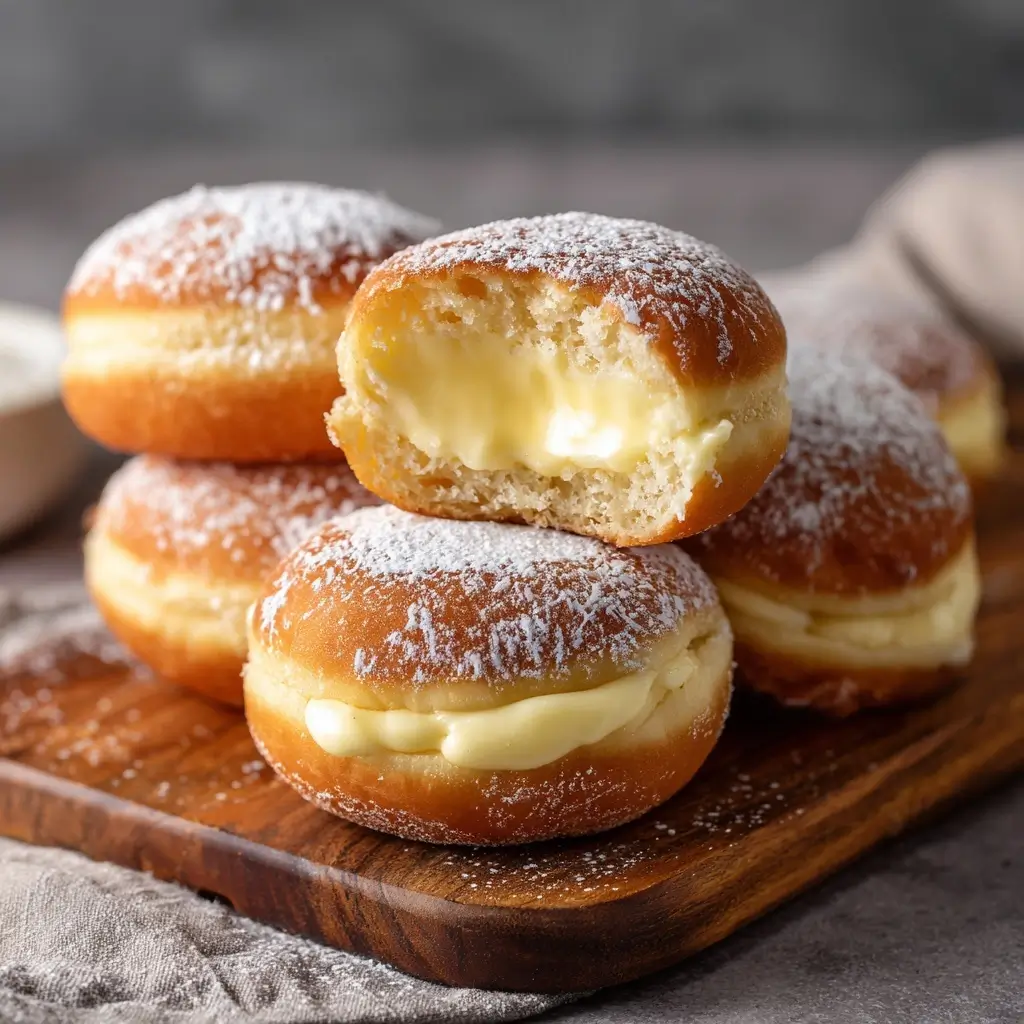
Vanilla Custard Filled Donuts
Vanilla Custard Filled Donuts: A Decadent Delight for Every Occasion
There’s something undeniably comforting about biting into a soft, pillowy donut filled with rich, creamy vanilla custard. The contrast between the tender fried dough and the smooth, luscious filling creates a symphony of textures and flavors that is hard to resist. Whether enjoyed as a weekend treat, a breakfast indulgence, or a dessert after dinner, vanilla custard filled donuts are a beloved classic in American pastry culture—and for good reason. In this comprehensive guide, we’ll dive deep into the origins, ingredients, techniques, variations, and nutritional insights of this delightful confection so you can master it at home and impress family and friends alike.
The History of Vanilla Custard Filled Donuts
The story of the donut begins centuries ago, with roots tracing back to Dutch settlers in America who brought “olykoeks” (oily cakes) to New Amsterdam—modern-day New York—in the 17th century. These early versions were simple fried dough balls, often with fruit or nuts added. Over time, the concept evolved, and by the 19th century, ring-shaped donuts became popular, possibly to ensure even cooking and reduce the dense center.
Filled donuts emerged later, inspired by European pastries like the Italian sfinge and German Berliner, which are essentially jam-filled yeast doughnuts. The idea of injecting custard into donuts gained traction in the 20th century, particularly in diners and bakeries across the United States. Vanilla custard, with its delicate flavor and silky texture, became a favorite filling due to its versatility and crowd-pleasing appeal.
Today, custard-filled donuts are staples at local bakeries, gourmet donut shops, and even fast-food chains. From retro roadside stands to trendy artisanal spots, the vanilla custard filled donut remains a timeless favorite, constantly reinvented with modern twists while honoring its rich culinary heritage.
Ingredients Breakdown: What Makes This Recipe Shine
To create perfect vanilla custard filled donuts, every ingredient plays a vital role—from activating yeast for rise to enriching the dough and creating a velvety custard. Here’s a detailed look at each component:
- Active Dry Yeast: This leavening agent gives the donuts their light, airy texture. It feeds on sugar and produces carbon dioxide, causing the dough to rise. Always check the expiration date and proof the yeast in warm liquid to ensure activity.
- Warm Milk (110°F): Acts as the liquid base and activates the yeast. Warm—but not hot—milk is essential; too hot will kill the yeast, while too cold won’t activate it.
- Granulated Sugar: Feeds the yeast and adds sweetness to the dough. It also contributes to browning during frying.
- Salted Butter (softened): Adds richness and tenderness to the dough. Using salted butter helps balance sweetness, but unsalted can be used with a pinch of salt added.
- Eggs (room temperature): Provide structure, color, and emulsification. Room-temperature eggs blend more smoothly into the dough.
- All-Purpose Flour: The structural backbone. Provides gluten for elasticity and chew. Some recipes include bread flour for a slightly firmer texture, but all-purpose works perfectly here.
- Nutmeg (optional): A warm, aromatic spice that complements the vanilla and enhances overall depth of flavor.
- Fine Sea Salt: Balances sweetness and enhances other flavors. Critical in small amounts to avoid dullness.
For the Vanilla Custard Filling:
- Egg Yolks: Key to thickening the custard. They add richness and a luxurious mouthfeel.
- Cornstarch: A thickening agent that stabilizes the custard and prevents weeping. Combined with egg yolks, it creates a firm yet creamy texture ideal for piping.
- Granulated Sugar: Sweetens the custard and dissolves into the mixture for smooth consistency.
- Whole Milk: Forms the base of the custard. Whole milk provides better fat content for creaminess than low-fat alternatives.
- Heavy Cream (optional): For an even richer custard, substitute part of the milk with heavy cream.
- Vanilla Bean or Pure Vanilla Extract: Real vanilla bean seeds give the most aromatic flavor, but high-quality extract works well too. Avoid artificial vanilla for best results.
- Butter (unsalted): Added at the end for gloss and silkiness. It improves mouthfeel and helps the custard hold shape when piped.
For Frying and Finishing:
- Vegetable Oil, Canola Oil, or Peanut Oil: Neutral-flavored oils with high smoke points are ideal for frying. They prevent off-flavors and allow consistent golden browning.
- Powdered Sugar or Glaze (optional): For finishing. A simple dusting of powdered sugar is classic, but a vanilla glaze or chocolate drizzle elevates presentation.
Step-by-Step Recipe: How to Make Vanilla Custard Filled Donuts at Home
Making custard-filled donuts from scratch may seem intimidating, but with patience and attention to detail, it’s entirely achievable—even for beginner bakers. Follow these steps carefully for bakery-quality results.
Dough Preparation
- Activate the Yeast: In a small bowl, combine 1/4 cup warm milk (110°F), 1 teaspoon sugar, and 2 1/4 teaspoons active dry yeast. Stir gently and let sit for 5–10 minutes until foamy. If it doesn’t foam, your yeast may be expired or the milk too hot/cold.
- Mix Wet Ingredients: In a large mixing bowl or stand mixer, combine 1 cup warm milk, 1/3 cup sugar, 1/3 cup softened butter, 2 large eggs, and the activated yeast mixture. Mix until smooth.
- Add Dry Ingredients: Gradually add 4 cups all-purpose flour, 1/2 teaspoon nutmeg (if using), and 1 teaspoon salt. Mix with a dough hook or wooden spoon until a shaggy dough forms.
- Knead the Dough: Turn out onto a floured surface and knead for 8–10 minutes until smooth, elastic, and slightly tacky but not sticky. Add flour sparingly if needed.
- First Rise: Place dough in a lightly greased bowl, cover with a damp cloth or plastic wrap, and let rise in a warm place for 1 to 1.5 hours, or until doubled in size.
Shaping and Cutting the Donuts
- Punch Down and Roll: After rising, punch down the dough to release air. Roll out on a floured surface to about 1/2-inch thickness.
- Use Donut Cutters: Use a 3-inch round cutter for the outer edge and a 1-inch cutter for the center hole. Re-roll scraps once for additional donuts (avoid overworking).
- Second Rise: Place cut donuts and holes on parchment-lined baking sheets, cover, and let rise for 30–45 minutes until puffy.
Prepare the Vanilla Custard Filling
- In a medium saucepan, whisk together 4 large egg yolks, 1/2 cup sugar, and 1/4 cup cornstarch until pale and thick.
- Heat 2 cups whole milk and 1 split vanilla bean (or 2 tsp vanilla extract) in a saucepan until steaming (do not boil).
- Slowly temper the egg mixture by pouring in 1/2 cup hot milk while whisking vigorously. Then pour everything back into the saucepan.
- Cook over medium heat, stirring constantly, until the mixture thickens and bubbles, about 3–5 minutes.
- Remove from heat, stir in 2 tablespoons butter until melted and smooth.
- Transfer to a bowl, press plastic wrap directly onto the surface to prevent a skin, and refrigerate until completely chilled (at least 2 hours).
Fry the Donuts
- Heat Oil: In a deep pot or fryer, heat 2–3 inches of oil to 350°F–375°F. Use a thermometer for accuracy.
- Fry in Batches: Carefully add 2–3 donuts at a time. Fry for 1–2 minutes per side until golden brown. Flip once using tongs or a slotted spoon.
- Drain: Remove and place on a wire rack over paper towels to drain excess oil. Cool completely before filling.
Fill with Custard
- Transfer chilled custard to a piping bag fitted with a long narrow tip (Bismarck or jelly tip).
- Insert the tip into the side of each donut and gently squeeze until you feel slight resistance—about 2–3 tablespoons per donut.
- Wipe any excess custard and finish with a dusting of powdered sugar or a glaze if desired.
Professional Tips for Success
- Temperature Control: Maintain oil temperature between 350°F and 375°F. Too cool = greasy donuts; too hot = burnt outside, raw inside.
- Don’t Overcrowd: Fry in small batches to maintain oil temperature and ensure even cooking.
- Chill the Custard Thoroughly: Warm custard will melt the donut and leak out. Refrigerate at least 2 hours or overnight.
- Use a Scale: For precise measurements, especially flour. Scooping can lead to over-measuring and dry dough.
- Room-Temperature Ingredients: Ensures even mixing and proper emulsification in both dough and custard.
- Test One Donut First: Fry a single donut to test oil temp and adjust timing as needed.
- Re-Roll Gently: Overworking scraps leads to tough donuts. Press and roll once only.
- Let Donuts Cool Completely: Filling warm donuts causes steam and custard leakage.
Variations and Customizations
Once you’ve mastered the classic version, get creative with these delicious twists:
- Chocolate Custard: Add 1/4 cup cocoa powder or melted dark chocolate to the custard base.
- Strawberry-Filled: Replace custard with seedless strawberry jam or mix jam into vanilla custard.
- Lemon Curd Filled: Swap vanilla custard for homemade lemon curd for a tangy twist.
- Coffee Custard: Infuse milk with instant espresso or strong brewed coffee for a mocha flavor.
- Coconut Custard: Use coconut milk instead of whole milk and add toasted coconut flakes.
- Glazed Varieties: Dip cooled donuts in vanilla glaze, chocolate ganache, or maple icing.
- Stuffed Donuts: Add a surprise center—like a chocolate truffle or caramel cube—before frying.
- Baked Option: For a lighter version, bake donuts at 375°F for 10–12 minutes and fill as usual.
- Mini Donut Holes: Fry only the centers and fill them for bite-sized treats.
- Seasonal Flavors: Pumpkin spice custard in fall, peppermint-vanilla in winter, or lavender-custard in spring.
Health Considerations and Nutritional Value
While vanilla custard filled donuts are undeniably indulgent, understanding their nutritional profile can help you enjoy them mindfully.
Nutritional Overview (Per Donut, Approximate):
- Calories: 350–450 kcal
- Total Fat: 18–22g (saturated fat: 7–10g)
- Carbohydrates: 50–60g (sugars: 20–25g)
- Protein: 6–8g
- Cholesterol: 80–100mg (from eggs and dairy)
- Sodium: 200–300mg
Health Notes:
- High in Refined Carbs and Sugar: The white flour and added sugars contribute to rapid blood sugar spikes. Best enjoyed occasionally or balanced with protein/fiber-rich meals.
- Saturated Fat Content: Due to butter, eggs, and frying oil. Opt for heart-healthy oils like avocado or sunflower if concerned.
- Dairy and Eggs: Contains common allergens. Vegan substitutions are possible (see below).
- Portion Size Matters: One donut is satisfying; multiple servings significantly increase calorie intake.
Lighter Alternatives:
- Baked Donuts: Eliminates deep-frying, reducing fat by up to 50%.
- Whole Wheat or Oat Flour Blend: Increases fiber but may affect texture—best mixed with all-purpose flour.
- Reduced-Sugar Custard: Use monk fruit or erythritol instead of sugar; thicken with cornstarch as usual.
- Plant-Based Version: Use almond milk, vegan butter, flax eggs, and cornstarch-based custard for dairy-free, egg-free donuts.
- Air Fryer Option: Some recipes adapt well to air frying at 350°F for 6–8 minutes, though texture differs slightly.
Full Ingredient List
Donut Dough:
- 2 1/4 teaspoons active dry yeast (1 packet)
- 1 1/4 cups warm whole milk (110°F)
- 1/3 cup granulated sugar
- 1/3 cup unsalted butter, softened
- 2 large eggs, room temperature
- 4 cups all-purpose flour, plus more for dusting
- 1 teaspoon fine sea salt
- 1/2 teaspoon ground nutmeg (optional)
Vanilla Custard Filling:
- 4 large egg yolks
- 1/2 cup granulated sugar
- 1/4 cup cornstarch
- 2 cups whole milk
- 1 vanilla bean (or 2 teaspoons pure vanilla extract)
- 2 tablespoons unsalted butter
Frying and Finishing:
- Vegetable, canola, or peanut oil (for frying)
- Powdered sugar (for dusting)
- Optional glaze: 1 cup powdered sugar + 2–3 tbsp milk + 1/2 tsp vanilla
Detailed Directions
Note: Total time: ~3.5 hours (includes rising and chilling). Active time: ~1 hour.
- Proof the Yeast: In a small bowl, mix 1/4 cup warm milk, 1 tsp sugar, and yeast. Let sit 5–10 minutes until bubbly.
- Make Dough: In a stand mixer with paddle attachment, combine remaining milk, sugar, butter, eggs, and yeast mixture. Mix until blended.
- Form Dough: Switch to dough hook. Gradually add flour, salt, and nutmeg. Mix 5–7 minutes until smooth and elastic.
- First Rise: Place dough in oiled bowl, cover, and let rise 1–1.5 hours in a warm spot until doubled.
- Roll and Cut: Punch down dough. Roll to 1/2-inch thickness. Cut with donut cutter. Place on parchment, cover, and rise 30–45 minutes.
- Make Custard: Whisk yolks, sugar, and cornstarch. Heat milk and vanilla bean (scrape seeds in) until steaming. Temper eggs, return to pan, cook until thick. Stir in butter. Chill 2+ hours.
- Heat Oil: Pour 2–3 inches oil into heavy pot. Heat to 350°F–375°F.
- Fry Donuts: Fry 2–3 at a time, 1–2 minutes per side. Drain on wire rack. Cool completely.
- Fill Donuts: Fit piping bag with Bismarck tip. Fill each donut with 2–3 tbsp chilled custard.
- Finish: Dust with powdered sugar or dip in glaze. Serve within 6–12 hours for best texture.
Frequently Asked Questions (FAQ)
Can I make the dough ahead of time?
Yes! After the first rise, refrigerate the dough overnight. Let it come to room temperature before rolling and cutting.
Can I freeze the donuts?
Unfilled donuts can be frozen for up to 2 months. Thaw at room temperature and reheat slightly before filling. Filled donuts are best fresh.
Why did my custard turn out runny?
Undercooking or inaccurate measurements. Ensure you cook until thick and bubbling, and use exact cornstarch amounts. Cooling also firms it up.
Can I bake instead of fry?
Yes. Bake at 375°F for 10–12 minutes. Texture will be cake-like, not traditional fried. Fill as usual.
How do I store leftover filled donuts?
Keep in an airtight container at room temperature for up to 1 day. Refrigeration may dry out the dough. Best eaten fresh.
Can I use store-bought custard?
Yes, but homemade has superior flavor and holds shape better. Avoid pudding cups meant for eating—use pastry cream if available.
What oil is best for frying donuts?
Neutral oils with high smoke points: canola, vegetable, peanut, or sunflower. Avoid olive oil (low smoke point, strong flavor).
Can I make vegan custard-filled donuts?
Absolutely. Use plant-based milk, vegan butter, flax eggs, and a cornstarch-based custard with agar or tapioca for stability.
Summary
Vanilla custard filled donuts are a heavenly blend of fluffy fried dough and silky,香-scented custard—a timeless treat that brings joy with every bite. With this detailed guide, you can recreate bakery-quality donuts at home, customize flavors, and share them with loved ones.