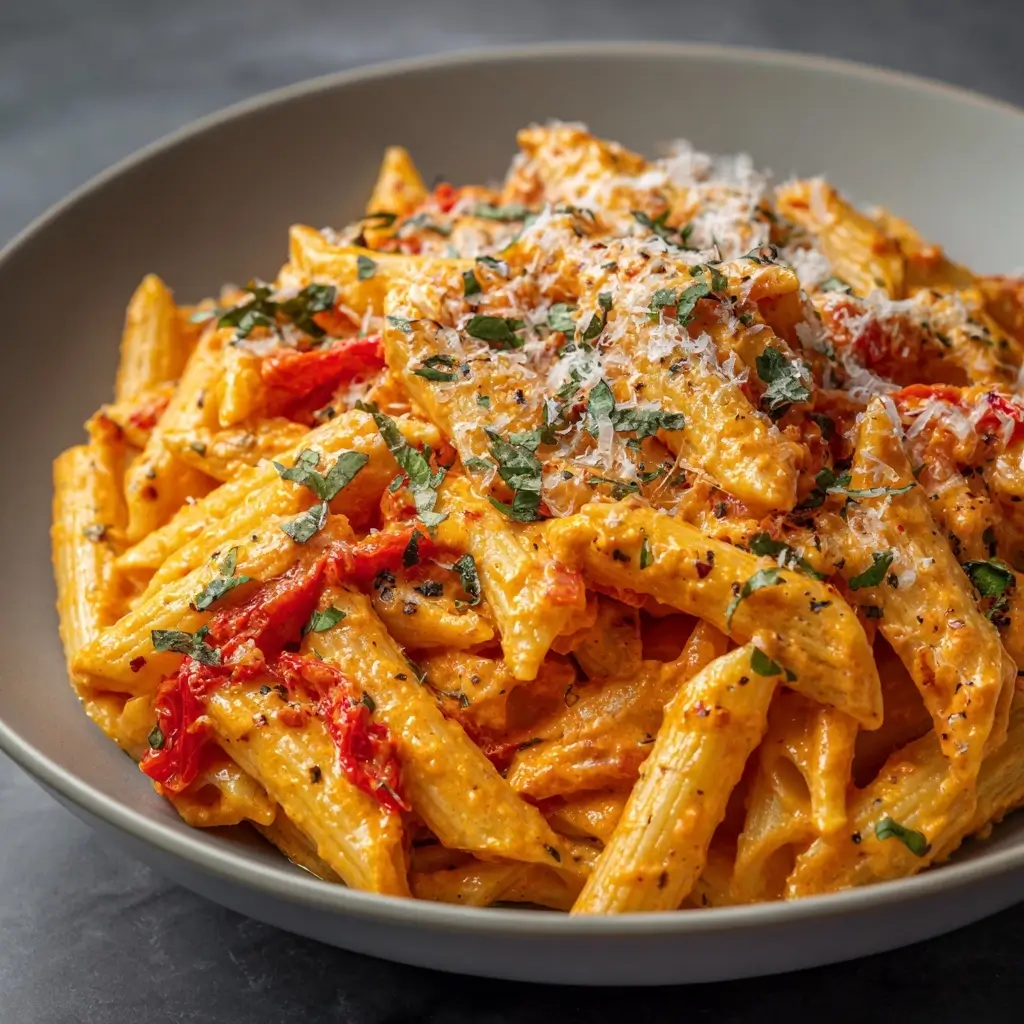
Creamy Roasted Red Pepper Pasta
Creamy Roasted Red Pepper Pasta: A Rich, Flavorful Delight
The History of Creamy Roasted Red Pepper Pasta
The origins of creamy roasted red pepper pasta are rooted in the culinary evolution of Italian-American cuisine, where traditional pasta dishes were reimagined with bold new flavors and ingredients. While classic Italian pasta recipes often rely on simple, high-quality components like olive oil, garlic, tomatoes, and fresh herbs, American adaptations have embraced cream-based sauces and roasted vegetables to create richer, more indulgent meals.
Roasted red peppers themselves have been a staple in Mediterranean cooking for centuries. Countries like Spain, Italy, and Greece frequently use them in tapenades, salads, stews, and sauces. Their natural sweetness and smoky depth enhance a wide range of dishes. In the 20th century, as global ingredients became more accessible and home roasting techniques improved, roasted red peppers gained popularity in North American kitchens.
The fusion of roasted red peppers with creamy pasta likely emerged in the 1980s and 1990s when chefs began experimenting with vegetable-based sauces as alternatives to heavy dairy or meat-laden options. This dish embodies that innovation—offering a velvety texture without relying solely on cream, while still delivering a luxurious mouthfeel. Today, creamy roasted red pepper pasta is celebrated in homes and restaurants alike, appreciated for its vibrant color, comforting consistency, and adaptability to vegetarian, vegan, and gluten-free diets.
Ingredients Breakdown
The magic of this dish lies in the careful selection and balance of each ingredient. Here’s a detailed look at what goes into a perfect bowl of creamy roasted red pepper pasta:
- Roasted Red Peppers (Jarred or Fresh): The star of the show. These bring sweetness, smokiness, and a rich umami flavor. Using jarred peppers offers convenience, while roasting your own allows for deeper control over flavor intensity.
- Fresh Garlic: Adds aromatic depth and pungency. Sautéing it gently prevents bitterness and enhances the overall complexity of the sauce.
- Shallot or Onion: Provides a subtle sweetness and base note that supports the roasted peppers without overpowering them.
- Heavy Cream or Half-and-Half: Creates the luscious, silky texture that defines the “creamy” aspect. For lighter versions, half-and-half works well; for extra richness, go full heavy cream.
- Vegetable or Chicken Broth: Thins the sauce slightly and adds savory depth. Vegetable broth keeps the dish fully plant-based if desired.
- Parmesan Cheese (or Nutritional Yeast for Vegan Option): Contributes saltiness, nuttiness, and helps thicken the sauce naturally through emulsification.
- Fresh Basil or Parsley: Brightens the dish with herbal freshness. Basil complements the sweetness of the peppers especially well.
- Olive Oil: Used for sautéing, it brings a fruity, peppery note that elevates the entire sauce.
- Salt and Black Pepper: Essential seasonings that balance and enhance all other flavors.
- Crushed Red Pepper Flakes (Optional): Introduces a gentle heat that contrasts beautifully with the sweetness of the peppers.
- Pasta (Fettuccine, Penne, or Farfalle Recommended): Holds the sauce well due to its surface area and structure. Whole wheat, chickpea, or gluten-free varieties can be used for dietary needs.
- Lemon Juice (Optional): A small splash can lift the richness and add brightness to the final dish.
Step-by-Step Recipe
Follow these detailed steps to craft a restaurant-quality creamy roasted red pepper pasta from scratch:
- Prepare the Roasted Red Peppers: If using jarred peppers, drain and rinse them lightly under cold water to remove excess brine. Pat dry with paper towels. If roasting fresh, place whole red bell peppers directly over a gas flame, under a broiler, or on a grill, turning occasionally until charred on all sides. Place in a bowl, cover with plastic wrap, and let steam for 10 minutes. Peel off the skin, remove seeds and stems, then slice into strips.
- Cook the Pasta: Bring a large pot of salted water to a boil (use about 1 tablespoon of salt per quart of water). Add your chosen pasta and cook according to package instructions until al dente. Reserve ½ cup of pasta water before draining, then set aside.
- Sauté Aromatics: In a large skillet or sauté pan, heat 2 tablespoons of olive oil over medium heat. Add 1 finely chopped shallot (or small onion) and cook for 3–4 minutes until translucent. Add 3 minced garlic cloves and cook for another 1 minute, stirring constantly to prevent burning.
- Add Roasted Peppers: Stir in 1 cup of chopped roasted red peppers (about 2 large jarred peppers). Cook for 2–3 minutes to blend the flavors. Use a wooden spoon to gently mash some of the pieces for a thicker sauce base.
- Puree the Sauce Base (Optional but Recommended): Transfer the mixture to a blender or food processor. Add ¼ cup of heavy cream or broth and blend until smooth. Return the puree to the skillet.
- Build the Creamy Sauce: Pour in ¾ cup of heavy cream (or half-and-half), ½ cup of broth, and stir to combine. Bring to a gentle simmer over medium-low heat. Let it reduce slightly for 5 minutes, allowing the sauce to thicken.
- Incorporate Cheese: Gradually whisk in ½ cup of freshly grated Parmesan cheese until fully melted and incorporated. Season with salt, black pepper, and a pinch of crushed red pepper flakes if desired.
- Combine with Pasta: Add the drained pasta to the sauce and toss thoroughly to coat. Use reserved pasta water as needed (start with 2–3 tablespoons) to loosen the sauce and help it cling to the noodles.
- Finish with Fresh Herbs: Remove from heat and stir in 2 tablespoons of chopped fresh basil or parsley. A squeeze of lemon juice (about ½ teaspoon) can be added here for a touch of acidity.
- Serve Immediately: Plate the pasta hot, garnishing with extra Parmesan, a drizzle of olive oil, and a sprinkle of fresh herbs.
Tips for Perfect Creamy Roasted Red Pepper Pasta
- Don’t Skip the Pasta Water: The starchy liquid is key to creating a glossy, cohesive sauce that clings to every strand or piece of pasta.
- Use High-Quality Jarred Peppers: Opt for peppers packed in water or brine without preservatives or artificial flavors. Avoid those with excessive vinegar, which can make the sauce too sharp.
- Blend for Smoothness: Blending the sauce ensures a luxuriously creamy texture. If you prefer a chunkier version, skip blending and simply mash the peppers in the pan.
- Avoid Boiling the Cream: Once cream is added, keep the heat at medium-low to prevent curdling or separation.
- Grate Your Own Cheese: Pre-grated cheeses contain anti-caking agents that can make the sauce grainy. Freshly grated Parmesan melts much more smoothly.
- Taste and Adjust: After combining everything, taste and adjust seasoning—especially salt and acid—as the final step. Sometimes a little more pepper, lemon, or even a touch of honey balances the flavors perfectly.
- Let It Rest Briefly: Allow the sauce to sit off heat for a minute after adding cheese to stabilize the emulsion before tossing with pasta.
Variations and Customizations
This versatile recipe lends itself to countless creative twists. Whether you’re catering to dietary preferences, seasonal ingredients, or just looking to mix things up, consider these delicious variations:
- Vegan Version: Replace heavy cream with coconut milk or cashew cream. Use nutritional yeast instead of Parmesan for a cheesy flavor. Ensure the pasta is egg-free.
- Protein-Packed: Add grilled chicken, shrimp, sautéed mushrooms, or white beans for a heartier meal. Tofu or tempeh works great in plant-based versions.
- Spicy Kick: Increase red pepper flakes or add a dash of hot sauce. Roast a jalapeño along with the red peppers for infused heat.
- Herb Infusion: Stir in rosemary, thyme, or oregano during the sauté step for an earthy twist. Alternatively, finish with pesto for a herby punch.
- Seafood Twist: Combine with scallops, crab, or lobster for an elegant dinner. Add seafood just before serving to avoid overcooking.
- Gluten-Free Option: Use gluten-free pasta made from rice, corn, quinoa, or lentils. Be mindful that GF pastas may require less cooking time and absorb more sauce.
- Cream Alternatives: Try Greek yogurt (added off heat), mascarpone, or ricotta blended with broth for different textures and tang levels.
- Add Greens: Fold in baby spinach, arugula, or kale during the last minute of cooking. They wilt quickly and boost nutrition.
- Nutty Crunch: Top with toasted pine nuts, walnuts, or almonds for contrast in texture and flavor.
- Dairy-Free Creaminess: Blend soaked raw cashews with broth and roasted peppers for a rich, neutral-flavored base.
Health Considerations and Nutritional Value
Creamy roasted red pepper pasta can be both indulgent and nutritious, depending on how it’s prepared. Here’s a breakdown of its health profile:
Nutritional Highlights:
- Rich in Vitamin C: Red bell peppers are one of the best sources of vitamin C—just one cup provides over 150% of the daily recommended intake. This antioxidant supports immune function and skin health.
- Source of Antioxidants: Roasting enhances the bioavailability of carotenoids like lycopene and beta-carotene, which support eye health and reduce inflammation.
- Low in Calories (When Made Lighter): By using low-fat dairy or plant-based substitutes, you can enjoy a creamy texture without excessive calories.
- Fiber-Rich Options: Choosing whole grain, legume-based, or vegetable pasta increases fiber content, aiding digestion and promoting satiety.
- Healthy Fats: Olive oil contributes monounsaturated fats, known to support heart health.
Considerations for Health-Conscious Eaters:
- Cream and Cheese Content: Traditional versions can be high in saturated fat and sodium. To reduce this, substitute part of the cream with broth or evaporated milk, and use reduced-fat cheese sparingly.
- Portion Control: This is a satisfying dish, so moderate portions paired with a side salad or steamed vegetables make for a balanced meal.
- Gluten and Allergens: Always check labels if using store-bought ingredients. Dairy, gluten, and tree nuts (in vegan versions) are common allergens.
- Low-Sodium Option: Use no-salt-added roasted peppers, low-sodium broth, and limit added salt. Boost flavor with herbs, lemon, and garlic instead.
Estimated Nutrition (Per Serving, Approx. 1.5 cups with fettuccine, full cream, and Parmesan):
- Calories: ~450–550
- Total Fat: 20–28g (Saturated Fat: 8–12g)
- Carbohydrates: 55–65g (Fiber: 4–6g, Sugars: 6–8g)
- Protein: 12–16g
- Sodium: 400–700mg (varies widely based on ingredients)
Ingredients
- 12 oz (340g) pasta (fettuccine, penne, or farfalle)
- 2 large roasted red peppers (about 1 cup chopped), jarred or homemade
- 2 tbsp olive oil
- 1 medium shallot, finely chopped (or ½ small onion)
- 3 garlic cloves, minced
- ¾ cup heavy cream (or half-and-half for lighter version)
- ½ cup vegetable or chicken broth
- ½ cup freshly grated Parmesan cheese (plus extra for serving)
- 2 tbsp fresh basil or parsley, chopped
- Salt and freshly ground black pepper, to taste
- ¼ tsp crushed red pepper flakes (optional)
- ½ tsp lemon juice (optional)
Directions
- Bring a large pot of salted water to a boil. Cook pasta according to package directions until al dente. Reserve ½ cup of pasta water, then drain and set aside.
- Heat olive oil in a large skillet over medium heat. Add chopped shallot and sauté for 3–4 minutes until soft and translucent.
- Add minced garlic and cook for 1 minute, stirring constantly, until fragrant.
- Stir in the chopped roasted red peppers. Cook for 2–3 minutes, mashing slightly with a spoon. Reduce heat if needed.
- Transfer the mixture to a blender. Add ¼ cup of cream or broth and blend until completely smooth. Return the puree to the skillet.
- Stir in the remaining cream and broth. Bring to a gentle simmer over medium-low heat. Cook for 5 minutes to allow the sauce to thicken slightly.
- Gradually whisk in the Parmesan cheese until melted and smooth. Season with salt, black pepper, and red pepper flakes if using.
- Add the cooked pasta to the sauce and toss to coat evenly. Add reserved pasta water 2–3 tablespoons at a time until the sauce reaches desired consistency.
- Remove from heat. Stir in fresh herbs and lemon juice if desired.
- Serve immediately, garnished with extra Parmesan, a drizzle of olive oil, and a sprinkle of fresh basil.
FAQ
Can I make this ahead of time?
Yes, you can prepare the sauce up to 2 days in advance and store it in an airtight container in the refrigerator. Reheat gently on the stove with a splash of broth or cream to restore creaminess. Cook the pasta fresh when ready to serve.
How do I store leftovers?
Store in an airtight container in the fridge for up to 3 days. Reheat in a skillet over low heat with a bit of liquid to loosen the sauce. Microwaving may cause separation.
Can I freeze creamy roasted red pepper pasta?
Freezing is not recommended due to the dairy content, which may separate upon thawing and reheating. However, the sauce (without pasta) can be frozen for up to 2 months. Thaw overnight and reheat gently, adjusting texture with cream or broth.
Why is my sauce separating?
This usually happens if the sauce gets too hot after adding dairy. Always keep the heat low once cream and cheese are in. If separation occurs, remove from heat, stir in a tablespoon of cold cream, and whisk vigorously.
Can I use sun-dried tomatoes instead?
Sun-dried tomatoes offer a different flavor profile—tangy and intense—but can be combined with roasted peppers for a complex sauce. Soak oil-packed ones briefly to soften before blending.
Is this dish gluten-free?
It can be! Simply use certified gluten-free pasta and ensure all other ingredients (like broth) are GF-safe.
Can I make it nut-free?
Yes, this recipe is naturally nut-free unless you add nuts as a topping. For vegan versions, avoid cashew cream or substitute with oat or soy-based cream.
Summary
Creamy roasted red pepper pasta is a harmonious blend of sweet, smoky, and rich flavors, offering a comforting yet vibrant alternative to traditional cream sauces. Easy to customize and suitable for various diets, it’s a modern classic that delights both weeknight diners and special occasion guests.