Teriyaki Salmon Pineapple Bowls
Introduction
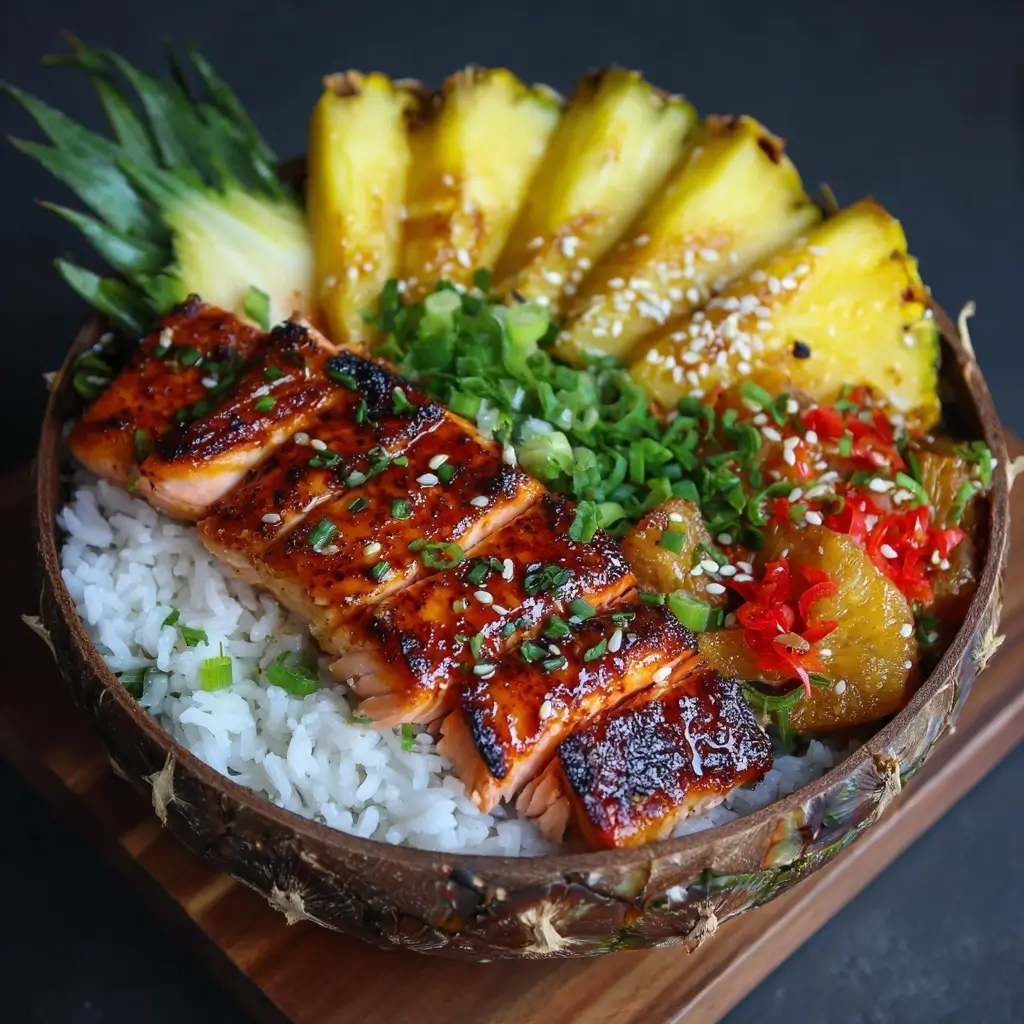
Teriyaki Salmon Pineapple Bowls are a vibrant, flavorful, and nutritious meal that brings together the rich umami of glazed salmon, the natural sweetness of pineapple, and a medley of fresh vegetables over a bed of fluffy rice. This dish is perfect for anyone looking to enjoy restaurant-quality cuisine at home with minimal effort and maximum satisfaction. Whether you’re preparing a weeknight dinner, a healthy lunch option, or an impressive dish to serve guests, this bowl delivers bold flavors, beautiful colors, and balanced nutrition in every bite. Inspired by Japanese and Hawaiian culinary traditions, it blends savory, sweet, tangy, and fresh elements into one harmonious plate that’s as pleasing to the eye as it is to the palate.
The History
The roots of Teriyaki Salmon Pineapple Bowls can be traced back to both Japanese and Hawaiian food cultures. The term “teriyaki” comes from the Japanese words “teri,” meaning luster or shine (from the glossy glaze), and “yaki,” which means grilled or broiled. Originally, teriyaki was a cooking technique developed in Japan during the 17th century, where fish—often salmon or mackerel—was broiled or grilled with a soy-based glaze to enhance flavor and preserve the meat.
Fast forward to the 20th century, when Japanese immigrants brought their culinary traditions to Hawaii. There, local ingredients like pineapple—abundant due to Hawaii’s thriving pineapple industry—began to influence traditional recipes. The fusion of Japanese teriyaki with tropical fruits such as pineapple gave rise to what we now recognize as Hawaiian-style teriyaki dishes. Over time, these flavors made their way to mainland America and evolved into modern grain bowls, combining teriyaki-glazed proteins with rice, vegetables, and fruit for a complete, health-conscious meal. Today, Teriyaki Salmon Pineapple Bowls represent a delicious cross-cultural evolution—a testament to how global flavors can come together to create something both comforting and exciting.
Ingredients Breakdown
The beauty of Teriyaki Salmon Pineapple Bowls lies in the balance of high-quality, complementary ingredients. Each component plays a crucial role in building layers of flavor, texture, and nutrition:
- Salmon Fillets: Rich in omega-3 fatty acids and protein, wild-caught salmon provides a buttery, flaky base that absorbs the teriyaki glaze beautifully.
- Fresh Pineapple: Adds a juicy, tangy-sweet contrast that cuts through the richness of the salmon and enhances the tropical flair of the dish.
- Homemade Teriyaki Sauce: A blend of soy sauce (or tamari for gluten-free), mirin, sake or rice vinegar, brown sugar, garlic, and ginger creates a glossy, savory-sweet glaze that caramelizes perfectly on the salmon.
- White or Brown Rice: Serves as the hearty foundation. Jasmine or sushi rice offers a fragrant, sticky texture, while brown rice adds fiber and a nutty flavor.
- Vegetables: Common choices include shredded carrots, cucumber ribbons, red cabbage, edamame, and sliced avocado—each contributing crunch, color, and nutrients.
- Garnishes: Sesame seeds, sliced green onions, cilantro, and pickled ginger add freshness, aroma, and visual appeal.
- Optional Add-ons: Kimchi, nori strips, sriracha mayo, or a soft-boiled egg can elevate the bowl with extra heat, umami, or creaminess.
Using fresh, high-quality ingredients ensures the best possible taste and nutritional value, making this bowl not just delicious but also wholesome.
Step-by-Step Recipe
- Prepare the Rice: Rinse 1 cup of jasmine or brown rice under cold water until the water runs clear. Combine with 2 cups of water in a saucepan, bring to a boil, then reduce to a simmer. Cover and cook for 15–18 minutes (for white rice) or 40–45 minutes (for brown rice). Let it rest for 10 minutes, then fluff with a fork. Optionally, stir in a splash of rice vinegar and a pinch of sugar for a sushi-style finish.
- Make the Teriyaki Sauce: In a small saucepan, combine ½ cup soy sauce, ¼ cup mirin, ¼ cup sake or rice vinegar, 3 tablespoons brown sugar, 2 minced garlic cloves, and 1 tablespoon freshly grated ginger. Bring to a gentle simmer over medium heat, stirring until the sugar dissolves. In a separate bowl, mix 1 tablespoon cornstarch with 2 tablespoons water to make a slurry. Slowly whisk the slurry into the sauce and continue simmering for 3–5 minutes until thickened and glossy. Remove from heat and set aside.
- Marinate the Salmon: Place 4 salmon fillets (about 6 oz each) in a shallow dish. Pour ¼ cup of the teriyaki sauce over them, turning to coat. Let marinate for 15–30 minutes in the refrigerator.
- Cook the Salmon: Preheat oven to 400°F (200°C). Line a baking sheet with parchment paper. Remove salmon from marinade (reserve the marinade) and place on the sheet. Bake for 12–15 minutes, or until the salmon flakes easily with a fork. For a caramelized finish, brush the top with more teriyaki sauce during the last 3–5 minutes of cooking. Alternatively, grill or pan-sear the salmon for a smoky crust.
- Prepare the Toppings: While the salmon cooks, peel and chop 1 cup of fresh pineapple into bite-sized chunks. Julienne 1 carrot, slice 1 cucumber, thinly slice ½ cup red cabbage, halve ½ cup shelled edamame, and dice 1 ripe avocado.
- Assemble the Bowls: Divide the cooked rice among four bowls. Arrange salmon fillet, pineapple, and assorted vegetables neatly over the rice. Drizzle with additional warm teriyaki sauce.
- Garnish and Serve: Sprinkle with toasted sesame seeds, chopped green onions, cilantro, and a few slices of pickled ginger. Serve immediately with extra sauce on the side.
Tips
- Don’t Overcook the Salmon: Salmon is best when slightly translucent in the center. It continues to cook after removal from heat, so pull it out just before it reaches your desired doneness.
- Double the Teriyaki Sauce: Make extra sauce to use as a marinade, glaze, or dipping sauce. Store in an airtight container in the fridge for up to two weeks.
- Use Fresh Ginger and Garlic: Avoid powdered versions for the sauce—they lack the bright, aromatic punch essential for authentic flavor.
- Toast the Sesame Seeds: Lightly toast sesame seeds in a dry skillet over low heat until golden and fragrant for enhanced nuttiness.
- Prep Ahead: Cook rice and make sauce up to 3 days in advance. Chop vegetables and store them separately in airtight containers to maintain crispness.
- Brighten the Bowl: A squeeze of fresh lime juice over the finished bowl adds acidity that balances the sweetness of the teriyaki and pineapple.
- Control Sweetness: Reduce brown sugar or substitute with honey or maple syrup if you prefer a less sweet glaze.
Variations and Customizations
This recipe is highly adaptable to suit different tastes, dietary needs, and ingredient availability:
- Protein Swap: Replace salmon with teriyaki chicken, shrimp, tofu, or scallops for a different twist.
- Grain Alternatives: Use quinoa, cauliflower rice, or forbidden black rice for lower-carb or higher-protein bases.
- Vegan Version: Use firm tofu or tempeh instead of salmon, and ensure the teriyaki sauce is made with coconut aminos instead of soy sauce for a soy-free, vegan option.
- Spicy Kick: Add sriracha, chili flakes, or a spicy mayo drizzle (mix mayonnaise with sriracha and a touch of lime) for heat lovers.
- Fruit Variations: Substitute pineapple with mango, peaches, or even grilled apples for seasonal variety.
- Extra Crunch: Top with crushed peanuts, crispy wonton strips, or tempura flakes.
- Low-Sodium Option: Use low-sodium soy sauce and reduce added sugar to manage blood pressure and calorie intake.
- Kid-Friendly: Dice ingredients smaller, reduce ginger and garlic intensity, and serve with mild vegetables like steamed broccoli or corn.
Health Considerations and Nutritional Value
Teriyaki Salmon Pineapple Bowls are not only delicious but also packed with nutrients that support overall health:
- Omega-3 Fatty Acids: Salmon is one of the best sources of EPA and DHA, which promote heart and brain health, reduce inflammation, and support cognitive function.
- High-Quality Protein: Each serving provides around 30–40 grams of protein, helping with muscle repair, satiety, and metabolic health.
- Dietary Fiber: Vegetables and whole grains like brown rice contribute fiber, aiding digestion and promoting gut health.
- Vitamins and Antioxidants: Pineapple contains bromelain, an enzyme that aids digestion and has anti-inflammatory properties, along with vitamin C. Carrots offer beta-carotene (vitamin A), while edamame provides folate and vitamin K.
- Balanced Carbohydrates: The natural sugars in pineapple and brown rice provide sustained energy without spiking blood sugar excessively, especially when paired with protein and fat.
- Sodium Awareness: Traditional soy sauce can be high in sodium. To reduce sodium content, use reduced-sodium soy sauce or coconut aminos, and control portion sizes of the teriyaki sauce.
- Portion Control: While nutrient-dense, the rice and sauce can increase calorie count. For weight management, consider using a smaller portion of rice or substituting with cauliflower rice.
Average nutritional values per serving (with salmon, brown rice, vegetables, pineapple, and 3 tbsp teriyaki sauce): approximately 550–650 calories, 35g protein, 60g carbohydrates, 20g fat (mostly healthy fats), 8g fiber, and 900–1100mg sodium (adjustable).
Ingredients
- 4 (6 oz) salmon fillets, skin-on or skinless
- 1 cup jasmine or brown rice
- 2 cups water (for rice)
- ½ cup soy sauce (or tamari/coconut aminos for gluten-free/soy-free)
- ¼ cup mirin (sweet rice wine)
- ¼ cup sake or rice vinegar
- 3 tbsp brown sugar (or honey/maple syrup)
- 2 cloves garlic, minced
- 1 tbsp fresh ginger, grated
- 1 tbsp cornstarch
- 2 tbsp water (for slurry)
- 1 cup fresh pineapple, cubed
- 1 large carrot, julienned
- 1 cucumber, sliced or ribboned
- ½ cup red cabbage, thinly sliced
- ½ cup shelled edamame (cooked)
- 1 avocado, diced
- 2 green onions, sliced
- 1 tbsp sesame seeds, toasted
- 2 tbsp pickled ginger (optional)
- Lime wedges, for serving
Directions
- In a saucepan, rinse rice until water runs clear. Add 2 cups water, bring to a boil, then reduce heat to low, cover, and simmer for 15–18 minutes (white rice) or 40–45 minutes (brown rice). Remove from heat, let sit covered for 10 minutes, then fluff with a fork.
- To make teriyaki sauce: In a small saucepan, combine soy sauce, mirin, sake (or vinegar), brown sugar, garlic, and ginger. Simmer over medium heat for 3–4 minutes. Mix cornstarch and water, stir into sauce, and cook another 2–3 minutes until thickened. Cool slightly; reserve ¼ cup for marinating, rest for glazing.
- Place salmon fillets in a dish, pour ¼ cup teriyaki sauce over them, and marinate for 15–30 minutes.
- Preheat oven to 400°F (200°C). Place salmon on a lined baking sheet. Bake for 12–15 minutes, brushing with extra sauce halfway through.
- While salmon cooks, prepare all vegetables and pineapple.
- To assemble, divide rice among four bowls. Top with salmon, pineapple, carrots, cucumber, cabbage, edamame, and avocado.
- Drizzle with warm teriyaki sauce. Garnish with green onions, sesame seeds, pickled ginger, and a squeeze of lime.
- Serve immediately with extra sauce on the side.
FAQ
Can I make this ahead of time?
Yes! Cook the rice and sauce up to 3 days in advance. Marinate the salmon the night before. Chop vegetables and store them separately. Assemble bowls just before eating for best texture.
Can I use frozen pineapple?
Fresh pineapple is preferred for its juiciness and texture, but thawed frozen pineapple can work in a pinch. Drain well to avoid watery bowls.
Is teriyaki sauce gluten-free?
Traditional soy sauce contains wheat. Use tamari or coconut aminos to make the dish gluten-free.
How do I store leftovers?
Store components separately in airtight containers in the fridge for up to 3 days. Reheat salmon and rice gently to avoid drying out the fish.
Can I grill the salmon?
Absolutely! Grilling adds a smoky flavor. Brush the grill with oil and cook salmon over medium heat for 4–5 minutes per side.
What if I don’t have mirin?
Substitute with ¼ cup rice vinegar plus 1 tablespoon sugar to mimic the sweet-tangy profile.
Are these bowls kid-friendly?
Yes! Kids love the sweet pineapple and mild salmon. Serve with less ginger/garlic in the sauce and fun toppings like corn or peas.
Summary
Teriyaki Salmon Pineapple Bowls combine succulent, glazed salmon with sweet pineapple, fresh vegetables, and fluffy rice for a nutritious, globally inspired meal bursting with flavor and color. Easy to customize and perfect for meal prep, this dish brings the taste of the tropics and the elegance of Japanese cuisine straight to your table.