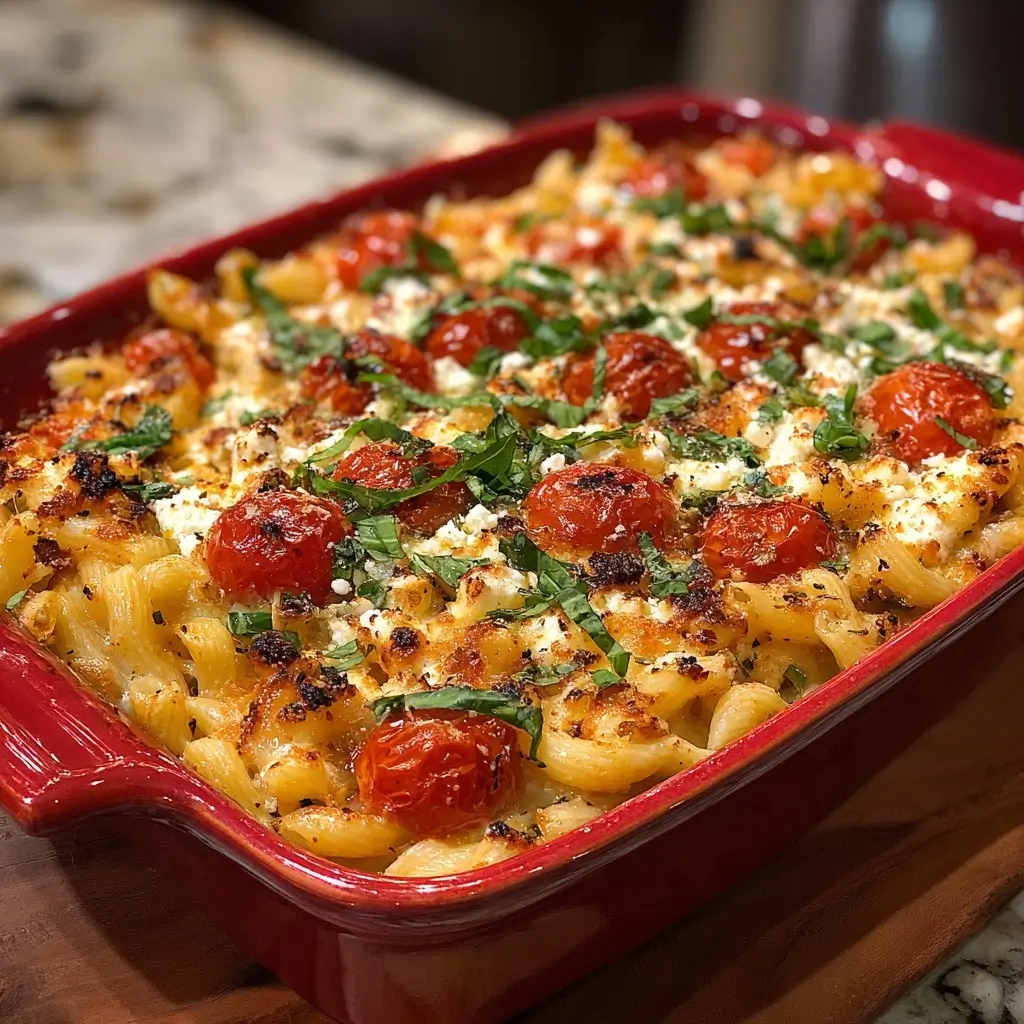
Baked Feta Pasta with Tomatoes
Baked Feta Pasta with Tomatoes
The Baked Feta Pasta with Tomatoes has taken the culinary world by storm, becoming a viral sensation across social media platforms like TikTok, Instagram, and Pinterest. This creamy, tangy, and delightfully simple dish emerged in early 2021, credited to Finnish food blogger Jalapeno Lena (Lena Puolakka), who first shared her creation on social media. Her original post quickly gained traction, inspiring thousands of home cooks around the globe to recreate the dish using minimal ingredients and one baking tray. What started as a cozy Nordic comfort meal soon became an international phenomenon, embraced for its rustic charm, vibrant colors, and foolproof method.
The History
Baked Feta Pasta is a modern example of how digital culture can rapidly transform a humble recipe into a global trend. Originating in Finland—a country known for its minimalist approach to cooking—the dish reflects Scandinavian principles: simplicity, quality ingredients, and minimal cleanup. Unlike traditional Italian pasta dishes that rely on stovetop sauces, this recipe uses the oven to meld flavors together, creating a rich, creamy sauce from feta cheese and roasted tomatoes. The viral wave began when users started tagging #BakedFetaPasta, leading major food publications like Food & Wine, Bon Appétit, and The New York Times to feature it. It even prompted supermarkets to report spikes in feta cheese sales. While not rooted in centuries-old tradition, this dish represents the evolution of comfort food in the digital age—accessible, photogenic, and deliciously satisfying.
Ingredients Breakdown
The beauty of Baked Feta Pasta lies in its short and straightforward ingredient list. Each component plays a vital role in building flavor, texture, and visual appeal:
- Feta Cheese: The star of the dish. Traditionally made from sheep’s milk or a blend of sheep and goat milk, feta adds a salty, tangy richness. When baked, it softens and blends seamlessly into the sauce.
- Cherry or Grape Tomatoes: These small tomatoes burst during baking, releasing their sweet juices and natural acidity, which balances the saltiness of the feta.
- Garlic: Fresh cloves infuse the oil and tomatoes with aromatic depth. Roasting mellows their sharpness while enhancing umami.
- Olive Oil: High-quality extra virgin olive oil carries flavors, helps roast the tomatoes evenly, and contributes to the silky sauce consistency.
- Pasta: Typically penne, rigatoni, or fusilli are used for their ability to hold sauce. The starch released during cooking helps emulsify the final mixture.
- Fresh Basil: Added at the end for brightness and herbal contrast. Its slight peppery note cuts through the creaminess.
- Optional Additions: Red pepper flakes for heat, black pepper for spice, salt (sparingly due to feta’s saltiness), and a splash of pasta water to adjust consistency.
- Cream or Mascarpone (optional): Some variations include a dollop for extra richness and smoothness.
Step-by-Step Recipe
- Preheat the Oven: Set your oven to 400°F (200°C). This temperature ensures the tomatoes caramelize slightly while the feta melts without burning.
- Prepare the Baking Pan: Use a large oven-safe baking dish or sheet pan. Arrange 500g (about 1 lb) of cherry or grape tomatoes in a single layer. Nestle a block (200–250g) of feta cheese in the center. Add 4–6 peeled garlic cloves scattered around.
- Douse with Olive Oil: Drizzle generously with 1/4 cup (60ml) of extra virgin olive oil. Season lightly with freshly ground black pepper and a pinch of red pepper flakes if desired. Avoid adding too much salt at this stage since feta is naturally salty.
- Bake Until Roasted: Place in the preheated oven and bake for 30–40 minutes. The tomatoes should wrinkle, burst, and begin to caramelize, while the feta softens and develops golden edges.
- Cook the Pasta: While the vegetables roast, bring a large pot of salted water to a boil. Cook 12 oz (340g) of pasta according to package instructions until al dente. Reserve 1 cup of starchy pasta water before draining.
- Combine Everything: Once the feta and tomatoes are done, use a fork to crumble the feta into the tomato mixture, stirring gently to form a creamy sauce. Add the drained pasta directly into the hot baking dish.
- Emulsify the Sauce: Toss everything together vigorously, adding splashes of reserved pasta water as needed to create a glossy, cohesive sauce that coats each noodle.
- Finish with Fresh Herbs: Tear fresh basil leaves over the top just before serving. Taste and adjust seasoning if necessary.
- Serve Warm: Plate immediately while hot. Optionally, garnish with extra basil, cracked pepper, or a drizzle of olive oil.
Tips for the Best Baked Feta Pasta
- Use Full-Fat Feta: Opt for a high-quality block of feta packed in brine rather than pre-crumbled versions, which are often dry and less flavorful.
- Don’t Skimp on Garlic: The roasted garlic becomes sweet and creamy, blending beautifully into the sauce.
- Roast Until Jam-Like: Let the tomatoes cook long enough so they break down and thicken. This concentrates flavor and improves sauce texture.
- Reserve Pasta Water: The starchy liquid is essential for binding the sauce. Add it gradually until you achieve a silky finish.
- Stir Vigorously: After combining pasta and roasted ingredients, toss well to ensure every strand is coated. A wooden spoon or tongs work best.
- Add Cream for Luxe Texture: For a richer version, stir in 2–3 tablespoons of heavy cream, mascarpone, or cream cheese after baking.
- Avoid Overcooking Pasta: Cook just until al dente, as it will continue to absorb sauce when mixed.
- Try Different Pastas: Short tubular shapes like penne or ziti trap sauce well, but campanelle or farfalle also work beautifully.
Variations and Customizations
One of the reasons Baked Feta Pasta remains popular is its versatility. Here are some creative ways to customize it:
- Vegetarian Boost: Add roasted bell peppers, zucchini slices, spinach, or artichoke hearts for more color and nutrients.
- Protein-Packed Version: Top with grilled chicken, shrimp, salmon, or plant-based chickpeas or lentils for added protein.
- Dairy-Free Option: Substitute feta with a dairy-free alternative made from almonds or tofu, seasoned with lemon juice and salt for tanginess.
- Herb Swaps: Replace basil with fresh oregano, parsley, or dill depending on your flavor preference.
- Spicy Kick: Increase red pepper flakes or add sliced jalapeños before baking for a fiery twist.
- Lemon Zest: Grate lemon zest over the finished dish for a bright, citrusy lift.
- Cheese Variations: Mix in ricotta, mozzarella, or goat cheese for different textures and flavor profiles.
- Pesto Swirl: Stir in a spoonful of basil pesto after mixing for an herbaceous punch.
- Olive Addition: Stir in kalamata or green olives for a briny Mediterranean touch.
- Gluten-Free Adaptation: Use gluten-free pasta such as brown rice or corn-based varieties without altering the rest of the method.
Health Considerations and Nutritional Value
While undeniably delicious, Baked Feta Pasta is moderately high in fat and sodium, primarily due to the feta and olive oil. However, it also offers several nutritional benefits:
- Healthy Fats: Olive oil provides monounsaturated fats, known to support heart health and reduce inflammation.
- Calcium and Protein: Feta cheese delivers calcium and moderate protein, though it’s higher in saturated fat and sodium compared to other cheeses.
- Antioxidants: Tomatoes are rich in lycopene, a powerful antioxidant linked to reduced risk of chronic diseases. Cooking enhances lycopene absorption.
- Fiber and Carbohydrates: Whole grain or legume-based pastas can boost fiber content, improving digestion and satiety.
- Low Added Sugar: This recipe contains no refined sugars, relying on natural sweetness from roasted tomatoes.
- Portion Control: Serving sizes matter. A typical portion (1/4 of the recipe) ranges between 500–700 calories depending on additions. To lighten the dish, reduce oil slightly, increase vegetables, and choose lean proteins.
- Sodium Awareness: Since feta is naturally salty, avoid additional salt unless needed. Rinsing feta briefly can reduce sodium levels slightly.
Ingredients
- 500g (1 lb) cherry or grape tomatoes
- 1 block (200–250g) feta cheese, preferably in brine
- 4–6 cloves garlic, peeled
- 1/4 cup (60ml) extra virgin olive oil
- 12 oz (340g) short pasta (penne, rigatoni, or fusilli)
- Salt (optional, to taste)
- Freshly ground black pepper
- Pinch of red pepper flakes (optional)
- 1/2 cup fresh basil leaves, torn
- 1 cup reserved pasta water
- Optional: 2–3 tbsp heavy cream, mascarpone, or cream cheese
Directions
- Preheat oven to 400°F (200°C).
- In a large oven-safe dish, arrange tomatoes in a single layer. Place the block of feta in the center and scatter garlic cloves around.
- Drizzle everything with olive oil. Sprinkle with black pepper, red pepper flakes (if using), and optional salt.
- Bake for 30–40 minutes, until tomatoes are blistered and softened, and feta is warm and slightly golden.
- Meanwhile, cook pasta in salted boiling water until al dente. Reserve 1 cup of pasta water, then drain.
- Remove baking dish from oven. Crumble the feta with a fork and mix into the tomatoes and garlic to form a creamy sauce.
- Add cooked pasta to the dish and toss thoroughly, adding reserved pasta water a little at a time to reach desired creaminess.
- If using cream or mascarpone, stir it in now for extra richness.
- Finish with torn basil leaves and additional seasoning if needed.
- Serve immediately while warm, optionally garnished with extra herbs or a drizzle of olive oil.
FAQ
Can I make Baked Feta Pasta ahead of time?
Yes, you can roast the tomatoes and feta in advance and store them in the fridge for up to 2 days. Reheat before tossing with freshly cooked pasta.
Can I freeze this dish?
Freezing is not recommended, as the texture of the tomatoes and feta may degrade upon thawing, becoming grainy or watery.
Why is my sauce too dry?
You likely didn’t use enough pasta water. Always reserve starchy water and add it gradually while mixing to achieve a creamy consistency.
Can I use dried basil instead of fresh?
Fresh basil is ideal for its bright flavor, but if unavailable, use 1 teaspoon of dried basil. Add it earlier during baking for better infusion.
Is this recipe gluten-free?
Yes, simply substitute with your favorite gluten-free pasta and ensure all other ingredients are certified gluten-free.
Can I air fry instead of bake?
Yes! Place tomatoes and feta in an air fryer basket and cook at 375°F (190°C) for 15–20 minutes, shaking halfway through.
What can I do with leftovers?
Refrigerate in an airtight container for up to 3 days. Reheat gently on the stove with a splash of water or broth to revive the sauce.
Can I use canned tomatoes?
While possible, fresh cherry tomatoes are preferred for their sweetness and texture. If using canned, opt for fire-roasted diced tomatoes and drain excess liquid.
Summary
Baked Feta Pasta with Tomatoes is a modern culinary sensation that combines minimal effort with maximum flavor, featuring roasted cherry tomatoes, creamy feta, garlic, and pasta tossed in a luscious, olive oil-based sauce. Easy to customize and perfect for weeknight dinners, this dish celebrates simplicity, freshness, and the joy of one-pan cooking.