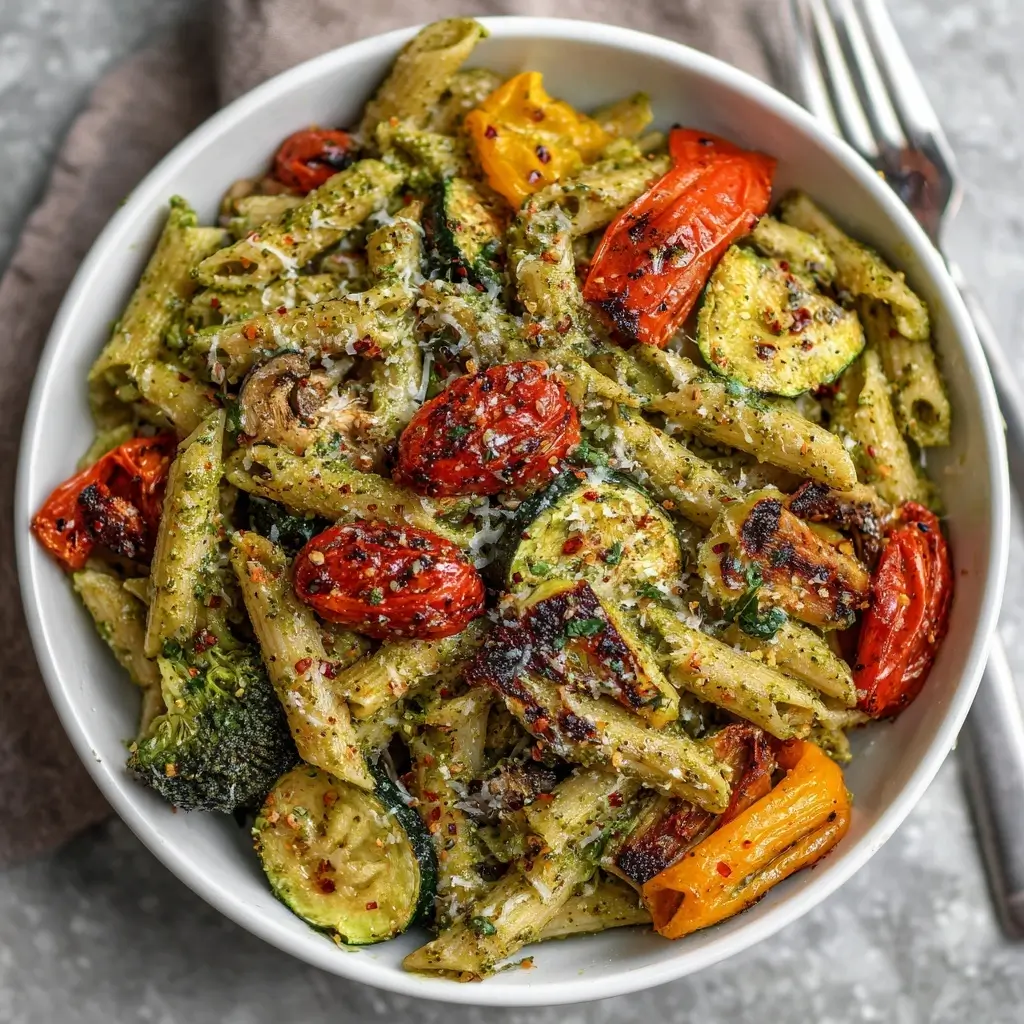
Creamy Pesto Pasta with Roasted Veggies
Creamy Pesto Pasta with Roasted Veggies
Introduction
Creamy Pesto Pasta with Roasted Veggies is a harmonious blend of rich, herby pesto, velvety creaminess, and the natural sweetness of roasted vegetables—all tossed together with tender pasta for a dish that’s as satisfying as it is nutritious. This recipe is perfect for weeknight dinners, meal prepping, or impressing guests at a casual dinner party. Whether you’re a seasoned home cook or just starting your culinary journey, this dish offers a balanced fusion of textures and flavors that delight the palate. With its vibrant colors and aromatic profile, it’s more than just a meal—it’s an experience on a plate.
The History
The roots of this dish trace back to two distinct culinary traditions: Italian pasta culture and the rustic art of roasting vegetables. Pasta has been a staple in Italian cuisine since at least the 12th century, with evidence suggesting earlier forms existed during Roman times. The word “pesto” comes from the Genoese word pestâ, meaning “to pound,” referencing the traditional method of making basil pesto using a mortar and pestle. Classic Genovese pesto combines fresh basil, pine nuts, garlic, Parmesan cheese, olive oil, and salt—ingredients emblematic of Liguria’s fertile coastal region.
Roasting vegetables, on the other hand, is a technique used across cultures for centuries, enhancing natural sugars and creating deep, caramelized flavors. In Mediterranean cooking, roasting root vegetables and seasonal produce was both practical and delicious. The modern twist of combining creamy pesto with roasted veggies reflects contemporary preferences for bold flavors and healthier, plant-forward meals. While not a traditional Italian dish per se, Creamy Pesto Pasta with Roasted Veggies is a testament to global culinary evolution—honoring heritage while embracing innovation.
Ingredients Breakdown
To create a perfectly balanced Creamy Pesto Pasta with Roasted Veggies, each ingredient plays a vital role in contributing flavor, texture, and nutrition:
- Pasta: Use high-quality dried or fresh pasta such as fettuccine, penne, or fusilli. These shapes hold sauce well and provide a satisfying chew.
- Fresh Basil Pesto: Either homemade or store-bought, pesto brings a bright, herbal punch. Key components include fresh basil, garlic, pine nuts (or walnuts), Parmesan cheese, extra virgin olive oil, and lemon juice.
- Heavy Cream or Half-and-Half: Adds silkiness and balances the sharpness of the pesto. For a lighter version, substitute with coconut milk or Greek yogurt.
- Vegetables: A colorful mix enhances visual appeal and nutritional value. Ideal choices include bell peppers (red, yellow, orange), zucchini, cherry tomatoes, red onion, broccoli florets, mushrooms, and carrots. Feel free to use seasonal or locally available produce.
- Olive Oil: Essential for roasting veggies and enriching the sauce. Extra virgin olive oil adds fruity notes and health benefits.
- Garlic: Fresh minced garlic boosts aroma and depth in both the roasted veggies and the final sauce.
- Salt and Black Pepper: Fundamental seasonings that elevate all components.
- Grated Parmesan Cheese: Adds umami and a slight saltiness; can be stirred into the sauce or sprinkled on top.
- Lemon Zest and Juice: Brightens the entire dish, cutting through the richness of the cream and cheese.
- Pine Nuts or Walnuts: Often toasted separately and used as a garnish for added crunch and nuttiness.
Step-by-Step Recipe
- Preheat Oven: Set your oven to 400°F (200°C). Line two large baking sheets with parchment paper or lightly grease them.
- Prepare Vegetables: Wash and cut your chosen vegetables into even-sized pieces—about 1-inch chunks—to ensure uniform roasting. Combine in a large bowl.
- Season & Roast: Drizzle vegetables with 3 tablespoons of olive oil, add 3 minced garlic cloves, season with salt and freshly ground black pepper, and toss thoroughly. Spread evenly on baking sheets in a single layer. Roast for 25–30 minutes, flipping halfway through, until golden brown and tender-crisp.
- Cook Pasta: While veggies roast, bring a large pot of salted water to a boil. Add pasta and cook according to package instructions until al dente. Reserve 1 cup of pasta water before draining.
- Make Creamy Pesto Sauce: In a large skillet over medium heat, warm 2 tablespoons of olive oil. Add 1 minced garlic clove and sauté for 30 seconds until fragrant. Stir in ¾ cup of prepared basil pesto and ½ cup heavy cream (or alternative). Cook gently for 2–3 minutes, stirring constantly. If the sauce thickens too much, loosen with a splash of reserved pasta water.
- Combine Everything: Drain cooked pasta and immediately add it to the skillet with the creamy pesto sauce. Toss to coat evenly. Gently fold in the roasted vegetables until everything is well combined and heated through.
- Finish & Serve: Remove from heat. Stir in the zest of half a lemon and a squeeze of juice. Taste and adjust seasoning with additional salt, pepper, or lemon if needed. Transfer to serving bowls and top with freshly grated Parmesan cheese, a drizzle of olive oil, and toasted pine nuts.
Tips
- Don’t Overcrowd the Pan: When roasting vegetables, spread them out in a single layer. Overlapping causes steaming instead of roasting, leading to soggy results.
- Use High Heat: Roasting at 400°F or higher ensures caramelization, which intensifies flavor.
- Reserve Pasta Water: The starchy liquid helps bind the sauce to the pasta and improves texture.
- Balance Creaminess: Start with less cream and add gradually—you can always make it creamier, but you can’t undo excess.
- Add Greens at the End: For extra freshness, stir in baby spinach or arugula right before serving—they’ll wilt slightly and add color and nutrients.
- Toast Your Nuts: Lightly toast pine nuts or walnuts in a dry pan over low heat for 2–3 minutes until fragrant and golden. This deepens their flavor significantly.
- Homemade Pesto Is Best: If time allows, make your own pesto. It’s fresher, brighter, and free of preservatives.
- Meal Prep Friendly: Roast vegetables and cook pasta ahead of time. Reheat and combine with sauce when ready to serve.
Variations and Customizations
This versatile recipe welcomes endless adaptations based on dietary needs, taste preferences, or what’s in your pantry:
- Vegan Version: Use dairy-free pesto (without Parmesan), substitute heavy cream with cashew cream or coconut milk, and top with nutritional yeast for a cheesy flavor.
- Gluten-Free Option: Swap regular pasta for gluten-free varieties made from rice, corn, quinoa, or lentils. Ensure all other ingredients are certified GF.
- Protein Boost: Add grilled chicken strips, sautéed shrimp, crumbled tofu, tempeh, chickpeas, or white beans for a heartier meal.
- Different Pesto Flavors: Experiment with sun-dried tomato pesto, kale-walnut pesto, cilantro-lime pesto, or arugula-almond pesto for unique twists.
- Spicy Kick: Add red pepper flakes to the sauce or toss in sliced jalapeños with the vegetables.
- Cheese Varieties: Try goat cheese, feta, or pecorino romano instead of Parmesan for different flavor profiles.
- Herb Swaps: Mix in fresh parsley, mint, or dill along with or instead of basil for a new aromatic dimension.
- Kid-Friendly Twist: Puree some roasted veggies and blend them into the sauce to sneak in extra nutrition without altering taste drastically.
- Low-Carb Alternative: Replace pasta with spiralized zucchini noodles (zoodles) or shirataki noodles. Add them raw to the hot sauce so they warm without getting mushy.
Health Considerations and Nutritional Value
Creamy Pesto Pasta with Roasted Veggies can be both indulgent and nourishing, depending on how it’s prepared. Let’s break down the key nutritional aspects:
- Vegetables: Packed with fiber, vitamins (A, C, K), antioxidants, and phytonutrients. Roasting preserves most nutrients while enhancing flavor without needing excessive fats.
- Olive Oil: A cornerstone of the Mediterranean diet, rich in monounsaturated fats that support heart health and reduce inflammation.
- Pesto: Contains healthy fats from olive oil and nuts, plus lycopene from tomatoes (if sun-dried) and anti-inflammatory compounds in basil and garlic.
- Pasta: Provides complex carbohydrates for sustained energy. Whole grain or legume-based pastas increase fiber and protein content.
- Cream: Adds saturated fat and calories. To lighten the dish, use half-and-half, evaporated milk, or plant-based alternatives like oat or soy creamer.
- Protein: Naturally moderate due to Parmesan and nuts. Adding lean proteins makes it more filling and balanced.
- Sodium: Store-bought pesto and cheeses can be high in sodium. Opt for low-sodium versions or make your own pesto to control salt levels.
- Calorie Awareness: A typical serving ranges from 450–650 kcal depending on portion size and ingredients. Portion control and smart substitutions help maintain balance.
This dish supports a balanced diet when paired with a side salad or steamed greens. It’s naturally vegetarian and easily adaptable to vegan, gluten-free, or low-carb lifestyles.
Ingredients
- 12 oz (340g) pasta (penne, fusilli, or fettuccine)
- 3 cups mixed vegetables (bell peppers, zucchini, cherry tomatoes, broccoli, red onion, mushrooms)
- ¼ cup olive oil (divided)
- 4 cloves garlic, minced (3 for veggies, 1 for sauce)
- Salt and freshly ground black pepper (to taste)
- ¾ cup basil pesto (homemade or store-bought)
- ½ cup heavy cream (or substitute)
- ½ cup grated Parmesan cheese (plus extra for serving)
- 1 lemon (zest and juice)
- ¼ cup pine nuts or chopped walnuts (toasted)
- Optional: 1 cup cooked chickpeas, grilled chicken, or tofu
Directions
- Preheat oven to 400°F (200°C). Line two baking sheets with parchment paper.
- Chop vegetables into uniform pieces. Place in a large bowl and toss with 3 tbsp olive oil, 3 minced garlic cloves, salt, and pepper.
- Spread vegetables in a single layer on baking sheets. Roast for 25–30 minutes, flipping once halfway, until tender and caramelized.
- While veggies roast, bring a large pot of salted water to a boil. Cook pasta according to package directions until al dente. Reserve 1 cup pasta water, then drain.
- In a large skillet over medium heat, warm 1 tbsp olive oil. Add remaining garlic clove and sauté for 30 seconds.
- Stir in pesto and heavy cream. Simmer gently for 2–3 minutes, stirring often. Add a splash of pasta water if too thick.
- Add drained pasta to the skillet and toss to coat. Fold in roasted vegetables and half the Parmesan cheese.
- Remove from heat. Stir in lemon zest and juice. Adjust seasoning with salt and pepper.
- Serve immediately, garnished with extra Parmesan, toasted pine nuts, and a drizzle of olive oil.
FAQ
Can I make this ahead of time?
Yes! Roast the vegetables and cook the pasta in advance. Store separately in airtight containers in the fridge for up to 3 days. Reheat veggies in the oven or microwave, warm the sauce, and combine just before serving.
How do I store leftovers?
Store in an airtight container in the refrigerator for up to 4 days. Reheat gently on the stove with a splash of water or broth to refresh the sauce.
Can I freeze creamy pesto pasta?
It’s not recommended due to the cream and fresh vegetables, which may separate or become watery upon thawing. However, you can freeze plain roasted veggies or pesto separately for future use.
What pasta works best?
Short, textured pastas like penne, fusilli, rigatoni, or farfalle hold the creamy sauce and roasted veggies exceptionally well.
Is this dish freezer-friendly?
As mentioned, the cream-based sauce doesn’t freeze well. For best quality, enjoy fresh or refrigerated.
Can I use jarred pesto?
Absolutely. Choose a high-quality brand with minimal additives. Taste it first and adjust seasoning accordingly.
How can I make it spicier?
Add crushed red pepper flakes while sautéing garlic, or stir in a dash of hot sauce or harissa paste into the creamy pesto mixture.
Can I skip the cream?
Yes. Substitute with milk, Greek yogurt, ricotta thinned with milk, or omit entirely for a lighter version. The sauce will be less rich but still flavorful.
Are there nut-free pesto options?
Yes—use seeds like sunflower or pumpkin instead of pine nuts. There are also commercially available nut-free pestos for those with allergies.
Can I add greens?
Definitely! Stir in a handful of baby spinach, arugula, or kale during the last minute of cooking. They’ll wilt beautifully into the warm pasta.
Summary
Creamy Pesto Pasta with Roasted Veggies is a vibrant, satisfying dish that marries the richness of creamy pesto with the earthy sweetness of perfectly roasted vegetables over al dente pasta. Healthy, customizable, and bursting with flavor, it’s a modern classic ideal for any occasion—from quick weeknight meals to elegant plant-based dinners.