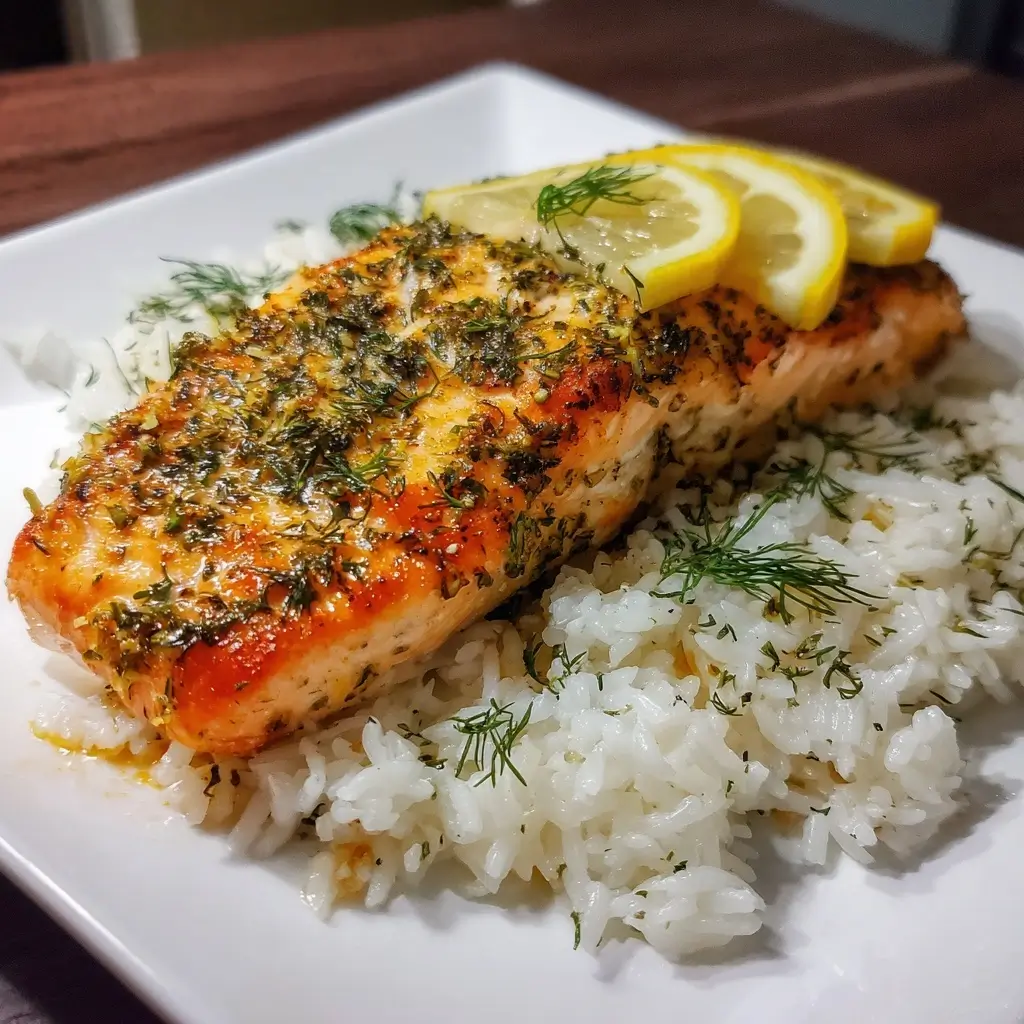
Lemon Dill Salmon with Rice
Lemon Dill Salmon with Rice: A Zesty, Flavorful Delight
There’s something truly magical about the combination of tender salmon, bright lemon zest, and the herbal freshness of dill. When paired with fluffy rice, this Lemon Dill Salmon with Rice becomes a complete meal that’s as nourishing as it is delicious. Whether you’re cooking for yourself after a long day or preparing an elegant dinner for guests, this dish strikes the perfect balance between simplicity and sophistication. It’s light yet satisfying, healthy yet indulgent, and bursting with vibrant Mediterranean flavors. This comprehensive guide will walk you through everything you need to know—from the origins of the dish to tips on perfecting every bite—so you can serve up a restaurant-quality meal in your own kitchen.
The History Behind Lemon Dill Salmon
While there isn’t a single documented origin for Lemon Dill Salmon with Rice, its roots can be traced across several culinary traditions. The use of fresh herbs like dill and citrus to enhance fish dishes dates back centuries, particularly in Scandinavian, Eastern European, and Mediterranean cuisines. In Sweden, dill is a staple herb used in gravlax and various salmon preparations. Greeks often use lemon and olive oil to marinate fish, while Russians and Ukrainians incorporate dill generously into soups, salads, and seafood dishes.
The modern version of Lemon Dill Salmon likely emerged from the fusion of these regional techniques, especially as global palates began embracing clean, fresh flavors in the late 20th century. With the rise of heart-healthy diets and increased awareness of omega-3 fatty acids, salmon became a star protein in Western kitchens. Chefs and home cooks alike began experimenting with herb-citrus marinades, leading to the now-classic pairing of lemon and dill. Served over rice—a universal comfort food—it transformed into a balanced, one-pan (or two-pan) wonder that graces weeknight tables and gourmet menus alike.
Ingredients Breakdown: What Makes This Dish Shine
The beauty of Lemon Dill Salmon with Rice lies in its simple yet thoughtfully chosen ingredients. Each component plays a vital role in building flavor, texture, and nutrition.
- Fresh Salmon Fillets: The centerpiece of the dish, wild-caught salmon is preferred for its rich flavor and higher omega-3 content. Look for fillets with firm flesh, a deep pink-orange hue, and no strong fishy odor.
- Fresh Lemon: Both the juice and zest are used to provide acidity and brightness that cuts through the richness of the salmon. Organic lemons are ideal since you’ll be using the peel.
- Fresh Dill: This delicate herb brings a slightly sweet, grassy note that complements salmon perfectly. Dried dill can be substituted in a pinch but lacks the aromatic punch of fresh.
- Olive Oil: Extra virgin olive oil adds richness and helps carry the flavors while promoting even cooking and a beautiful sear.
- Garlic: Minced fresh garlic enhances the savory depth without overpowering the other ingredients.
- Salt and Black Pepper: Essential seasonings that elevate all other flavors. Use coarse sea salt and freshly ground pepper for best results.
- Rice: Long-grain white rice such as Basmati or Jasmine works best due to its fluffy texture and ability to absorb flavors. Brown rice can be used for a whole-grain alternative, though it requires longer cooking time.
- Vegetable or Chicken Broth: Replaces water when cooking rice to add subtle complexity and depth.
- Butter (optional): A small amount added at the end enriches the rice with a silky finish and enhances mouthfeel.
- Lemon Slices (for garnish): Not just decorative—these caramelize during cooking and infuse additional citrus aroma.
Step-by-Step Recipe: How to Make Lemon Dill Salmon with Rice
This recipe serves 4 and takes approximately 35–40 minutes from start to finish. You’ll cook the rice first, then prepare the salmon while it rests.
Ingredients
- 4 (6-ounce) skin-on salmon fillets
- 2 tablespoons extra virgin olive oil
- Zest and juice of 1 large lemon (about ¼ cup juice)
- 3 tablespoons chopped fresh dill (plus extra for garnish)
- 3 cloves garlic, minced
- 1 teaspoon sea salt (divided)
- ½ teaspoon freshly ground black pepper
- 1½ cups long-grain white rice (Basmati or Jasmine)
- 3 cups low-sodium chicken or vegetable broth
- 1 tablespoon unsalted butter (optional)
- 4 thin lemon slices (for roasting)
- Fresh parsley or green onions (optional, for garnish)
Directions
- Cook the Rice: In a medium saucepan, bring the broth to a boil. Add the rice, reduce heat to low, cover, and simmer for 15–18 minutes, or until liquid is absorbed and rice is tender. Remove from heat and let it sit covered for 5 minutes. Fluff with a fork, stir in butter (if using), and keep warm.
- Preheat Oven: While rice cooks, preheat your oven to 400°F (200°C). Line a baking sheet with parchment paper or lightly grease it to prevent sticking.
- Prepare Salmon Marinade: In a small bowl, whisk together olive oil, lemon juice, lemon zest, minced garlic, ½ teaspoon salt, ¼ teaspoon black pepper, and 2 tablespoons of chopped dill.
- Season the Salmon: Pat the salmon fillets dry with paper towels—this ensures better browning. Place them skin-side down on the prepared baking sheet. Spoon the marinade evenly over each fillet, gently rubbing it into the flesh. Sprinkle remaining chopped dill on top. Arrange lemon slices over or beside the fillets.
- Bake the Salmon: Roast in the preheated oven for 12–15 minutes, depending on thickness. The salmon is done when it flakes easily with a fork and reaches an internal temperature of 145°F (63°C). Avoid overcooking to preserve moisture.
- Rest and Serve: Let the salmon rest for 2–3 minutes after removing it from the oven. This allows juices to redistribute, keeping the fish moist.
- Assemble: Spoon the warm, fluffy rice onto serving plates. Top each portion with a salmon fillet. Drizzle any pan juices over the top for extra flavor. Garnish with fresh dill, parsley, or green onions and an extra wedge of lemon on the side.
Pro Tips for Perfect Lemon Dill Salmon Every Time
- Choose Uniform Fillets: Select salmon pieces that are similar in thickness so they cook evenly. If some are thicker, consider tenting them with foil halfway through baking to prevent overcooking thinner ones.
- Don’t Skip the Zest: Lemon zest contains concentrated essential oils that deliver intense citrus fragrance. Use a microplane for fine grating without bitterness from the pith.
- Dry the Skin: For crispier skin (if pan-searing instead of baking), pat thoroughly dry and sear skin-side down in a hot skillet before finishing in the oven.
- Use Fresh Herbs: Dill loses much of its flavor when dried. If you must substitute, use 1 tablespoon dried dill for every 3 tablespoons fresh—but expect a milder taste.
- Check Doneness Gently: Insert a fork at the thickest part and twist slightly. If the flesh separates easily and appears opaque throughout, it’s ready. Center should still be slightly pink for optimal juiciness.
- Make Ahead Rice: Cook rice earlier in the day and reheat gently with a splash of broth or water to restore moisture.
- Pan Sauce Option: After baking, deglaze the pan with a bit of white wine or broth, scrape up browned bits, and reduce slightly for an elegant sauce to drizzle over the salmon.
Variations and Customizations
This recipe is highly adaptable to suit dietary preferences, seasonal ingredients, or pantry constraints.
- Creamy Version: Stir a spoonful of Greek yogurt or crème fraîche into the rice along with lemon juice and dill for a creamy, tangy twist.
- Gluten-Free: Naturally gluten-free as written—just ensure your broth is certified GF if needed.
- Dairy-Free: Omit butter or replace with a plant-based alternative like olive oil or vegan margarine.
- Low-Carb/Keto Option: Replace rice with cauliflower rice sautéed in olive oil with garlic and herbs.
- Spicy Kick: Add a pinch of red pepper flakes to the marinade or serve with harissa or sriracha on the side.
- Herb Swaps: Try tarragon, chives, or parsley instead of dill for a different herbal profile. Tarragon pairs especially well with lemon.
- Grilled Salmon: Instead of baking, grill the marinated salmon over medium heat for 4–5 minutes per side for a smoky flavor.
- Sheet Pan Dinner: Add chopped asparagus, cherry tomatoes, or zucchini around the salmon on the baking sheet for a full meal in one pan.
- Asian Fusion: Swap dill for cilantro, add ginger and soy sauce to the marinade, and serve over jasmine rice for an East-meets-West take.
Health Considerations and Nutritional Value
Lemon Dill Salmon with Rice isn’t just tasty—it’s also packed with nutrients that support overall health.
- Omega-3 Fatty Acids: Salmon is one of the best sources of EPA and DHA, which promote heart and brain health, reduce inflammation, and may improve mood and cognitive function.
- High-Quality Protein: Each serving provides about 35–40 grams of protein, aiding muscle repair, satiety, and metabolic health.
- Vitamin D: Especially important in winter months, salmon offers a natural source of vitamin D, crucial for immune function and bone health.
- B Vitamins: Rich in B12, niacin, and selenium, supporting energy metabolism and nervous system function.
- Fiber (with Brown Rice): Switching to brown rice increases fiber content significantly, promoting digestive health and stable blood sugar levels.
- Antioxidants: Lemon provides vitamin C, while olive oil contributes polyphenols—both act as antioxidants protecting cells from oxidative stress.
- Low in Added Sugar: This recipe contains no added sugars, making it suitable for diabetic or low-glycemic diets when portion-controlled.
Nutritional Estimate (per serving, with white rice):
Calories: ~550 | Protein: 40g | Fat: 25g (mostly healthy fats) | Carbohydrates: 40g | Fiber: 2g | Sugar: 2g | Sodium: ~600mg (varies by broth)
Frequently Asked Questions (FAQ)
Can I use frozen salmon?
Yes, but thaw it completely in the refrigerator overnight before cooking. Never cook frozen salmon directly unless specified in a recipe, as it leads to uneven texture and excess moisture.
How do I store leftovers?
Store cooled salmon and rice separately in airtight containers in the refrigerator for up to 3 days. Reheat gently in the oven or microwave, adding a splash of water or broth to revive moisture.
Can I air fry the salmon?
Absolutely! Preheat air fryer to 375°F (190°C). Cook marinated salmon for 8–10 minutes, depending on thickness. Results are beautifully crisp on the outside and tender within.
Is this dish safe during pregnancy?
Cooked salmon is generally considered safe and beneficial during pregnancy due to its omega-3 content. Ensure it’s fully cooked to 145°F and sourced from reputable suppliers to minimize mercury exposure. Limit consumption to 2–3 servings per week.
What sides go well with this dish?
Try steamed green beans, roasted Brussels sprouts, a mixed arugula salad with lemon vinaigrette, or sautéed spinach with garlic. A crusty whole-grain bread complements the meal nicely.
Can I make this ahead for meal prep?
Yes! Cook rice and bake salmon, then store components separately. Assemble and reheat when ready to eat. Best eaten within 3 days for peak freshness.
Summary
Lemon Dill Salmon with Rice is a harmonious blend of fresh flavors, wholesome ingredients, and effortless elegance—perfect for both busy weeknights and special occasions. Packed with omega-3s, protein, and vibrant citrus-herb notes, it’s a nourishing meal that delights the senses and supports a healthy lifestyle.