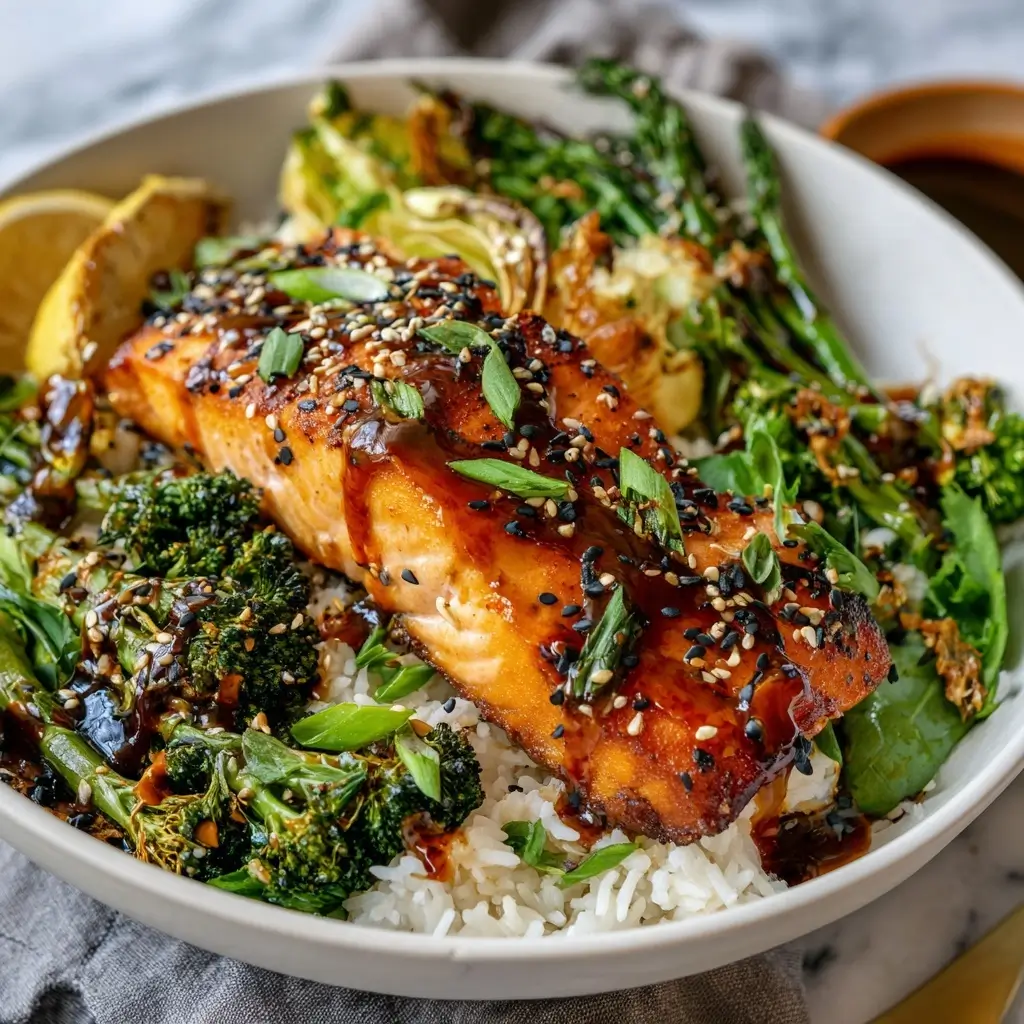
Miso Glazed Salmon Bowls
Miso Glazed Salmon Bowls
The Miso Glazed Salmon Bowl is a harmonious fusion of Japanese culinary tradition and modern health-conscious dining. With its rich umami flavor, tender salmon fillet, and vibrant array of fresh vegetables, this dish has become a favorite among food enthusiasts seeking both taste and nutrition in one bowl. Whether you’re a seasoned home cook or just beginning to explore Asian-inspired cuisine, this recipe offers an accessible yet elegant meal that can be customized to suit various palates and dietary needs.
The History
The roots of miso glazed salmon trace back to traditional Japanese cooking, where miso—a fermented soybean paste—has been used for centuries as a seasoning, preservative, and source of deep savory flavor. In Japan, fish like salmon and mackerel were often marinated in miso-based sauces before grilling, a method known as saikyo-yaki, which originated in Kyoto. This technique traditionally uses white (yellow) miso, known for its mild sweetness, to cure and glaze the fish, resulting in a delicate, caramelized exterior and moist interior. Over time, as Japanese cuisine gained global popularity, chefs and home cooks adapted the method to include other proteins and presentation styles. The “bowl” format emerged from the bento and donburi traditions, where rice is topped with protein and accompaniments for a balanced meal. Today’s Miso Glazed Salmon Bowl combines these ancient techniques with contemporary plating sensibilities, making it a staple in both restaurants and homes around the world.
Ingredients Breakdown
The beauty of the Miso Glazed Salmon Bowl lies in its balance of flavors and textures, achieved through carefully selected ingredients:
- Salmon Fillets: Rich in omega-3 fatty acids and protein, wild-caught salmon provides a buttery texture that pairs perfectly with the sweet-savory miso glaze.
- Miso Paste: The star ingredient. White miso is recommended for its mellow flavor, though red or mixed miso can add depth. Fermented for weeks to months, miso contributes probiotics and umami richness.
- Rice Vinegar: Adds brightness and helps balance the richness of the salmon and miso.
- Soy Sauce or Tamari: Enhances saltiness and depth; tamari is gluten-free and slightly richer.
- Maple Syrup or Honey: Natural sweeteners that caramelize during cooking, creating a glossy glaze.
- Fresh Ginger and Garlic: Aromatic foundations that lend warmth and complexity to the marinade.
- Sesame Oil: Used sparingly for its nutty aroma, especially in the glaze and final drizzle.
- Steamed Rice: Typically short-grain white or brown sushi rice, serving as a neutral base that absorbs the flavorful sauce.
- Vegetable Toppings: Common choices include steamed broccoli, shredded carrots, cucumber ribbons, pickled red cabbage, sautéed mushrooms, or edamame.
- Garnishes: Thinly sliced green onions, toasted sesame seeds, nori strips, microgreens, or chili flakes for heat.
- Optional Additions: Avocado slices, kimchi, sriracha mayo, or a soft-boiled egg for added richness.
Step-by-Step Recipe
- Prepare the Miso Glaze: In a small bowl, whisk together 1/4 cup white miso paste, 2 tablespoons maple syrup, 1 tablespoon rice vinegar, 1 tablespoon soy sauce, 1 teaspoon sesame oil, 1 tablespoon grated fresh ginger, and 2 minced garlic cloves until smooth. Adjust sweetness or saltiness to taste.
- Marinate the Salmon: Pat 4 salmon fillets (about 6 oz each) dry and place them skin-side down in a shallow dish. Pour half of the miso mixture over the salmon, spreading it evenly to coat. Cover and refrigerate for at least 30 minutes, or ideally 2–4 hours for deeper flavor. Do not exceed 8 hours to avoid overpowering saltiness.
- Cook the Rice: Rinse 1 cup of sushi rice under cold water until the water runs clear. Cook according to package instructions (typically 1:1.25 rice-to-water ratio) using a rice cooker or stovetop. Once cooked, let it rest for 10 minutes, then fluff with a fork. Optionally, stir in 1 tsp rice vinegar and 1/2 tsp sugar for authentic sushi rice flavor.
- Cook the Salmon: Preheat oven to 400°F (200°C). Line a baking sheet with parchment paper. Remove salmon from marinade, gently scraping off excess (reserve leftover marinade). Place fillets skin-side down on the baking sheet. Bake for 12–15 minutes, depending on thickness, until the internal temperature reaches 125°F (52°C) for medium or 135°F (57°C) for well-done. For extra caramelization, broil for 1–2 minutes at the end, watching closely.
- Prepare the Vegetables: While salmon cooks, steam or blanch broccoli for 3–4 minutes until bright green and tender-crisp. Shred carrots, slice cucumbers, and prepare any additional toppings.
- Make the Glaze: In a small saucepan, heat the reserved marinade over medium heat. Simmer for 3–5 minutes until slightly thickened, stirring constantly. This ensures safety if raw fish juices were in contact with the marinade.
- Assemble the Bowls: Divide rice among four bowls. Top with a salmon fillet, then arrange vegetables attractively around the salmon. Drizzle with warm miso glaze and garnish with green onions, sesame seeds, and nori. Add optional extras like avocado or a soft-boiled egg.
Tips
- Choose Quality Salmon: Look for sustainably sourced, wild-caught salmon with firm flesh and vibrant color. Avoid fillets with excessive browning or a strong fishy smell.
- Don’t Over-Marinate: Miso is salty and potent. Marinating longer than 8 hours can make the salmon overly salty and alter its texture.
- Reserve Marinade Safely: Always bring leftover marinade to a boil before using as a glaze to eliminate potential bacteria from raw fish.
- Perfect Skin: For crispy skin, sear the salmon skin-side down in a hot skillet before finishing in the oven, or use a broiler at the end.
- Balanced Bowls: Aim for a mix of colors, textures, and temperatures—crisp veggies, creamy avocado, warm salmon, cool rice—for maximum satisfaction.
- Meal Prep Friendly: Cook rice and prep vegetables ahead of time. Store separately and assemble bowls fresh for best results.
- Glaze Consistency: If the glaze is too thick, thin it with a splash of water or mirin. If too thin, simmer longer or add a cornstarch slurry (1/2 tsp cornstarch + 1 tsp water).
Variations and Customizations
This versatile dish welcomes endless creativity:
- Protein Swaps: Use miso-glazed cod, trout, chicken thighs, or tofu for alternative proteins.
- Dietary Adaptations: Make it gluten-free by using tamari instead of soy sauce. For paleo or Whole30, replace maple syrup with date syrup or omit sweetener, and serve over cauliflower rice.
- Vegan Version: Replace salmon with grilled king oyster mushrooms or pressed tofu, marinated and glazed the same way.
- Spicy Kick: Add sriracha, gochujang, or chili oil to the glaze for heat.
- Fruit Infusion: Incorporate yuzu, orange zest, or pineapple juice into the marinade for a citrusy twist.
- Grill Option: Cook the marinated salmon on a preheated grill for smoky char marks and enhanced flavor.
- Rice Alternatives: Substitute quinoa, farro, or soba noodles for a different grain base.
- Seasonal Toppings: In spring, use snap peas and radishes; in fall, try roasted squash and kale.
Health Considerations and Nutritional Value
The Miso Glazed Salmon Bowl is not only delicious but also packed with nutrients:
- Omega-3 Fatty Acids: Salmon is one of the best sources of EPA and DHA, which support heart and brain health.
- Probiotics: Miso is a fermented food containing beneficial bacteria that promote gut health, although high-heat cooking may reduce live cultures.
- High-Quality Protein: Each serving provides about 30–40g of complete protein, aiding muscle repair and satiety.
- Fiber-Rich Vegetables: Colorful toppings contribute fiber, vitamins (A, C, K), and antioxidants.
- Complex Carbohydrates: Brown rice adds fiber and sustained energy, while white rice offers quick fuel.
- Low in Saturated Fat: Especially when skin is removed and minimal oil is used.
Nutritional Estimate (per serving):
- Calories: ~600–700 kcal
- Protein: 35–40g
- Fat: 25–30g (mostly healthy fats)
- Carbohydrates: 50–60g
- Fiber: 5–7g
- Sodium: 800–1200mg (can be reduced by using low-sodium soy sauce and less miso)
Note: Sodium content can be high due to miso and soy sauce. To lower it, rinse miso lightly or dilute with water, use reduced-sodium versions, and increase vegetables to balance the meal.
Ingredients
- 4 (6 oz) salmon fillets, skin-on or skinless
- 1/4 cup white miso paste (shiro miso)
- 2 tbsp pure maple syrup (or honey)
- 1 tbsp rice vinegar
- 1 tbsp soy sauce (or tamari for gluten-free)
- 1 tsp toasted sesame oil
- 1 tbsp fresh ginger, finely grated
- 2 cloves garlic, minced
- 1 cup sushi rice or brown rice
- 1 1/4 cups water (for rice)
- 1 cup broccoli florets
- 1/2 cup shredded carrots
- 1/2 cucumber, thinly sliced or ribboned
- 2 green onions, sliced
- 1 tbsp sesame seeds, toasted
- Nori strips (optional)
- Avocado slices (optional)
Directions
- In a bowl, combine miso, maple syrup, rice vinegar, soy sauce, sesame oil, ginger, and garlic. Whisk until smooth.
- Place salmon fillets in a dish and coat evenly with half of the miso mixture. Cover and refrigerate for 30 minutes to 4 hours.
- Rinse rice under cold water until water runs clear. Combine rice and water in a pot or rice cooker. Bring to a boil, then reduce heat, cover, and simmer for 18 minutes (white rice) or 30–35 minutes (brown rice). Let stand 10 minutes, then fluff.
- Preheat oven to 400°F (200°C). Place marinated salmon on a parchment-lined baking sheet, skin-side down. Reserve remaining marinade.
- Bake salmon for 12–15 minutes, until flaky and cooked through. Broil 1–2 minutes for a golden top if desired.
- While salmon bakes, steam broccoli until tender-crisp. Prepare other vegetables.
- Pour reserved marinade into a small saucepan. Simmer over medium heat for 3–5 minutes until thickened. Set aside.
- Divide rice among four bowls. Top each with a salmon fillet, broccoli, carrots, cucumber, and other toppings.
- Drizzle with warm miso glaze. Garnish with green onions, sesame seeds, nori, and avocado if using.
- Serve immediately and enjoy!
FAQ
Can I make this recipe ahead of time?
Yes! Marinate the salmon up to 4 hours in advance and store cooked rice and chopped vegetables in airtight containers for 2–3 days. Assemble bowls just before eating to maintain texture.
Is miso paste vegan?
Most miso paste is vegan (fermented soybeans, salt, koji), but always check the label—some varieties may contain dashi (fish stock).
Can I freeze miso glazed salmon?
Cooked salmon can be frozen for up to 2 months. Thaw in the refrigerator and reheat gently. Raw marinated salmon can also be frozen before cooking—thaw in the fridge before baking.
What can I use instead of miso?
There’s no perfect substitute, but a mix of soy sauce, tahini, and a touch of sugar can mimic some flavor. However, miso’s unique umami and fermentation cannot be fully replicated.
Why is my salmon too salty?
Over-marinating or using dark miso (which is saltier) can cause this. Stick to white miso and limit marination time to 4 hours max.
Can I air fry the salmon?
Absolutely! Air fry at 375°F (190°C) for 10–12 minutes, flipping halfway, until cooked through.
How do I know when salmon is done?
It should flake easily with a fork and reach an internal temperature of 125°F (52°C) for medium. The center should still be slightly translucent.
Summary
Miso Glazed Salmon Bowls blend traditional Japanese flavors with modern, wholesome ingredients for a satisfying, nutrient-dense meal. Easy to customize and perfect for weeknights or meal prep, this dish delivers restaurant-quality taste at home.