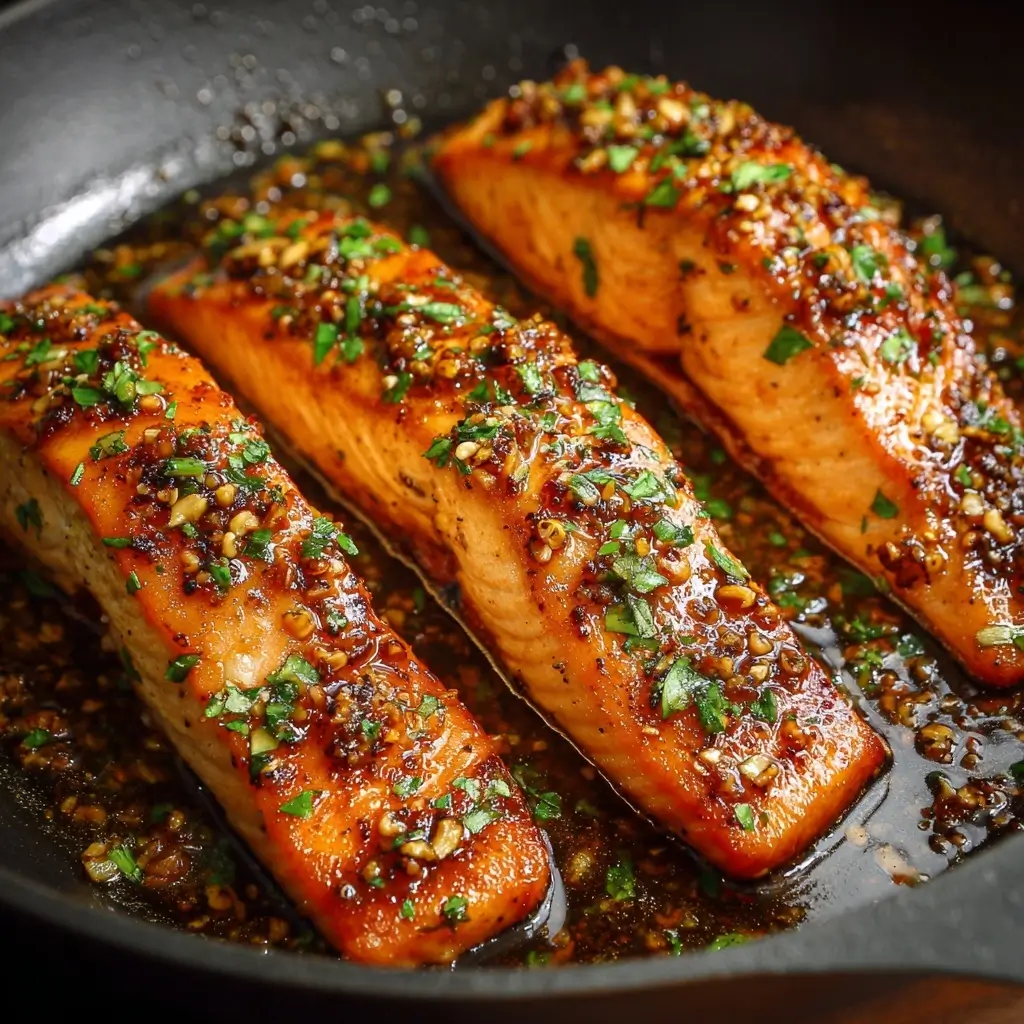
Honey Garlic Butter Salmon
Honey Garlic Butter Salmon: A Flavorful and Healthy Delight
There’s something undeniably satisfying about a perfectly cooked piece of salmon—flaky, moist, and rich in flavor. When you combine that with the sweet warmth of honey, the pungent aroma of garlic, and the luxurious richness of butter, you get an irresistible dish known as Honey Garlic Butter Salmon. This recipe has gained popularity across home kitchens and restaurants alike for its perfect balance of savory, sweet, and umami notes. Whether you’re preparing a romantic dinner for two or a family meal on a busy weeknight, this dish delivers both elegance and simplicity.
The History Behind the Dish
While salmon has been a staple food in coastal regions for centuries—especially among Indigenous communities in North America and Northern Europe—the combination of honey, garlic, and butter as a glaze is more modern. The roots of this flavor profile can be traced back to early 20th-century American and European cooking, where pan-seared fish dishes began incorporating sweet and aromatic elements to enhance taste. Garlic and butter have long been a classic duo in French cuisine, often seen in dishes like beurre blanc or gambas al ajillo. Honey, used since ancient times as both a sweetener and preservative, found new culinary life in savory applications during the mid-1900s.
The fusion of these ingredients into a salmon glaze likely emerged in the 1980s and 1990s, when home cooks and chefs alike began experimenting with bolder, global-inspired flavors. Asian influences brought soy sauce and ginger into Western kitchens, enhancing the complexity of sauces. Over time, the honey garlic butter sauce evolved into a signature marinade and finishing glaze for proteins, particularly salmon, thanks to its ability to caramelize beautifully and complement the fish’s natural oils. Today, it remains a beloved favorite in both casual dining restaurants and gourmet kitchens around the world.
Ingredients Breakdown: What Makes It So Delicious?
The magic of Honey Garlic Butter Salmon lies not just in its taste but in the harmony of its ingredients. Each component plays a vital role:
- Salmon Fillets: Rich in omega-3 fatty acids and protein, wild-caught or sustainably farmed salmon provides a buttery texture and deep flavor that stands up well to bold sauces.
- Butter: Unsalted butter adds a creamy richness and helps create a glossy, emulsified sauce. It also aids in browning the garlic and carrying the flavors evenly.
- Garlic: Freshly minced garlic brings a sharp, aromatic kick. When sautéed gently, it mellows and infuses the entire dish with warmth.
- Honey: Raw or mild honey contributes natural sweetness and helps form a sticky, caramelized glaze. Its floral notes balance the saltiness and acidity in the sauce.
- Soy Sauce: Adds depth, umami, and a touch of saltiness. Low-sodium soy sauce allows better control over seasoning.
- Lemon Juice: Brightens the dish with acidity, cutting through the richness of butter and enhancing overall flavor balance.
- Red Pepper Flakes (optional): For those who enjoy heat, a pinch adds subtle spice without overpowering.
- Fresh Parsley or Green Onions: Used as garnish, they add freshness and color contrast.
Together, these ingredients create a symphony of taste—sweet, salty, tangy, and savory—all clinging to tender, flaky salmon.
Step-by-Step Recipe: How to Make Perfect Honey Garlic Butter Salmon at Home
Follow this detailed guide to achieve restaurant-quality results every time.
Ingredients:
- 4 (6-ounce) skin-on salmon fillets, pin bones removed
- 3 tablespoons unsalted butter
- 5 cloves garlic, finely minced
- 1/4 cup honey (preferably raw)
- 3 tablespoons low-sodium soy sauce
- 1 tablespoon fresh lemon juice (about half a lemon)
- 1/2 teaspoon red pepper flakes (optional)
- 1/4 teaspoon freshly ground black pepper
- 1 tablespoon olive oil (for searing)
- Fresh parsley or green onions, chopped (for garnish)
- Lemon wedges (for serving)
Directions:
- Prepare the Salmon: Pat the salmon fillets dry with paper towels. Moisture is the enemy of good searing, so ensure the surface is completely dry. Season both sides lightly with salt and pepper.
- Make the Sauce: In a small bowl, whisk together honey, soy sauce, lemon juice, minced garlic, red pepper flakes, and black pepper. Set aside.
- Preheat the Pan: Heat a large oven-safe skillet (such as cast iron or stainless steel) over medium-high heat. Add olive oil and swirl to coat the pan.
- Sear the Salmon: Place salmon fillets skin-side down in the hot pan. Press gently with a spatula to ensure full contact. Sear for 4–5 minutes until the skin is crispy and golden brown. Flip carefully using a spatula and cook for another 1–2 minutes on the flesh side.
- Add Butter and Sauce: Reduce heat to medium. Add butter and the prepared sauce mixture to the pan. As the butter melts, tilt the pan slightly and spoon the bubbling sauce over the salmon repeatedly (a technique called basting). Continue for 2–3 minutes.
- Finish Cooking: If needed, transfer the skillet to a preheated oven at 375°F (190°C) for 4–6 minutes, depending on thickness, until the internal temperature reaches 125–130°F (52–54°C) for medium doneness.
- Rest and Serve: Remove from heat. Let the salmon rest for 2–3 minutes. Spoon extra sauce from the pan over the top. Garnish with chopped parsley or green onions and serve with lemon wedges.
Tips for Success
- Dry the Salmon Thoroughly: Wet fish won’t sear properly. Always pat fillets dry before seasoning.
- Use Skin-On Fillets: The skin protects the delicate flesh during cooking and crisps up beautifully for added texture.
- Don’t Crowd the Pan: Cook in batches if necessary to avoid steaming instead of searing.
- Baste Constantly: Spooning the sauce over the salmon ensures even flavor distribution and helps cook the top gently.
- Control the Heat: Keep the temperature moderate when adding the sauce to prevent burning the honey, which can turn bitter.
- Check Doneness Early: Salmon continues to cook after removal from heat due to carryover cooking. Aim for slightly underdone when pulling it off the stove.
- Use Fresh Garlic: Pre-minced garlic from jars lacks the bright, pungent quality needed for optimal flavor.
Variations and Customizations
This recipe is highly adaptable. Here are some creative twists to try:
- Lime Instead of Lemon: Swap lemon juice for lime for a tropical twist that pairs well with cilantro.
- Maple Syrup Substitute: Replace honey with pure maple syrup for a deeper, earthier sweetness.
- Teriyaki-Inspired Version: Add 1 teaspoon of grated fresh ginger and 1 tablespoon of rice vinegar to the sauce for an Asian flair.
- Dijon Mustard Addition: Stir 1 tablespoon of Dijon mustard into the sauce for a tangy, complex layer.
- Grilled Option: Marinate the salmon in the sauce (minus butter) for 20–30 minutes, then grill over indirect heat, brushing with melted butter-honey mixture while cooking.
- Baked Sheet Pan Meal: Arrange salmon on a sheet pan with vegetables (like asparagus, broccoli, or bell peppers), drizzle with sauce, and bake at 400°F (200°C) for 12–15 minutes.
- Dairy-Free/Vegan Alternative: Use plant-based butter and substitute salmon with firm tofu or king oyster mushrooms for a vegan version.
- Spicy Kick: Add 1 teaspoon of sriracha or a diced jalapeño to the sauce for extra heat.
Health Considerations and Nutritional Value
Honey Garlic Butter Salmon isn’t just delicious—it’s packed with nutrients that support overall health.
Nutritional Highlights per Serving (1 fillet with sauce):
- Calories: ~420 kcal
- Protein: 34g – Essential for muscle repair and satiety.
- Fat: 26g – Mostly heart-healthy unsaturated fats, including omega-3 fatty acids (EPA and DHA).
- Omega-3s: ~2,000mg – Supports brain function, reduces inflammation, and promotes cardiovascular health.
- Carbohydrates: 18g – Primarily from honey; minimal fiber.
- Sodium: ~600mg – Can be reduced by using low-sodium soy sauce or coconut aminos.
Health Benefits:
- Heart Health: Omega-3s in salmon help lower triglycerides and reduce blood pressure.
- Brain Function: Regular consumption of fatty fish is linked to improved cognitive performance and reduced risk of neurodegenerative diseases.
- Anti-Inflammatory Properties: Garlic contains allicin, a compound with antioxidant and anti-inflammatory effects.
- Natural Energy: Honey provides a quick source of natural glucose, ideal for sustained energy without artificial additives.
Considerations:
- Sugar Content: Honey adds natural sugars. Diabetics or those monitoring blood sugar should consume in moderation or consider sugar-free substitutes like monk fruit syrup (though texture may vary).
- Sodium Awareness: Soy sauce contributes sodium. Use tamari or coconut aminos for a gluten-free, lower-sodium alternative.
- Portion Control: While nutrient-dense, butter and honey increase calorie density. Stick to recommended portions for balanced intake.
- Sustainability: Choose wild-caught Alaskan salmon or certified sustainable farmed options to support environmental responsibility.
Frequently Asked Questions (FAQ)
Can I use frozen salmon?
Yes, but thaw it overnight in the refrigerator for best texture. Never cook frozen salmon directly unless specified in a recipe, as it leads to uneven cooking and mushiness.
How do I know when salmon is done?
The internal temperature should reach 125–130°F (52–54°C) for medium doneness. The flesh will be opaque and flake easily with a fork but still moist inside.
Can I make the sauce ahead of time?
Absolutely! Prepare the sauce (without butter) up to 3 days in advance and store in an airtight container in the fridge. Warm gently before using.
Is this recipe keto-friendly?
Traditional honey garlic butter salmon is not strictly keto due to the sugar in honey. However, you can adapt it using a keto-approved sweetener like erythritol or allulose blended with a touch of xanthan gum for viscosity.
What sides go well with this dish?
Excellent pairings include roasted asparagus, garlic mashed cauliflower, quinoa, wild rice, steamed broccoli, or a crisp arugula salad with vinaigrette.
Can I air fry the salmon?
Yes! Air fry at 370°F (188°C) for 8–10 minutes, depending on thickness. Brush with sauce halfway through and finish with a drizzle after cooking.
Why did my sauce burn?
Honey has a low smoke point and burns easily. Always cook the sauce over medium or medium-low heat and stir frequently. Adding butter helps raise the smoke point slightly.
Can I double the recipe?
Yes, but increase pan size or cook in batches to avoid overcrowding, which causes steaming instead of searing.
Summary
Honey Garlic Butter Salmon combines succulent salmon with a luscious glaze of honey, garlic, and butter for a dish that’s both comforting and elegant. Packed with nutrients and bursting with flavor, it’s a quick yet impressive meal perfect for any occasion.