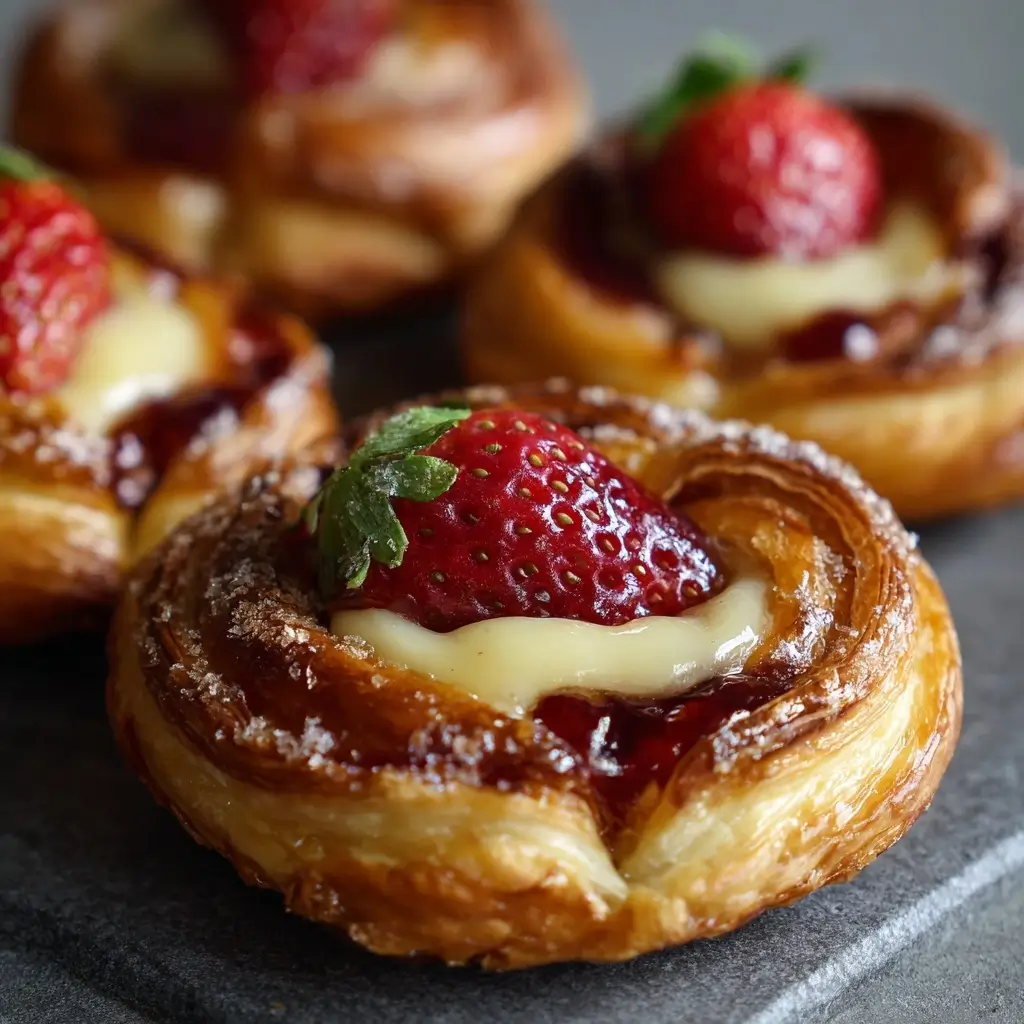
Fruit-filled Danish Pastry (fruit & custard)
Fruit-filled Danish Pastry (Fruit & Custard): A Delectable Treat from the Heart of Scandinavian Baking
The Fruit-filled Danish Pastry, especially when enhanced with a luscious layer of custard and topped with vibrant fresh fruit, is one of the most beloved pastries in European patisseries. Known for its flaky, buttery layers and rich fillings, this pastry has captured hearts far beyond its Nordic origins. Whether enjoyed at a cozy café with a steaming cup of coffee or served as an elegant dessert at brunch gatherings, the fruit and custard Danish stands as a symbol of indulgence, craftsmanship, and sweet sophistication.
The History: From Denmark to the World’s Bakeries
Despite its name, the modern Danish pastry—known locally in Denmark as “wienerbrød” or “Viennese bread”—was actually influenced by Austrian bakers in the 19th century. In 1850, during a strike among local bakery workers in Denmark, Austrian bakers were brought in to keep production going. They introduced their own version of laminated dough, which the Danes refined over time using more butter and creating even lighter, airier textures. The result was a uniquely Danish twist on Viennese techniques.
Over the decades, the pastry evolved with various regional interpretations, including the now-iconic fruit-filled versions. The addition of custard filling began in mid-20th century bakeries as a way to enhance richness and moisture, making the pastry more satisfying and decadent. Today, fruit and custard Danish pastries are staples not only across Scandinavia but also in North America, Australia, and throughout Europe, often customized with local fruits and flavor profiles.
Ingredients Breakdown: What Makes This Pastry So Irresistible?
The magic of a fruit-filled Danish pastry lies in the harmony between its three main components: the laminated dough, the creamy custard filling, and the fresh or preserved fruit topping. Each plays a crucial role in delivering the perfect balance of texture, flavor, and visual appeal.
- Danish Pastry Dough: Made from high-fat butter, all-purpose flour, sugar, eggs, milk, and yeast, this dough undergoes a process of folding and chilling known as lamination. This creates dozens of thin layers that puff up during baking, resulting in a tender, crisp exterior and soft, airy interior.
- Custard Filling: A rich, velvety custard made from egg yolks, whole milk or cream, sugar, cornstarch (or flour), and vanilla extract. Some recipes include a touch of lemon zest or almond extract for added depth. The custard must be thick enough to hold its shape without oozing out during baking.
- Fruit Component: Traditionally, berries like raspberries, blueberries, or strawberries are used, but stone fruits such as peaches, apricots, or cherries work beautifully too. You can use fresh fruit, lightly macerated, or high-quality preserves for a consistent flavor and jammy texture.
- Garnishes & Finishes: A simple glaze made from powdered sugar and milk or lemon juice adds sweetness and shine. Optional additions include sliced almonds, pearl sugar, or a dusting of cinnamon before baking for extra crunch and aroma.
Step-by-Step Recipe: Crafting Your Own Fruit-filled Danish Pastries at Home
Making Danish pastries from scratch may seem daunting, but with patience and attention to detail, you can create bakery-quality results in your own kitchen. Below is a comprehensive guide to help you through each stage.
Ingredients
For the Danish Pastry Dough:
- 4 cups (500g) all-purpose flour, plus extra for dusting
- 1/4 cup (50g) granulated sugar
- 1 packet (2 1/4 tsp) active dry yeast
- 1/2 tsp salt
- 1 cup (240ml) whole milk, lukewarm
- 3 large eggs, divided (2 for dough, 1 for egg wash)
- 1 lb (454g) unsalted butter, cold but pliable (European-style preferred)
For the Vanilla Custard Filling:
- 2 cups (480ml) whole milk
- 4 large egg yolks
- 1/3 cup (65g) granulated sugar
- 3 tbsp (25g) cornstarch
- 1 tsp pure vanilla extract
- 1 tbsp (15g) unsalted butter (optional, for silkiness)
For the Fruit Topping:
- 2 cups mixed fresh fruit (e.g., raspberries, blueberries, diced strawberries, or sliced peaches)
- 2–3 tbsp fruit preserves (apricot, raspberry, or red currant recommended)
- 1 tbsp granulated sugar (for macerating fruit, optional)
- 1 tsp lemon juice (to brighten flavors)
For Assembly & Finishing:
- 1 egg (for egg wash)
- 1/2 cup powdered sugar
- 2–3 tbsp milk or cream (for glaze)
- Sliced almonds or coarse sugar (optional)
Directions
- Prepare the Dough: In a small bowl, dissolve yeast in lukewarm milk. Let sit for 5–10 minutes until foamy. In the bowl of a stand mixer fitted with a dough hook, combine flour, sugar, salt, one egg, and the yeast mixture. Mix on low speed until a shaggy dough forms. Increase speed to medium and knead for 5–7 minutes until smooth and elastic. Transfer to a lightly greased bowl, cover with plastic wrap, and let rise in a warm place for 1–1.5 hours, or until doubled.
- Prepare the Butter Block: While the dough rises, prepare the butter block. Place the cold butter between two sheets of parchment paper and roll into a 7×7 inch square about 1/2 inch thick. Chill until firm but still pliable.
- Laminate the Dough: On a floured surface, roll the risen dough into a 10×10 inch square. Place the butter block diagonally in the center and fold the corners of the dough over it like an envelope, sealing completely. Roll gently into a 20×8 inch rectangle. Perform a “single fold” (also called book fold): divide the rectangle into thirds, folding one end toward the center, then the other end over it, like a letter. Wrap in plastic and chill for 30 minutes. Repeat this rolling and folding process two more times, chilling between each fold. After the final fold, chill the dough for at least 2 hours or overnight.
- Make the Custard: Heat milk in a saucepan until just below boiling. In a bowl, whisk egg yolks, sugar, and cornstarch until pale and thick. Slowly pour hot milk into yolk mixture while whisking constantly. Return mixture to the saucepan and cook over medium heat, stirring constantly, until thick and bubbling. Remove from heat, stir in vanilla and optional butter. Press plastic wrap directly onto the surface and refrigerate until completely cool.
- Shape the Pastries: Preheat oven to 375°F (190°C). Line baking sheets with parchment paper. Roll the laminated dough to 1/4 inch thickness and cut into 4×4 inch squares or 5-inch circles using a cutter. For squares, place a spoonful of custard in the center, then top with fruit. For round shapes, fold edges slightly inward to form a shallow well, leaving the center open for filling. Brush edges with beaten egg (egg wash).
- Bake: Arrange pastries on baking sheets, spacing 2 inches apart. Bake for 20–25 minutes, rotating pans halfway, until golden brown and puffed. If desired, sprinkle with sliced almonds or coarse sugar before baking.
- Finish and Serve: Warm the fruit preserves with a splash of water and brush over the fruit for a glossy finish. Whisk powdered sugar with milk to make a thin glaze and drizzle over cooled pastries. Serve at room temperature or slightly warmed.
Tips for Perfect Fruit-filled Danish Pastries Every Time
- Keep Everything Cold: Maintaining a cold temperature during lamination prevents the butter from melting into the dough, which is essential for achieving distinct layers.
- Don’t Rush the Rests: Chilling between folds allows gluten to relax and butter to re-solidify, both critical for proper rise and texture.
- Avoid Overfilling: Too much custard or fruit can cause leakage and disrupt the pastry’s structure during baking.
- Use High-Fat Butter: European-style butter (with 82–84% fat) gives superior flakiness and flavor compared to standard supermarket butter.
- Egg Wash is Essential: It gives the pastry its signature golden sheen and helps toppings adhere.
- Work Quickly When Shaping: Warm hands can soften the dough and butter; if the dough gets too soft, return it to the fridge for 10–15 minutes.
- Test Custard Thickness: The custard should coat the back of a spoon and leave a clear path when you run your finger through it.
Variations and Customizations: Make It Your Own
One of the joys of Danish pastries is their versatility. Once you master the base recipe, you can experiment with endless variations:
- Fruit Variations: Try seasonal fruits like figs in autumn, mango in summer, or poached pears in winter. Citrus segments (like blood oranges) add a refreshing tang.
- Cheese-Custard Fusion: Mix ricotta or mascarpone into the custard for a cheesecake-like twist.
- Chocolate-Dipped: Dip cooled pastries halfway in melted dark chocolate for an elegant upgrade.
- Nutty Additions: Add a layer of frangipane (almond cream) beneath the custard for nutty richness.
- Savory-Sweet Options: Incorporate goat cheese or cream cheese with figs and honey for a brunch-friendly version.
- Mini Danish Bites: Use a muffin tin to create individual tartlet-style Danishes—perfect for parties.
- Gluten-Free Option: Substitute the all-purpose flour with a high-quality gluten-free blend and use gluten-free cornstarch. Note: Lamination may be less effective, but results can still be delicious.
- Vegan Adaptation: Use plant-based butter, oat milk, flax eggs, and cornstarch-based custard. Top with fresh fruit and agave glaze.
Health Considerations and Nutritional Value
While undeniably delicious, traditional fruit-filled Danish pastries are rich in calories, saturated fat, and sugars due to their butter-heavy dough and custard filling. However, they can be enjoyed in moderation as part of a balanced diet.
Nutritional Highlights (per average-sized pastry, approx. 150g):
- Calories: ~380–450
- Total Fat: 20–28g (mostly from butter)
- Saturated Fat: 12–16g
- Carbohydrates: 45–55g
- Sugars: 25–35g (including added sugar and natural fruit sugars)
- Protein: 6–8g (from eggs and milk)
- Fiber: 2–3g (especially if berries are used)
Healthier Swaps:
- Reduce sugar in custard and dough by 25% without sacrificing flavor.
- Use low-fat milk in custard (though full-fat yields creamier texture).
- Add chia seeds or ground flax to the dough for omega-3s and fiber.
- Top with unsweetened fresh fruit instead of sugary preserves.
- Control portion size—opt for smaller individual servings.
Those with dietary restrictions should note that this recipe contains gluten, dairy, and eggs. Always check ingredient labels if avoiding allergens.
Frequently Asked Questions (FAQ)
Can I make Danish pastry dough ahead of time?
Yes! The laminated dough can be prepared up to 3 days in advance and kept refrigerated, or frozen for up to 3 months. Thaw in the fridge before using.
Can I use store-bought puff pastry instead?
Absolutely. While not authentic Danish, puff pastry makes a quick substitute. Add a layer of custard and fruit, then bake as directed. Texture will be less rich but still tasty.
Why did my pastry turn out dense or greasy?
This usually happens if the butter melted into the dough during lamination or if the oven wasn’t hot enough. Ensure butter stays cold and preheat your oven thoroughly.
How do I store leftover Danish pastries?
Store in an airtight container at room temperature for up to 2 days. Reheat in a 300°F (150°C) oven for 5–7 minutes to restore crispness. Avoid refrigeration, as it makes the pastry soggy.
Can I freeze baked Danish pastries?
Yes. Freeze unbaked or baked pastries on a tray, then transfer to freezer bags. Bake from frozen, adding 5–10 minutes to the cooking time. Unbaked ones yield better texture.
What’s the difference between Danish pastry and croissant dough?
Both are laminated, but Danish dough includes eggs and sugar, making it richer and slightly cake-like, while croissant dough is leaner and more bread-like.
Can I make mini Danish tarts in a muffin tin?
Yes! Press small pieces of dough into greased muffin cups, add custard and fruit, then bake for 18–22 minutes. Great for gatherings!
Summary
The fruit-filled Danish pastry with custard is a masterpiece of European baking—flaky, buttery layers enveloping silky custard and crowned with vibrant fruit. Elegant yet comforting, it’s a treat that brings joy to any occasion.