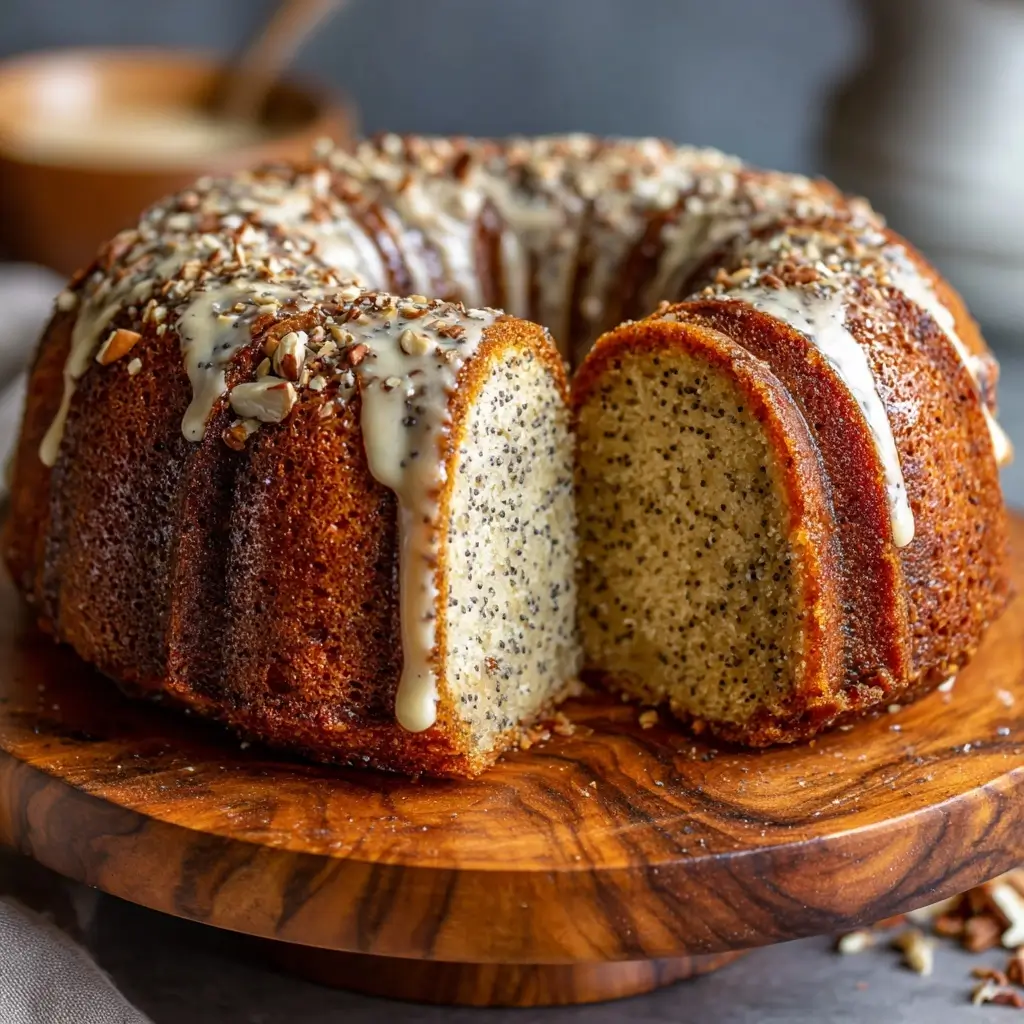
Almond Poppyseed Bundt Cake
Introduction
The Almond Poppyseed Bundt Cake is a timeless classic that brings together the delicate nuttiness of almond with the delightful crunch of poppyseeds in a beautifully moist and tender crumb. With its elegant golden-brown exterior and inviting aroma, this cake is perfect for brunch gatherings, afternoon tea, holiday celebrations, or simply as a sweet treat to brighten your day. The bundt shape not only gives it a stunning presentation but also ensures even baking and a perfect balance of crust and soft interior. Whether you’re an experienced baker or just beginning your journey into the world of homemade desserts, this recipe promises delicious results every time.
The History
The origins of the Almond Poppyseed Bundt Cake can be traced back to Central and Eastern European baking traditions, where poppyseeds have long been cherished as a staple ingredient in festive pastries and breads. In countries like Austria, Germany, Poland, and Hungary, poppyseed-filled cakes and strudels were common during holidays such as Christmas and Easter. These treats were often rich, spiced, and filled with symbolic meaning—poppyseeds represented prosperity and abundance due to their countless tiny seeds.
Almonds, too, have played a significant role in European confectionery for centuries. Ground almonds were used to enrich doughs and batters, adding moisture and a subtle nutty flavor. When combined with poppyseeds, the two ingredients create a harmonious blend of textures and tastes that has stood the test of time.
The modern bundt cake, however, emerged much later. The word “bundt” was trademarked in the 1950s by Nordic Ware, an American kitchenware company, after they introduced a cast aluminum pan designed to resemble traditional European decorative molds. The bundt pan quickly gained popularity in the United States, especially after the famous Tunnel of Fudge cake won second place in the 1966 Pillsbury Bake-Off, baked in a bundt pan. This exposure catapulted bundt cakes into mainstream American kitchens, making them synonymous with home-baked elegance.
Today, the Almond Poppyseed Bundt Cake stands as a beloved fusion of Old World flavors and New World baking innovation—a dessert that honors tradition while delighting modern palates with its simplicity and sophistication.
Ingredients Breakdown
Understanding each ingredient in the Almond Poppyseed Bundt Cake helps ensure optimal flavor, texture, and structure. Here’s a detailed breakdown:
- All-purpose flour: Provides the structural foundation of the cake. It contains gluten-forming proteins that give the cake its shape and stability while maintaining a soft crumb.
- Baking powder and baking soda: Leavening agents that help the cake rise. Baking powder reacts with liquids and heat, while baking soda requires an acidic component (like buttermilk or yogurt) to activate.
- Salt: Enhances overall flavor and balances sweetness.
- Unsalted butter: Adds richness, tenderness, and flavor. Using unsalted butter allows better control over the salt content.
- Granulated sugar: Sweetens the cake and contributes to its tender texture by interfering with gluten development. It also aids in browning during baking.
- Eggs: Provide structure, leavening, and emulsification. They help bind the ingredients together and contribute to a smooth, airy batter.
- Vanilla extract: Adds depth and warmth to the flavor profile. Pure vanilla extract offers a more complex taste than imitation versions.
- Almond extract: A concentrated flavoring that intensifies the nutty essence of the cake. Even a small amount goes a long way in enhancing the almond character.
- Buttermilk or sour cream: Adds moisture, tenderness, and slight tanginess. The acidity helps activate the baking soda and improves shelf life.
- Poppyseeds: Impart a mild nutty flavor and distinctive crunch. They are rich in fiber, healthy fats, and minerals like calcium and magnesium.
- Almonds (sliced or slivered, optional): Used for garnish or mixed into the batter for added texture and visual appeal.
- Powdered sugar (for glaze): Creates a smooth, sweet finish when combined with milk or lemon juice.
- Lemon zest (optional): Brightens the flavor and complements the nuttiness of almonds and earthiness of poppyseeds.
Step-by-Step Recipe
- Preheat the oven to 350°F (175°C). Generously grease a 10- to 12-cup bundt pan with nonstick spray or softened butter, then dust with flour, tapping out any excess. This ensures easy release after baking.
- Prepare the dry ingredients: In a medium bowl, whisk together 2 ½ cups all-purpose flour, 1 ½ teaspoons baking powder, ½ teaspoon baking soda, and ¼ teaspoon salt. Set aside.
- Cream the butter and sugar: In a large mixing bowl, beat 1 cup (2 sticks) of softened unsalted butter with 1 ¾ cups granulated sugar using an electric mixer on medium-high speed until light and fluffy, about 3–4 minutes. Scrape down the sides of the bowl as needed.
- Add eggs one at a time: Beat in 4 large eggs, one at a time, mixing well after each addition. Then stir in 1 teaspoon vanilla extract and 1 teaspoon almond extract.
- Incorporate dry and wet ingredients alternately: Add one-third of the flour mixture to the butter mixture and mix on low speed until just combined. Pour in ½ cup buttermilk (or sour cream), mix gently, then add another third of the flour. Repeat, ending with the final portion of flour. Do not overmix.
- Fold in poppyseeds: Stir in ¼ cup poppyseeds by hand using a spatula until evenly distributed throughout the batter.
- Pour batter into the prepared pan: Transfer the batter carefully into the greased bundt pan, smoothing the top with a spatula for even baking.
- Bake for 50–60 minutes, or until a wooden skewer inserted into the deepest part of the cake comes out clean or with a few moist crumbs. Avoid overbaking to keep the cake moist.
- Cool the cake: Let the cake cool in the pan for 15 minutes. Then place a wire rack over the top and invert to release the cake. Allow it to cool completely before glazing.
- Prepare the glaze: In a small bowl, whisk together 1 cup powdered sugar, 1–2 tablespoons milk or cream, and ½ teaspoon almond or vanilla extract until smooth. For a citrus twist, use lemon juice instead of milk.
- Glaze the cake: Once cooled, drizzle the glaze over the top of the cake, allowing it to drip down the sides. Optionally, sprinkle with sliced almonds or additional poppyseeds for decoration.
- Serve or store: Let the glaze set for 10–15 minutes before slicing. Serve at room temperature.
Tips
- Room temperature ingredients: Ensure butter, eggs, and buttermilk are at room temperature before mixing. This promotes even blending and a smoother batter.
- Don’t overmix: Overmixing the batter after adding flour can develop excess gluten, leading to a dense or tough cake. Mix only until ingredients are incorporated.
- Grease the pan thoroughly: Bundt pans have intricate designs that can trap cake if not properly greased. Use a pastry brush to reach all crevices.
- Cool before removing: Wait exactly 15 minutes before inverting. Too soon, and the cake may break; too late, and steam can make it stick.
- Check for doneness accurately: Insert the toothpick in multiple spots, especially near the center tube, where cakes often bake slower.
- Enhance flavor with soaking syrup: After cooling, brush the warm cake with a simple syrup made from equal parts sugar and water, infused with almond or lemon. This adds moisture and intensifies flavor.
- Store properly: Keep the cake covered at room temperature for up to 3 days. For longer storage, refrigerate for up to 5 days or freeze for up to 3 months.
- Bring to room temperature before serving: If refrigerated, let the cake sit out for 30 minutes before serving for best texture and flavor.
- Use high-quality extracts: Opt for pure almond and vanilla extracts rather than artificial ones for superior taste.
- Toast the poppyseeds (optional): Lightly toast poppyseeds in a dry skillet over low heat for 2–3 minutes to enhance their nutty flavor before adding to the batter.
Variations and Customizations
The beauty of the Almond Poppyseed Bundt Cake lies in its versatility. Here are several creative variations to suit different tastes and occasions:
- Lemon Almond Poppyseed Cake: Add the zest of 1–2 lemons to the batter and replace some of the buttermilk with fresh lemon juice. Use lemon juice in the glaze for a bright, citrusy twist.
- Blueberry Almond Poppyseed: Gently fold in 1 cup of fresh or frozen (not thawed) blueberries coated in flour to prevent sinking.
- Chocolate Drizzle: Instead of a traditional glaze, melt dark chocolate and drizzle over the top for a decadent contrast.
- Whole Wheat or Gluten-Free Version: Substitute half the all-purpose flour with whole wheat flour for a heartier texture, or use a gluten-free flour blend for dietary needs.
- Dairy-Free Option: Replace butter with plant-based margarine, buttermilk with almond milk mixed with lemon juice, and use dairy-free yogurt.
- Vegan Adaptation: Use flax eggs (1 tbsp ground flaxseed + 3 tbsp water per egg), vegan butter, plant-based milk with acid, and a vegan-friendly glaze.
- Marzipan Swirl: Drop spoonfuls of marzipan into the batter and gently swirl with a knife before baking for pockets of intense almond flavor.
- Spiced Almond Cake: Add ½ teaspoon cinnamon, ¼ teaspoon nutmeg, and a pinch of cardamom for a warm, aromatic profile.
- Streusel-Topped Variation: Before baking, sprinkle the top with a crumb topping made from brown sugar, cold butter, flour, chopped almonds, and poppyseeds.
- Mini Bundt or Muffin Version: Divide the batter among mini bundt pans or muffin tins for individual servings. Reduce baking time to 20–25 minutes.
- Boozy Glaze: Add 1–2 teaspoons of amaretto, rum, or orange liqueur to the glaze for an adult-friendly version.
- Fruit Compote Accompaniment: Serve slices with a side of raspberry coulis, apricot jam, or stewed plums for added freshness and color.
Health Considerations and Nutritional Value
While the Almond Poppyseed Bundt Cake is undeniably a dessert meant for enjoyment, understanding its nutritional components can help with mindful consumption. Here’s a general overview per slice (assuming 12 servings):
- Calories: Approximately 380–420 kcal
- Total Fat: 18–22g (mostly from butter and eggs; includes healthy monounsaturated fats from almonds)
- Saturated Fat: 8–10g
- Cholesterol: 80–100mg
- Sodium: 200–250mg
- Total Carbohydrates: 50–55g
- Sugars: 30–35g (primarily from added sugar)
- Fiber: 1–2g (from flour and poppyseeds)
- Protein: 6–8g (from eggs, dairy, and almonds)
Health Benefits of Key Ingredients:
- Poppyseeds: Rich in calcium, iron, magnesium, and omega-3 fatty acids. They support bone health and offer anti-inflammatory properties.
- Almonds: High in vitamin E, healthy fats, and protein. Even though this recipe uses extract rather than whole nuts, pairing with sliced almonds adds nutritional value.
- Buttermilk: Contains probiotics and is lower in fat than cream, contributing to gut health and improved digestion.
Dietary Modifications:
- For a lower-sugar option, reduce sugar by ¼ cup and use a natural sweetener like monk fruit or erythritol blend.
- To increase fiber and nutrients, substitute some flour with almond flour or oat flour.
- Those managing cholesterol may consider using egg substitutes or applesauce (though this alters texture).
- People with nut allergies should omit almond extract and replace it with vanilla or coconut extract, ensuring no cross-contamination.
Enjoy this cake in moderation as part of a balanced diet. Its satisfying richness means a little goes a long way!
Ingredients
- 2 ½ cups (315g) all-purpose flour
- 1 ½ teaspoons baking powder
- ½ teaspoon baking soda
- ¼ teaspoon salt
- 1 cup (2 sticks / 226g) unsalted butter, softened
- 1 ¾ cups (350g) granulated sugar
- 4 large eggs, room temperature
- 1 teaspoon pure vanilla extract
- 1 teaspoon pure almond extract
- ½ cup (120ml) buttermilk, room temperature (or substitute with sour cream)
- ¼ cup (35g) poppyseeds
- 1 tablespoon lemon zest (optional, for brightness)
For the Glaze:
- 1 cup (120g) powdered sugar
- 1–2 tablespoons milk, cream, or lemon juice
- ½ teaspoon almond or vanilla extract
- Optional: sliced almonds or extra poppyseeds for garnish
Directions
- Preheat oven to 350°F (175°C). Grease and flour a 10–12 cup bundt pan thoroughly, making sure to coat all ridges and corners.
- In a medium bowl, whisk together flour, baking powder, baking soda, and salt. Set aside.
- In a large bowl, beat softened butter and granulated sugar together on medium speed until pale and fluffy, about 3–4 minutes.
- Add eggs one at a time, beating well after each addition. Scrape down the sides of the bowl as needed.
- Mix in vanilla extract and almond extract until combined.
- Reduce mixer speed to low. Add one-third of the flour mixture, followed by half of the buttermilk. Alternate additions, ending with the last third of flour. Mix just until incorporated—do not overmix.
- Gently fold in poppyseeds (and lemon zest, if using) with a rubber spatula until evenly dispersed.
- Pour batter into the prepared bundt pan and smooth the top with an offset spatula.
- Bake for 50–60 minutes, or until a wooden skewer inserted into the thickest part comes out clean.
- Allow the cake to cool in the pan for 15 minutes. Then invert onto a wire rack to cool completely.
- While the cake cools, prepare the glaze: whisk powdered sugar, 1 tablespoon of liquid, and extract in a bowl. Add more liquid if needed for desired consistency.
- Once cake is completely cool, drizzle the glaze over the top. Sprinkle with sliced almonds or poppyseeds if desired.
- Let the glaze set for 10–15 minutes before slicing and serving.
FAQ
Can I make this cake ahead of time?
Yes! This cake actually tastes better the next day as flavors meld. Store it covered at room temperature for up to 3 days.
Can I freeze the Almond Poppyseed Bundt Cake?
Absolutely. Wrap the unglazed cake tightly in plastic wrap and foil, then freeze for up to 3 months. Thaw overnight at room temperature before glazing and serving.
Why did my cake stick to the pan?
This usually happens if the pan wasn’t greased and floured properly. Always use a nonstick spray with flour or a homemade butter-flour paste for best results.
Can I use honey or maple syrup instead of sugar?
These liquid sweeteners change the texture significantly. Stick to granulated sugar for proper structure unless following a tested alternative recipe.
Is almond extract safe for those with nut allergies?
Many almond extracts are made from synthetic sources (like pits of apricots) and are labeled “nut-free,” but always check the label. True almond oil should be avoided by those with tree nut allergies.
Can I skip the glaze?
Yes, though the glaze adds sweetness and moisture. You can also dust with powdered sugar or serve plain with whipped cream.
Can I use self-rising flour?
Not recommended, as the leavening ratio differs. Stick to all-purpose flour with added baking powder and soda for consistent results.
How do I know when the cake is done?
Insert a toothpick or skewer into the center near the tube. If it comes out clean or with a few moist crumbs (no wet batter), it’s ready.
Can I double the recipe?
It’s safer to make two separate batches. Doubling may lead to uneven mixing and inconsistent baking.
Why are my poppyseeds sinking?
Toss them in a tablespoon of flour before folding into the batter. This helps suspend them evenly throughout.
Summary
The Almond Poppyseed Bundt Cake is a luscious, aromatic dessert that blends European tradition with American baking flair, featuring a moist crumb studded with crunchy poppyseeds and fragrant almond flavor.
Perfect for special occasions or everyday indulgence, this elegant cake is easy to customize, freezes well, and delights all who taste it with its rich yet balanced sweetness.