Apple Pie
Apple Pie: A Timeless Classic
There are few desserts as iconic, comforting, and universally beloved as apple pie. With its golden-brown crust, tender cinnamon-kissed apples, and the warm aroma that fills your kitchen while it bakes, apple pie is more than just a dessert—it’s a symbol of home, tradition, and celebration. Whether served at Thanksgiving dinner, enjoyed with a scoop of vanilla ice cream on a summer evening, or shared among friends during a cozy fall gathering, apple pie holds a special place in American culture and beyond.
The History of Apple Pie
The origins of apple pie stretch back centuries and across continents. While often associated with American heritage—famously captured in the idiom “as American as apple pie”—the dessert actually has deep European roots. The earliest known recipe for a dish resembling apple pie dates back to England in 1381, found in The Forme of Cury, one of the oldest known English cookbooks. This early version included figs, raisins, pears, and spices baked in a pastry casing called a “coffyn,” which was not meant to be eaten but served as a cooking vessel.
Over time, as apples were cultivated throughout Europe—especially in France, Germany, and the Netherlands—the pie evolved. Dutch cooks in the 16th century began using sliced apples layered with sugar, butter, and spices, closely resembling the modern version. When European settlers arrived in North America, they brought apple seeds and culinary traditions with them. Apples flourished in the New World’s climate, and by the 18th century, apple orchards dotted the American countryside.
By the 19th century, apple pie had become a staple in American households. It symbolized domesticity, prosperity, and national pride. During World War II, American soldiers famously said they were fighting “for mom and apple pie,” cementing its status as a cultural icon. Today, apple pie remains a beloved dessert worldwide, celebrated for its simplicity, warmth, and nostalgic charm.
Ingredients Breakdown
Creating the perfect apple pie starts with understanding each ingredient’s role in building flavor, texture, and structure. Here’s a detailed look at what goes into a classic apple pie and why each component matters:
- Apples: The star of the show. Choose firm, tart varieties like Granny Smith, Honeycrisp, Braeburn, or Jonagold. These hold their shape during baking and provide a balanced sweet-tart flavor. Using a mix of apple types adds complexity.
- Granulated Sugar: Sweetens the apples and balances their natural tartness. Adjust based on apple sweetness and personal preference.
- Brown Sugar: Adds moisture and a rich, caramel-like depth due to its molasses content. Often used in combination with granulated sugar.
- Cinnamon: The quintessential apple pie spice. It enhances warmth and complements the fruit’s natural flavors.
- Nutmeg: A small amount adds aromatic complexity and subtle earthiness. Freshly grated is best.
- Lemon Juice: Prevents browning of cut apples and brightens the overall flavor profile, cutting through sweetness.
- Flour or Cornstarch: Acts as a thickener to absorb excess juice released during baking, ensuring a luscious, non-runny filling.
- Butter: Small cubes added to the filling create pockets of richness and enhance mouthfeel.
- Salt: Enhances all other flavors and prevents the pie from tasting flat.
- Pie Crust (Double Crust): Made from flour, fat (butter, shortening, or lard), ice water, and salt. The bottom crust contains the filling; the top crust can be solid, lattice, or decorative cutouts. Butter provides flavor, while shortening or lard contributes flakiness.
- Egg Wash or Milk: Brushed on the top crust before baking to promote browning and give a glossy finish.
- Sugar Sprinkle: Coarse sugar (like turbinado) sprinkled on top before baking adds crunch and sparkle.
Step-by-Step Recipe for Homemade Apple Pie
Follow this detailed guide to bake a delicious, flaky-crust apple pie from scratch.
Ingredients
For the Double Pie Crust:
- 2 ½ cups (315g) all-purpose flour
- 1 teaspoon salt
- 1 tablespoon granulated sugar (optional, for slight sweetness)
- 1 cup (2 sticks / 226g) unsalted butter, cold and cubed
- 6–8 tablespoons ice water
For the Apple Filling:
- 6–7 medium apples (about 3 pounds / 1.4 kg), peeled, cored, and thinly sliced (¼ inch thick)
- ¾ cup (150g) granulated sugar
- ¼ cup (50g) packed light brown sugar
- 2 tablespoons all-purpose flour (or 1 tablespoon cornstarch for clearer filling)
- 1 ½ teaspoons ground cinnamon
- ¼ teaspoon ground nutmeg
- 1 tablespoon lemon juice
- 2 tablespoons (28g) unsalted butter, diced
- ¼ teaspoon salt
For Finishing:
- 1 egg, beaten (or 2 tablespoons milk)
- 1–2 tablespoons coarse sugar (e.g., turbinado or sanding sugar)
Directions
- Make the Pie Crust: In a large bowl, whisk together flour, salt, and sugar. Add cold, cubed butter and use a pastry cutter or fingers to work it into the flour until the mixture resembles coarse crumbs with pea-sized butter pieces. Gradually add ice water, 1 tablespoon at a time, mixing gently with a fork until the dough begins to clump. Divide into two equal balls, flatten into discs, wrap in plastic, and refrigerate for at least 1 hour (or up to 2 days).
- Prepare the Filling: In a large bowl, combine sliced apples, sugars, flour (or cornstarch), cinnamon, nutmeg, lemon juice, and salt. Toss well to coat evenly. Let sit for 15–20 minutes to allow juices to develop.
- Roll Out the Bottom Crust: On a lightly floured surface, roll one disc of dough into a 12-inch circle. Carefully transfer it to a 9-inch pie dish. Gently press it into the bottom and sides without stretching. Trim any overhang for now.
- Add the Filling: Pour the apple mixture into the crust, mounding slightly in the center. Dot the top with diced butter.
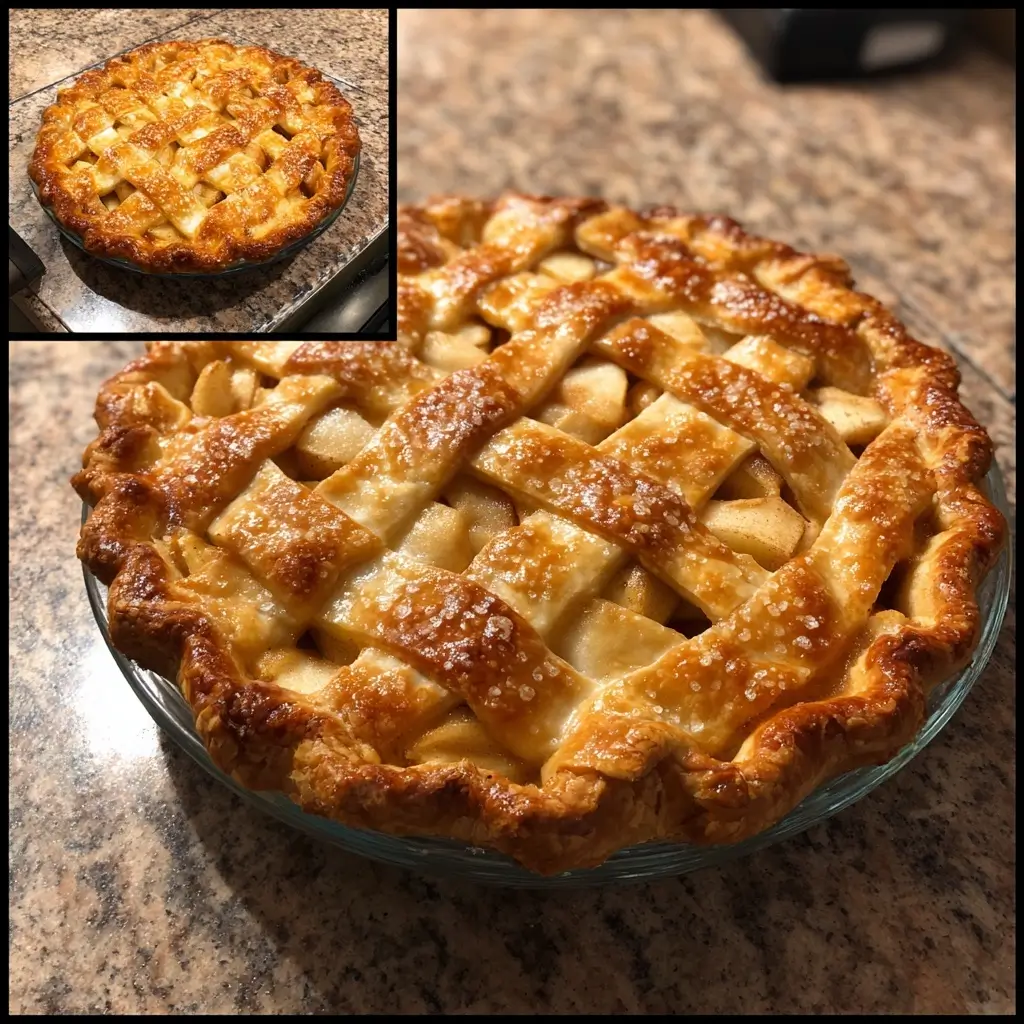
- Roll Out the Top Crust: Roll the second dough disc into another 12-inch circle. You can place it whole over the apples, cut slits for steam to escape, or weave a lattice design. For a lattice: cut the rolled dough into ¾-inch strips and weave over the filling.
- Seal and Crimp: If using a full top crust, tuck the edges under the bottom crust and crimp with fingers or a fork. For a lattice, trim strips and fold ends under, then crimp.
- Brush and Sugar: Lightly brush the top crust (or lattice) with beaten egg or milk. Sprinkle generously with coarse sugar for shine and crunch.
- Chill the Pie: Place the assembled pie in the freezer for 15 minutes or refrigerator for 30 minutes. This helps prevent shrinkage during baking.
- Preheat Oven: Set oven to 425°F (220°C). Place a baking sheet on the lower rack to catch any drips.
- First Bake: Place pie on the center rack. Bake at 425°F for 20 minutes to set the crust and begin caramelizing the apples.
- Reduce Heat: Lower oven temperature to 375°F (190°C). Continue baking for 40–50 minutes, until the crust is deep golden brown and the filling is bubbling through the vents.
- Cool Completely: Remove pie from oven and let cool on a wire rack for at least 3–4 hours. This allows the filling to set properly. Cutting too soon will result in a runny pie.
Tips for the Perfect Apple Pie
- Keep Ingredients Cold: For a flaky crust, ensure butter and water are very cold. Work quickly to prevent the fat from softening.
- Don’t Skip the Chill: Chilling the dough and assembled pie prevents shrinkage and improves texture.
- Vent Well: If using a solid top crust, make generous slits to allow steam to escape and prevent sogginess.
- Use Tart Apples: They hold up better during baking and balance sweetness. Avoid Red Delicious—they turn mushy.
- Prevent Overflow: Place a baking sheet beneath the pie to catch any bubbling juices.
- Golden Crust Tip: For extra browning, cover the pie’s edges with foil after 20 minutes if they’re browning too quickly.
- Test Doneness: Insert a thin knife through a vent—apples should be tender but not mushy.
Variations and Customizations
While classic apple pie is timeless, there are endless ways to personalize it:
- Cheddar Crust: Add ½ cup shredded sharp cheddar cheese to the crust dough for a savory-sweet twist popular in Vermont.
- Maple Apple Pie: Replace granulated sugar with maple syrup or maple sugar for a deeper, autumnal flavor.
- Bourbon Apple Pie: Add 1–2 tablespoons of bourbon to the filling for a rich, sophisticated note.
- Oat Crumble Top: Swap the top crust for a streusel topping made with oats, flour, brown sugar, butter, and cinnamon.
- Gluten-Free: Use a gluten-free flour blend for the crust and thickener. Ensure all ingredients are certified GF.
- Vegan Apple Pie: Substitute butter with vegan margarine or coconut oil, and use plant-based milk for brushing. Flax eggs can replace egg wash if needed.
- Mini Pies: Make individual hand pies or use a muffin tin for portable treats.
- Spice Variations: Add cardamom, allspice, ginger, or cloves for a spiced-up version.
- Fruit Mix-Ins: Combine apples with cranberries, pears, or raspberries for a fruity twist.
Health Considerations and Nutritional Value
Apple pie is a rich dessert and should be enjoyed in moderation, especially for those monitoring sugar, calories, or carbohydrates. However, it does offer some nutritional benefits when made thoughtfully.
Nutritional Highlights (per slice, approximately 1/8 of a 9-inch pie):
- Calories: ~350–450
- Total Fat: 15–20g (mostly from butter in crust)
- Saturated Fat: 8–10g
- Carbohydrates: 50–60g
- Sugars: 25–35g (natural and added)
- Fiber: 3–4g (from apples and skin, if left on)
- Vitamin C: From apples, supports immunity
- Antioxidants: Apples contain polyphenols, particularly in the skin
Ways to Make It Healthier:
- Reduce Sugar: Cut sugar by 25–30% or use natural sweeteners like monk fruit or erythritol.
- Whole Grain Crust: Substitute part of the all-purpose flour with whole wheat or spelt for added fiber.
- Less Butter: Use heart-healthy oils like olive oil in part, or reduce butter slightly in the crust.
- Skin-On Apples: Retain the peel for extra fiber and nutrients.
- Smaller Portions: Serve modest slices, perhaps with a dollop of Greek yogurt instead of ice cream.
Frequently Asked Questions (FAQ)
Can I make apple pie ahead of time?
Yes! Assemble and bake the pie up to 2 days in advance. Store covered at room temperature. Reheat gently in a 300°F oven for 15–20 minutes before serving. Unbaked pies can be frozen before baking—wrap tightly and bake from frozen, adding 20–30 minutes to baking time.
Why is my apple pie soggy?
Common causes include insufficient thickener, underbaking, or slicing apples too thickly. Ensure you use enough flour or cornstarch and bake until the filling bubbles vigorously. Cooling completely also helps the filling set.
Can I use canned apples?
Fresh apples are best for texture and flavor. Canned apples are often too soft and may alter the taste due to syrup. If necessary, drain and pat dry thoroughly, but expect a softer result.
How do I store leftover apple pie?
Cover loosely and store at room temperature for up to 2 days. For longer storage, refrigerate for up to 5 days. Reheat in the oven to restore crispness.
Can I freeze apple pie?
Yes. Freeze fully baked and cooled pie for up to 4 months. Wrap tightly in plastic and foil. Thaw in the refrigerator overnight and reheat in a 350°F oven for 20–30 minutes.
What apples are best for apple pie?
Firm, tart apples that hold their shape are ideal. Recommended varieties include Granny Smith, Honeycrisp, Braeburn, Pink Lady, and Jonagold. Mixing two types creates balanced flavor and texture.
Do I need to pre-cook the apples?
Not usually. Raw apples soften perfectly during baking. Pre-cooking can help prevent shrinkage but isn’t necessary with proper technique.
Summary
Apple pie is a cherished dessert that combines a buttery, flaky crust with a warmly spiced, tender apple filling—baked to golden perfection. More than just a treat, it’s a symbol of comfort, tradition, and homemade joy.