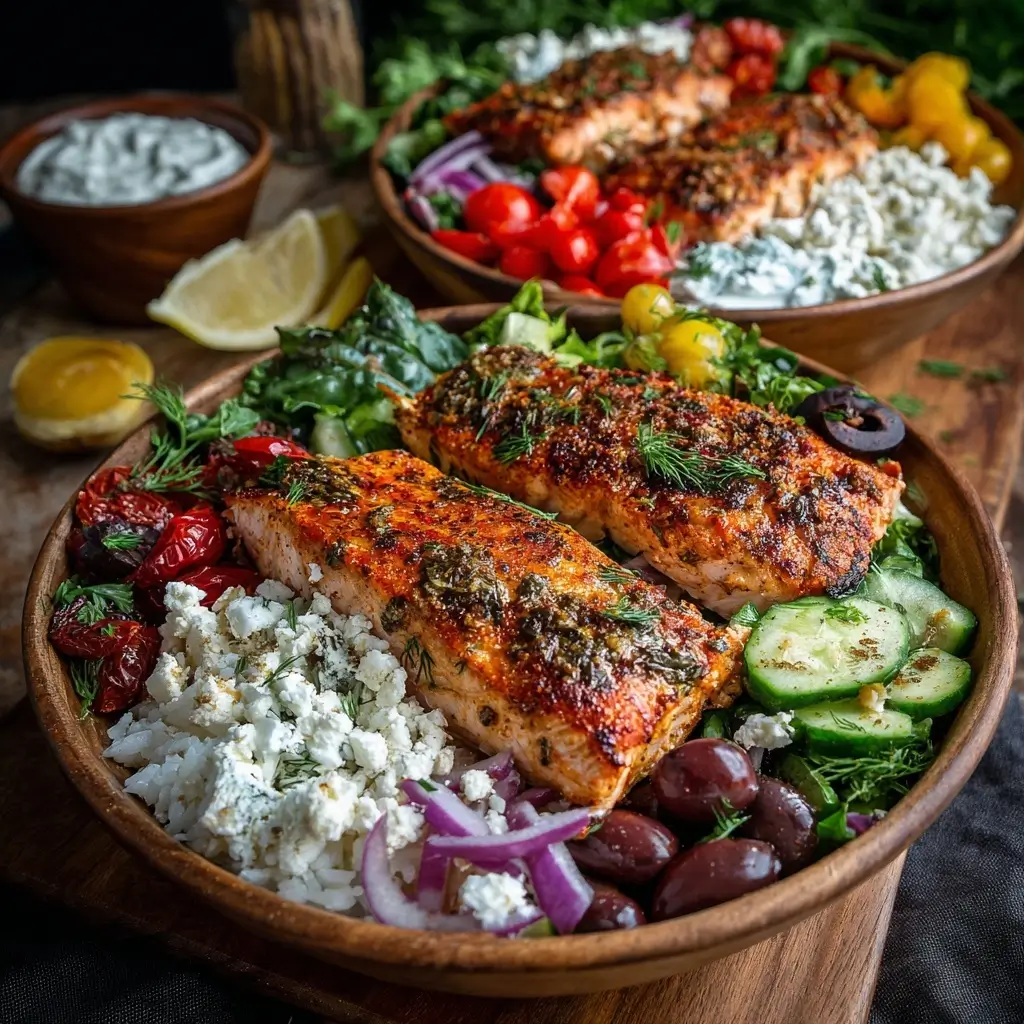
Mediterranean Salmon Bowls
Mediterranean Salmon Bowls: A Flavorful, Healthy Delight
Introduction
The Mediterranean Salmon Bowl is more than just a meal—it’s a celebration of vibrant flavors, wholesome ingredients, and the heart-healthy principles of the Mediterranean diet. This nourishing bowl combines succulent grilled salmon with a colorful array of fresh vegetables, whole grains, and zesty dressings inspired by the sun-drenched coasts of Greece, Turkey, and Southern Italy. Whether you’re looking for a post-workout power meal, a quick weeknight dinner, or a nutrient-packed lunch option, this dish delivers on taste, texture, and health benefits. With its balance of lean protein, fiber-rich grains, healthy fats, and antioxidant-laden produce, the Mediterranean Salmon Bowl stands out as a culinary masterpiece that supports long-term wellness and satisfies even the most discerning palates.
The History
The concept of grain bowls has ancient roots across many cultures, but the modern interpretation of the Mediterranean-inspired bowl emerged in the late 20th century as global interest in the Mediterranean diet grew. Popularized by nutritionists and chefs alike, the Mediterranean diet—recognized by UNESCO as an Intangible Cultural Heritage—emphasizes seasonal vegetables, legumes, olive oil, fish, herbs, and whole grains. Countries like Greece, Italy, Lebanon, and Spain have long enjoyed meals built around these elements, often served family-style on large platters. The rise of the “bowl food” trend in the 2010s, particularly in urban cafes and health-conscious eateries across North America and Europe, led to the creation of composed dishes like the Mediterranean Salmon Bowl. Chefs began combining grilled fish—especially omega-3-rich salmon—with quinoa or farro, roasted vegetables, olives, feta cheese, and herb-based sauces to create satisfying, portable meals. This fusion of tradition and modern culinary innovation reflects a growing desire for balanced, sustainable eating rooted in cultural authenticity and nutritional science.
Ingredients Breakdown
Every component of the Mediterranean Salmon Bowl plays a vital role in creating a harmonious blend of flavor, texture, and nutrition:
- Salmon Fillets: Rich in omega-3 fatty acids, high-quality protein, and vitamin D, wild-caught salmon provides the centerpiece of the bowl. Its buttery texture and mild flavor absorb seasonings beautifully.
- Olive Oil: A cornerstone of the Mediterranean diet, extra virgin olive oil adds heart-healthy monounsaturated fats and a fruity, peppery depth to marinades and dressings.
- Lemon Juice: Freshly squeezed lemon juice brightens the dish, enhances the flavor of the salmon, and aids in digestion while providing a dose of vitamin C.
- Garlic & Herbs: Garlic, oregano, thyme, and dill contribute aromatic complexity and possess natural anti-inflammatory and antimicrobial properties.
- Quinoa or Farro: These whole grains offer complete protein (quinoa) or chewy texture and fiber (farro), serving as a nutritious base that keeps you full longer.
- Cucumber, Cherry Tomatoes, Red Onion: Crisp cucumbers, juicy tomatoes, and sharp red onions bring freshness, color, and antioxidants such as lycopene and quercetin.
- Kalamata Olives: Briny and rich in healthy fats, these Greek olives add a savory umami note characteristic of Mediterranean cuisine.
- Feta Cheese: Tangy and creamy, feta made from sheep’s or goat’s milk offers calcium and probiotics while enhancing flavor without overpowering the dish.
- Spinach or Arugula: Leafy greens provide iron, folate, and a peppery bite (especially arugula), boosting the bowl’s micronutrient profile.
- Hummus: A dollop of hummus adds plant-based protein, fiber, and creaminess, acting as both garnish and sauce.
- Pita Bread (optional): Whole wheat pita can be served on the side for scooping or tearing into pieces to add crunch.
- Tahini-Lemon Dressing: A creamy emulsion of tahini, lemon, garlic, and water ties all components together with nutty richness and tangy brightness.
Step-by-Step Recipe
- Prepare the Salmon: Begin by patting 4 salmon fillets (about 6 oz each) dry with paper towels. In a small bowl, whisk together 3 tablespoons of extra virgin olive oil, juice of 1 lemon, 2 minced garlic cloves, 1 teaspoon dried oregano, 1/2 teaspoon smoked paprika, salt, and freshly ground black pepper. Place the salmon in a shallow dish and pour the marinade over it. Let it sit for 20–30 minutes at room temperature (or up to 2 hours refrigerated). Preheat your oven to 400°F (200°C) or prepare a grill or stovetop pan.
- Cook the Salmon: Transfer the marinated salmon to a lined baking sheet or grill pan. Bake for 12–15 minutes, or until the internal temperature reaches 145°F and the flesh flakes easily with a fork. Alternatively, sear skin-side down on medium-high heat for 5–6 minutes, then flip and cook another 3–4 minutes. Set aside to rest.
- Cook the Grain Base: While the salmon cooks, rinse 1 cup of quinoa under cold water. In a saucepan, combine quinoa with 2 cups of water or low-sodium vegetable broth. Bring to a boil, reduce heat, cover, and simmer for 15 minutes until liquid is absorbed. Fluff with a fork and let cool slightly. (For farro, use 1 cup semi-pearled farro with 3 cups water; simmer 25–30 minutes.)
- Chop the Vegetables: Dice 1 English cucumber, halve 1 pint of cherry tomatoes, thinly slice 1/2 red onion, and chop a handful of fresh parsley and dill. Place them in separate bowls or mix gently in a large salad bowl.
- Make the Tahini Dressing: In a jar or small bowl, whisk together 1/4 cup tahini, juice of 1 lemon, 1 minced garlic clove, 2 tablespoons warm water, 1 tablespoon olive oil, a pinch of salt, and a dash of cumin. Adjust consistency with more water if needed.
- Assemble the Bowls: Start with a base of 1/2 to 3/4 cup cooked quinoa or farro in each of four wide, shallow bowls. Arrange portions of spinach or arugula over the grains. Top each with a salmon fillet. Surround with cucumber, tomatoes, red onion, Kalamata olives, and crumbled feta cheese. Drizzle generously with tahini-lemon dressing and sprinkle with fresh herbs.
- Serve: Serve immediately, optionally with warm whole wheat pita bread on the side. Encourage mixing before eating to distribute flavors evenly.
Tips
- Don’t Overcook the Salmon: Salmon continues to cook slightly after removal from heat. Remove it just before it looks fully opaque for a moist, flaky result.
- Brighten with Fresh Herbs: Add chopped mint, parsley, or dill just before serving to elevate freshness and aroma.
- Toast the Grains: For extra flavor, toast quinoa or farro in a dry pan for 2–3 minutes before cooking to bring out a nutty scent.
- Batch Prep Smartly: Cook grains and chop vegetables ahead of time. Store them separately in airtight containers for up to 4 days. Marinate salmon the night before for deeper flavor.
- Customize Doneness: Prefer rare salmon? Sear quickly on high heat for a crispy exterior and tender center—ideal for sushi-grade or very fresh fillets.
- Dress Lightly: Add dressing just before serving to prevent sogginess, especially if prepping meals in advance.
- Use Parchment Paper: Line your baking sheet with parchment to make cleanup effortless and prevent sticking.
- Add Crunch: Include toasted pine nuts, slivered almonds, or sunflower seeds for added texture and healthy fats.
Variations and Customizations
The beauty of the Mediterranean Salmon Bowl lies in its versatility. Here are creative ways to personalize it:
- Protein Swaps: Replace salmon with grilled chicken, shrimp, canned tuna, or baked tofu for different dietary preferences.
- Grain Alternatives: Use brown rice, bulgur, couscous, or freekeh instead of quinoa or farro. For a low-carb version, try cauliflower rice or massaged kale.
- Vegetable Rotations: Add roasted bell peppers, artichoke hearts, zucchini ribbons, pickled red onions, or steamed broccoli for seasonal variety.
- Dairy-Free Option: Skip feta or use a plant-based alternative made from almonds or cashews. Boost creaminess with avocado slices.
- Vegan Version: Omit salmon and feta, double the hummus, and add chickpeas or lentils for protein. Use marinated and baked portobello mushrooms for a meaty texture.
- Spicy Kick: Stir harissa paste into the dressing or sprinkle with red pepper flakes for heat.
- Sweet Contrast: Add diced peaches, pomegranate arils, or dried figs for a touch of sweetness that balances the salty olives and feta.
- Greek-Inspired Twist: Incorporate tzatziki sauce, pepperoncini, and a squeeze of lemon for a classic Greek gyro vibe.
- Meal Prep Friendly: Divide components into separate compartments of a meal prep container. Assemble just before eating to maintain optimal texture.
Health Considerations and Nutritional Value
The Mediterranean Salmon Bowl aligns perfectly with evidence-based dietary guidelines for promoting cardiovascular health, brain function, and metabolic wellness. Key health benefits include:
- Omega-3 Fatty Acids: Salmon is one of the best sources of EPA and DHA, which reduce inflammation, support cognitive health, and lower triglyceride levels.
- Heart Health: Olive oil, nuts, fiber-rich grains, and vegetables contribute to improved cholesterol profiles and reduced risk of heart disease.
- Antioxidant-Rich Produce: Tomatoes (lycopene), spinach (lutein), olives (polyphenols), and citrus (vitamin C) help combat oxidative stress and support immune function.
- High-Quality Protein: With approximately 35–40 grams of protein per serving, this bowl supports muscle maintenance, satiety, and weight management.
- Fiber Content: Thanks to whole grains, legumes (if added), and vegetables, each bowl provides 8–12 grams of fiber, aiding digestion and blood sugar control.
- Low in Refined Carbs and Added Sugar: Naturally sweet ingredients come from vegetables and fruits, avoiding processed sugars common in commercial dressings.
- Gluten-Free Potential: Use certified gluten-free grains like quinoa and ensure all packaged ingredients (e.g., hummus) are safe for those with celiac disease or sensitivity.
- Portion Control: The bowl format encourages mindful eating and balanced macronutrient distribution—ideal for maintaining energy throughout the day.
Nutritional Estimate (per serving):
- Calories: ~580–650 kcal
- Protein: ~38–42g
- Fat: ~30–35g (mostly unsaturated)
- Carbohydrates: ~40–45g
- Fiber: ~8–10g
- Sodium: ~600–800mg (adjustable by reducing feta, olives, or using low-sodium products)
- Rich in Vitamins: A, C, D, B12, K, and minerals like iron, calcium, magnesium, and selenium
Ingredients
For the Salmon:
- 4 (6 oz) salmon fillets, skin-on or skinless
- 3 tbsp extra virgin olive oil
- Juice of 1 lemon
- 2 cloves garlic, minced
- 1 tsp dried oregano
- 1/2 tsp smoked paprika
- Salt and freshly ground black pepper to taste
For the Bowl Base:
- 1 cup quinoa or farro
- 2 cups water or vegetable broth
- 2 cups baby spinach or arugula
For the Vegetables and Toppings:
- 1 English cucumber, diced
- 1 pint cherry tomatoes, halved
- 1/2 red onion, thinly sliced
- 1/2 cup Kalamata olives, pitted and halved
- 1/2 cup crumbled feta cheese
- 1/4 cup fresh parsley, chopped
- 2 tbsp fresh dill, chopped
- Optional: 1/2 cup hummus, pita bread, avocado slices
For the Tahini-Lemon Dressing:
- 1/4 cup tahini (sesame seed paste)
- Juice of 1 lemon
- 1 clove garlic, minced
- 2–3 tbsp warm water
- 1 tbsp extra virgin olive oil
- 1/4 tsp ground cumin
- Salt to taste
Directions
- In a bowl, whisk together olive oil, lemon juice, garlic, oregano, smoked paprika, salt, and pepper. Pour over salmon fillets in a dish, turning to coat. Marinate for 20–30 minutes at room temperature.
- Preheat oven to 400°F (200°C). Place salmon on a parchment-lined baking sheet and bake for 12–15 minutes until cooked through. Alternatively, grill or pan-sear.
- While salmon cooks, rinse quinoa and cook in 2 cups water or broth according to package instructions (approx. 15 minutes). Fluff and set aside.
- Prepare vegetables: dice cucumber, halve tomatoes, slice red onion, chop herbs.
- To make dressing: whisk tahini, lemon juice, garlic, olive oil, cumin, and salt. Gradually add warm water until smooth and pourable.
- Assemble bowls: divide quinoa among four bowls. Top with spinach, then arrange salmon, cucumber, tomatoes, onion, olives, feta, and herbs.
- Drizzle with tahini dressing and serve with hummus and warm pita, if desired.
FAQ
Can I use frozen salmon?
Yes, frozen salmon works well. Thaw it overnight in the refrigerator and pat dry before marinating to ensure proper browning.
How do I store leftovers?
Store components separately in airtight containers in the fridge for up to 3 days. Reheat salmon gently to avoid drying out.
Is this recipe keto-friendly?
Not in its standard form due to grains and some vegetables. For a keto version, replace quinoa with cauliflower rice and limit higher-carb veggies.
Can I make it ahead for meal prep?
Absolutely! Cook grains, chop veggies, and make dressing 3–4 days in advance. Keep salmon separate and assemble bowls fresh.
What can I substitute for tahini?
You can use Greek yogurt mixed with lemon and garlic for a creamy dressing, though it won’t be sesame-based. Almond butter is another alternative with a milder nutty flavor.
Is wild-caught salmon worth the extra cost?
Wild-caught salmon generally has a better omega-3 profile and fewer contaminants than farmed. If budget is a concern, look for sustainably farmed options labeled “responsibly raised.”
Can I grill the salmon?
Definitely. Grill over medium heat for 4–5 minutes per side, depending on thickness. Use a grill basket or foil to prevent sticking.
Are there mercury concerns with salmon?
Salmon is low in mercury compared to other fish like tuna or swordfish. It’s safe to eat 2–3 servings per week, even during pregnancy.
Summary
The Mediterranean Salmon Bowl is a nutrient-dense, flavor-packed meal that brings the vibrant essence of coastal cuisines to your table. Packed with omega-3s, fiber, and fresh produce, it supports heart health, energy, and overall wellness.