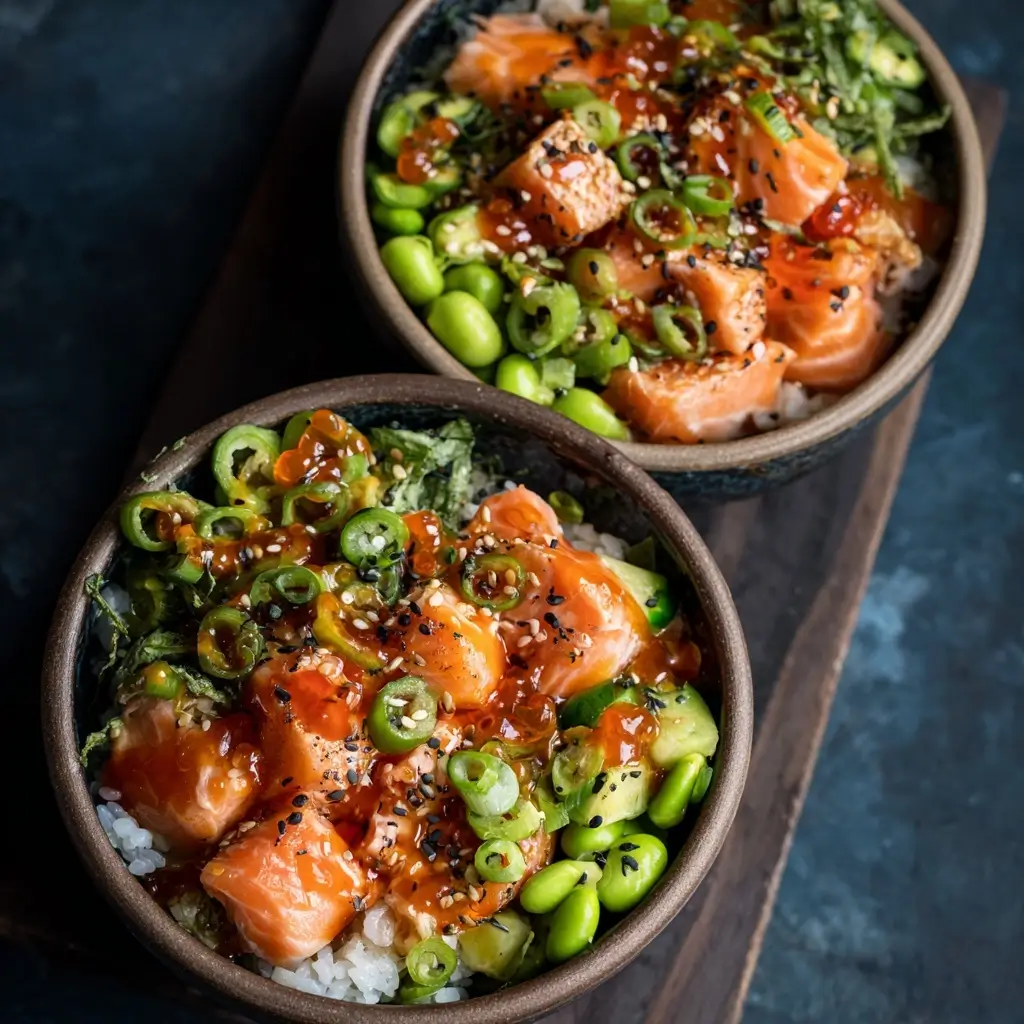
Spicy Sushi Bowls with Salmon
Spicy Sushi Bowls with Salmon
Introduction
Imagine the bold, vibrant flavors of your favorite sushi roll—fresh salmon, crisp vegetables, and that signature spicy kick—but deconstructed into a nourishing, easy-to-enjoy bowl format. Spicy Sushi Bowls with Salmon bring together all the elements you love about Japanese cuisine in a convenient, customizable, and satisfying meal. Whether you’re new to sushi or a seasoned connoisseur, this dish offers a modern twist on tradition that’s perfect for weeknight dinners, meal prepping, or impressing guests at a casual dinner party. Packed with protein, healthy fats, and colorful produce, these bowls are as nutritious as they are delicious. Dive into a culinary experience that balances heat, umami, freshness, and texture in every bite.
The History
Sushi, as we know it today, originated in Japan over a thousand years ago, beginning as a method of preserving fish by fermenting it with salted rice. This early form, known as narezushi, was quite different from modern sushi but laid the foundation for what would evolve into one of the world’s most beloved cuisines. It wasn’t until the Edo period (1603–1868) that fresh fish began to be placed atop vinegared rice, giving rise to nigiri and maki (rolled sushi). Fast forward to the 20th century, and sushi spread globally, adapting to local tastes and ingredients.
In Western countries, particularly the United States, creative interpretations emerged—like the California roll and spicy tuna roll—introducing mayonnaise, avocado, and chili-based sauces. The concept of the “sushi bowl” or “poke bowl” gained popularity in Hawaii, blending Japanese techniques with Polynesian and American influences. Today, Spicy Sushi Bowls represent a fusion trend, combining traditional elements like nori, soy sauce, and raw fish with bold, contemporary flavors such as sriracha and spicy mayo. These bowls reflect our fast-paced lifestyles while honoring the artistry and balance inherent in Japanese food culture.
Ingredients Breakdown
Every component of a Spicy Sushi Bowl plays a vital role in creating harmony between flavor, texture, and nutrition. Here’s a detailed look at what goes into this vibrant dish:
- Fresh Salmon: The star ingredient, preferably sashimi-grade, offering buttery richness and high omega-3 content. Must be handled safely and sourced responsibly.
- Sushi Rice: Short-grain Japanese rice seasoned with rice vinegar, sugar, and salt. Its sticky texture holds the bowl together and complements the other ingredients.
- Spicy Mayo: A creamy blend of mayonnaise and sriracha (or chili garlic sauce), adding heat and lusciousness. Some versions include lime juice or sesame oil for depth.
- Avocado: Adds creaminess and healthy monounsaturated fats. Its mild flavor balances the spiciness and enhances mouthfeel.
- Cucumber: Provides a refreshing crunch and light hydration. English cucumbers are ideal due to their thin skin and low seed content.
- Carrots: Julienned or shredded for color and sweetness, contributing fiber and beta-carotene.
- Scallions: Add a sharp, oniony bite and vibrant green color, enhancing both aroma and visual appeal.
- Sesame Seeds: Toasted white or black sesame seeds lend nuttiness and a delicate crunch.
- Nori (Seaweed Sheets): Dried seaweed strips offer an oceanic umami flavor and essential minerals like iodine.
- Soy Sauce or Tamari: Used for drizzling or serving on the side, providing savory depth. Tamari is a gluten-free alternative.
- Rice Vinegar: Essential for seasoning the rice, lending subtle acidity and shine.
- Optional Add-ins: Edamame, pickled ginger, radish sprouts, tobiko (fish roe), microgreens, mango, or jalapeño slices can elevate complexity.
Each ingredient contributes not just taste but also nutritional value, making the bowl a well-rounded meal when properly balanced.
Step-by-Step Recipe
- Prepare the Sushi Rice: Rinse 1 cup of short-grain sushi rice under cold water until the water runs clear. Combine with 1¼ cups water in a saucepan, bring to a boil, then reduce to a simmer. Cover and cook for 18–20 minutes. Remove from heat and let sit, covered, for 10 minutes. In a small bowl, mix 2 tablespoons rice vinegar, 1 tablespoon sugar, and ½ teaspoon salt until dissolved. Gently fold this mixture into the cooked rice using a wooden spatula. Let cool to room temperature.
- Marinate the Salmon: While the rice cooks, dice 8 oz of sashimi-grade salmon into small cubes. In a separate bowl, combine 2 tablespoons mayonnaise and 1–2 teaspoons sriracha (adjust to taste) to make the spicy mayo. Toss the salmon gently with 1 tablespoon of the spicy mayo to coat lightly. Refrigerate until ready to use.
- Prep the Vegetables: Peel and julienne 1 small carrot. Slice ½ English cucumber into thin matchsticks. Dice 1 ripe avocado. Thinly slice 2–3 scallions. If using edamame, steam or thaw frozen edamame and lightly salt.
- Toast the Sesame Seeds: In a dry skillet over medium heat, toast 1 tablespoon of sesame seeds for 2–3 minutes, stirring frequently, until golden and fragrant. Set aside.
- Rehydrate Nori (Optional): Break nori sheets into small pieces. For softer texture, briefly dip in warm water; for crunch, use dry or lightly toasted.
- Assemble the Bowls: Divide the seasoned sushi rice among 2–3 serving bowls. Arrange the marinated salmon, avocado, cucumber, carrots, scallions, and any additional toppings in neat sections over the rice.
- Finish and Serve: Drizzle remaining spicy mayo over the top. Sprinkle with toasted sesame seeds and crumbled nori. Serve with soy sauce or tamari on the side for dipping or drizzling. Add pickled ginger and wasabi if desired.
Tips
- Use Sashimi-Grade Fish: Always ensure your salmon is labeled “sashimi-grade” or “sushi-grade,” indicating it has been frozen to kill parasites and is safe for raw consumption.
- Don’t Overcook the Rice: Sushi rice should be tender and slightly sticky, not mushy. Rinsing removes excess starch and prevents clumping.
- Cool Rice Properly: Spread rice on a large plate or tray to cool quickly and prevent it from becoming gummy. Never refrigerate hot rice.
- Balancing Spice: Start with less sriracha in the mayo and adjust gradually. You can always add more heat, but you can’t take it away.
- Prep Ahead: Cook rice and chop vegetables a day in advance. Store separately in airtight containers. Assemble bowls fresh to maintain texture.
- Layering Matters: Place heavier items like salmon and avocado first, then lighter garnishes like scallions and sesame seeds on top for visual appeal.
- Customize Heat: For extra kick, add gochujang, chili oil, or fresh minced jalapeño to the spicy mayo.
- Keep Avocado Fresh: Drizzle diced avocado with a little lemon or lime juice to prevent browning.
- Use Quality Soy Sauce: Opt for reduced-sodium soy sauce or tamari to control saltiness and enhance flavor without overpowering.
- Garnish Creatively: Microgreens, edible flowers, or citrus zest can elevate presentation for special occasions.
Variations and Customizations
The beauty of Spicy Sushi Bowls lies in their adaptability. Here are several ways to personalize your bowl:
- Protein Swaps: Replace salmon with spicy tuna (using canned or fresh), cooked shrimp, grilled chicken, tofu, or even marinated tempeh for a vegetarian option.
- Grain Alternatives: Use brown rice, quinoa, cauliflower rice, or mixed grains for a lower-carb or higher-fiber base.
- Veggie Variations: Add bell peppers, daikon radish, blanched broccoli, corn, or heirloom tomatoes for extra color and nutrients.
- International Twists: Incorporate Korean gochujang for a spicy-sweet depth, Thai-inspired lime-chili dressing, or Mexican-style pico de gallo for fusion flair.
- Dairy-Free or Vegan: Use vegan mayonnaise and substitute salmon with marinated mushrooms, hearts of palm, or jackfruit for a plant-based version.
- Fruit Infusions: Add diced mango, pineapple, or peach for a sweet contrast that pairs beautifully with spicy mayo.
- Crunchy Toppings: Include tempura flakes, crushed peanuts, crispy onions, or wonton strips for added texture.
- Sauce Options: Try eel sauce (unagi glaze), ponzu, miso dressing, or yuzu kosho for different flavor profiles.
- Seasonal Themes: In summer, highlight fresh herbs and citrus; in winter, incorporate roasted root vegetables and warm broths as a base.
- Kids’ Version: Omit spice, use mild mayo, and add fun toppings like corn, cheese, or fruit for a family-friendly twist.
Health Considerations and Nutritional Value
Spicy Sushi Bowls can be a nutrient-dense, balanced meal when thoughtfully composed. Here’s a breakdown of key health aspects:
- Omega-3 Fatty Acids: Salmon is rich in EPA and DHA, which support heart and brain health, reduce inflammation, and improve cognitive function.
- Healthy Fats: Avocado and sesame seeds provide monounsaturated and polyunsaturated fats, promoting satiety and aiding nutrient absorption.
- Complex Carbohydrates: Sushi rice offers energy and, when paired with vinegar, may help moderate blood sugar spikes due to increased resistant starch formation upon cooling.
- Fiber Content: Vegetables like cucumber, carrots, and edamame contribute dietary fiber, supporting digestion and gut health.
- Low in Saturated Fat: When prepared with minimal mayo and quality ingredients, this dish remains low in unhealthy fats.
- Rich in Vitamins and Minerals: Nori provides iodine for thyroid function, while scallions and carrots deliver vitamin A, C, and K.
- Calorie Awareness: Be mindful of portion sizes, especially with rice and spicy mayo, which can increase calorie density. A typical bowl ranges from 500–700 calories depending on ingredients.
- Sodium Levels: Soy sauce and store-bought mayo can be high in sodium. Use low-sodium versions and limit added sauces to manage intake.
- Food Safety: Raw fish carries risks for certain populations (pregnant women, immunocompromised individuals). Consider fully cooked salmon or alternatives if needed.
- Allergen Notes: Contains fish, soy, and sesame. May contain shellfish if served in shared kitchens. Vegan/dairy-free substitutions available.
Overall, this dish aligns well with Mediterranean and Japanese dietary patterns—both associated with longevity and reduced chronic disease risk.
Ingredients
- 1 cup sushi rice (short-grain Japanese rice)
- 1¼ cups water
- 2 tbsp rice vinegar
- 1 tbsp sugar
- ½ tsp salt
- 8 oz sashimi-grade salmon, skin removed and finely diced
- 3 tbsp mayonnaise (preferably Kewpie or vegan)
- 1–2 tsp sriracha (adjust to taste)
- 1 ripe avocado, diced
- ½ English cucumber, julienned
- 1 small carrot, julienned or shredded
- 2–3 scallions, thinly sliced
- 1 tbsp sesame seeds, toasted
- 1–2 nori sheets, cut into strips
- 2–3 tbsp soy sauce or tamari (for serving)
- Optional: pickled ginger, wasabi, edamame, lime wedges
Directions
- In a fine-mesh strainer, rinse the sushi rice under cold running water until the water runs clear. Transfer to a saucepan with 1¼ cups water. Bring to a boil, then reduce heat to low, cover, and simmer for 18–20 minutes. Remove from heat and let stand, covered, for 10 minutes.
- While rice cooks, prepare the seasoning. In a small bowl, whisk rice vinegar, sugar, and salt until fully dissolved.
- Transfer cooked rice to a large non-metallic bowl. Gently fold in the vinegar mixture with a wooden spatula. Spread out to cool to room temperature.
- In a separate bowl, mix mayonnaise and sriracha to create spicy mayo. Reserve 1 tablespoon for tossing with salmon, and set the rest aside for drizzling.
- Toss diced salmon gently with 1 tablespoon of spicy mayo. Cover and refrigerate until assembly.
- Prepare all vegetables: dice avocado, julienne cucumber and carrot, slice scallions. Lightly toss avocado with lemon juice if desired.
- Toast sesame seeds in a dry skillet over medium heat until golden and aromatic, about 2–3 minutes. Set aside.
- To assemble, divide cooled sushi rice among bowls. Top with salmon, avocado, cucumber, carrots, scallions, and any additional toppings.
- Drizzle with remaining spicy mayo. Sprinkle with toasted sesame seeds and nori strips.
- Serve immediately with soy sauce, pickled ginger, and wasabi on the side. Enjoy fresh and chilled.
FAQ
Can I use frozen salmon?
Yes, but it must be labeled “sashimi-grade” and previously frozen to meet safety standards for raw consumption. Thaw in the refrigerator overnight.
How long do Spicy Sushi Bowls last in the fridge?
Assembled bowls are best eaten within 24 hours. Components can be stored separately for up to 2 days. Note: avocado may brown over time.
Is it safe to eat raw salmon?
Only if it’s sashimi-grade and handled properly. Freezing kills parasites, but improper storage can lead to bacterial growth. When in doubt, cook the salmon.
Can I make this ahead for meal prep?
Absolutely! Prepare rice, chop veggies, and make sauces 1–2 days in advance. Keep salmon separate and assemble bowls the day of eating.
What can I use instead of nori?
If you don’t like seaweed, omit it or try roasted seaweed snacks crushed on top. Alternatively, use furikake seasoning for similar flavor.
How do I make this low-carb?
Swap sushi rice for cauliflower rice or shirataki noodles. Reduce or omit sugar in the rice seasoning.
Can I cook the salmon?
Yes! Pan-sear or bake the salmon with a little oil and soy sauce. It won’t be traditional, but still delicious and safer for sensitive eaters.
Why is my sushi rice too sticky?
Over-rinsing or over-stirring can release too much starch. Follow proper ratios and avoid mashing the rice when mixing in vinegar.
Can I freeze spicy sushi bowls?
Not recommended. Freezing alters texture, especially of raw fish, avocado, and rice. Best enjoyed fresh or refrigerated short-term.
Are there sustainable salmon options?
Look for wild-caught Alaskan salmon (especially sockeye or coho) or farmed salmon certified by organizations like MSC or ASC for environmental responsibility.
Summary
Spicy Sushi Bowls with Salmon are a vibrant, flavorful fusion dish that brings the essence of sushi to a convenient, customizable format. Packed with fresh ingredients, healthy fats, and a kick of heat, they’re perfect for nutritious meals any day of the week.