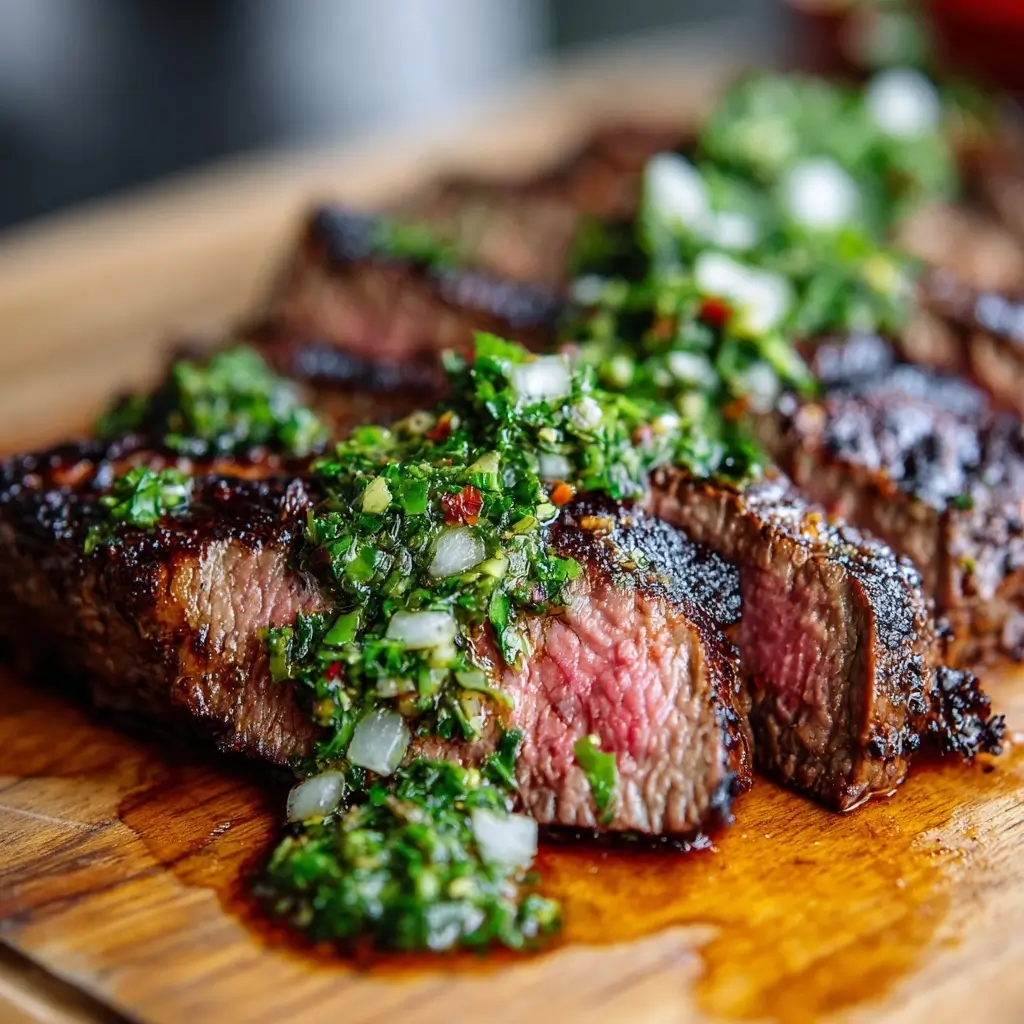
Grilled Chimichurri Steak
Grilled Chimichurri Steak: A Flavorful Journey from Argentina to Your Plate
The History of Chimichurri and Grilled Steak
The tradition of grilled steak with chimichurri sauce originates in the lush pampas of Argentina, where gauchos (South American cowboys) have long mastered the art of open-fire grilling. Chimichurri, believed to have been created in the 19th century, was originally a way for gauchos to enhance the flavor of simple grilled meats using readily available herbs and spices. While its exact origins are debated—some say it was named after an Irishman named Jimmy McCurry who couldn’t pronounce “para el chivo” (“for the goat”)—the sauce has become a cornerstone of Argentinean cuisine.
Today, grilled chimichurri steak is celebrated worldwide, not only for its bold, herbaceous flavor but also as a symbol of communal dining and outdoor cooking. From backyard barbecues in the United States to fine dining restaurants across Europe, this dish continues to captivate palates with its vibrant green sauce and perfectly seared beef. Its popularity has grown alongside the global appreciation for rustic, flavorful, and minimally processed foods.
Ingredients Breakdown
Creating the perfect grilled chimichurri steak starts with high-quality ingredients that come together to deliver a symphony of fresh, tangy, garlicky, and slightly spicy flavors.
For the Chimichurri Sauce:
- Fresh Parsley (flat-leaf): The base of the sauce, providing a bright, grassy flavor. Avoid curly parsley as it lacks depth.
- Fresh Oregano: Adds earthiness and a subtle floral note. Dried oregano can be used in a pinch, but fresh is far superior.
- Garlic: Minced finely or crushed, garlic brings pungency and depth. Adjust quantity based on your preference.
- Red Wine Vinegar: Offers acidity that balances the richness of the steak. Apple cider vinegar can be substituted if needed.
- Olive Oil (extra virgin): Acts as the carrier oil, enriching the sauce and helping emulsify the ingredients.
- Red Pepper Flakes: Provide a gentle heat. You can adjust or omit depending on spice tolerance.
- Onion (finely chopped or shallot): Adds mild sweetness and texture. Shallots offer a more refined flavor.
- Salt and Black Pepper: Essential for seasoning and enhancing all other flavors.
For the Steak:
- Steak Cut (e.g., Ribeye, Sirloin, Flank, or Skirt Steak): Choose well-marbled cuts for best results. Ribeye offers rich flavor; flank or skirt work well for marinades and slicing.
- Olive Oil: Used to coat the steak before grilling for even browning.
- Salt and Freshly Ground Black Pepper: Simple seasoning enhances the natural meat flavor.
- Optional Marinade Additions: A splash of red wine, soy sauce, or Worcestershire can deepen flavor if marinating longer.
Step-by-Step Recipe
Step 1: Prepare the Chimichurri Sauce
- Gather 1 cup of fresh flat-leaf parsley, 2 tablespoons of fresh oregano leaves, 4 cloves of garlic, 1 small shallot or ¼ cup red onion, ½ teaspoon red pepper flakes, ½ teaspoon salt, ¼ teaspoon black pepper, ⅓ cup red wine vinegar, and ¾ cup extra virgin olive oil.
- Rinse and thoroughly dry the herbs. Remove the leaves from the stems and finely chop by hand or pulse in a food processor until uniformly minced (avoid turning into a paste).
- Mince the garlic and finely dice the shallot or onion.
- In a medium bowl, combine the chopped herbs, garlic, shallot, red pepper flakes, salt, and pepper.
- Pour in the red wine vinegar and stir well. Let sit for 5 minutes to allow the flavors to meld and the vinegar to soften the raw edge of the garlic.
- Slowly drizzle in the olive oil while stirring continuously to create a loose emulsion.
- Cover and refrigerate for at least 30 minutes (up to 2 hours) before serving to deepen the flavors. Bring back to room temperature before serving.
Step 2: Prepare the Steak
- Remove the steak from the refrigerator 30–60 minutes before grilling to bring it to room temperature for even cooking.
- Pat the steak dry with paper towels to ensure a good sear.
- Season generously on both sides with kosher salt and freshly ground black pepper. Optionally, rub with a thin layer of olive oil.
- If marinating, place the steak in a resealable bag with a mixture of olive oil, minced garlic, a splash of vinegar, and herbs. Marinate for 2–4 hours in the fridge (not necessary but enhances flavor).
Step 3: Preheat the Grill
- Heat a gas or charcoal grill to high (around 450–500°F / 230–260°C).
- Clean the grates thoroughly and oil them using tongs and a folded paper towel dipped in vegetable oil to prevent sticking.
Step 4: Grill the Steak
- Place the steak on the hot grill at a 45-degree angle to the grates for attractive sear marks.
- Grill for 4–6 minutes per side for medium-rare (internal temperature of 130–135°F / 54–57°C), depending on thickness. Use a meat thermometer for accuracy.
- Avoid pressing down on the steak with a spatula, as this squeezes out flavorful juices.
- For thicker cuts, consider the reverse sear method: finish in a preheated oven at 400°F (200°C) after initial searing.
Step 5: Rest and Slice
- Transfer the steak to a cutting board and tent loosely with foil. Let rest for 8–10 minutes to allow juices to redistribute.
- For flank, skirt, or hanger steaks, slice thinly against the grain for maximum tenderness.
- Arrange on a serving platter or individual plates.
Step 6: Serve with Chimichurri
- Spoon a generous amount of chimichurri over the steak just before serving.
- Pass extra sauce at the table for those who want more.
- Accompany with grilled vegetables, roasted potatoes, or crusty bread to soak up the sauce.
Essential Tips for Perfect Grilled Chimichurri Steak
- Use Fresh Herbs: Bottled or dried herbs will not deliver the same bright, fresh flavor. Always opt for fresh parsley and oregano.
- Don’t Over-blend: While a food processor speeds things up, pulsing too much turns chimichurri into a puree. A coarse chop preserves texture.
- Balance Acidity: If the sauce tastes too sharp, add a touch more olive oil or a pinch of sugar to mellow it.
- Rest the Steak: Skipping the resting step leads to dry meat. Patience ensures juiciness.
- Control Grill Heat: High heat is key for a good sear, but flare-ups can burn the steak. Keep a cooler zone on the grill to move steaks if needed.
- Adjust Salt Gradually: Taste the chimichurri before adding more salt, especially if your steak is well-seasoned.
- Make Ahead: Chimichurri improves overnight. Prepare it a day in advance and store in the fridge—just bring to room temp before serving.
Variations and Customizations
While traditional chimichurri is made with parsley and oregano, creative variations can elevate the dish for different palates and occasions.
Green vs. Red Chimichurri
Argentinians typically enjoy green chimichurri, but chimichurri rojo (red version) includes tomatoes, roasted red peppers, or chili paste for a smoky-sweet twist. Blend in ½ cup roasted red peppers and 1 tablespoon tomato paste for a vibrant alternative.
Herb Variations
Add cilantro, mint, or basil for a modern fusion flair. Cilantro gives a citrusy kick, ideal for Latin-inspired dishes.
Spice It Up
Include a finely diced jalapeño or serrano pepper for extra heat. Remove seeds for less intensity.
Lemon or Lime Zest
Grate in some lemon or lime zest to add a refreshing citrus note that complements grilled meats beautifully.
Dairy-Infused Chimichurri
Some chefs mix in crumbled feta or goat cheese for a creamy version, though purists may object. Try it as a dip or spread!
Marinade Integration
Use part of the chimichurri as a marinade (reserve half for serving). Marinate thinner cuts like flank steak for 2–4 hours for deeper flavor infusion.
Vegetarian Option
Grilled portobello mushrooms, zucchini, or cauliflower steaks pair wonderfully with chimichurri for a plant-based alternative.
Health Considerations and Nutritional Value
Grilled chimichurri steak can be part of a balanced diet when enjoyed in moderation and prepared thoughtfully.
Nutritional Highlights (per 6 oz ribeye with 2 tbsp chimichurri):
- Calories: ~450–500 kcal
- Protein: ~40–45g (excellent source of high-quality protein)
- Fat: ~30–35g (mostly unsaturated from olive oil; saturated fat from beef)
- Carbohydrates: ~3–5g (mainly from herbs and vinegar)
- Fiber: ~1g (minimal, unless served with veggies)
- Vitamins & Minerals: Rich in iron, zinc, B12, vitamin E (from olive oil), and antioxidants (from herbs and garlic)
Health Benefits:
- Olive Oil: Contains heart-healthy monounsaturated fats and polyphenols with anti-inflammatory properties.
- Garlic and Onions: Known for immune-boosting and cardiovascular benefits.
- Fresh Herbs: Packed with antioxidants and phytonutrients that support detoxification and digestion.
- Leaner Cuts: Choosing sirloin or flank over ribeye reduces saturated fat content while maintaining flavor.
Considerations:
- Sodium: Store-bought seasonings or excessive salt can increase sodium. Monitor intake if on a low-sodium diet.
- Charring: High-heat grilling can produce heterocyclic amines (HCAs). Minimize risk by avoiding heavy charring, marinating meat, and flipping frequently.
- Portion Control: Stick to 4–6 oz portions to manage calorie and fat intake.
- Balanced Meal: Pair with fiber-rich sides like grilled vegetables, quinoa, or salad to improve overall nutritional profile.
Full Ingredient List
Chimichurri Sauce:
- 1 cup fresh flat-leaf parsley, finely chopped
- 2 tablespoons fresh oregano, finely chopped
- 4 cloves garlic, minced
- 1 small shallot or ¼ cup red onion, finely diced
- ½ teaspoon red pepper flakes
- ½ teaspoon kosher salt (or to taste)
- ¼ teaspoon freshly ground black pepper
- ⅓ cup red wine vinegar
- ¾ cup extra virgin olive oil
Grilled Steak:
- 1.5 lbs (680g) steak (ribeye, sirloin, flank, or skirt)
- 1 tablespoon olive oil (for coating)
- Kosher salt and freshly ground black pepper (to taste)
- Optional: 1 tablespoon Worcestershire sauce or red wine (for marinade)
Detailed Directions
- Make the Chimichurri: In a bowl, combine parsley, oregano, garlic, shallot, red pepper flakes, salt, and pepper. Stir in red wine vinegar and let sit 5 minutes. Whisk in olive oil slowly until blended. Cover and chill 30+ minutes.
- Prepare the Steak: Take steak out of fridge. Pat dry. Season both sides with salt, pepper, and a light coat of olive oil. Optional: marinate 2–4 hours.
- Preheat Grill: Heat grill to high. Clean and oil grates.
- Grill Steak: Place steak on grill. Sear 4–6 minutes per side for medium-rare. Use thermometer: 130°F for rare, 135°F for medium-rare, 145°F for medium.
- Rest: Transfer to plate, cover lightly with foil, rest 8–10 minutes.
- Slice (if applicable): For tougher cuts like flank, slice thinly against the grain.
- Serve: Drizzle generously with chimichurri. Serve immediately with extra sauce on the side.
Frequently Asked Questions (FAQ)
Can I make chimichurri ahead of time?
Yes! Chimichurri actually tastes better the next day as flavors meld. Store in an airtight container in the fridge for up to 1 week. Stir well before serving.
Can I freeze chimichurri?
Not recommended. Freezing damages the fresh herb texture and causes separation. Best used fresh or refrigerated.
What cut of steak is best for chimichurri?
Ribeye, strip, and sirloin offer great marbling and flavor. For marinated versions, flank, skirt, or hanger steak absorb flavors well and are traditionally used in Argentina.
Is chimichurri spicy?
Traditionally, it has a mild heat from red pepper flakes. Adjust to taste or omit entirely for a non-spicy version.
Can I use dried herbs?
Fresh herbs are essential for authentic flavor. Dried herbs lack vibrancy and can taste bitter. If absolutely necessary, use 1/3 the amount (e.g., 1 tbsp dried parsley), but expect a flatter result.
How do I prevent my steak from sticking?
Ensure the grill is hot and the grates are clean and oiled. Don’t move the steak until it naturally releases.
Can I bake the steak instead of grilling?
Yes. Sear in a cast-iron skillet, then finish in a 400°F oven. Broiling is another option for a charred effect.
Is chimichurri gluten-free?
Yes, provided all ingredients are certified gluten-free. Check vinegar labels if concerned about processing.
Can I add lemon juice instead of vinegar?
You can substitute part of the vinegar with lemon juice for a brighter, citrus-forward profile. Use equal parts or a 50/50 blend.
What sides go well with grilled chimichurri steak?
Excellent pairings include grilled asparagus, roasted sweet potatoes, chimichurri rice, avocado salad, or crusty sourdough bread.
Summary
Grilled chimichurri steak combines succulent, perfectly seared beef with a vibrant, herb-packed sauce rooted in Argentine tradition. Bursting with freshness and bold flavor, it’s a show-stopping dish ideal for any gathering.