Butter Chicken
Butter Chicken: A Culinary Journey Through Flavor and Tradition
The History of Butter Chicken
Butter chicken, known in India as Murgh Makhani, is a dish that stands as a symbol of culinary innovation born out of necessity. Its origin traces back to the 1950s in Delhi, India, at a now-legendary restaurant called Moti Mahal. The story goes that Kundan Lal Gujral, a Punjabi chef and restaurateur who had migrated from Peshawar (now in Pakistan) during the partition of India, sought a way to repurpose leftover tandoori chicken. Rather than letting the slightly dried-out grilled chicken go to waste, he devised a rich, creamy tomato-based gravy enriched with butter, cream, and aromatic spices. This ingenious solution not only preserved the flavor of the tandoori chicken but elevated it into something luxurious and deeply satisfying.
The dish quickly gained popularity among locals and visitors alike, eventually becoming a staple of North Indian cuisine. Over time, butter chicken transcended regional boundaries and found its way onto menus across India and around the world. Today, it is one of the most beloved Indian dishes globally—frequently featured in Indian restaurants from London to New York, Sydney to Toronto. Its international acclaim speaks volumes about its universal appeal: a harmonious blend of smoky, tangy, spicy, and creamy elements that delight the palate.
Interestingly, butter chicken shares roots with other iconic Indian dishes like paneer makhani and dal makhani, all featuring the signature “makhani” or buttery sauce. While traditionally made with bone-in chicken for maximum flavor, modern interpretations often use boneless pieces for convenience. Despite its global fame, authentic butter chicken remains a testament to Indian resourcefulness, comfort food philosophy, and mastery of spice balance.
Ingredients Breakdown
To create an authentic and flavorful butter chicken, every ingredient plays a crucial role in building layers of taste, aroma, and texture. Here’s a comprehensive breakdown:
- Chicken: Bone-in chicken thighs or drumsticks are preferred for their juiciness and depth of flavor when cooked slowly. However, boneless chicken breast can be used for a leaner option, though it may dry out more easily.
- Yogurt: Acts as a marinade base, tenderizing the chicken while helping spices adhere better. Full-fat yogurt works best for richness and smoothness.
- Lemon Juice: Adds acidity which helps break down proteins and enhances flavor penetration during marination.
- Ginger-Garlic Paste: A fundamental component in Indian cooking, this paste provides pungency and warmth, forming the aromatic backbone of the dish.
- Kashmiri Red Chili Powder: Imparts a vibrant red color without excessive heat. It’s milder than regular chili powder and adds a subtle fruity note.
- Garam Masala: A proprietary blend of ground spices including cinnamon, cardamom, cloves, cumin, and black pepper. It contributes warmth and complexity, especially when added toward the end of cooking.
- Turmeric Powder: Offers earthy flavor and golden hue, along with anti-inflammatory properties.
- Cooking Oil or Ghee: Used for searing and sautéing. Ghee (clarified butter) enhances richness and gives an authentic restaurant-style depth.
- Onions: Finely chopped or pureed onions form the body of the gravy, providing sweetness and thickness once caramelized.
- Tomatoes: Fresh ripe tomatoes or canned crushed tomatoes are simmered into a smooth sauce. They bring acidity and natural sweetness essential for balancing the buttery richness.
- Tomato Paste: Concentrates the tomato flavor and deepens the color of the gravy.
- Sugar: A small amount balances the tartness of tomatoes, rounding out the overall flavor profile.
- Heavy Cream: Gives the sauce its signature silkiness and mild sweetness. Coconut milk can substitute for a dairy-free version.
- Butter: Unsalted butter is stirred in at the end to enrich the gravy and give it that luscious, glossy finish—hence the name “butter chicken.”
- Fresh Cilantro: Chopped and used as garnish, adding freshness and visual appeal.
- Kasuri Methi (Dried Fenugreek Leaves): Crushed and sprinkled into the sauce, these leaves add a distinctive bittersweet, herbal aroma unique to makhani preparations.
Optional additions include cashew paste (for extra creaminess), saffron strands (for luxury and aroma), and green chilies (for added heat).
Step-by-Step Recipe
- Marinate the Chicken: In a large bowl, combine 1.5 lbs (700g) of chicken pieces with ½ cup plain yogurt, 1 tablespoon lemon juice, 1 tablespoon ginger-garlic paste, 1 teaspoon Kashmiri red chili powder, ½ teaspoon turmeric, 1 teaspoon garam masala, and salt to taste. Mix well, cover, and refrigerate for at least 2 hours—or ideally overnight—for optimal flavor infusion.
- Cook the Chicken: Preheat oven or grill to 400°F (200°C). Place marinated chicken on a lined baking sheet or grill rack. Cook for 20–25 minutes, turning halfway, until charred in spots and fully cooked. Alternatively, you can pan-sear the chicken in a little oil over medium-high heat. Set aside. (Note: Traditionally, tandoor-cooked chicken is used, but oven or stovetop methods work perfectly at home.)
- Prepare the Gravy Base: Heat 2 tablespoons of oil or ghee in a heavy-bottomed pot or Dutch oven over medium heat. Add 1 large finely chopped onion and sauté until golden brown (about 8–10 minutes). Stir in 1 tablespoon ginger-garlic paste and cook for another minute until fragrant.
- Add Tomatoes: Stir in 1.5 cups (375ml) crushed tomatoes or tomato puree, 2 tablespoons tomato paste, 1 teaspoon sugar, ½ teaspoon turmeric, 1 teaspoon Kashmiri chili powder, 1 teaspoon garam masala, and salt. Simmer uncovered for 15–20 minutes, stirring occasionally, until the mixture thickens and oil begins to separate from the sauce.
- Puree the Sauce: Allow the mixture to cool slightly, then transfer to a blender and blend until completely smooth. Return the sauce to the pot.
- Enrich the Gravy: Stir in ¼ cup heavy cream and 2 tablespoons butter. Bring to a gentle simmer. Add the cooked chicken pieces and let them simmer in the sauce for 10–15 minutes, allowing the flavors to meld.
- Add Final Touches: Crumble 1–2 teaspoons of kasuri methi between your palms and stir into the curry. Adjust seasoning with salt, a splash of cream, or a pinch of sugar if needed. For extra richness, add a drizzle of cream on top and swirl gently.
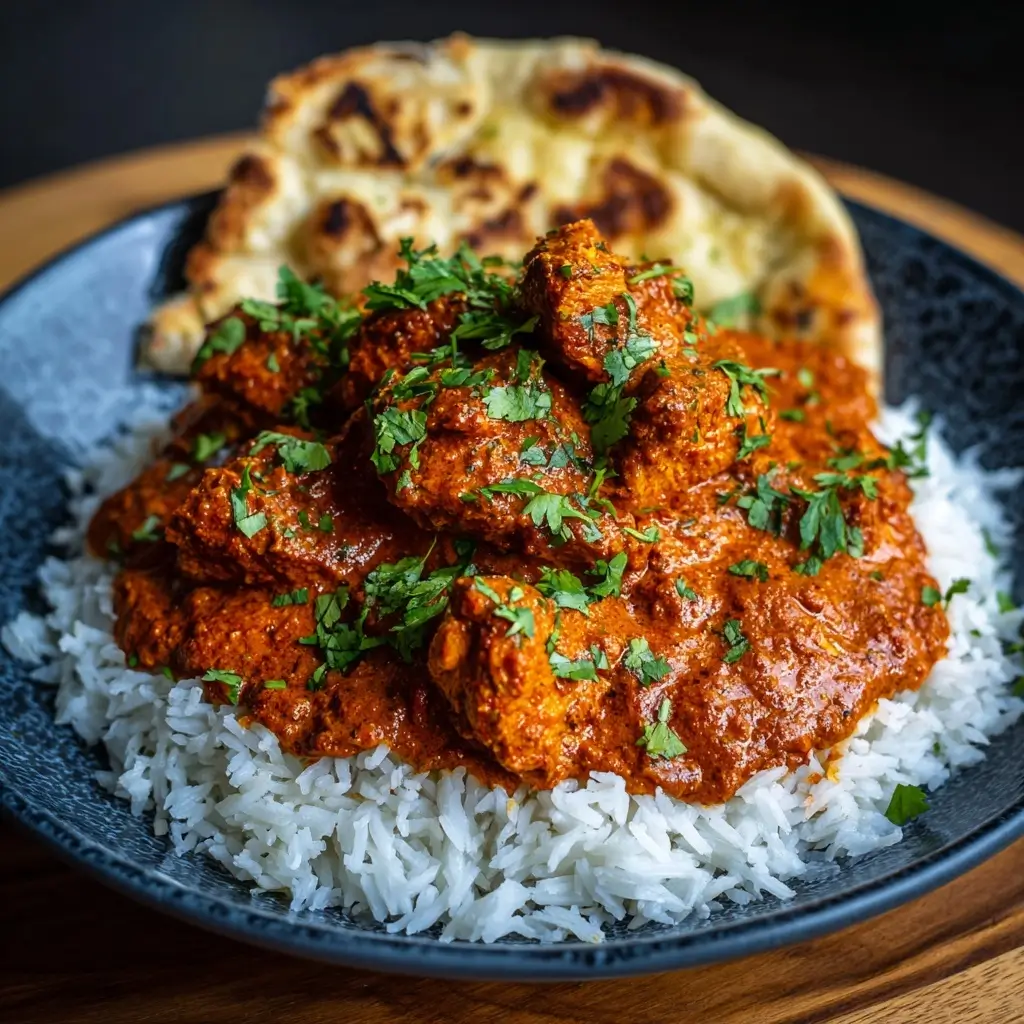
- Garnish and Serve: Sprinkle with freshly chopped cilantro. Optionally, drizzle with melted butter or cream for a restaurant-style presentation.
Tips for Perfect Butter Chicken
- Use Bone-In Chicken: Bones add collagen and flavor to the sauce as they simmer, resulting in a richer final dish.
- Don’t Skip Marination: At least 2 hours of marinating ensures tender, flavorful chicken. Overnight is ideal.
- Char the Chicken Well: Achieving slight charring mimics the smoky tandoor flavor, enhancing authenticity.
- Simmer the Tomato-Onion Base Slowly: Rushing this step leads to raw flavors. Let it cook until the oil separates—a sign the spices are fully bloomed.
- Blend Until Smooth: A silky-smooth gravy defines butter chicken. Strain after blending if necessary for ultra-luxurious texture.
- Add Butter Last: Adding butter at the end preserves its fresh flavor and creates a glossy sheen.
- Adjust Cream Gradually: Add cream slowly to control richness. You can always add more, but you can’t take it out.
- Balance Flavors: Taste and adjust—add a touch of honey or sugar if too acidic, a squeeze of lemon if too rich, or more chili for heat.
- Rest Before Serving: Letting the curry sit for 10–15 minutes off heat allows flavors to deepen and integrate.
- Reheats Well: Butter chicken tastes even better the next day as flavors continue to meld. Reheat gently on the stove to avoid curdling.
Variations and Customizations
While traditional butter chicken is made with chicken and dairy, numerous adaptations cater to dietary preferences and creative experimentation:
- Vegetarian Butter Paneer: Replace chicken with paneer (Indian cottage cheese). Marinate and pan-fry the paneer before adding to the gravy. Mushrooms or tofu also work well as substitutes.
- Dairy-Free Version: Use coconut oil instead of butter, and full-fat coconut milk in place of cream and yogurt. Cashew cream can add richness without dairy.
- Gluten-Free: Naturally gluten-free, just ensure all spice blends and tomato products are certified GF.
- Low-Fat Butter Chicken: Substitute Greek yogurt for cream, use less butter, and remove visible fat from the sauce. Note: This reduces richness but maintains flavor.
- Spicy Butter Chicken: Increase Kashmiri chili or add powdered cayenne, green chilies, or a dash of hot sauce for more heat.
- Smoky Flavor (Dum Style): To emulate tandoor smoke, place a heated piece of charcoal in a small metal bowl inside the serving dish, drizzle with oil, cover for 5 minutes, then remove. This technique is called dhungar method.
- Creamier Texture: Blend in 2–3 soaked cashews or 1 tablespoon almond butter for a velvety, restaurant-quality consistency.
- Oven-Baked Butter Chicken: After combining chicken and sauce, bake at 350°F (175°C) for 20 minutes for deeper flavor integration.
- Air Fryer Option: Air fry marinated chicken at 370°F (190°C) for 12–15 minutes for quick, crispy results.
- Instant Pot/Pressure Cooker: Combine all ingredients except cream and butter, pressure cook for 8 minutes, then release and finish with cream and butter. Great for weeknight meals.
Health Considerations and Nutritional Value
Butter chicken is undeniably rich and indulgent, but with mindful adjustments, it can be part of a balanced diet. Let’s examine its nutritional profile and health implications:
Nutritional Breakdown (Per Serving, Approx. 1 cup with chicken):
- Calories: ~450–600 kcal (varies by preparation)
- Protein: 25–30g (high-quality protein from chicken)
- Fat: 30–40g (mostly saturated from butter and cream)
- Carbohydrates: 10–15g (primarily from onions, tomatoes, and minimal sugar)
- Fiber: 2–3g
- Sodium: 600–900mg (can be reduced by limiting added salt)
Health Benefits:
- High-Quality Protein: Supports muscle repair and satiety.
- Spices with Antioxidants: Turmeric contains curcumin, known for anti-inflammatory properties. Garlic and ginger support immune function.
- Lycopene from Tomatoes: A powerful antioxidant linked to heart and prostate health, enhanced when cooked with fat.
- Vitamins and Minerals: Contains B vitamins, vitamin C, potassium, and iron from chicken and vegetables.
Health Concerns:
- High Saturated Fat: Excessive butter and cream may contribute to elevated cholesterol levels if consumed frequently.
- Calorie Density: Can lead to weight gain if portion sizes aren’t controlled.
- Sodium Content: Store-bought spice mixes or restaurant versions may contain high sodium levels.
Ways to Make It Healthier:
- Use skinless chicken breast or remove skin before cooking.
- Replace half the cream with evaporated skim milk or Greek yogurt.
- Reduce butter to 1 tablespoon and use olive oil or avocado oil instead.
- Increase vegetable content by adding bell peppers, spinach, or peas.
- Limit added sugar and salt; rely on natural sweetness from onions and tomatoes.
- Serve with brown rice, quinoa, or cauliflower rice instead of white basmati.
Full Ingredients List
- 1.5 lbs (700g) bone-in chicken thighs or drumsticks (or boneless chicken breast)
- ½ cup plain full-fat yogurt
- 1 tablespoon lemon juice
- 1 tablespoon ginger-garlic paste
- 1 teaspoon Kashmiri red chili powder (or paprika + pinch of cayenne)
- ½ teaspoon turmeric powder
- 1 teaspoon garam masala
- Salt to taste
- 2 tablespoons oil or ghee (plus extra for cooking chicken)
- 1 large onion, finely chopped
- 1.5 cups crushed tomatoes (fresh or canned)
- 2 tablespoons tomato paste
- 1 teaspoon sugar (optional)
- ¼ cup heavy cream (or coconut cream for dairy-free)
- 2 tablespoons unsalted butter
- 1–2 teaspoons kasuri methi (dried fenugreek leaves), crushed
- Fresh cilantro, chopped (for garnish)
Detailed Directions
- Marinate: In a mixing bowl, combine chicken with yogurt, lemon juice, ginger-garlic paste, chili powder, turmeric, garam masala, and salt. Coat evenly, cover, and refrigerate for 2–12 hours.
- Cook Chicken: Preheat oven to 400°F (200°C). Place chicken on a greased baking tray. Roast for 20–25 minutes until cooked through and lightly charred. Remove and set aside. (Alternatively, grill or pan-sear.)
- Sauté Onions: In a deep skillet or pot, heat oil or ghee over medium heat. Add onions and cook until golden brown (~10 minutes).
- Add Aromatics: Stir in ginger-garlic paste and cook for 1 minute until fragrant.
- Tomato Base: Add crushed tomatoes, tomato paste, sugar, turmeric, chili powder, garam masala, and salt. Simmer for 15–20 minutes until oil rises to the surface and sauce thickens.
- Blend: Carefully transfer sauce to a blender and purée until smooth. Strain if desired for extra smoothness.
- Combine: Return sauce to pot. Stir in cream and butter. Add cooked chicken pieces. Simmer on low for 10–15 minutes.
- Finish: Add crushed kasuri methi. Adjust salt, creaminess, or spice. Garnish with cilantro and a swirl of cream.
- Serve: Pair with naan, roti, or steamed basmati rice. A side of cucumber raita complements the richness.
Frequently Asked Questions (FAQ)
Q: Can I make butter chicken without a tandoor or oven?
A: Absolutely! You can pan-sear the marinated chicken on the stovetop until fully cooked and slightly charred. While you won’t get the exact smokiness of a tandoor, the flavor will still be excellent.
Q: Is butter chicken the same as chicken tikka masala?
A: They are similar but distinct. Chicken tikka masala uses grilled chicken in a spicier, tangier tomato-cream sauce, often with more pronounced British-Indian influences. Butter chicken tends to be milder, sweeter, and more buttery, with roots firmly in North Indian cuisine.
Q: How long does butter chicken last in the fridge?
A: Properly stored in an airtight container, it lasts 3–4 days. The flavor often improves after 24 hours as spices meld.
Q: Can I freeze butter chicken?
A: Yes. Freeze without cream or butter for best texture. Thaw overnight and reheat gently, adding fresh cream and butter before serving.
Q: Why is my butter chicken too watery?
A: The sauce may not have been simmered long enough. Continue cooking uncovered until thickened. Blending in a bit of cashew paste or reducing further can help.
Q: What can I use instead of kasuri methi?
A: While there’s no perfect substitute, a tiny pinch of fenugreek seeds (dry roasted and crushed) or a drop of maple syrup with oregano can mimic the bittersweet note—but kasuri methi is highly recommended.
Q: Can I make this in a slow cooker?
A: Yes. Brown the chicken and sauté aromatics first, then transfer to a slow cooker with the sauce. Cook on low for 6–8 hours. Add cream and butter at the end.
Q: Is butter chicken gluten-free?
A: Yes, provided all ingredients (especially spice blends and tomato paste) are certified gluten-free.
Summary
Butter chicken is a rich, creamy, and aromatic North Indian classic that combines smoky grilled chicken with a luxuriously spiced tomato-butter sauce. Born from culinary ingenuity, it has become a global favorite for its comforting flavor and elegant simplicity.