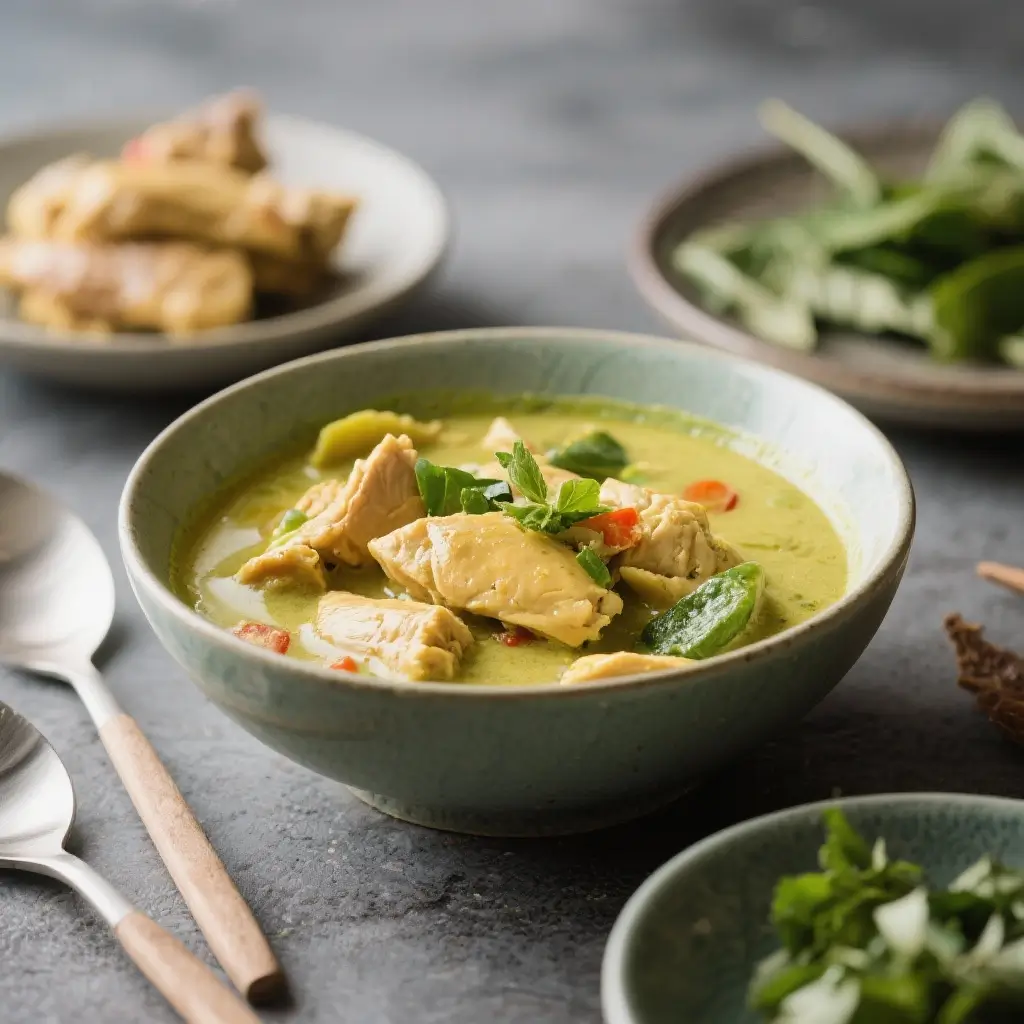
Thai Green Curry Chicken
Thai Green Curry Chicken: A Flavorful Journey Through Thailand’s Culinary Gem
Immerse yourself in the vibrant and aromatic world of Thai cuisine with one of its most beloved dishes—Thai Green Curry Chicken. Known for its creamy texture, bold flavors, and gentle heat, this dish is a masterpiece of balance between spicy, sweet, salty, and tangy elements. Originating from central Thailand, green curry (known locally as kaeng khiao wan) stands out among Thai curries due to its vivid green color and fresh herbal profile. Whether you’re a seasoned chef or a curious home cook, mastering Thai Green Curry Chicken opens the door to authentic Southeast Asian flavors that delight the senses and warm the soul.
The History of Thai Green Curry
The roots of Thai green curry trace back centuries, influenced by both indigenous Thai cooking traditions and external culinary exchanges, particularly with Indian and Malay cuisines. While curry-like dishes existed in ancient Siam, the modern version of green curry evolved during the Ayutthaya period (1351–1767), when trade with India introduced spices and the concept of spiced stews. However, Thai curries are distinct—they rely less on dry ground spices and more on fresh herbs and aromatics.
The defining feature of green curry is its green chili-based paste, which gives it both color and heat. Unlike red or yellow curries, green curry uses unripe chilies, contributing to its signature hue and fresher, more floral flavor profile. Over time, coconut milk was incorporated into the recipe, softening the spice and creating the rich, creamy consistency we enjoy today. The dish became especially popular in royal courts and urban centers before spreading throughout households across Thailand.
Today, Thai Green Curry Chicken is a staple not only in Thailand but also in Thai restaurants worldwide. It represents the harmony and complexity that defines Thai gastronomy—where every ingredient plays a role in achieving perfect equilibrium on the palate.
Ingredients Breakdown: What Makes Thai Green Curry Chicken So Special?
The magic of Thai Green Curry Chicken lies in its ingredients—each carefully selected to contribute aroma, flavor, texture, and depth. Here’s a detailed breakdown of the components:
- Green Curry Paste: The heart of the dish. Traditionally made from scratch using fresh green chilies, lemongrass, galangal, kaffir lime zest, cilantro roots, garlic, shallots, shrimp paste, and cumin. Store-bought versions are available, but homemade paste offers superior freshness and complexity.
- Chicken: Boneless, skinless chicken thighs or breasts are commonly used. Thighs are preferred for their juiciness and ability to absorb flavors without drying out.
- Coconut Milk: Full-fat coconut milk is essential for creating the luscious, velvety base. The first pour (thicker cream) is often used to fry the curry paste initially, enhancing flavor release.
- Fish Sauce: Adds umami and saltiness, balancing the sweetness of coconut milk. A cornerstone of Thai seasoning.
- Palm Sugar: Provides a subtle caramel-like sweetness that rounds out the sharpness of chilies and acidity.
- Kaffir Lime Leaves: These fragrant leaves impart a citrusy, floral note unique to Southeast Asian cuisine. Always tear them slightly before adding to release essential oils.
- Bai Makrut (Kaffir Lime): Sometimes the juice or rind is added for extra zing.
- Eggplant: Thai eggplants (small, round, and pale green) are traditional, but regular purple eggplant or even bell peppers can be substituted.
- Basil: Thai holy basil (kaphrao) or sweet basil adds aromatic depth. Holy basil has a peppery, clove-like flavor; sweet basil offers a milder, anise-like taste.
- Red Bell Pepper: Adds color, crunch, and mild sweetness.
- Vegetable Oil or Coconut Oil: Used to bloom the curry paste and enhance flavor extraction.
Optional garnishes include fresh cilantro, sliced red chilies, and lime wedges for serving.
Step-by-Step Recipe: How to Make Authentic Thai Green Curry Chicken at Home
Follow these detailed steps to recreate an authentic and restaurant-quality Thai Green Curry Chicken in your own kitchen.
Ingredients
- 2–3 tbsp vegetable oil or coconut oil
- 3–4 tbsp Thai green curry paste (homemade or high-quality store-bought)
- 1 can (400 ml) full-fat coconut milk
- 1 lb (450 g) boneless chicken thighs, cut into bite-sized pieces
- 1 cup Thai eggplant, quartered (or substitute with purple eggplant or zucchini)
- 1 small red bell pepper, sliced
- 3–4 kaffir lime leaves, torn
- 1–2 tsp palm sugar (or brown sugar)
- 2–3 tbsp fish sauce (adjust to taste)
- 1/2 cup water or chicken broth (if needed for consistency)
- 1/2 cup Thai holy basil or sweet basil leaves
- 1–2 red chilies, sliced (optional, for extra heat)
- Lime wedges, for serving
- Cooked jasmine rice, for serving
Directions
- Prepare Ingredients: Cut all vegetables and chicken. Measure out curry paste, coconut milk, fish sauce, and sugar. Have basil and lime leaves ready.
- Bloom the Curry Paste: Heat oil in a large wok or heavy-bottomed pot over medium heat. Add 2–3 tablespoons of the thicker coconut cream (the solid part scooped from the top of the can). Let it simmer for 1–2 minutes until it starts to separate.
- Fry the Paste: Add the green curry paste and stir-fry for 2–3 minutes until highly aromatic. This step “blooms” the spices and deepens the flavor.
- Add Chicken: Add the chicken pieces and cook for 4–5 minutes, stirring frequently, until they begin to sear and absorb the curry flavors.
- Incorporate Coconut Milk: Pour in the remaining coconut milk and stir well to combine. Bring to a gentle simmer.
- Add Vegetables and Seasonings: Stir in the eggplant, bell pepper, kaffir lime leaves, fish sauce, and palm sugar. Simmer for 8–10 minutes until the chicken is fully cooked and vegetables are tender but still slightly crisp.
- Adjust Seasoning: Taste and adjust the balance—add more fish sauce for saltiness, palm sugar for sweetness, or a splash of lime juice for acidity.
- Add Basil: Just before turning off the heat, stir in the basil leaves. They should wilt slightly but retain their fragrance.
- Serve: Ladle the curry over steamed jasmine rice. Garnish with fresh basil, sliced chilies, and a wedge of lime.
Tips for Perfect Thai Green Curry Chicken
- Use High-Quality Curry Paste: If making your own, toast whole spices like coriander seeds and cumin seeds before grinding. For store-bought, check labels—avoid pastes with artificial colors or excessive preservatives.
- Don’t Boil Coconut Milk Too Hard: Gentle simmering preserves the creamy texture. Boiling too vigorously may cause the milk to separate or become oily.
- Bloom the Paste Properly: Frying the paste in coconut cream is crucial—it unlocks complex flavors and reduces raw spice notes.
- Balance the Flavors: Thai cuisine emphasizes balance. Aim for a harmony of spicy (chilies), salty (fish sauce), sweet (palm sugar), and sour (lime). Adjust after cooking.
- Add Vegetables Last: To retain texture, add delicate vegetables like bell peppers toward the end. Eggplant can go earlier as it takes longer to cook.
- Use Fresh Kaffir Lime Leaves: Dried versions lack intensity. If unavailable, substitute with a strip of lime zest, though the flavor will differ slightly.
- Serve Immediately: Green curry tastes best fresh. Reheating can dull the aromatics, especially the basil.
Variations and Customizations
While traditional Thai Green Curry Chicken remains a favorite, there are many ways to adapt the recipe to suit dietary preferences or available ingredients:
- Vegetarian/Vegan Version: Replace chicken with tofu, mushrooms, or chickpeas. Use vegan fish sauce or soy sauce instead of traditional fish sauce.
- Seafood Green Curry: Substitute chicken with shrimp, scallops, or white fish. Add seafood in the last few minutes to avoid overcooking.
- Different Proteins: Try beef, duck, or pork for a richer variation.
- Low-Fat Option: Use light coconut milk, but be aware that flavor and creaminess will be reduced. Consider adding a cornstarch slurry if needed for thickness.
- Extra Vegetables: Add bamboo shoots, snow peas, baby corn, or spinach for more nutrition and texture.
- Spice Level Control: Reduce the amount of curry paste or remove seeds from chilies for a milder curry. Conversely, add fresh green chilies for extra heat.
- Gluten-Free: Ensure fish sauce is gluten-free (many brands are, but check labels).
- With Rice Noodles: Serve over rice noodles instead of jasmine rice for a different texture and a curry noodle bowl experience.
Health Considerations and Nutritional Value
Thai Green Curry Chicken can be a nutritious meal when prepared with mindful ingredient choices. Here’s a breakdown of its health aspects:
- Protein-Rich: Chicken provides high-quality protein essential for muscle repair and satiety.
- Healthy Fats: Coconut milk contains medium-chain triglycerides (MCTs), which are metabolized differently than long-chain fats and may support energy and metabolism. However, it is high in saturated fat, so moderation is key.
- Vitamins and Minerals: Ingredients like eggplant (fiber, antioxidants), bell peppers (vitamin C), and kaffir lime leaves (antioxidants) contribute valuable nutrients.
- Low Carbohydrate (without rice): The curry itself is relatively low in carbs, making it suitable for low-carb diets when served with cauliflower rice.
- Sodium Content: Fish sauce and store-bought curry pastes can be high in sodium. To reduce salt, use reduced-sodium fish sauce or make your own curry paste.
- Calorie Count: A typical serving (1 cup curry with rice) ranges from 400–600 calories, depending on coconut milk quantity and portion size.
- Digestive Benefits: Herbs like lemongrass and galangal have anti-inflammatory and digestive properties.
For a healthier version, increase vegetables, reduce coconut milk slightly with broth, and choose lean chicken breast.
Frequently Asked Questions (FAQ)
Can I make Thai green curry paste from scratch?
Yes! Blend 10–15 green chilies, 3 lemongrass stalks (minced), 1-inch galangal, 4 kaffir lime zest, 1 tbsp cilantro roots, 4 garlic cloves, 3 shallots, 1 tsp shrimp paste, 1/2 tsp cumin seeds (toasted), and 1/2 tsp coriander seeds (toasted) until smooth. Add a splash of water if needed.
What can I use instead of kaffir lime leaves?
Lime zest (from 1 lime, finely grated) is the best substitute, though it lacks the floral depth. Avoid using juice alone.
Can I freeze Thai green curry?
Yes. Freeze in airtight containers for up to 3 months. Thaw in the fridge and reheat gently, stirring to recombine separated coconut milk.
Why did my coconut milk separate?
High heat or prolonged boiling can cause separation. Simmer gently and stir occasionally to prevent this.
Is Thai green curry very spicy?
It can be, depending on the number of chilies in the paste. You can control the heat by adjusting the amount of paste or deseeding the chilies.
Can I use canned coconut milk from a carton?
Yes, but ensure it’s full-fat and shake well before using. Cartons labeled “cooking coconut milk” are ideal.
What kind of rice should I serve with it?
Jasmine rice is traditional—its floral aroma and sticky texture pair perfectly with the rich curry.
Summary
Thai Green Curry Chicken is a harmonious blend of aromatic herbs, creamy coconut milk, tender chicken, and vibrant vegetables, delivering a symphony of spicy, sweet, and savory flavors. Rooted in centuries of Thai culinary tradition, this dish brings the essence of Thailand to your table with every fragrant bite.