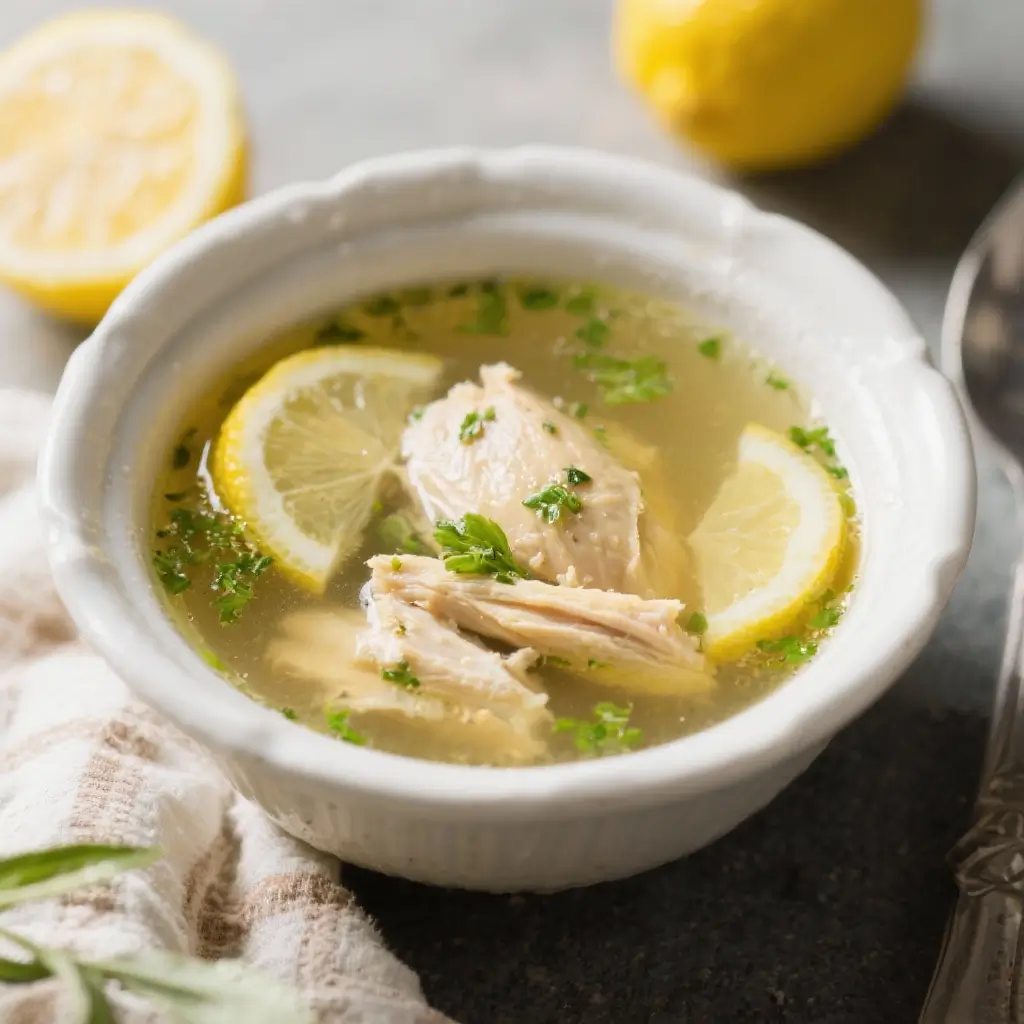
Greek Lemon Chicken Soup
Greek Lemon Chicken Soup (Avgolemono)
The History of Greek Lemon Chicken Soup
Greek Lemon Chicken Soup, known in Greece as Avgolemono (pronounced ahv-go-lem-o-no), is a beloved traditional soup that embodies the essence of Greek home cooking. The name itself reveals its key ingredients: “avgo” meaning egg, and “lemono” meaning lemon—two components that give this soup its signature silky texture and bright, tangy flavor. While its exact origins are somewhat obscure, Avgolemono has deep roots in both Greek and broader Eastern Mediterranean cuisines, particularly within the culinary traditions of the Ottoman Empire.
Historically, Avgolemono evolved as a way to stretch simple ingredients into a nourishing meal. It was commonly prepared during religious fasts such as Lent, though variations exist with and without meat. The version with chicken became especially popular among Greek families for its comforting warmth and protein-rich content. Over time, it transitioned from a frugal peasant dish into a cherished staple served at family gatherings, holidays, and even as a remedy for colds and flu.
The soup’s unique emulsification technique—using eggs and lemon juice to thicken the broth—demonstrates ancient culinary wisdom. This method predates modern thickeners like flour or cornstarch and showcases how resourceful cooks used natural ingredients to achieve rich textures. Today, Avgolemono remains a symbol of Greek hospitality and is often one of the first dishes taught to young cooks in Greek households around the world.
Ingredients Breakdown
The beauty of Greek Lemon Chicken Soup lies in its simplicity and the harmony of humble, high-quality ingredients. Each plays a crucial role in achieving the soup’s velvety consistency and balanced flavor profile.
- Chicken: Traditionally, bone-in chicken pieces (such as thighs or a whole chicken cut-up) are used to create a deeply flavorful broth. However, boneless, skinless chicken breasts or thighs can be used for convenience. The slow simmering extracts collagen and richness from the bones, enhancing both taste and nutrition.
- Rice: Short-grain white rice (like Arborio or jasmine) is typically used because it breaks down slightly during cooking, naturally thickening the soup. Some versions use orzo pasta instead, which gives a different but equally satisfying texture.
- Eggs: Large eggs act as the primary thickening agent when combined with lemon juice. They create a smooth, custard-like consistency without making the soup heavy. Fresh, high-quality eggs yield the best results and ensure proper emulsification.
- Lemons: Freshly squeezed lemon juice is essential. Bottled juice lacks the vibrant acidity and aromatic brightness needed for authenticity. The zest can also be added for an extra layer of citrus fragrance.
- Broth/Water: While water is traditionally used and enriched by the chicken itself, many modern recipes call for low-sodium chicken broth to intensify the savory base. Homemade stock enhances depth significantly.
- Onion and Carrot: These aromatics form the soffritto base of the soup, adding subtle sweetness and complexity. Yellow onion is standard; carrots contribute color and mild earthiness.
- Garlic: Minced garlic adds pungency and depth, balancing the acidity of the lemon.
- Olive Oil: A drizzle of extra virgin olive oil at the end enhances mouthfeel and brings a distinctly Greek touch.
- Salt & Pepper: Used to season throughout cooking and adjust final flavor balance.
- Fresh Herbs (Optional): Dill or parsley are sometimes added just before serving for freshness and visual appeal.
Step-by-Step Recipe
Follow these detailed steps to create an authentic, restaurant-quality bowl of Greek Lemon Chicken Soup right in your kitchen.
- Prepare the Chicken Broth Base: In a large pot, add 1.5 lbs (700g) of chicken pieces (bone-in preferred), 8 cups of water or low-sodium chicken broth, 1 chopped onion, 1 peeled and diced carrot, 2 cloves minced garlic, and a pinch of salt and black pepper. Bring to a gentle boil over medium-high heat, then reduce to a simmer. Skim off any foam that rises to the surface. Cover and cook for 45 minutes to 1 hour, until the chicken is fully cooked and tender.
- Remove and Shred the Chicken: Using tongs or a slotted spoon, remove the chicken from the pot and place it on a cutting board. Let it cool slightly, then shred the meat into bite-sized pieces, discarding bones and skin. Set aside.
- Strain and Clarify the Broth (Optional): For a clearer soup, strain the broth through a fine-mesh sieve to remove onions, carrots, and garlic. Return the clear broth to the pot.
- Cook the Rice: Add 1/3 cup of short-grain rice (or orzo) to the simmering broth. Cook uncovered for about 20–25 minutes, stirring occasionally, until the rice is soft and beginning to break down. If using orzo, reduce cooking time to 8–10 minutes.
- Prepare the Avgolemono Mixture: In a medium bowl, whisk together 3 large eggs until frothy. Slowly add the juice of 2 large lemons (about 1/3 to 1/2 cup), continuing to whisk vigorously. This mixture must be well-blended to prevent curdling later.
- Temper the Egg-Lemon Mixture: This is the most critical step. Take a ladleful (about 1/2 cup) of the hot broth and very slowly drizzle it into the egg-lemon mixture while whisking constantly. This gradually raises the temperature of the eggs without scrambling them. Repeat with a second ladleful.
- Combine and Thicken: Pour the tempered egg-lemon mixture back into the main pot of soup, stirring gently but continuously. Do not let the soup come to a boil after this point, as high heat will cause the eggs to curdle. Instead, warm over low heat for 3–5 minutes until the soup thickens to a creamy, velvety consistency.
- Add Chicken and Adjust Seasoning: Stir in the shredded chicken. Taste and adjust seasoning with additional salt, pepper, or lemon juice as desired. If the soup is too thick, thin it with a little warm water or broth.
- Finish and Serve: Remove from heat. Drizzle with a tablespoon of extra virgin olive oil and sprinkle with freshly chopped dill or parsley if desired. Serve immediately in warm bowls.
Tips for Perfect Avgolemono
- Never Boil After Adding Eggs: Once the egg-lemon mixture is incorporated, keep the heat low. Boiling will curdle the eggs and ruin the smooth texture.
- Use Fresh Lemons: Always squeeze lemons fresh. Pre-bottled juice alters the flavor and may contain preservatives that affect emulsification.
- Whisk Constantly During Tempering: Vigorous whisking ensures even temperature distribution and prevents lumps.
- Cool the Broth Slightly Before Tempering (Optional): If you’re nervous about curdling, let the broth cool for 2–3 minutes off the heat before starting the tempering process.
- Choose the Right Rice: Short-grain rice releases more starch, helping to thicken the soup naturally. Rinse it briefly before use to remove excess surface starch if you prefer a cleaner texture.
- Double the Recipe? This soup keeps well and often tastes better the next day, as flavors meld. Reheat gently on the stove over low heat—never microwave, as it can cause separation.
- Serve Immediately: Avgolemono is best enjoyed fresh. While leftovers can be stored, the texture may change slightly upon reheating.
Variations and Customizations
While traditional Avgolemono sticks to its classic formula, countless regional and personal variations exist across Greece and the diaspora.
- Orzo Version: Replace rice with 1/2 cup of orzo pasta for a heartier texture. Cook it directly in the broth until al dente.
- Vegetarian Avgolemono: Omit chicken and use vegetable broth. Add diced potatoes or mushrooms for body. Use only egg yolks for a richer sauce, or explore vegan alternatives like blended silken tofu and chickpea flour (though not traditional).
- Fattoush-Inspired Twist: Garnish with crispy pita chips and cucumber ribbons for a textural contrast reminiscent of other Greek dishes.
- Herb-Forward Version: Increase fresh dill or add mint for a brighter, more aromatic profile.
- Creamier Texture: Use only egg yolks (4–5) instead of whole eggs for a silkier, richer mouthfeel.
- Spicy Kick: Add a pinch of red pepper flakes or grated ginger to the broth for warmth and complexity.
- Dairy Addition: Though not traditional, some modern versions stir in a spoonful of Greek yogurt at the end for extra creaminess.
- Fasting-Friendly (Nistisima): During Orthodox Christian fasting periods, a vegan version uses no animal products. Tamarind or verjus may replace lemon, and bread-thickened broths emulate the egg-lemon effect.
Health Considerations and Nutritional Value
Greek Lemon Chicken Soup is not only delicious but also offers several health benefits, making it a nourishing choice for all ages.
- High-Quality Protein: Chicken provides lean protein essential for muscle repair, immune function, and satiety.
- Vitamin C Boost: Lemon juice is rich in vitamin C, supporting immune health and aiding iron absorption from plant-based foods.
- Hydration and Recovery: The broth base helps rehydrate the body, making this soup ideal when fighting colds or recovering from illness.
- Low in Fat (When Prepared Wisely): Using skinless chicken and minimal olive oil keeps fat content moderate. Most fat comes from healthy monounsaturated sources when olive oil is used.
- Easy to Digest: The combination of soft rice, tender chicken, and smooth broth makes this soup gentle on the stomach—ideal for convalescence.
- Antioxidants and Anti-Inflammatory Properties: Garlic, lemon, and olive oil contain compounds shown to reduce inflammation and support cardiovascular health.
- Considerations: Due to the raw egg component, pregnant women, young children, elderly individuals, or those with compromised immune systems should ensure eggs are pasteurized or cook the soup gently to at least 160°F (71°C) to eliminate any risk of salmonella. Alternatively, use pasteurized eggs.
- Nutritional Estimate (Per Serving, Approx. 1.5 cups):
- Calories: 220–260
- Protein: 20–25g
- Carbohydrates: 20–25g
- Fat: 6–9g
- Fiber: 1–2g
- Vitamin C: 25–30mg (over 30% DV)
- Iron: 10% DV
- Calcium: 4% DV
Full Ingredients List
- 1.5 lbs (700g) bone-in chicken pieces (thighs, drumsticks, or breast)
- 8 cups water or low-sodium chicken broth
- 1 medium yellow onion, chopped
- 1 medium carrot, peeled and diced
- 2 cloves garlic, minced
- 1/3 cup short-grain white rice (e.g., Arborio) or 1/2 cup orzo
- 3 large eggs, preferably pasteurized or fresh farm eggs
- Juice of 2 large lemons (about 1/3 to 1/2 cup)
- 1 tbsp extra virgin olive oil
- Salt and freshly ground black pepper, to taste
- Optional: 2 tbsp chopped fresh dill or parsley
Directions (Concise Format)
- In a large pot, combine chicken, water/broth, onion, carrot, garlic, salt, and pepper. Bring to a boil, then reduce to a simmer. Cook covered for 45–60 minutes until chicken is tender.
- Remove chicken, shred meat, and set aside. Strain broth if desired.
- Return broth to pot. Add rice and cook for 20–25 minutes until soft (or orzo for 8–10 minutes).
- In a bowl, whisk eggs and lemon juice until smooth and pale yellow.
- Temper eggs: Slowly add two ladles of hot broth to the egg mixture, whisking constantly.
- Pour tempered mixture back into the pot, stirring gently over low heat for 3–5 minutes until thickened (do not boil).
- Stir in shredded chicken. Adjust seasoning with salt, pepper, and extra lemon if needed.
- Remove from heat. Stir in olive oil and fresh herbs. Serve warm.
Frequently Asked Questions (FAQ)
Q: Can I make Avgolemono ahead of time?
A: Yes, but store components separately. Keep the broth-rice-chicken mixture refrigerated, and prepare the avgolemono sauce fresh when ready to serve. Reheat broth gently, then temper and combine.
Q: Why did my soup curdle?
A: Curdling usually occurs due to excessive heat or improper tempering. Always temper the eggs slowly and never let the soup boil after adding the egg-lemon mixture.
Q: Can I freeze Greek Lemon Chicken Soup?
A: Not recommended. Freezing and thawing disrupt the emulsion, leading to separation and graininess. Best consumed fresh or within 3 days refrigerated.
Q: Is Avgolemono gluten-free?
A: Yes, if using rice. Avoid orzo (made from wheat) if gluten-free. Ensure broth is certified gluten-free if needed.
Q: Can I use lime instead of lemon?
A: Not advised. Lime has a different pH and flavor profile that may interfere with emulsification and alter the authentic taste.
Q: How do I reheat leftover soup safely?
A: Gently warm over low heat on the stove, stirring frequently. Do not boil. Add a splash of water if too thick.
Q: Can I make this dairy-free?
A: Yes! Traditional Avgolemono contains no dairy. Just ensure your broth is dairy-free.
Q: What does Avgolemono taste like?
A: It’s rich and creamy with a bright, citrusy tang. The lemon enhances rather than dominates, creating a harmonious balance between savory and sour.
Summary
Greek Lemon Chicken Soup, or Avgolemono, is a timeless, comforting dish that blends tender chicken, fragrant broth, and a silky egg-lemon sauce into a nourishing meal steeped in tradition.
Simple to make yet elegant in flavor, it’s a testament to Greek culinary artistry—where few ingredients create a symphony of taste, warmth, and wellness.