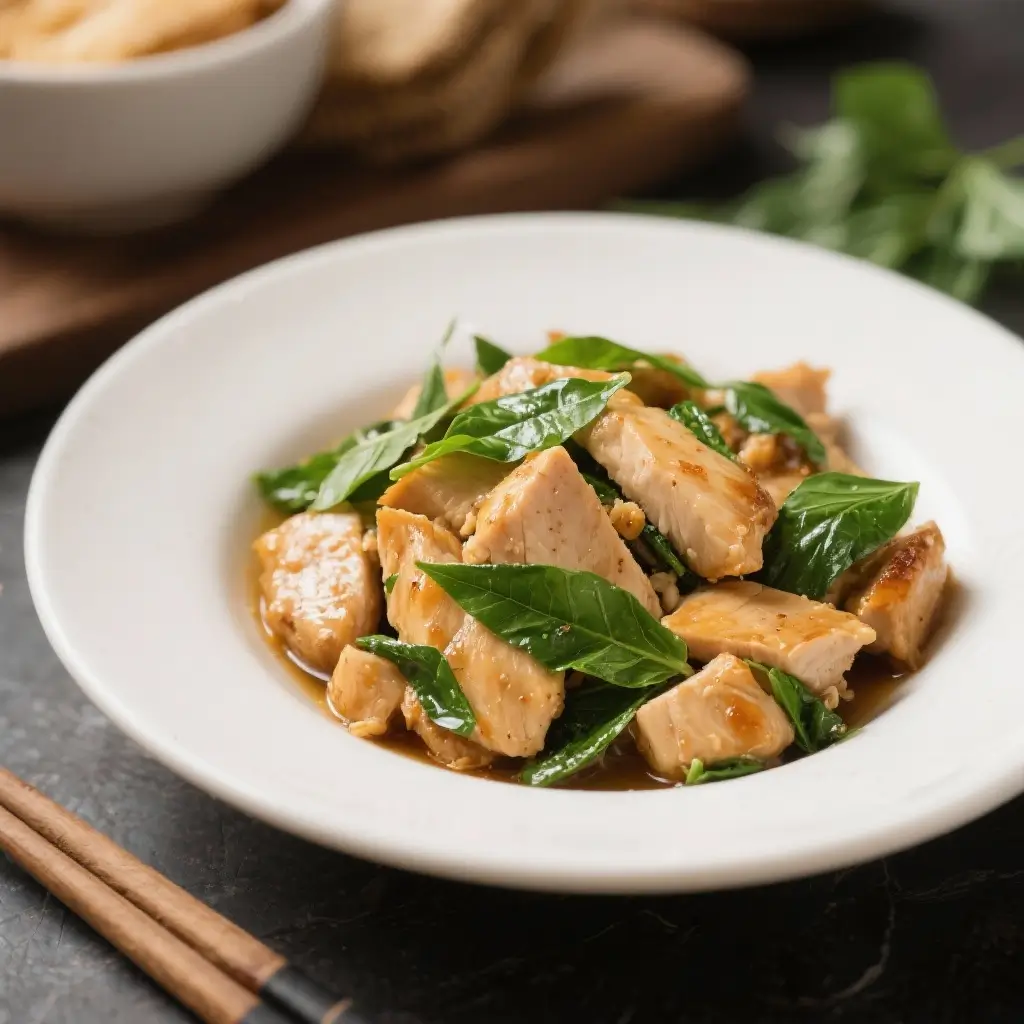
Thai Basil Chicken
Thai Basil Chicken (Pad Krapow Gai): A Flavorful Journey Through Thailand’s Beloved Street Food Classic
When it comes to Thai street food, few dishes capture the hearts and palates of locals and travelers alike quite like Thai Basil Chicken, known in Thailand as Pad Krapow Gai. This sizzling, aromatic stir-fry is a staple across Bangkok’s bustling alleyways, night markets, and humble roadside stalls. Bursting with bold flavors—spicy, salty, sweet, and savory—it’s no wonder this dish has become an international favorite. Served piping hot over steamed jasmine rice and crowned with a perfectly fried egg, Thai Basil Chicken is comfort food at its finest: quick, satisfying, and deeply flavorful.
The History of Thai Basil Chicken
Thai Basil Chicken, or Pad Krapow Gai, has deep roots in Thai culinary tradition, though its exact origins are somewhat elusive. The dish is believed to have originated in central Thailand, where stir-frying techniques were influenced by Chinese immigrants who brought their woks and high-heat cooking methods to the region centuries ago. Over time, Thai cooks adapted these techniques, infusing them with native ingredients such as holy basil, bird’s eye chilies, fish sauce, and palm sugar—creating a uniquely Thai flavor profile.
The name “Krapow” refers to holy basil (Ocimum tenuiflorum), a sacred herb used extensively in Thai and Southeast Asian cooking and traditional medicine. Unlike sweet basil common in Western cuisine, holy basil has a peppery, clove-like aroma that defines the character of this dish. “Gai” simply means chicken, making Pad Krapow Gai a literal translation of “stir-fried holy basil with chicken.”
Historically, Pad Krapow was not only a popular meal but also considered beneficial for health. In traditional Thai medicine, holy basil is believed to aid digestion, reduce stress, and boost immunity. The dish gained widespread popularity in the 20th century as urbanization led more people to seek quick, nutritious meals. Today, it’s so iconic that many Thais eat it several times a week, often for lunch, accompanied by a cold Thai iced tea.
Ingredients Breakdown: What Makes Thai Basil Chicken So Special?
The magic of Thai Basil Chicken lies in its balance of fresh, vibrant ingredients that come together in minutes to create a complex and addictive flavor profile. Here’s a detailed look at each component:
- Ground Chicken: Traditionally made with ground chicken thigh meat for its juiciness and rich flavor, though some variations use chicken breast or even pork or beef.
- Holy Basil (Krapow): The star herb. It has a spicy, slightly minty, clove-like taste. If unavailable, Thai basil can be substituted, though the flavor will differ slightly (Thai basil is sweeter and anise-forward).
- Fresh Chilies: Bird’s eye chilies (prik kee noo) provide intense heat. Adjust quantity based on spice tolerance.
- Garlic: Minced finely to release its pungent aroma when sautéed.
- Shallots or Onions: Often included for sweetness and depth; red onions are commonly used.
- Fish Sauce (Nam Pla): Adds umami and saltiness. A cornerstone of Thai seasoning.
- Oyster Sauce: Contributes a rich, slightly sweet depth and helps thicken the sauce.
- Soy Sauce (Light): Enhances color and adds another layer of savory flavor.
- Palm Sugar or Brown Sugar: A touch of sweetness to balance the heat and salt.
- Chicken Stock or Water: Used to deglaze the pan and create a light sauce.
- Vegetable Oil: High smoke point oil ideal for stir-frying.
- Fried Egg (Khai Dao): Served on top—runny yolk mixes beautifully into the rice and meat.
- Jasmine Rice: The classic accompaniment, fragrant and fluffy, perfect for soaking up the flavorful sauce.
Optional garnishes include sliced cucumber, lime wedges, and additional chilies for those who crave extra heat.
Step-by-Step Recipe: How to Make Authentic Thai Basil Chicken at Home
Ready to bring the taste of Thailand into your kitchen? Follow this detailed guide to make restaurant-quality Thai Basil Chicken from scratch.
Ingredients (Serves 2–3)
- 1 lb (450g) ground chicken (preferably thigh)
- 2 cups fresh holy basil leaves (or Thai basil if unavailable)
- 4–6 bird’s eye chilies, finely chopped (adjust to taste)
- 4 cloves garlic, minced
- 1 small red onion, thinly sliced
- 3 tbsp vegetable oil
- 2 tbsp fish sauce
- 1 tbsp oyster sauce
- 1 tsp light soy sauce
- 1 tsp palm sugar (or brown sugar)
- ¼ cup chicken stock or water
- 2–3 eggs (for frying)
- Cooked jasmine rice, for serving
- Optional: cucumber slices, lime wedges, chili flakes
Directions
- Prep Ingredients: Have all your ingredients prepped and ready before you start cooking. Stir-frying is fast, and you won’t have time to chop once the heat is on.
- Heat the Wok: Place a large wok or heavy skillet over high heat. Add 1 tablespoon of oil and swirl to coat. Once the oil shimmers, add the garlic and chilies. Stir-fry for 15–20 seconds until fragrant—be careful not to burn.
- Sauté Aromatics: Add the sliced red onion and stir-fry for another 30 seconds.
- Cook the Chicken: Add the ground chicken, breaking it apart with a spatula. Stir-fry for 3–4 minutes until fully cooked and lightly browned.
- Add Sauces: Pour in the fish sauce, oyster sauce, soy sauce, and palm sugar. Stir well to combine. Cook for another minute, allowing the flavors to meld.
- Deglaze and Finish: Add the chicken stock or water and stir to loosen any browned bits from the bottom of the wok. Bring to a quick simmer.
- Incorporate Basil: Toss in the holy basil leaves. Stir just until wilted—about 30 seconds. The leaves should remain vibrant green.
- Fry the Eggs: While the chicken rests, heat 1–2 tablespoons of oil in a non-stick pan over medium-high heat. Crack eggs into the pan and fry sunny-side up or over-easy, aiming for a crispy edge and runny yolk.
- Serve Immediately: Spoon hot jasmine rice onto plates. Top with the Thai Basil Chicken mixture. Crown each serving with a fried egg. Garnish with cucumber slices and a squeeze of lime if desired.
Pro Tip: Serve immediately while hot—the textures and aromas are best enjoyed fresh off the stove.
Tips for Perfect Thai Basil Chicken Every Time
- Use High Heat: Authentic Pad Krapow is cooked over blistering heat to achieve a smoky, seared flavor (called wok hei). If using an electric stove, preheat the wok thoroughly.
- Don’t Overcook the Basil: Add it at the very end and stir just until wilted. Overcooking dulls its vibrant flavor and color.
- Balance the Flavors: Taste before serving. You want a harmony of salty (fish sauce), sweet (sugar), spicy (chilies), and savory (oyster sauce). Adjust with a pinch more sugar or splash of fish sauce if needed.
- Use Fresh Ingredients: Fresh garlic, chilies, and holy basil make a huge difference. Avoid dried herbs or pre-minced garlic.
- Fry the Egg Right: For the perfect khai dao (fried egg), use a little extra oil and let the edges crisp up. Some street vendors even pour a spoonful of hot oil over the egg as it fries for a lacy, golden crust.
- Double the Batch: This dish reheats well (though the basil may darken). Make extra for quick lunches!
Variations and Customizations
While the classic version uses chicken, Thai Basil Stir-Fry is incredibly versatile. Here are some popular twists:
- Pad Krapow Moo: Substitute ground pork for chicken. Pork is actually more traditional in some regions and offers a richer, fattier texture.
- Vegetarian/Vegan Pad Krapow: Use crumbled tofu, tempeh, or plant-based ground “meat.” Replace fish sauce with soy sauce or vegan fish sauce, and omit oyster sauce or use a mushroom-based alternative.
- Seafood Version: Try with ground shrimp or squid. Cook quickly to avoid toughness.
- Spice Level: Mild versions use only 1–2 chilies; daredevils may add 8 or more! Some Thai restaurants offer chili jars so diners can adjust heat at the table.
- Extra Veggies: Add bell peppers, green beans, or mushrooms for added texture and nutrition.
- Noodle Version: Serve over rice noodles or glass noodles for a different base.
- Crispy Shallots: Top with store-bought or homemade crispy shallots for extra crunch.
Health Considerations and Nutritional Value
Thai Basil Chicken is not only delicious but can also be part of a balanced diet when prepared mindfully. Let’s break down its nutritional components:
- Protein-Packed: Ground chicken provides lean protein essential for muscle repair and satiety. One serving contains approximately 25–30g of protein.
- Low Carb Option: When served with cauliflower rice instead of jasmine rice, it becomes a low-carb, keto-friendly meal.
- Healthy Fats: The fried egg adds healthy fats and essential nutrients like choline and vitamin D.
- Antioxidant-Rich Herbs: Holy basil contains antioxidants and compounds like eugenol, which may have anti-inflammatory properties.
- Sodium Watch: Fish sauce and soy sauce are high in sodium. To reduce salt, use reduced-sodium versions or cut back and compensate with lime juice or a dash of broth.
- Sugar Content: Palm sugar is natural but still a form of sugar. Use sparingly—1 tsp is usually enough to balance without overwhelming sweetness.
A typical serving (with 1 cup jasmine rice and one fried egg) contains roughly:
- Calories: 550–650
- Protein: 30g
- Fat: 25–30g
- Carbohydrates: 50–60g
- Fiber: 2–3g
To lighten the dish: use less oil, skip the fried egg or poach it, and increase vegetable content.
Frequently Asked Questions (FAQ)
Q: Can I use regular basil instead of holy basil?
A: Yes, but the flavor will change. Sweet basil lacks the spiciness of holy basil, while Thai basil (common in grocery stores) offers a licorice note. Holy basil is ideal, but Thai basil is the closest substitute.
Q: Is Thai Basil Chicken spicy?
A: Traditionally, yes—it’s meant to be spicy. However, you can control the heat by reducing or removing the seeds from chilies, or using milder peppers like jalapeños.
Q: Can I make it ahead of time?
A: The stir-fry is best fresh, but you can prep ingredients in advance. Store the sauce mix and chopped veggies separately. Cook the dish just before serving for optimal texture.
Q: What’s the difference between Thai basil and holy basil?
A: Holy basil (Ocimum tenuiflorum) has fuzzy leaves, purple stems, and a peppery, clove-like taste. Thai basil (Ocimum basilicum) has glossy green leaves, a purple stem, and a sweet, anise flavor. They are not interchangeable in terms of authenticity, but Thai basil works in a pinch.
Q: Why is the fried egg so important?
A: The runny yolk acts as a rich, creamy sauce when mixed with the rice and chicken. It’s a beloved textural and flavor component in Thai cuisine.
Q: Can I freeze leftovers?
A: Yes, the chicken mixture freezes well for up to 3 months. Thaw and reheat in a wok with a splash of water. Note: basil may darken upon reheating.
Q: Is it gluten-free?
A: Most versions are, but check labels on fish sauce and oyster sauce—some contain wheat. Use tamari instead of soy sauce and ensure sauces are certified gluten-free if needed.
Summary
Thai Basil Chicken (Pad Krapow Gai) is a fiery, fragrant stir-fry that embodies the soul of Thai street food—bold, fast, and deeply satisfying. With its tender chicken, aromatic holy basil, and perfectly fried egg over jasmine rice, it’s a dish that delights the senses and comforts the soul.
Easy to customize, packed with flavor, and adaptable to various diets, this classic recipe brings the vibrant essence of Thailand straight to your dinner table—no passport required.