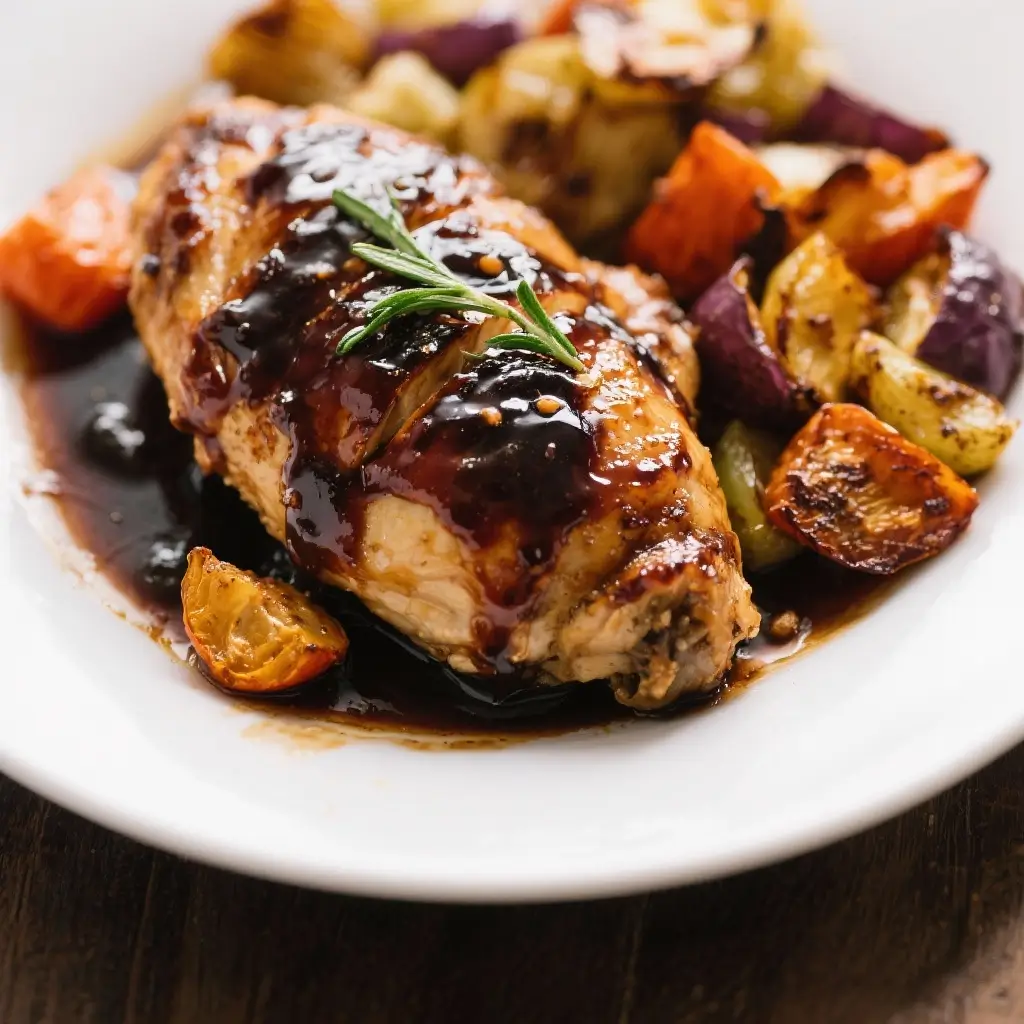
Balsamic Glazed Chicken with Roasted Veggies
Balsamic Glazed Chicken with Roasted Veggies: A Flavorful, Healthy Meal for Every Occasion
The Balsamic Glazed Chicken with Roasted Veggies is more than just a meal—it’s an experience. This dish combines tender, juicy chicken breasts marinated in a rich, tangy balsamic glaze with a colorful medley of oven-roasted seasonal vegetables. It’s a harmonious blend of sweet, savory, and slightly acidic flavors that dance on the palate while delivering a nutritious and satisfying dinner option. Whether you’re cooking for your family on a cozy weeknight or preparing a healthy dish for guests, this recipe strikes the perfect balance between simplicity and gourmet flair.
The History of Balsamic Glazed Chicken and Roasted Vegetables
While balsamic vinegar has roots in Modena, Italy—dating back to the 11th century—the concept of using it as a glaze for meats like chicken is a relatively modern culinary evolution. Traditionally, balsamic vinegar was aged for years and used sparingly as a finishing touch on salads or fresh fruit. However, as global palates began embracing bold flavor profiles in the late 20th century, chefs started experimenting with reducing balsamic vinegar into a syrupy glaze, often paired with proteins such as chicken, pork, or fish.
The combination of balsamic-glazed chicken with roasted vegetables gained popularity in the 2000s, particularly within health-conscious and Mediterranean-inspired diets. Roasting vegetables isn’t new—humans have been roasting root vegetables over open flames for centuries—but the method evolved with modern ovens, allowing for even caramelization and deeper flavor development. Today, this dish symbolizes the fusion of rustic Italian tradition with contemporary American home cooking, emphasizing both taste and wellness.
Ingredients Breakdown: What Makes This Dish Shine?
The beauty of Balsamic Glazed Chicken with Roasted Veggies lies in its thoughtfully chosen ingredients, each contributing to the overall depth of flavor, texture, and nutrition. Let’s break them down:
- Chicken Breasts: Boneless, skinless chicken breasts are lean, high in protein, and act as a neutral canvas that absorbs the bold flavors of the glaze.
- Balsamic Vinegar: High-quality balsamic vinegar brings acidity and sweetness. When reduced, it forms a thick, glossy glaze that clings beautifully to the chicken.
- Olive Oil: Extra virgin olive oil adds richness, helps crisp the chicken, and enhances the roasting process for vegetables.
- Honey or Maple Syrup: A natural sweetener balances the tartness of the vinegar and aids in caramelizing the glaze.
- Fresh Garlic: Minced garlic infuses the marinade with aromatic depth and complements both the chicken and veggies.
- Dijon Mustard: Adds a subtle tang and emulsifies the dressing, giving the glaze a creamy consistency.
- Dried Herbs: Oregano, thyme, and rosemary bring earthy notes that enhance the overall savoriness.
- Seasonal Vegetables: Typically includes bell peppers, zucchini, red onion, cherry tomatoes, broccoli, and carrots—each chosen for color, texture, and roasting capability.
- Salt and Black Pepper: Essential for seasoning and bringing out the natural flavors of all components.
- Fresh Herbs (optional): Parsley or basil sprinkled at the end brightens the dish and adds freshness.
Every ingredient serves a purpose—no filler, no waste. The synergy between the sweet-tart glaze and the caramelized vegetables creates a restaurant-quality meal right in your kitchen.
Step-by-Step Recipe: How to Make Balsamic Glazed Chicken with Roasted Veggies
- Prep the Ingredients: Preheat your oven to 400°F (200°C). Pat the chicken breasts dry with paper towels to ensure proper browning. Slice all vegetables into uniform pieces—about 1-inch chunks—to promote even roasting.
- Make the Balsamic Marinade/Glaze: In a medium bowl, whisk together 1/3 cup balsamic vinegar, 2 tablespoons honey (or maple syrup), 2 tablespoons olive oil, 2 minced garlic cloves, 1 tablespoon Dijon mustard, 1 teaspoon dried oregano, 1/2 teaspoon dried thyme, 1/2 teaspoon salt, and 1/4 teaspoon black pepper. Set aside 1/4 cup of this mixture to use later as a glaze. The rest will serve as the marinade.
- Marinate the Chicken: Place the chicken breasts in a shallow dish or resealable plastic bag. Pour the marinade (excluding the reserved portion) over the chicken, ensuring each piece is well-coated. Let it marinate for at least 30 minutes at room temperature, or up to 4 hours in the refrigerator for deeper flavor.
- Prepare the Vegetables: On a large baking sheet, spread out the chopped vegetables (bell peppers, zucchini, red onion, broccoli, carrots, etc.). Drizzle with 2 tablespoons of olive oil, 1 tablespoon of balsamic vinegar, salt, pepper, and a pinch of dried herbs. Toss well to coat evenly.
- Roast the Vegetables: Arrange the vegetables in a single layer on the baking sheet. Roast in the preheated oven for 15 minutes to begin the caramelization process.
- Cook the Chicken: While the veggies roast, heat 1 tablespoon of olive oil in a large oven-safe skillet over medium-high heat. Remove the chicken from the marinade (shake off excess) and sear for 4–5 minutes per side until golden brown. If your skillet isn’t oven-safe, transfer the chicken to a greased baking dish after searing.
- Glaze and Finish in Oven: After the initial 15 minutes of roasting, remove the vegetables from the oven. Place the seared chicken breasts on top of or beside the vegetables. Brush the tops of the chicken generously with the reserved balsamic glaze. Return everything to the oven and bake for 18–22 minutes, or until the chicken reaches an internal temperature of 165°F (74°C) and the vegetables are tender and lightly charred.
- Rest and Serve: Let the chicken rest for 5 minutes before slicing. Drizzle any pan juices over the top, sprinkle with fresh parsley or basil, and serve immediately alongside the roasted vegetables.
Tips for Perfect Balsamic Glazed Chicken Every Time
- Use Quality Balsamic Vinegar: Opt for authentic, aged balsamic vinegar if possible. Avoid cheap, overly sweetened versions that lack depth.
- Don’t Skip the Sear: Searing locks in moisture and develops a flavorful crust on the chicken before finishing in the oven.
- Uniform Vegetable Cuts: Cut veggies into similar sizes so they cook evenly. Harder vegetables like carrots may need slightly smaller cuts than softer ones like zucchini.
- Reserve the Glaze: Never reuse marinade that has touched raw chicken. Always set some aside before marinating for basting.
- Check Chicken Temperature: Use a meat thermometer to avoid overcooking. Overcooked chicken becomes dry and tough.
- Add Lemon Zest: For a bright finish, add lemon zest to the glaze or squeeze fresh lemon juice over the final dish.
- Roast on Parchment or Silpat: This prevents sticking and makes cleanup easier without sacrificing browning.
- Let It Rest: Allowing the chicken to rest redistributes juices, resulting in a juicier bite.
Variations and Customizations
This recipe is highly adaptable based on dietary needs, preferences, or what’s in your pantry. Here are some creative twists:
- Protein Swap: Replace chicken with boneless pork tenderloin, salmon fillets, or tofu for a vegetarian version.
- Low-Sugar Option: Substitute honey with monk fruit syrup or omit sweeteners entirely for a sugar-free glaze.
- Spicy Kick: Add red pepper flakes or a dash of cayenne to the marinade for heat.
- Herb Variations: Use fresh rosemary or tarragon instead of dried herbs for a more aromatic profile.
- Different Veggies: Try sweet potatoes, Brussels sprouts, mushrooms, or asparagus depending on the season.
- Grill Version: Cook the chicken on a grill and roast veggies in the oven—or use a grill basket for a smoky twist.
- Creamy Finish: Stir a spoonful of goat cheese or feta into the roasted vegetables before serving.
- Meal Prep Friendly: Double the batch and store portions in containers for up to 4 days in the fridge. Reheat gently in the oven or microwave.
Health Considerations and Nutritional Value
Balsamic Glazed Chicken with Roasted Veggies isn’t just delicious—it’s also packed with nutrients that support a balanced diet.
- High in Lean Protein: Chicken breast provides about 30g of protein per 4-ounce serving, essential for muscle repair and satiety.
- Heart-Healthy Fats: Olive oil contains monounsaturated fats and antioxidants linked to reduced inflammation and improved cardiovascular health.
- Rich in Fiber and Vitamins: The variety of colorful vegetables delivers fiber, vitamin C, vitamin A, potassium, and phytonutrients that support immune function and digestion.
- Antioxidant-Rich Balsamic Vinegar: Studies suggest that balsamic vinegar may help regulate blood sugar and improve insulin sensitivity due to its polyphenol content.
- Low in Carbohydrates: This dish can easily fit into low-carb, keto (with sugar-free glaze), paleo, and gluten-free diets.
- Calorie-Conscious: A typical serving ranges from 350–450 calories, depending on portion size and added oils or sweeteners.
For those monitoring sodium intake, be mindful of salt levels and consider using low-sodium alternatives where possible. Also, pairing this dish with a quinoa or farro salad can boost fiber and make it a complete meal.
Full Ingredient List
- 4 boneless, skinless chicken breasts (about 6 oz each)
- 1/3 cup balsamic vinegar (plus 1 tbsp for veggies)
- 2 tablespoons honey or pure maple syrup
- 3 tablespoons extra virgin olive oil (divided)
- 2 cloves garlic, minced
- 1 tablespoon Dijon mustard
- 1 teaspoon dried oregano
- 1/2 teaspoon dried thyme
- 1/2 teaspoon sea salt (plus more to taste)
- 1/4 teaspoon freshly ground black pepper
- 1 red bell pepper, sliced
- 1 yellow bell pepper, sliced
- 1 medium zucchini, halved and sliced
- 1 cup broccoli florets
- 1 large carrot, sliced into rounds
- 1 small red onion, cut into wedges
- 1 cup cherry tomatoes
- Fresh parsley or basil, chopped (for garnish)
Detailed Directions
- Preheat oven to 400°F (200°C). Line a large baking sheet with parchment paper or a silicone mat.
- In a bowl, whisk together 1/3 cup balsamic vinegar, honey, 2 tablespoons olive oil, garlic, Dijon mustard, oregano, thyme, salt, and pepper. Reserve 1/4 cup of this mixture in a separate container for glazing later.
- Place chicken breasts in a dish and pour the remaining marinade over them. Cover and refrigerate for 30 minutes to 4 hours.
- On the prepared baking sheet, combine all vegetables. Drizzle with 1 tablespoon olive oil, 1 tablespoon balsamic vinegar, salt, and pepper. Toss to coat evenly and spread in a single layer.
- Roast vegetables for 15 minutes while you prepare the chicken.
- Heat 1 tablespoon olive oil in an oven-safe skillet over medium-high heat. Remove chicken from marinade and sear for 4–5 minutes per side until golden. (Discard used marinade.)
- After 15 minutes, remove vegetables from oven. Place seared chicken on the baking sheet among the veggies.
- Brush chicken generously with the reserved balsamic glaze. Return to oven and bake for 18–22 minutes, until chicken registers 165°F internally and vegetables are fork-tender with caramelized edges.
- Let chicken rest for 5 minutes. Garnish with fresh herbs and serve warm.
Frequently Asked Questions (FAQ)
Can I make this recipe ahead of time?
Yes! Marinate the chicken up to 24 hours in advance. You can also chop the vegetables a day ahead and store them in airtight containers. Assemble and roast just before serving.
Can I freeze balsamic glazed chicken?
Absolutely. Cooked chicken freezes well for up to 3 months. Cool completely, store in freezer-safe containers, and reheat in the oven at 350°F until warmed through. Roasted veggies are best fresh but can be frozen with slight texture changes.
What sides go well with this dish?
Great pairings include quinoa, wild rice, mashed sweet potatoes, couscous, or a simple arugula salad with lemon vinaigrette.
Is balsamic vinegar high in sugar?
Traditional balsamic vinegar contains natural sugars from grape must, but it’s used in moderation. A tablespoon typically has 2–4 grams of sugar. For lower sugar, reduce the amount or use a sugar-free alternative.
Can I use chicken thighs instead of breasts?
Yes. Boneless, skinless chicken thighs work beautifully—they’re more forgiving and stay juicier during cooking. Adjust cooking time as needed (may take 5–10 minutes longer).
Why did my glaze turn out too thin?
If you want a thicker glaze, simmer the reserved portion in a small saucepan over low heat for 5–7 minutes until reduced by half and syrupy. Let cool slightly before brushing on chicken.
Are roasted vegetables still healthy?
Yes! Roasting preserves most nutrients, and the caramelization enhances natural sweetness without needing excessive fats or salts. Just avoid charring excessively to minimize acrylamide formation.
Summary
Balsamic Glazed Chicken with Roasted Veggies is a nutritious, flavorful, and visually stunning dish that brings together the tangy richness of balsamic glaze with the natural sweetness of caramelized vegetables. Easy to customize and perfect for meal prep, it’s a wholesome dinner solution that satisfies both taste buds and health goals.