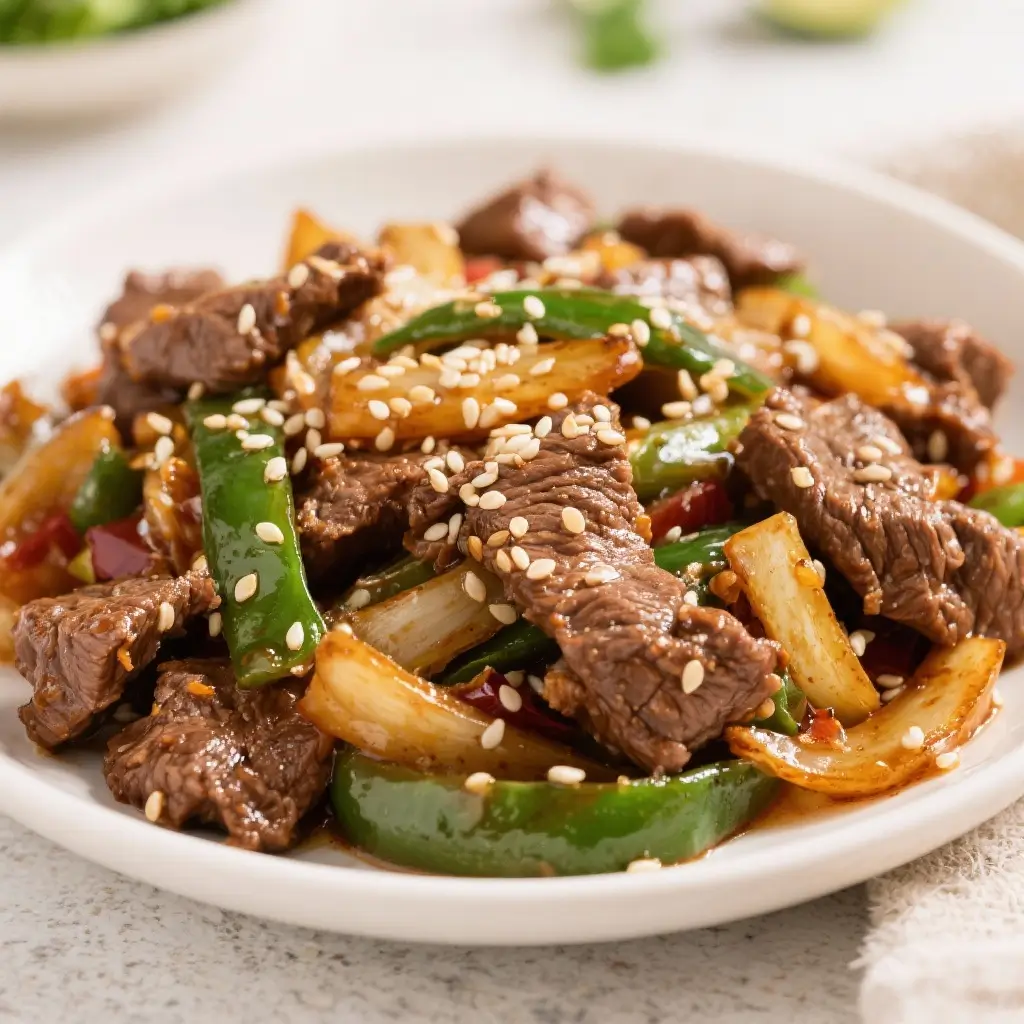
Sesame Ginger Beef Stir Fry
Sesame Ginger Beef Stir Fry: A Flavorful Journey Through Umami and Tradition
The History
The origins of Sesame Ginger Beef Stir Fry can be traced back to the rich culinary traditions of East Asia, particularly China, where stir-frying has been a fundamental cooking technique for centuries. The method of stir-frying—cooking food quickly in a wok over high heat—was developed during the Han Dynasty (206 BCE–220 CE) as an efficient way to prepare meals using minimal fuel. Over time, this technique spread throughout Asia and evolved with regional ingredients and flavor profiles.
Ginger, one of the key components in this dish, has been used in Chinese medicine and cuisine for over 2,500 years, valued for its warming properties and digestive benefits. Similarly, sesame oil and seeds have long been prized across Asian cultures not only for their nutty richness but also for their symbolic meaning of longevity and health. As trade routes expanded, these flavors traveled westward, eventually gaining popularity globally.
In modern American-Chinese and fusion cuisines, Sesame Ginger Beef Stir Fry emerged as a beloved staple on restaurant menus, blending traditional techniques with accessible ingredients. Its balance of savory, sweet, spicy, and umami elements reflects a harmony that appeals to diverse palates. Today, home cooks around the world recreate this dish not just for its delicious taste, but for its cultural resonance and ease of preparation.
Ingredients Breakdown
Understanding each ingredient’s role is essential to mastering the perfect Sesame Ginger Beef Stir Fry. Here’s a detailed look at what goes into this flavorful dish:
- Beef (flank steak or sirloin): These cuts are ideal due to their tenderness and ability to absorb marinade flavors. Thin slicing against the grain ensures a tender bite after quick cooking.
- Fresh ginger: Adds a bright, zesty warmth without overpowering spiciness. It pairs beautifully with garlic and enhances digestion.
- Garlic: Provides depth and aromatic complexity. When sautéed briefly, it brings a mellow sweetness rather than bitterness.
- Soy sauce (low-sodium preferred): Offers saltiness and umami backbone. Tamari can be substituted for a gluten-free version.
- Hoisin sauce: Contributes a sweet, tangy, and slightly fermented depth, enhancing the glaze-like consistency of the sauce.
- Rice vinegar: Brings a mild acidity that balances the richness of the beef and oil, helping to brighten the overall flavor profile.
- Sesame oil (toasted): Imparts a deep, nutty aroma and is typically added at the end to preserve its volatile flavor compounds.
- Brown sugar or honey: Adds a touch of sweetness to counteract salt and acid, creating a well-rounded sauce.
- Green onions (scallions): Used both in the stir-fry and as garnish, they contribute freshness and color contrast.
- Red bell pepper: Adds sweetness, crunch, and vibrant color. Other vegetables like broccoli, snap peas, or carrots can also be included.
- Cornstarch: Used to marinate the beef (velveting technique) and thicken the sauce slightly for better cling.
- Vegetable or avocado oil: High smoke point oils are best for high-heat stir-frying without burning.
- Sesame seeds (optional): For garnish, adding texture and reinforcing the nutty theme.
- Chili flakes or sriracha (optional): For those who enjoy a hint of heat.
Step-by-Step Recipe
- Prepare Ingredients: Slice 1 pound of flank steak or sirloin thinly against the grain into ¼-inch strips. Julienne 1 red bell pepper and slice 3–4 green onions into 1-inch pieces. Mince 3 cloves of garlic and 1 tablespoon of fresh ginger.
- Marinate the Beef: In a bowl, combine beef with 1 tablespoon soy sauce, 1 teaspoon cornstarch, and 1 teaspoon rice vinegar. Mix well and let sit for 15–20 minutes. This tenderizes the meat and helps create a silky texture.
- Make the Sauce: In a separate bowl, whisk together ¼ cup low-sodium soy sauce, 2 tablespoons hoisin sauce, 1 tablespoon rice vinegar, 1 tablespoon brown sugar (or honey), 1 teaspoon toasted sesame oil, and 2 tablespoons water. Set aside.
- Stir-Fry the Beef: Heat 1 tablespoon of vegetable oil in a large wok or skillet over high heat until shimmering. Add the marinated beef in a single layer (work in batches if needed) and sear for 1–2 minutes per side until browned but not fully cooked. Remove and set aside.
- Cook Aromatics: Add another teaspoon of oil to the pan. Sauté minced garlic and ginger for 30 seconds until fragrant—do not burn. Immediately add julienned bell pepper and stir-fry for 2 minutes until crisp-tender.
- Combine and Simmer: Return the beef to the pan. Pour in the prepared sauce and stir to coat all ingredients evenly. Cook for another 2–3 minutes, allowing the sauce to bubble and thicken slightly.
- Add Green Onions: Toss in sliced green onions and cook for an additional 30 seconds to 1 minute. Avoid overcooking to retain their fresh crunch and color.
- Finish with Sesame Oil: Drizzle with an extra ½ teaspoon of toasted sesame oil for enhanced fragrance. Stir gently to incorporate.
- Serve Hot: Plate immediately over steamed jasmine rice, brown rice, or cauliflower rice for a lower-carb option. Garnish with toasted sesame seeds and optional red chili flakes.
Tips
- Prep Everything Ahead: Stir-frying is fast-paced; having all ingredients chopped, measured, and within reach (mise en place) prevents burning or undercooking.
- Use High Heat: A proper stir-fry requires intense heat to achieve wok hei (the breath of the wok)—that smoky, seared flavor characteristic of authentic Asian cooking.
- Don’t Overcrowd the Pan: Cooking too much beef at once lowers the pan temperature and causes steaming instead of searing. Work in batches if necessary.
- Velvet the Beef: The cornstarch marinade creates a protective coating that locks in juices and gives the meat a restaurant-quality tenderness.
- Control Sauce Thickness: If the sauce becomes too thick, add a splash of water or broth. If too thin, mix ½ teaspoon cornstarch with 1 tablespoon cold water and stir in while simmering.
- Toast Your Own Sesame Seeds: Dry-toast raw sesame seeds in a pan over medium heat until golden and fragrant for maximum flavor.
- Balance Flavors: Taste your sauce before adding—adjust sweetness, saltiness, or acidity as needed. A pinch of salt or a squeeze of lime juice can elevate the final dish.
- Rest the Wok: Let the pan reheat between batches to maintain consistent cooking temperatures.
Variations and Customizations
This recipe is highly adaptable based on dietary needs, preferences, or pantry availability:
- Protein Swaps: Substitute beef with chicken, pork, shrimp, tofu, tempeh, or seitan for different textures and protein sources.
- Vegetable Options: Include broccoli florets, baby corn, mushrooms, bok choy, snow peas, zucchini, or carrots for added nutrition and variety.
- Gluten-Free Version: Use tamari instead of soy sauce and ensure hoisin sauce is gluten-free (some brands contain wheat).
- Low-Sugar Option: Replace brown sugar with monk fruit sweetener or reduce/eliminate sweeteners entirely for a more savory profile.
- Keto-Friendly Adaptation: Omit sugar, use low-carb sweeteners, and serve over cauliflower rice or shirataki noodles.
- Vegan Version: Use plant-based beef alternatives or extra-firm tofu, and swap honey for maple syrup or agave.
- Spicy Kick: Add sliced fresh Thai chilies, chili garlic sauce, or a dash of sambal oelek for extra heat.
- Noodle Stir-Fry: Toss cooked soba, udon, or rice noodles directly into the finished dish for a heartier meal.
- Pineapple Addition: For a sweet-tart twist reminiscent of Hawaiian-style dishes, add canned or fresh pineapple chunks near the end of cooking.
- Citrus Twist: Add orange or yuzu zest to the sauce for a bright, citrusy note that complements the ginger.
Health Considerations and Nutritional Value
Sesame Ginger Beef Stir Fry can be a nutritious addition to a balanced diet when prepared mindfully:
- High-Quality Protein: Beef provides complete protein, iron (especially heme iron, which is easily absorbed), zinc, and B vitamins like B12, crucial for energy metabolism and nerve function.
- Healthy Fats: Sesame oil contains monounsaturated and polyunsaturated fats, including sesamin and sesamolin—lignans shown in studies to support heart health and antioxidant activity.
- Anti-Inflammatory Properties: Fresh ginger contains gingerol, a bioactive compound with anti-inflammatory and antioxidant effects that may help reduce muscle pain and soreness.
- Digestive Support: Ginger stimulates saliva and bile production, aiding digestion and reducing nausea.
- Fiber-Rich Vegetables: Bell peppers and green onions provide dietary fiber, vitamin C, and antioxidants like beta-carotene.
- Sodium Awareness: Soy sauce and hoisin can be high in sodium. Opt for reduced-sodium versions and control portion sizes, especially for individuals managing hypertension.
- Balanced Carbohydrates: When served with whole grains like brown rice or quinoa, this dish offers sustained energy release and improved satiety.
- Portion Control: While flavorful, the sauce can be calorie-dense due to oils and sugars. Measuring ingredients helps maintain a healthy balance.
- Allergen Notes: Contains soy and sesame—common allergens. Always label accordingly when serving others.
- Iron Absorption Tip: Pair with vitamin C-rich vegetables (like bell peppers) to enhance non-heme iron absorption from plant sources if using tofu or legumes.
A typical serving (approx. 1 cup stir-fry over ½ cup rice) contains roughly:
- Calories: 380–450
- Protein: 28–32g
- Fat: 14–18g (mostly unsaturated)
- Carbohydrates: 35–40g
- Fiber: 3–5g
- Sodium: 700–900mg (varies by sauce choices)
Ingredients
- 1 lb flank steak or sirloin, thinly sliced
- 2 tbsp low-sodium soy sauce (divided)
- 1 tsp cornstarch
- 1 tsp rice vinegar
- 1 tbsp vegetable oil (plus more if needed)
- 3 cloves garlic, minced
- 1 tbsp fresh ginger, grated or finely minced
- 1 red bell pepper, julienned
- 4 green onions, sliced
- 2 tbsp hoisin sauce
- 1 tbsp brown sugar or honey
- 1 tsp toasted sesame oil (plus extra for finishing)
- 2 tbsp water
- Toasted sesame seeds, for garnish
- Optional: red chili flakes, sriracha, or sliced chilies
Directions
- In a medium bowl, combine sliced beef with 1 tablespoon soy sauce, cornstarch, and 1 teaspoon rice vinegar. Stir to coat evenly and let marinate for 15–20 minutes at room temperature.
- While beef marinates, prepare all vegetables and aromatics. In a small bowl, whisk together remaining 1 tablespoon soy sauce, hoisin sauce, brown sugar, rice vinegar, toasted sesame oil, and water. Set sauce aside.
- Heat a large wok or heavy skillet over high heat. Once hot, add 1 tablespoon vegetable oil and swirl to coat.
- Add marinated beef in a single layer (avoid overcrowding). Sear for 1–2 minutes per side until browned but not fully cooked through. Transfer beef to a clean plate.
- Reduce heat to medium-high, add a touch more oil if needed, then add minced garlic and ginger. Stir-fry for 30 seconds until fragrant.
- Add julienned red bell pepper and stir-fry for 2 minutes until slightly softened but still crisp.
- Return beef and any accumulated juices to the pan. Stir to combine with vegetables.
- Pour in the prepared sauce, stirring constantly. Bring to a gentle simmer and cook for 2–3 minutes, allowing the sauce to thicken and coat the ingredients.
- Stir in sliced green onions and cook for an additional 30 seconds to 1 minute.
- Remove from heat. Drizzle with an extra ½ teaspoon of toasted sesame oil for aroma. Toss gently to combine.
- Serve immediately over your choice of rice or noodles. Garnish with toasted sesame seeds and optional chili flakes.
FAQ
Can I make this ahead of time?
Yes, you can prep ingredients up to a day in advance. Store marinated beef, cut veggies, and sauce separately in airtight containers in the fridge. Reheat the wok thoroughly before cooking.
How do I store leftovers?
Keep in an airtight container in the refrigerator for up to 4 days. Reheat in a skillet over medium heat or in the microwave, adding a splash of water to refresh the sauce.
Can I freeze Sesame Ginger Beef Stir Fry?
Yes, though texture may change slightly upon thawing. Freeze in portioned containers for up to 3 months. Thaw overnight in the fridge before reheating.
Why is my beef tough?
This could result from overcooking, slicing with the grain, or skipping the cornstarch marinade. Always slice against the grain and avoid prolonged cooking.
Is this dish gluten-free?
Only if you use tamari instead of soy sauce and verify that the hoisin sauce is gluten-free. Many commercial hoisin sauces contain wheat.
Can I use frozen vegetables?
Fresh is best for texture, but frozen stir-fry blends work in a pinch. Thaw and pat dry to prevent excess moisture in the pan.
What kind of rice pairs best?
Jasmine rice offers a fragrant, slightly sticky base. Brown rice adds fiber and nutrients, while cauliflower rice keeps it low-carb.
Can I cook this in a regular pan?
Absolutely. A cast-iron skillet or nonstick pan works well. Just ensure it’s preheated properly and avoid overcrowding.
How do I make it spicier?
Add crushed red pepper flakes, fresh chilies, or a spoonful of chili garlic sauce to the sauce mixture.
Can I double the recipe?
Yes, but cook in batches to maintain high heat and prevent steaming. Double the sauce ingredients proportionally.
Summary
Sesame Ginger Beef Stir Fry is a vibrant, nutrient-rich dish that combines tender beef, bold aromatics, and a glossy umami-packed sauce for a restaurant-quality meal in under 30 minutes.
Perfectly balanced, endlessly customizable, and steeped in culinary tradition, this stir fry brings bold Asian-inspired flavors straight to your dinner table with ease and elegance.