Lemon Meringue Pie Bars
Lemon Meringue Pie Bars: A Zesty, Sweet Delight
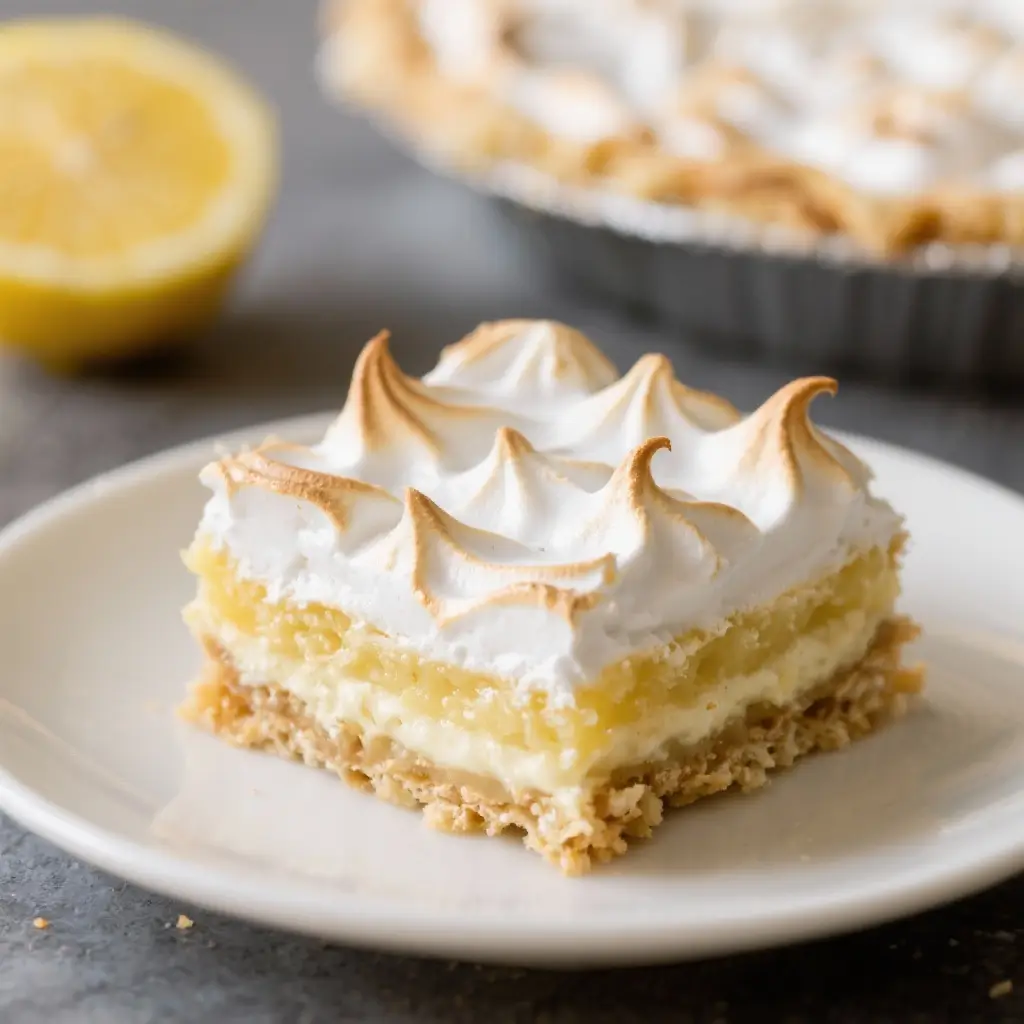
Lemon meringue pie bars are a delightful twist on the classic American dessert. These handheld treats combine the tangy brightness of lemon curd with the airy sweetness of meringue, all nestled atop a buttery shortbread crust. Perfect for picnics, potlucks, or as an elegant dessert at home, these bars offer the full flavor experience of traditional lemon meringue pie in a more convenient, sliceable form. With their golden crust, vibrant yellow filling, and cloud-like toasted topping, they’re as visually appealing as they are delicious.
The History of Lemon Meringue Pie and Its Evolution into Bars
The origins of lemon meringue pie trace back to 19th-century Europe, where both meringue and custard-based desserts were gaining popularity. The earliest known recipe resembling modern lemon meringue pie appeared in a Swiss cookbook in the 1820s, but it was in America that the dessert truly flourished. By the late 1800s, recipes began appearing in American cookbooks, often under names like “Lemon Cream Pie” or “Lemon Meringue Pudding Pie.” The combination of tart lemon, sweet custard, and fluffy meringue became a staple of American baking, especially during times when lemons and eggs were readily available.
As culinary trends evolved, bakers sought ways to simplify and repackage classic desserts into more accessible formats. Enter the bar version. Lemon meringue pie bars emerged in the mid-20th century as part of a broader movement toward no-fuss, easy-to-serve desserts. By transforming the pie into a bar, home cooks could eliminate the need for pie tins, blind baking, and complex layering. Instead, everything could be baked in a single pan—first the crust, then the filling, followed by the meringue—making it ideal for batch baking and sharing. Today, lemon meringue pie bars are celebrated not only for their nostalgic charm but also for their versatility and crowd-pleasing appeal.
Ingredients Breakdown: What Makes These Bars So Special?
The magic of lemon meringue pie bars lies in their layered composition, each component playing a crucial role in flavor, texture, and structure. Let’s break down the ingredients:
- For the Shortbread Crust: All-purpose flour provides structure, while cold unsalted butter delivers richness and flakiness. Powdered sugar adds subtle sweetness without compromising the dough’s integrity, and a pinch of salt enhances flavor. Some variations include vanilla extract or almond extract for extra depth.
- For the Lemon Filling: Freshly squeezed lemon juice is essential—it offers bright acidity that bottled juice simply can’t match. Eggs act as a thickening agent, creating a smooth, custard-like consistency. Granulated sugar balances the tartness, while cornstarch helps stabilize the filling and prevent weeping. Lemon zest amplifies the citrus aroma, and a touch of butter enriches the texture.
- For the Meringue Topping: Egg whites are the foundation, whipped into stiff peaks with granulated sugar to create volume and stability. Cream of tartar is often added to strengthen the protein structure of the egg whites and prevent collapse. Pure vanilla extract rounds out the sweetness with a floral note.
Each ingredient must be carefully measured and properly incorporated to ensure the perfect balance between tart and sweet, firm and tender. Using high-quality, fresh components—especially real lemons and farm-fresh eggs—can elevate the bars from good to extraordinary.
Step-by-Step Recipe: How to Make Perfect Lemon Meringue Pie Bars
Follow this detailed guide to create flawless lemon meringue pie bars from scratch. Precision and timing are key, especially when working with the meringue and custard layers.
Ingredients
Shortbread Crust:
- 1 ½ cups (190g) all-purpose flour
- ½ cup (60g) powdered sugar
- ¼ teaspoon salt
- ¾ cup (170g) cold unsalted butter, cubed
- 1 large egg yolk
- 1 teaspoon pure vanilla extract
Lemon Filling:
- 4 large eggs
- 1 ½ cups (300g) granulated sugar
- ¼ cup (30g) cornstarch
- ½ teaspoon salt
- 1 cup (240ml) freshly squeezed lemon juice (from about 4–6 lemons)
- Zest of 2 lemons
- ¼ cup (60g) unsalted butter, cut into small pieces
Meringue Topping:
- 4 large egg whites, at room temperature
- ½ teaspoon cream of tartar
- ½ cup (100g) granulated sugar
- 1 teaspoon pure vanilla extract
Directions
- Preheat oven and prepare pan: Preheat your oven to 350°F (175°C). Line a 9×13-inch baking pan with parchment paper, leaving overhang on two sides for easy removal. Lightly grease any exposed pan.
- Make the crust: In a food processor, pulse together flour, powdered sugar, and salt. Add cold butter cubes and pulse until the mixture resembles coarse crumbs. Add egg yolk and vanilla; pulse until dough begins to clump. Press evenly into the bottom of the prepared pan. Bake for 18–20 minutes, or until lightly golden. Remove and let cool slightly while preparing the filling. Reduce oven temperature to 325°F (160°C).
- Prepare the lemon filling: In a medium saucepan, whisk together eggs, sugar, cornstarch, and salt. Gradually whisk in lemon juice and zest. Cook over medium heat, stirring constantly, until the mixture thickens and bubbles, about 8–10 minutes. Remove from heat and stir in butter until fully melted and incorporated. Pour hot filling over the warm crust and spread evenly. Return to oven and bake for 10 minutes to set the filling slightly.
- Make the meringue: While the filling bakes, prepare meringue. In a clean, grease-free bowl, beat egg whites and cream of tartar with a hand mixer or stand mixer on medium speed until soft peaks form. Gradually add sugar, one tablespoon at a time, beating continuously. Increase speed to high and beat until stiff, glossy peaks form. Beat in vanilla.
- Add meringue and finish baking: Spread meringue over the warm lemon layer, sealing it all the way to the edges to prevent shrinking. Use a spatula to create decorative swirls. Bake at 325°F for 12–15 minutes, or until meringue is golden brown. Turn off oven, crack the door open, and let bars cool inside for 1 hour to minimize cracking.
- Cool and cut: Transfer pan to a wire rack and cool completely at room temperature (about 2 hours). Then chill in the refrigerator for at least 2 hours before slicing. Use parchment overhang to lift bars out. Cut into squares or rectangles with a sharp knife dipped in hot water for clean edges.
Tips for Success
- Use room temperature egg whites for meringue: They whip up faster and achieve greater volume.
- Avoid greasy bowls: Even a trace of fat can prevent egg whites from whipping properly. Wipe the bowl with a lemon wedge if needed.
- Don’t skip the cornstarch in the filling: It prevents the lemon layer from becoming too runny.
- Seal the meringue to the edges: This creates a barrier that prevents air pockets and reduces weeping.
- Cool slowly: Sudden temperature changes cause meringue to crack. Letting it cool gradually in the turned-off oven helps maintain its structure.
- Fresh lemons are non-negotiable: Bottled lemon juice lacks the vibrant flavor and aromatic zest of fresh fruit.
- Chill before cutting: This ensures clean slices and allows flavors to meld.
Variations and Customizations
Lemon meringue pie bars are wonderfully adaptable. Here are some creative twists to try:
- Lime or Orange Version: Substitute lime or orange juice and zest for lemon for a tropical or citrus-forward variation.
- Berried Bliss: Swirl in raspberry or strawberry puree into the lemon filling before adding the meringue for a fruity twist.
- Toasted Coconut Crust: Replace ¼ cup of flour in the crust with toasted coconut flakes for a nutty, tropical base.
- Lavender-Infused Meringue: Add ½ teaspoon of culinary lavender to the sugar before whipping into the meringue for a floral note.
- Gluten-Free Option: Use a 1:1 gluten-free flour blend in the crust and filling for those with sensitivities.
- Dairy-Free Crust: Substitute vegan butter for regular butter to make the crust dairy-free.
- Mini Bars: Bake in a muffin tin for individual-sized treats—adjust baking times accordingly.
- Chocolate Swirl: Drizzle melted white or dark chocolate over the meringue before toasting for a gourmet touch.
Health Considerations and Nutritional Value
While undeniably indulgent, lemon meringue pie bars do offer some nutritional elements worth noting:
- Eggs: Provide high-quality protein and essential nutrients like choline and selenium.
- Lemons: Rich in vitamin C, antioxidants, and flavonoids that support immune health and reduce inflammation.
- Butter: Contains fat-soluble vitamins (A, D, E, K), though it should be consumed in moderation due to saturated fat content.
However, these bars are relatively high in sugar and calories. A typical serving (one bar from a 9×13 pan cut into 12 pieces) contains approximately:
- Calories: 320–360
- Total Fat: 16–18g
- Saturated Fat: 10g
- Carbohydrates: 45–50g
- Sugars: 35–40g
- Protein: 4–5g
To make a lighter version:
- Use reduced-fat butter or a plant-based alternative.
- Replace half the sugar in the filling with a natural sweetener like erythritol or monk fruit (note: may affect texture).
- Reduce portion size or serve with fresh berries to balance sweetness.
- Consider using pasteurized egg whites in the meringue for safety, especially for vulnerable populations.
As with any dessert, enjoy lemon meringue pie bars in moderation as part of a balanced diet.
Frequently Asked Questions (FAQ)
Q: Why is my meringue weeping or separating?
A: Weeping occurs when the meringue isn’t properly sealed to the filling or when there’s a temperature shock. Always spread meringue to the edges and cool slowly in the oven.
Q: Can I make these bars ahead of time?
A: Yes! Assemble and refrigerate for up to 2 days. For longer storage, freeze uncut bars (wrapped tightly) for up to 1 month. Thaw in the fridge before serving.
Q: Can I use store-bought lemon curd?
A: Yes, but homemade filling gives better control over texture and flavor. If using store-bought, heat gently and pour over crust before adding meringue.
Q: Why did my filling turn out runny?
A: Undercooking or insufficient cornstarch are common causes. Ensure the filling boils and thickens before removing from heat.
Q: Can I make this recipe with aquafaba?
A: Yes, aquafaba (chickpea brine) can replace egg whites in the meringue. Use ¾ cup aquafaba and follow standard whipping techniques.
Q: How do I prevent the crust from getting soggy?
A: Par-bake the crust thoroughly and pour the hot filling onto the warm crust. This helps create a moisture barrier.
Summary
Lemon meringue pie bars bring together a buttery shortbread crust, tangy lemon custard, and fluffy toasted meringue in one irresistible, portable treat. Easy to make and endlessly customizable, they’re perfect for sharing and sure to impress.