Mango Coconut Chia Pudding: A Tropical Delight in Every Bite
Introduction
Imagine a creamy, tropical dessert that not only satisfies your sweet tooth but also nourishes your body with wholesome ingredients. Enter mango coconut chia pudding—a luscious fusion of sun-kissed mangoes, rich coconut milk, and nutrient-dense chia seeds. This no-bake treat has taken the world by storm, becoming a staple in health-conscious kitchens, plant-based diets, and brunch tables alike. With its velvety texture, vibrant color, and refreshing flavor, it’s more than just a pudding—it’s an experience.
Perfect for breakfast, a midday snack, or even as an elegant dessert, mango coconut chia pudding combines simplicity with sophistication. Whether you’re vegan, gluten-free, paleo-friendly, or simply looking to add more superfoods to your diet, this recipe is incredibly adaptable and easy to prepare. Plus, it’s made ahead of time, allowing flavors to meld and textures to perfect overnight. Dive into this comprehensive guide to learn everything about crafting the ultimate mango coconut chia pudding—complete with history, ingredients, step-by-step instructions, variations, nutritional insights, and frequently asked questions.
The History
Chia seeds have been revered for centuries, dating back to ancient Aztec and Mayan civilizations. The word “chia” itself comes from the ancient Nahuatl language, meaning “strength,” and warriors and runners consumed chia seeds for endurance and energy. These tiny black and white seeds were so valuable they were used as currency and offered as tribute to rulers.
Fast forward to modern times—chia seeds experienced a resurgence in popularity during the 2010s as part of the global superfood movement. Their impressive nutritional profile and ability to absorb liquid and form a gel-like consistency made them ideal for puddings, especially in plant-based and dairy-free diets.
Meanwhile, coconut milk has long been a staple in tropical cuisines across Southeast Asia, the Caribbean, and Polynesia. Its creamy richness and subtle sweetness pair perfectly with fruits like mango, which has been cultivated for over 4,000 years in South Asia and later spread throughout the tropics.
The marriage of chia seeds, coconut milk, and mango is a relatively recent culinary innovation—a product of global fusion and the rise of healthy indulgence. Food bloggers, wellness influencers, and chefs began combining these ingredients in the early 2010s, creating what we now know as mango coconut chia pudding. Today, it stands as a symbol of modern comfort food that doesn’t compromise on nutrition.
Ingredients Breakdown
Each ingredient in mango coconut chia pudding plays a vital role—not just in flavor and texture, but also in boosting the overall nutritional value. Let’s take a closer look at what goes into this tropical masterpiece:
- Chia Seeds: These tiny powerhouses are packed with fiber, omega-3 fatty acids, protein, antioxidants, calcium, magnesium, and phosphorus. When soaked in liquid, they expand and create a pudding-like consistency, making them perfect for dairy-free desserts.
- Coconut Milk (Canned Full-Fat): Provides a luxuriously creamy base with a subtle tropical flavor. Rich in medium-chain triglycerides (MCTs), which are easily digested and converted into energy, coconut milk adds both satiety and richness without dairy.
- Fresh Mango: Sweet, juicy, and fragrant, mango brings natural sugars, vitamin C, vitamin A, folate, and digestive enzymes like amylase. It gives the pudding its signature golden hue and summery taste.
- Maple Syrup or Honey (Optional): Adds a touch of sweetness if your mango isn’t quite ripe enough. Both are natural sweeteners—honey has antimicrobial properties, while maple syrup contains minerals like manganese and zinc.
- Vanilla Extract: Enhances the overall flavor profile with warm, floral notes. Pure vanilla extract adds depth and complexity without overpowering the tropical essence.
- Lime Juice (Optional): A splash brightens up the flavors, balancing the sweetness and enhancing the freshness of the mango.
- Almond Milk or Coconut Water (for layering or thinning): Used to adjust consistency or create layered parfaits. Almond milk adds a light nuttiness, while coconut water keeps it extra tropical and hydrating.
Every ingredient contributes to a harmonious blend of taste, texture, and health benefits—making this pudding far more than just a dessert.
Step-by-Step Recipe
Creating the perfect mango coconut chia pudding is simple, requiring minimal effort and basic kitchen tools. Follow these detailed steps for foolproof results every time.
- Prepare the Chia Base: In a large mixing bowl or jar, combine 1/4 cup chia seeds with 1 cup canned full-fat coconut milk and 1/2 cup unsweetened almond milk (or all coconut milk for richer texture). Stir well to prevent clumping.
- Add Flavor Enhancers: Stir in 1 teaspoon pure vanilla extract, 1–2 tablespoons maple syrup (adjust to taste), and a pinch of sea salt. If using, add 1 tablespoon fresh lime juice for brightness.
- Mix Thoroughly: Use a whisk or fork to stir the mixture vigorously for about 1–2 minutes. This ensures the chia seeds are evenly distributed and don’t settle at the bottom.
- Rest and Thicken: Let the mixture sit for 5 minutes, then stir again to break up any clumps. Cover and refrigerate for at least 4 hours, or ideally overnight (8 hours). The pudding will thicken into a creamy, tapioca-like consistency.
- Blend the Mango Layer: While the chia pudding sets, peel and dice 1 large ripe mango (about 1.5 cups). Blend in a food processor or blender until completely smooth. For a thinner swirl, add 1–2 tablespoons of coconut milk or almond milk.
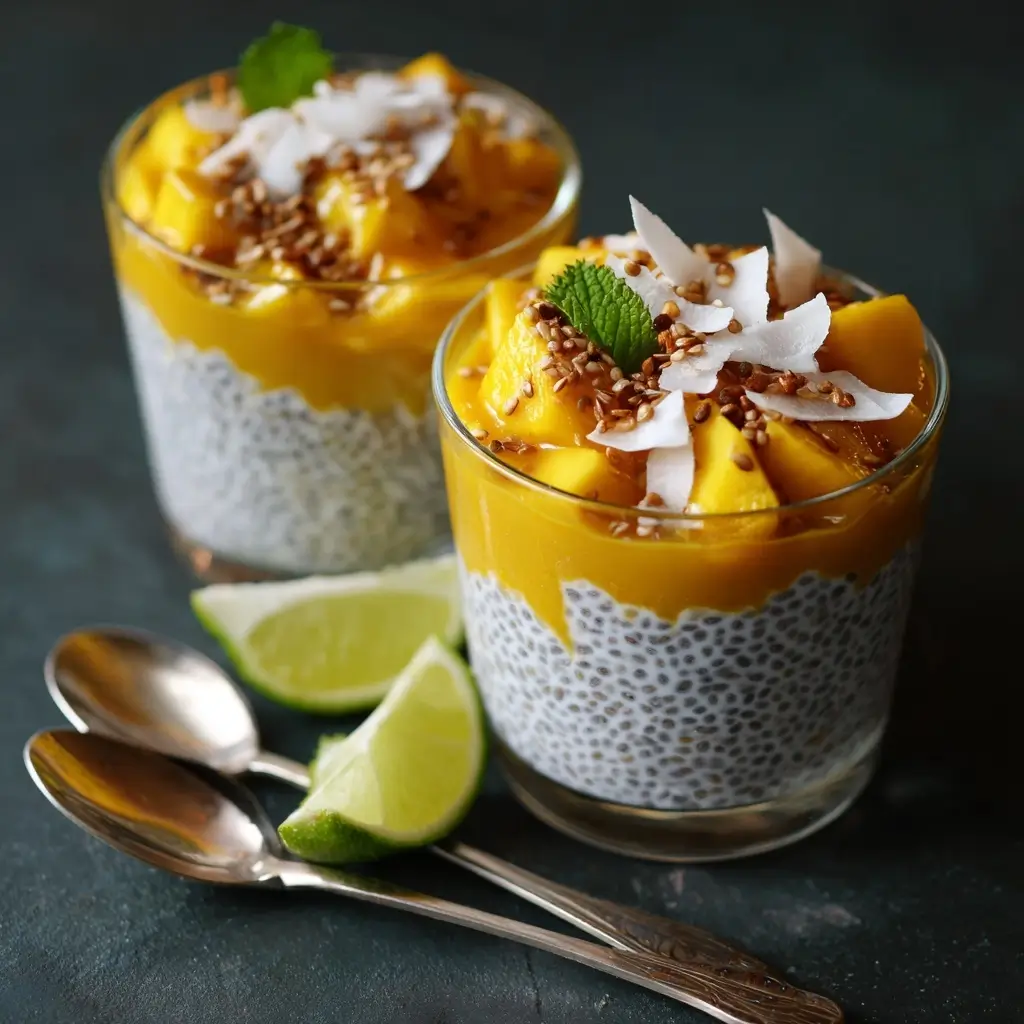
- Assemble the Pudding: Once the chia mixture has set, give it a good stir. In serving glasses or jars, alternate layers of chia pudding and mango puree. You can go for clean layers or gently swirl them together for a marbled effect.
- Chill Again: Refrigerate the assembled puddings for another 30 minutes to 1 hour to let flavors meld.
- Garnish and Serve: Top with fresh mango cubes, toasted coconut flakes, chia seed sprinkles, sliced almonds, or a drizzle of honey. Serve cold and enjoy immediately!
Pro Tip: For individual servings, use mason jars, parfait glasses, or reusable silicone cups—perfect for meal prep and on-the-go snacking.
Tips
- Use Ripe Mangoes: Choose mangoes that yield slightly to gentle pressure and have a sweet aroma near the stem. Ataulfo (Honey) or Kent mangoes work best for their creamy texture and low fiber content.
- Stir Frequently During First 15 Minutes: Chia seeds tend to clump when first mixed. Stirring every 5 minutes for the first 15–20 minutes prevents lumps and ensures even hydration.
- Adjust Consistency: Prefer thinner pudding? Add more almond milk. Want it thicker? Increase chia seeds by 1–2 teaspoons. Remember, it thickens more over time.
- Sweeten Smartly: Taste your mango first. Very ripe mangoes may eliminate the need for added sweeteners altogether.
- Overnight Soaking Is Best: While 4 hours works, letting chia pudding chill overnight yields superior texture and deeper flavor integration.
- Layer Creatively: Create stunning parfaits by adding granola, passionfruit pulp, kiwi slices, or a layer of yogurt between chia and mango layers.
- Shake, Don’t Stir (for Jars): If storing in sealed jars, simply shake well before eating instead of stirring—especially convenient for meal preppers.
- Freeze for Smoothies: Freeze leftover chia pudding in ice cube trays and blend into tropical smoothies for a nutrient boost.
Variations and Customizations
One of the greatest strengths of mango coconut chia pudding is its versatility. Here are some creative twists to keep things exciting:
1. Vegan & Allergy-Friendly Options
- Ensure all ingredients are plant-based—use maple syrup or agave instead of honey.
- Swap almond milk for oat, soy, or rice milk if nut allergies are a concern.
2. Tropical Fruit Twists
- Pineapple-Coconut Chia Pudding: Replace mango with fresh pineapple puree and add shredded coconut.
- Mango-Passionfruit Swirl: Layer or swirl in strained passionfruit juice for tangy contrast.
- Island Medley: Mix diced papaya, banana, and mango into the top layer for a fruit salad effect.
3. Protein-Powered Version
- Add 1 scoop of unflavored or vanilla plant-based protein powder to the chia mixture (increase liquid slightly).
- Top with Greek yogurt (dairy or non-dairy) for extra protein and creaminess.
4. Superfood Boosters
- Stir in 1 teaspoon spirulina or matcha for a green superfood twist.
- Add 1 tablespoon hemp seeds or flaxseed meal for extra omega-3s and crunch.
- Mix in acai puree or blueberry compote for antioxidant power.
5. Dessert-Inspired Variants
- Coco-Mango Chia Tiramisu: Add a hint of coffee-soaked ladyfinger layer (vegan version possible).
- Mango Sticky Rice Pudding Style: Use brown rice milk and top with toasted glutinous rice and coconut cream.
- Creamsicle Vibes: Add orange zest and a splash of orange juice to mimic a mango creamsicle.
6. Kid-Friendly Fun
- Serve in colorful cups with fun straws and sprinkle with rainbow chia or edible glitter.
- Create “chia pudding pops” by freezing in popsicle molds.
- Let kids layer their own in clear cups for a DIY dessert station.
Health Considerations and Nutritional Value
Mango coconut chia pudding isn’t just delicious—it’s a powerhouse of nutrients. Let’s break down what one serving (approx. 1 cup) typically offers:
| Nutrient | Amount (Approximate) | Health Benefits |
|---|---|---|
| Calories | 280–320 kcal | Balanced energy for sustained fuel |
| Dietary Fiber | 10–12g | Supports digestion, gut health, and satiety |
| Omega-3 Fatty Acids (ALA) | 4–5g | Promotes heart and brain health |
| Protein | 6–8g | Helps maintain muscle mass and repair tissues |
| Healthy Fats (from coconut & chia) | 20–24g | Includes MCTs for quick energy and hormone support |
| Vitamin C | 45–60mg (75% DV) | Boosts immunity and skin health |
| Vitamin A (from mango) | 25% DV | Supports vision and immune function |
| Calcium | 15% DV | Strengthens bones and teeth |
| Magnesium | 30% DV | Regulates muscle and nerve function, blood sugar |
| Potassium | 10% DV | Helps balance fluids and supports heart rhythm |
Health Considerations:
- Portion Control: While nutritious, the high fat content from coconut milk means calorie density is moderate to high. Stick to 1-cup servings unless very active.
- Sugar Content: Naturally occurring sugars from mango and optional sweeteners should be monitored for diabetics. Use low-glycemic sweeteners like monk fruit or stevia if needed.
- Allergies: Contains coconut (a tree nut allergen for some) and potential cross-contamination with nuts depending on other ingredients. Always label accordingly.
- Chia Seed Caution: Consume with plenty of water. Eating dry chia seeds can cause choking or digestive discomfort due to rapid expansion.
- Thyroid Health: Mango contains goitrogens in very small amounts—cooking or blending reduces impact. Not a concern for most, but those with iodine deficiency may want variety.
Overall, mango coconut chia pudding aligns beautifully with plant-based, gluten-free, anti-inflammatory, and heart-healthy diets when enjoyed as part of a balanced lifestyle.
Ingredients
- 1/4 cup (40g) chia seeds
- 1 cup (240ml) full-fat canned coconut milk (well stirred)
- 1/2 cup (120ml) unsweetened almond milk (or coconut milk/water)
- 1 large ripe mango (about 1.5 cups diced)
- 1–2 tbsp pure maple syrup or raw honey (optional)
- 1 tsp pure vanilla extract
- Juice of 1/2 lime (about 1 tbsp)
- Pinch of sea salt
- Additional toppings: fresh mango cubes, toasted coconut flakes, chia seeds, sliced almonds, mint leaves, granola
Directions
- In a medium bowl or large jar, whisk together coconut milk, almond milk, maple syrup (if using), vanilla extract, lime juice, and sea salt.
- Slowly sprinkle in chia seeds while whisking continuously to avoid clumps.
- Whisk vigorously for 1–2 minutes, then let sit for 5 minutes. Stir again thoroughly to break up any forming clumps.
- Cover and refrigerate for at least 4 hours, preferably overnight, until thick and pudding-like.
- While pudding chills, peel and dice the mango. Blend in a food processor or blender until completely smooth. Set aside.
- After chilling, stir the chia pudding well. If too thick, thin with 1–2 tablespoons of milk.
- To assemble, spoon a layer of chia pudding into serving glasses, followed by a layer of mango puree. Repeat, swirling gently with a knife for a marbled effect if desired.
- Refrigerate for another 30 minutes to set layers.
- Top with fresh mango, toasted coconut, chia seeds, or other garnishes.
- Serve chilled and enjoy within 5 days. Store covered in the refrigerator.
FAQ
Q: Can I make chia pudding without coconut milk?
A: Yes! Substitute with almond milk, oat milk, soy milk, or even dairy milk. However, coconut milk gives the richest, creamiest texture. For lower fat, use light coconut milk or a mix.
Q: How long does mango coconut chia pudding last in the fridge?
A: Up to 5 days when stored in airtight containers. The mango layer may darken slightly but is still safe to eat.
Q: Why is my chia pudding slimy or clumpy?
A: Clumping occurs if not stirred enough initially. Always stir vigorously after mixing and again after 5–10 minutes. Sliminess is natural due to chia’s gel-forming property—many find it pleasant once accustomed.
Q: Can I freeze mango chia pudding?
A: Yes, though the texture may become slightly grainier upon thawing. Best used in smoothies or eaten semi-frozen as a sorbet-like treat.
Q: Is chia pudding safe during pregnancy?
A: Absolutely! Chia seeds provide fiber, omega-3s, and protein—great for prenatal nutrition. Just ensure all ingredients are fresh and properly stored.
Q: Can I use frozen mango?
A: Yes. Thaw and drain excess liquid before blending. Fresh mango offers better texture and flavor, but frozen works in a pinch.
Q: How do I make it sweeter without sugar?
A: Use very ripe mangoes, dates (blended into the base), or a splash of date syrup. Banana can also add natural sweetness and creaminess.
Q: Can I prep this for a crowd?
A: Definitely! Multiply the recipe and store in a large dish or individual jars. Add toppings just before serving to maintain freshness and crunch.
Summary
Mango coconut chia pudding is a nutrient-rich, creamy, and refreshing dessert that blends tropical flavors with superfood benefits—perfect for breakfast, snacks, or healthy indulgence.
Easy to customize, naturally gluten-free and vegan-friendly, this make-ahead treat delivers fiber, omega-3s, and vibrant taste in every spoonful.