Introduction
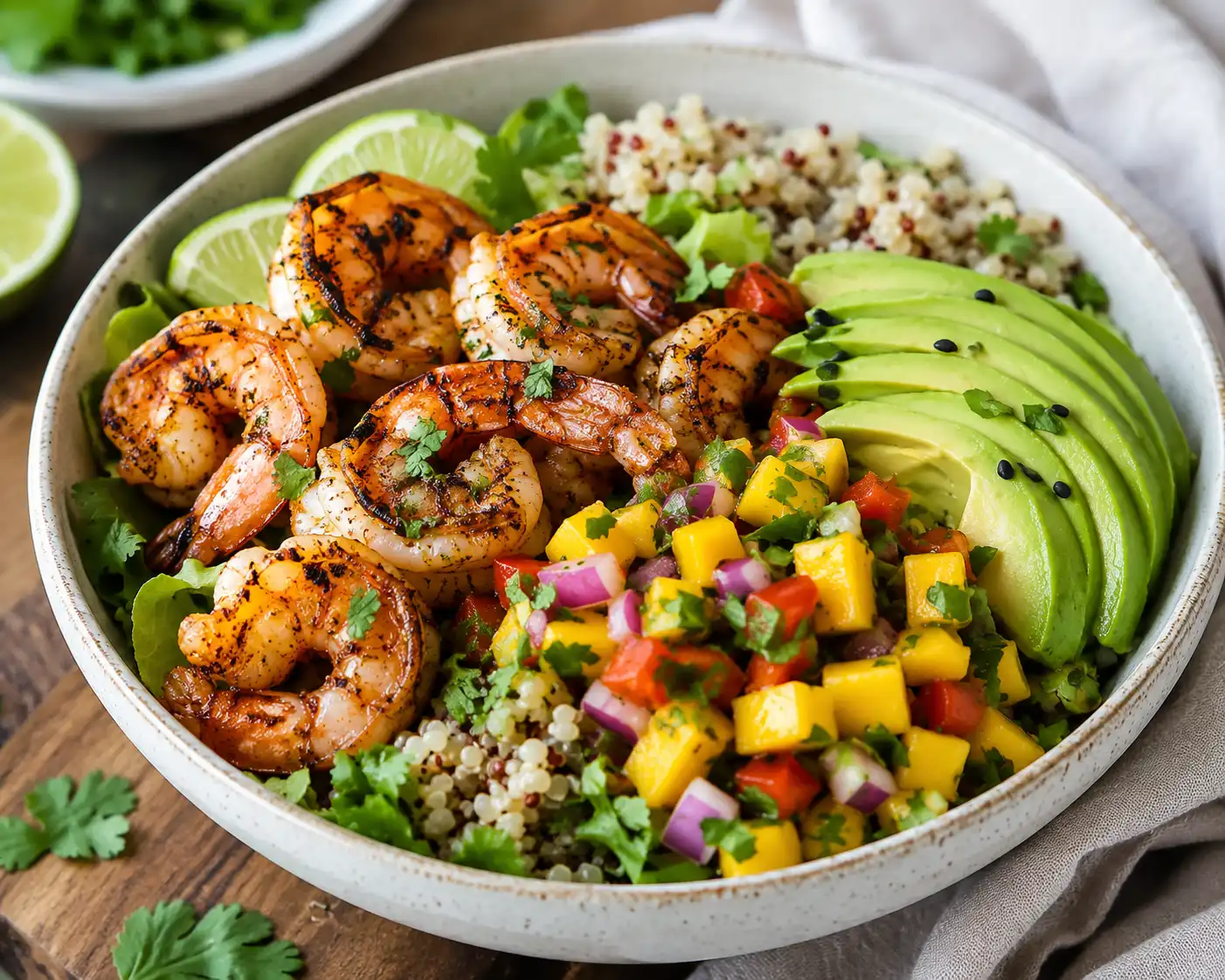
Welcome to a vibrant, nutrient-dense, and restaurant-worthy meal you can effortlessly prepare at home: Healthy Grilled Shrimp & Avocado Bowls with Mango Salsa. This dish is more than just a feast for the eyes—it’s a symphony of clean flavors, bold textures, and functional nutrition. Designed for health-conscious food lovers, busy professionals, fitness enthusiasts, and anyone seeking a satisfying yet light meal without compromising on taste or satiety, this bowl celebrates freshness, balance, and culinary simplicity. At its core lies succulent, protein-rich grilled shrimp; creamy, heart-healthy avocado; fiber-packed whole grains or leafy greens; and a zesty, antioxidant-rich mango salsa that ties everything together with brightness and complexity. Whether served as a revitalizing lunch, post-workout recovery bowl, summer dinner centerpiece, or even a make-ahead meal prep staple, this recipe embodies mindful eating—free from refined sugars, excessive oils, or processed additives—while delivering maximum flavor in every bite.
The History
While there’s no single documented “origin story” for grilled shrimp and avocado bowls, their evolution reflects broader culinary and cultural shifts over the past four decades. Shrimp, one of the most consumed seafoods globally, has long been prized across coastal cuisines—from Mediterranean meze platters to Latin American ceviches and Southeast Asian stir-fries. Its rise in popularity in North America accelerated in the 1980s with improved aquaculture practices and sustainable harvesting standards. Meanwhile, avocado’s journey from regional Mexican staple to global superfood icon gained momentum in the 1990s and exploded in the 2010s, propelled by scientific validation of its monounsaturated fats, fiber, and potassium content. The “bowl” format itself emerged from the wellness and clean-eating movements of the early 2010s, popularized by juice bars, meal delivery services, and social media–driven food trends emphasizing visual appeal, ingredient transparency, and customizable nutrition. Mango salsa—inspired by traditional Central American *salsas de mango*—adds a tropical, enzyme-rich counterpoint rooted in Caribbean and Yucatán culinary traditions, where unripe green mangoes were historically used for their tartness and digestive benefits. Together, these elements coalesce into a modern, globally informed, health-forward dish that honors tradition while embracing contemporary nutritional science and sustainability values.
Ingredients Breakdown
Every component in this bowl is intentionally selected for both flavor synergy and functional nutrition. Let’s explore each layer:
- Shrimp: Wild-caught or sustainably farmed (MSC or ASC certified) large shrimp (21–25 count per pound) provide high-quality, low-calorie complete protein (24g per 3 oz), selenium for thyroid support, iodine for metabolism, and astaxanthin—an anti-inflammatory carotenoid giving shrimp its pink hue.
- Avocado: Ripe but firm Hass avocados deliver creamy texture and over 20 essential vitamins and minerals—including potassium (more than bananas), folate, vitamin K, and lutein for eye health—alongside heart-healthy oleic acid and prebiotic fiber that feeds beneficial gut bacteria.
- Mango: Fresh, ripe Ataulfo (Champagne) or Tommy Atkins mangoes offer natural sweetness balanced by digestive enzymes (amylase and mangiferin), vitamin C (boosting iron absorption from shrimp), and beta-carotene converted to vitamin A for immune and skin health.
- Red Onion & Cilantro: These aromatics aren’t just for flavor—they’re phytonutrient powerhouses. Red onion contains quercetin (a potent antioxidant) and prebiotic inulin, while cilantro is rich in coriander oil compounds shown to support heavy metal detoxification and reduce oxidative stress.
- Lime Juice: Cold-pressed lime not only brightens the salsa and prevents avocado browning but also enhances non-heme iron bioavailability and provides citric acid, which supports kidney stone prevention and digestion.
- Base Options: Brown rice, quinoa, farro, or mixed baby greens serve as complex carbohydrate or fiber-rich foundations. Quinoa adds all nine essential amino acids; leafy greens contribute nitrates for blood pressure regulation and vitamin K-dependent bone metabolism.
- Seasonings: Smoked paprika contributes mild heat and lycopene; garlic powder offers allicin precursors (activated upon grilling); and a whisper of cayenne delivers capsaicin—linked to thermogenesis and appetite modulation.
No added sugars, dairy, gluten (if using GF grains or greens), or refined oils are required—making this naturally compliant with paleo, Whole30, Mediterranean, pescatarian, and many anti-inflammatory dietary frameworks.
Step-by-Step Recipe
- Prep the Shrimp (15 minutes + optional marinating time): Pat 1 lb (450g) peeled, deveined, tail-on shrimp *thoroughly* dry with paper towels—this ensures optimal sear and prevents steaming. In a non-reactive bowl, whisk together 2 tbsp extra-virgin olive oil (or avocado oil), 2 minced garlic cloves, 1 tsp smoked paprika, ½ tsp ground cumin, ¼ tsp cayenne (optional), 1 tsp lime zest, 1 tbsp fresh lime juice, ½ tsp sea salt, and ¼ tsp freshly cracked black pepper. Add shrimp and gently toss to coat. Refrigerate for 15–30 minutes (no longer—acid can begin to “cook” shrimp).
- Prepare the Mango Salsa (12 minutes): Dice 1½ cups ripe mango (peeled and pitted), ½ medium red onion (finely diced), 1 small jalapeño (seeded and minced), ¼ cup loosely packed fresh cilantro leaves, and 2 tbsp finely chopped red bell pepper. In a medium bowl, combine ingredients. Stir in 2 tbsp fresh lime juice, ½ tsp honey or pure maple syrup (optional, for balance), ¼ tsp fine sea salt, and a pinch of black pepper. Gently fold—avoid overmixing to preserve texture. Refrigerate uncovered for at least 10 minutes to let flavors meld.
- Grill the Shrimp (6–8 minutes): Preheat grill or grill pan to medium-high (375–400°F). Lightly oil grates or pan. Thread shrimp onto soaked wooden or metal skewers (for even cooking), or place directly on grate. Grill 2–3 minutes per side until opaque, pink, and slightly curled—do not overcook. Remove immediately and rest 2 minutes. Optional: Finish with a final squeeze of lime and flaky sea salt.
- Assemble the Base (5 minutes): Divide 4 cups cooked base (e.g., 1 cup cooked tri-color quinoa per serving, cooled) among four wide, shallow bowls. Alternatively, use 2 cups massaged kale + 2 cups shredded romaine or 1½ cups cooked brown rice + ½ cup roasted sweet potato cubes for added fiber and micronutrients.
- Add Creamy Element (3 minutes): Slice 2 ripe avocados in half, remove pits, scoop flesh, and slice or dice. Fan or scatter over each bowl. Sprinkle lightly with lime juice and a pinch of flaky salt to preserve color and enhance flavor.
- Layer & Garnish (2 minutes): Arrange 4–5 grilled shrimp per bowl atop avocado. Spoon generous portions of chilled mango salsa over shrimp and avocado. Garnish with extra cilantro sprigs, microgreens, toasted pepitas or slivered almonds (for crunch and magnesium), and a drizzle of high-quality extra-virgin olive oil or chili-lime vinaigrette.
Tips
- Dry shrimp thoroughly before marinating—excess moisture inhibits caramelization and leads to steamed, rubbery results.
- Use a meat thermometer if uncertain: shrimp are perfectly cooked at 120°F internal temperature—beyond 125°F, they toughen rapidly.
- Prevent avocado browning by tossing slices with lime or lemon juice *immediately* after cutting—or keep pit intact in half until ready to serve.
- For meal prep success: Prepare salsa up to 2 days ahead (store in airtight container with plastic wrap pressed directly on surface); cook grains/base up to 4 days ahead; grill shrimp the day of serving (they don’t reheat well).
- Grill alternatives: No outdoor grill? Use a cast-iron skillet over medium-high heat, a grill pan, or even an air fryer basket (375°F for 6–7 minutes, shaking halfway).
- Maximize flavor depth: Toast whole cumin seeds in dry skillet before grinding—or char red onion and jalapeño briefly on the grill before dicing for smoky salsa variation.
- Serving temperature matters: Serve components at contrasting temps—chilled salsa against warm shrimp and room-temp avocado—for dynamic mouthfeel.
- Scale smartly: Double the salsa—it keeps beautifully and doubles as a dip for plantain chips, grilled fish, or Greek yogurt.
Variations and Customizations
This bowl is gloriously adaptable—here’s how to tailor it to your palate, pantry, or dietary goals:
Dietary Adaptations
- Vegan/Vegetarian: Replace shrimp with grilled king oyster mushrooms (marinated similarly), marinated baked tofu, or seasoned chickpeas. Boost protein with hemp hearts or edamame.
- Keto/Low-Carb: Skip grains entirely—use double portions of greens, spiralized zucchini “noodles,” or cauliflower rice. Increase healthy fats with extra avocado, macadamia nuts, or avocado oil drizzle.
- Low-FODMAP: Omit garlic and onion; use garlic-infused oil and green onion tops (green parts only); substitute mango with cantaloupe or honeydew (in limited portions); choose lactose-free feta if adding cheese.
- Allergy-Friendly: Nut-free (skip pepitas/almonds), shellfish-free (see vegan options above), soy-free (verify tamari-free marinade), and gluten-free (ensure certified GF grains or use greens).
Flavor & Texture Twists
- Spice It Up: Add chipotle in adobo (minced) to marinade or salsa; include pickled red onions for tangy crunch; top with Tajín or chili-lime salt.
- Herb Forward: Swap cilantro for fresh mint or basil—especially lovely with Thai-inspired lime-coconut nuance (add 1 tsp grated ginger + 1 tbsp coconut aminos to marinade).
- Umami Boost: Finish with a sprinkle of nutritional yeast, white miso paste (whisked into marinade), or crumbled nori strips.
- Seafood Swap: Try grilled scallops, flaked grilled mahi-mahi, or marinated grilled octopus for variety.
- Grain Alternatives: Farro, freekeh, teff, millet, or shirataki rice for lower-carb option.
Seasonal Swaps
- Spring: Add blanched asparagus ribbons, pea shoots, or fava beans.
- Summer: Incorporate heirloom cherry tomatoes, grilled corn kernels, or watermelon cubes in salsa.
- Fall: Roast delicata squash or add spiced pepitas; swap mango for ripe pear and pomegranate arils.
- Winter: Use citrus segments (blood orange, grapefruit) in salsa; add roasted beets or sautéed rainbow chard.
Health Considerations and Nutritional Value
A single serving (⅓ of full recipe) delivers approximately 485 calories, with a robust macro- and micronutrient profile optimized for metabolic health, cellular repair, and sustained energy:
- Protein: ~32g—supporting muscle synthesis, satiety signaling (leptin/ghrelin balance), and thermic effect of food (TEF) for natural calorie burn.
- Heart-Healthy Fats: ~24g total fat (16g monounsaturated, 3g polyunsaturated)—lowers LDL cholesterol, improves endothelial function, and stabilizes blood sugar.
- Fiber: ~14g (from quinoa, mango, avocado, red onion, greens)—feeds Akkermansia muciniphila (a gut bacterium linked to lean metabolism) and slows glucose absorption.
- Vitamins & Minerals: Meets or exceeds 100% DV for vitamin C (150%), vitamin K (75%), folate (60%), potassium (45%), and copper (40%). Also rich in magnesium (for nerve/muscle function), zinc (immune resilience), and selenium (antioxidant enzyme cofactor).
- Phytochemical Power: Contains quercetin (anti-allergy), mangiferin (anti-glycation), lutein (eye protection), astaxanthin (neuroprotective), and limonene (digestive support)—all synergistically amplified by food matrix effects.
Contraindications & Mindful Notes:
- Shellfish Allergy: Not suitable—always verify source and cross-contamination risk.
- High-Histamine Sensitivity: Grilled shrimp and aged ingredients may be problematic; opt for very fresh shrimp and skip fermented garnishes.
- Medication Interactions: Avocado’s vitamin K may affect warfarin—consult provider before significant dietary changes.
- Portion Awareness: While nutrient-dense, calories add up—those managing weight may benefit from reducing grain portion or using lighter bases like spinach.
- Sustainability Reminder: Choose shrimp certified by Marine Stewardship Council (MSC), Aquaculture Stewardship Council (ASC), or Seafood Watch–rated “Best Choice.” Avoid imported shrimp with questionable labor or environmental practices.
Ingredients
Makes 4 servings
For the Grilled Shrimp
- 1 lb (450g) large, peeled and deveined shrimp (21–25 count), tails on preferred
- 2 tbsp extra-virgin olive oil or cold-pressed avocado oil
- 2 garlic cloves, finely minced
- 1 tsp smoked paprika
- ½ tsp ground cumin
- ¼ tsp cayenne pepper (optional, for heat)
- 1 tsp lime zest (from 1 lime)
- 1 tbsp fresh lime juice
- ½ tsp fine sea salt
- ¼ tsp freshly cracked black pepper
For the Mango Salsa
- 1½ cups diced ripe mango (about 1 large mango, peeled and pitted)
- ½ medium red onion, finely diced (about ½ cup)
- 1 small jalapeño, seeded and finely minced
- ¼ cup finely diced red bell pepper
- ¼ cup loosely packed fresh cilantro leaves, chopped
- 2 tbsp fresh lime juice (from ~1 lime)
- ½ tsp raw honey or pure maple syrup (optional, balances acidity)
- ¼ tsp fine sea salt
- Pinch of black pepper
For Assembly
- 4 cups cooked base (e.g., 1 cup cooked tri-color quinoa per serving, or 2 cups mixed baby greens + 2 cups massaged kale)
- 2 ripe Hass avocados, sliced or diced
- Extra lime wedges, for serving
- Flaky sea salt (like Maldon), for finishing
- Optional garnishes: Toasted pepitas, slivered almonds, microgreens, chili-lime vinaigrette, crumbled cotija or feta (if dairy tolerated)
Directions
- Marinate the shrimp: In a medium non-reactive bowl, whisk together olive oil, minced garlic, smoked paprika, cumin, cayenne (if using), lime zest, lime juice, salt, and pepper. Add shrimp and gently toss to fully coat. Cover and refrigerate 15–30 minutes.
- Make the salsa: In another bowl, combine mango, red onion, jalapeño, red bell pepper, and cilantro. Stir in lime juice, honey/maple syrup (if using), salt, and pepper. Gently mix—do not crush fruit. Refrigerate uncovered for at least 10 minutes (up to 48 hours).
- Prep base and avocado: Cook quinoa or grain of choice according to package instructions; cool completely. Wash and dry greens thoroughly. Slice avocados and immediately toss with a squeeze of lime juice and pinch of salt.
- Grill the shrimp: Preheat grill or grill pan to medium-high. Lightly oil grates. Place shrimp directly on hot surface (or thread on skewers). Grill 2–3 minutes per side until opaque, pink, and curled. Do not overcook. Transfer to plate; rest 2 minutes.
- Assemble bowls: Divide quinoa (or greens) among four bowls. Arrange avocado slices over base. Top with grilled shrimp. Spoon generous portions of chilled mango salsa over shrimp and avocado.
- Garnish and serve: Finish with extra lime wedges, flaky salt, optional toppings, and a final drizzle of olive oil or vinaigrette. Serve immediately.
FAQ
- Can I use frozen shrimp?
- Yes—but choose IQF (individually quick frozen), wild-caught, and thaw *slowly* in refrigerator overnight. Never microwave or run under hot water, as uneven thawing damages texture. Pat extremely dry before marinating.
- Is there a way to make this Whole30-compliant?
- Absolutely. Omit honey/maple syrup from salsa (mango’s natural sweetness suffices); ensure all spices are additive-free (check labels for anti-caking agents); skip optional cheese/cotija; and confirm shrimp source is free from preservatives like sodium tripolyphosphate.
- How do I prevent my mango salsa from getting watery?
- Use *just-ripe* (not overripe) mangoes—they hold shape better. After dicing, place mango on paper towels for 2–3 minutes to absorb excess surface moisture before mixing. Also, avoid adding lime juice until right before serving if prepping >1 hour ahead.
- Can I grill the shrimp ahead of time?
- Not recommended. Grilled shrimp deteriorates in texture and flavor when chilled and reheated. For meal prep, grill same-day and assemble bowls just before eating—or prep all components separately and do final assembly in <5 minutes.
- What’s the best way to pick a ripe avocado?
- Gently press near the stem end—not the broad bottom. If it yields slightly with gentle pressure and the skin is pebbly and dark green to nearly black, it’s ready. Avoid avocados with sunken spots or stringy flesh when cut.
- Can I make this nut-free and seed-free?
- Yes. Simply omit pepitas and almonds. Add crunch with jicama matchsticks, cucumber ribbons, or roasted seaweed snacks. Ensure all seasonings are processed in nut-free facilities if severe allergy exists.
- Why is my shrimp turning rubbery?
- Overcooking is the #1 cause. Shrimp cook in *minutes*, not tens of minutes. Pull them off heat as soon as they turn opaque and curl into a loose “C” shape—tight “O” shapes indicate overcooking. Carryover heat continues cooking, so resting is essential.
- Is there a low-sodium version?
- Easily. Reduce added salt by half and rely on lime, herbs, smoked paprika, and umami-rich ingredients like nutritional yeast or mushroom powder for depth. Rinse canned beans (if added) thoroughly and choose no-salt-added broths for grain cooking.
- Can I freeze any part of this recipe?
- Salsa freezes poorly (texture breaks down), and avocado turns brown and mushy. However, unmarinated shrimp can be frozen up to 3 months—thaw overnight before marinating. Cooked quinoa freezes well for up to 2 months (portion in freezer bags, lay flat to thaw quickly).
- What wine or beverage pairs well with this bowl?
- A crisp, unoaked Sauvignon Blanc or Albariño complements the lime and mango brightness. For non-alcoholic options: hibiscus iced tea (antioxidant-rich), sparkling water with muddled mint and lime, or cold-brew green tea with ginger.
Summary
Healthy Grilled Shrimp & Avocado Bowls with Mango Salsa unite vibrant, whole-food ingredients into a nutritionally sophisticated, globally inspired meal that satisfies cravings while actively supporting metabolic health, gut integrity, cardiovascular function, and immune resilience.
With under 30 minutes of active time, zero refined sugars or processed additives, and endless customization potential, it’s a versatile, chef-worthy bowl that belongs in every real-food kitchen—from beginner cooks to seasoned nutrition professionals.