Introduction
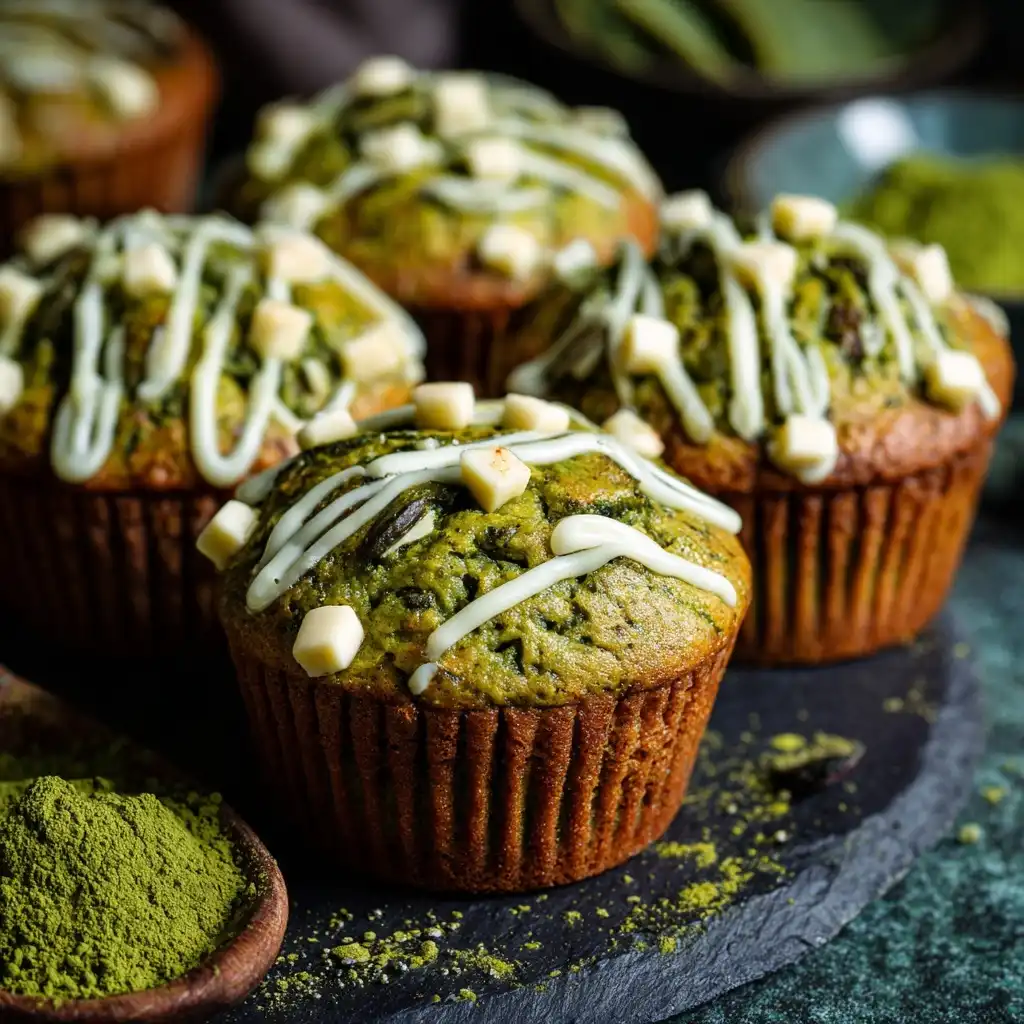
Matcha White Chocolate Muffins are a harmonious fusion of earthy sophistication and sweet indulgence—elevating the humble muffin into a gourmet, café-worthy treat. With vibrant green matcha powder lending its distinctive umami-rich, subtly vegetal flavor and natural antioxidant power, and creamy white chocolate providing luxurious sweetness and velvety texture, these muffins strike an exquisite balance between wellness and decadence. Perfect for weekend baking, afternoon tea, brunch gatherings, or even as a refined on-the-go breakfast option, they offer visual appeal (think delicate jade-green crumb speckled with ivory-white chocolate chips), aromatic depth, and a tender, moist crumb that stays fresh for days. Whether you’re a matcha novice curious about its culinary versatility or a seasoned connoisseur seeking new ways to celebrate its complexity, these muffins invite you to savor tradition reimagined through modern, mindful baking.
The History
The story of Matcha White Chocolate Muffins is a delicious convergence of ancient tradition and contemporary innovation. Matcha—a finely ground, shade-grown green tea powder—has been central to Japanese tea ceremony culture since the 12th century, introduced by Zen Buddhist monk Eisai and later refined by tea masters like Sen no Rikyū. Its journey westward accelerated in the late 20th and early 21st centuries, propelled by global interest in functional foods, mindfulness practices, and artisanal ingredients. Meanwhile, white chocolate—though often misunderstood as “not real chocolate” due to its lack of cocoa solids—has roots tracing back to Nestlé’s 1930s Swiss laboratories, evolving from a novelty into a beloved confectionery staple prized for its rich dairy notes and smooth mouthfeel. The marriage of matcha and white chocolate emerged organically in high-end patisseries across Tokyo, Seoul, and New York during the 2010s, where chefs recognized their complementary profiles: matcha’s grassy bitterness and gentle astringency temper white chocolate’s sweetness, while the latter softens matcha’s intensity—creating a dynamic, layered flavor experience. As home baking surged post-pandemic, food bloggers and culinary educators began adapting these elegant pairings into accessible, reliable recipes—culminating in today’s beloved Matcha White Chocolate Muffin: a testament to cross-cultural gastronomy, ingredient-driven storytelling, and the joyful alchemy of pantry staples transformed into something extraordinary.
Ingredients Breakdown
Every exceptional muffin begins not with technique alone—but with intention behind each ingredient. Here’s an in-depth look at the role, sourcing guidance, and science behind each component:
- High-Quality Ceremonial-Grade Matcha Powder (2 tbsp): Not all matcha is created equal. Ceremonial-grade matcha—stone-ground from the youngest, shade-grown tencha leaves—is essential for vibrant color, nuanced flavor (sweet, umami, slightly marine), and solubility. Culinary-grade matcha may result in bitterness, dull hue, or graininess. Store in an airtight, opaque container in the refrigerator or freezer to preserve chlorophyll and L-theanine integrity.
- Unbleached All-Purpose Flour (2 cups / 250g): Provides gluten structure for lift and tenderness. For optimal texture, spoon-and-level (never scoop) to avoid over-compaction. Consider blending ¼ cup (30g) with whole wheat pastry flour or oat flour for added fiber and nuttiness—just be sure to reduce liquid slightly if using more than 20% whole grain.
- Granulated Sugar (¾ cup / 150g): Balances matcha’s natural bitterness and aids in browning and moisture retention. Organic cane sugar offers subtle molasses notes; coconut sugar can be substituted 1:1 but yields a deeper caramel tone and slightly denser crumb.
- Brown Sugar (¼ cup / 50g, light or dark): Adds moisture, chew, and complex molasses depth that enhances matcha’s umami. Dark brown sugar intensifies richness; for lighter notes, omit or replace with additional granulated sugar.
- Baking Powder (2 tsp) & Baking Soda (½ tsp): A dual-leavening system ensures maximum rise and even crumb. Baking powder provides acid-independent lift, while baking soda neutralizes acidity from buttermilk (or yogurt) and accelerates browning. Always verify freshness—test by mixing ½ tsp with ¼ cup hot water; vigorous fizzing = active.
- Fine Sea Salt (¾ tsp): Critical for flavor enhancement—not just “saltiness,” but amplification of sweetness and suppression of off-notes. Use flaky or fine sea salt (not iodized table salt) for clean mineral balance.
- Full-Fat Buttermilk (1 cup / 240ml): Adds tang, tenderness, and activates baking soda. If unavailable, make a substitute: stir 1 tbsp lemon juice or white vinegar into 1 cup whole milk; let sit 5–10 minutes until curdled. Low-fat or plant-based “buttermilk” alternatives (e.g., soy + acid) work but yield less richness.
- Large Eggs (2, room temperature): Provide emulsification, structure, and leavening. Room-temp eggs integrate more smoothly into batter, preventing separation and ensuring even distribution of fat and protein.
- Unsalted Butter (⅓ cup / 75g, melted and cooled): Imparts flavor, moisture, and tender crumb. Clarified butter (ghee) deepens nuttiness; browned butter adds toasted complexity—but cool completely before adding to prevent cooking eggs. Vegan option: refined coconut oil (solid at room temp) or cold-pressed avocado oil (neutral flavor).
- Pure Vanilla Extract (1½ tsp): Enhances floral and sweet notes without competing. Avoid imitation vanilla—it introduces harsh alcohol notes that clash with matcha’s delicacy.
- White Chocolate Chips or Chunks (1¼ cups / 200g): Choose high-cocoa-butter white chocolate (minimum 29% cocoa butter, no vegetable oils or artificial emulsifiers). Guittard, Valrhona Ivoire, Callebaut, or Theo Chocolate are excellent choices. Chop bars into irregular ¼–½” pieces for melty pockets and visual texture. Avoid “white baking chips”—they contain stabilizers that resist melting and dull flavor.
- Optional Additions: Zest of 1 organic lemon (brightens matcha), 1 tsp poppy seeds (crunch contrast), or 2 tbsp toasted sesame seeds (earthy nuance).
Step-by-Step Recipe
Follow this meticulous, chef-tested method for consistently perfect muffins—designed to maximize flavor development, texture control, and foolproof execution:
- Preheat & Prep: Position oven rack in the center. Preheat oven to 425°F (220°C) — the initial high heat creates “oven spring” for dramatic doming. Line a standard 12-cup muffin tin with parchment liners (or grease thoroughly with butter + dust with flour); chilling liners for 10 minutes prevents sticking. Also prepare a small bowl for whisking dry ingredients and another for wet—no overmixing starts here.
- Whisk Dry Ingredients: In a large bowl, sift together flour, matcha, granulated sugar, brown sugar, baking powder, baking soda, and salt. Sifting is non-negotiable—it aerates flour, breaks up matcha clumps, and ensures even distribution. Whisk vigorously for 45 seconds to fully incorporate and lighten. Set aside.
- Combine Wet Ingredients: In a separate medium bowl, whisk buttermilk, eggs, melted (cooled) butter, and vanilla until homogenous and slightly frothy—about 30 seconds. No streaks of butter or egg whites should remain.
- The Muffin Method: Fold, Don’t Stir: Pour wet mixture over dry. Using a flexible silicone spatula, gently fold in a “figure-8” motion—cut down the center, sweep across the bottom, and up the side—just until *no dry flour remains*. This takes 12–15 folds. Overmixing develops gluten → tunnels, toughness, and peaked tops that collapse. Batter will be thick, lumpy, and shaggy—this is ideal.
- Incorporate White Chocolate: Add white chocolate chips/chunks. Fold 6–8 times *just* until evenly distributed—do not overwork. Let batter rest 15 minutes at room temperature. This hydrates flour fully, relaxes gluten, and allows matcha to bloom—deepening flavor and yielding ultra-tender crumb.
- Fill & Bake: Use a large cookie scoop (¼ cup) to portion batter evenly into liners—fill each ¾ full for tall, bakery-style domes. Optional: gently tap tin on counter 2x to release air bubbles. Immediately place in preheated oven. Bake at 425°F for 5 minutes—this jumpstarts rise. WITHOUT OPENING THE OVEN, reduce heat to 350°F (175°C) and continue baking 15–18 minutes, until a toothpick inserted into the center comes out with *moist crumbs* (not wet batter, not clean—this ensures moistness). Total time: ~20–23 minutes.
- Cool with Intention: Remove tin from oven. Let muffins cool in pan for 5 minutes—this sets structure. Then transfer to a wire rack. Cool completely (at least 45 minutes) before serving. Why? Trapped steam softens crust; cutting too soon releases moisture and causes gummy texture. For best flavor, enjoy warm (reheat 10 sec in toaster oven) or at room temperature.
Tips
- Matcha Bloom Tip: For intensified flavor and brighter color, whisk matcha with 1 tbsp warm (not hot) milk or water until smooth *before* adding to dry ingredients—this pre-hydrates and unlocks volatile compounds.
- Temperature Is Everything: Cold ingredients cause batter to seize; warm butter can scramble eggs. Keep everything (eggs, buttermilk, butter) at true room temperature (68–72°F)—pull from fridge 1 hour ahead.
- No-Mess Melting Butter: Melt butter in a saucepan over low heat, swirling constantly until foam subsides and it smells nutty. Cool to 90°F (32°C) before adding—use an instant-read thermometer for precision.
- Uniform Baking: Rotate tin halfway through the 350°F bake phase if your oven has hot spots (common in electric ovens). Convection fans? Reduce final temp by 25°F and check 2 minutes earlier.
- Freeze for Freshness: Cool completely, then freeze unglazed muffins in a single layer on a tray. Once solid, transfer to airtight freezer bags for up to 3 months. Thaw overnight in fridge or reheat from frozen at 325°F for 12 minutes.
- Perfect Liners: Spray parchment liners lightly with baking spray before filling—they grip batter better and prevent sliding during oven spring.
- Sugar Sparkle: Before baking, sprinkle tops with flaky sea salt *and* turbinado sugar (e.g., Sugar in the Raw) for textural contrast and caramelized crunch.
- Altitude Adjustment: At 3,000+ ft, increase flour by 1 tbsp, reduce sugar by 1 tbsp, and add 1 extra tbsp buttermilk to combat dryness and rapid rising.
Variations and Customizations
These muffins are a canvas for creativity—each variation preserves structural integrity while offering distinct sensory experiences:
- Matcha White Chocolate Swirl: Reserve ⅓ cup batter. Mix reserved portion with 1 tsp matcha + 1 tsp milk for a thin glaze. Alternate layers of plain and matcha batter in liners, then swirl gently with a skewer.
- Green Tea Latte Muffins: Replace ¼ cup buttermilk with strong, cooled matcha latte (matcha + steamed oat milk). Add 1 tsp espresso powder to dry mix for roasted depth.
- Yuzu-White Chocolate: Add 2 tsp yuzu zest + 1 tsp yuzu juice to wet ingredients; substitute 2 tbsp white chocolate with yuzu-infused white chocolate (or candy melts).
- Ube-Infused Matcha: Blend ¼ cup boiled, mashed ube (purple yam) into wet ingredients. Fold in 2 tbsp ube jam swirled at the end—creates stunning violet-green marbling and tropical-sweet notes.
- Gluten-Free Version: Use 1:1 GF flour blend (Bob’s Red Mill or King Arthur) + ½ tsp xanthan gum. Add 1 extra tbsp buttermilk and increase bake time by 2–3 minutes.
- Vegan Matcha White Chocolate: Replace eggs with “flax eggs” (2 tbsp ground flax + 5 tbsp water, rested 10 min), use plant-based buttermilk (soy + vinegar), vegan butter (Miyoko’s), and certified vegan white chocolate (Pascha or Enjoy Life).
- Protein-Packed: Add 2 scoops (60g) unflavored collagen peptides or vanilla whey to dry ingredients. Compensate with +2 tbsp buttermilk.
- Mini Muffin Edition: Fill mini muffin tin ⅔ full. Bake at 425°F for 3 min, then 350°F for 9–11 min. Yields 36–40 delicate bites—ideal for parties or portion control.
- Matcha White Chocolate Loaf: Pour batter into a greased 9×5” loaf pan. Bake at 425°F for 7 min, then 350°F for 45–55 min. Cool 20 min in pan before slicing.
Health Considerations and Nutritional Value
While indulgent, these muffins offer meaningful functional benefits when made mindfully—transforming dessert into nutrient-dense fuel:
- Matcha Powerhouse: Two tablespoons provide ~60mg caffeine (gentler than coffee), 60mg L-theanine (promotes calm focus), and 1,384 ORAC units of antioxidants—more than blueberries or spinach per gram. Chlorophyll supports detoxification; EGCG may aid metabolism and cellular health.
- Smart Fats: Butter contributes vitamin K2 (for bone/vascular health) and butyrate (gut-supportive short-chain fatty acid). Substituting half with avocado oil adds monounsaturated fats linked to heart health.
- Dairy Benefits: Buttermilk supplies probiotics (live cultures), calcium, and bioavailable B12. Opt for grass-fed dairy for higher CLA (conjugated linoleic acid) and omega-3s.
- Nutrient Density vs. Refinement: Using 25% whole grain flour boosts fiber (4g/serving vs. 1g), slowing glucose spikes. Swapping 2 tbsp sugar for date paste adds potassium and polyphenols.
- Portion-Aware Indulgence: One standard muffin contains ~280–310 calories, 12–14g fat (6–7g saturated), 32–36g carbs (20–22g sugar), 4g protein, and 1g fiber. Pair with Greek yogurt or berries to balance macros and lower glycemic load.
- Considerations: Those sensitive to caffeine should limit to 1 muffin/day (especially evening). White chocolate is high in sugar and saturated fat—choose ethically sourced, low-additive brands. For low-FODMAP diets, substitute lactose-free buttermilk and ensure white chocolate is free of inulin or chicory root.
- Wellness Upgrades: Add chia or hemp seeds (1 tbsp) for omega-3s and fiber; stir in adaptogenic powders like ashwagandha (¼ tsp) or reishi (⅛ tsp) for stress support—flavor-neutral and synergistic with matcha.
Ingredients
- 2 cups (250g) unbleached all-purpose flour
- 2 tablespoons high-quality ceremonial-grade matcha powder
- ¾ cup (150g) granulated sugar
- ¼ cup (50g) light or dark brown sugar, packed
- 2 teaspoons aluminum-free baking powder
- ½ teaspoon baking soda
- ¾ teaspoon fine sea salt
- 1 cup (240ml) full-fat buttermilk, room temperature
- 2 large eggs, room temperature
- ⅓ cup (75g) unsalted butter, melted and cooled to 90°F (32°C)
- 1½ teaspoons pure vanilla extract
- 1¼ cups (200g) high-cocoa-butter white chocolate chips or chopped bar
- Optional: Flaky sea salt and turbinado sugar for topping
Directions
- Preheat oven to 425°F (220°C). Line a 12-cup muffin tin with parchment liners or grease thoroughly. Chill liners in freezer for 10 minutes.
- In a large bowl, sift together flour, matcha, granulated sugar, brown sugar, baking powder, baking soda, and salt. Whisk vigorously for 45 seconds until uniform and airy.
- In a medium bowl, whisk buttermilk, eggs, melted (cooled) butter, and vanilla until smooth and slightly frothy (~30 seconds).
- Pour wet ingredients over dry. Using a flexible silicone spatula, fold gently in a figure-8 motion just until no dry flour remains (12–15 folds). Batter will be thick and lumpy—do not overmix.
- Fold in white chocolate chips until evenly distributed (6–8 folds). Let batter rest 15 minutes at room temperature.
- Using a ¼-cup scoop, portion batter into prepared liners, filling each ¾ full. Optional: Sprinkle tops with flaky salt and turbinado sugar.
- Place tin in preheated oven. Bake at 425°F for 5 minutes. Without opening oven, reduce temperature to 350°F (175°C) and bake 15–18 more minutes, until a toothpick inserted in center comes out with moist crumbs.
- Let muffins cool in pan for 5 minutes. Transfer to a wire rack and cool completely (45+ minutes) before serving.
FAQ
- Can I use culinary-grade matcha?
- Technically yes—but expect diminished flavor, duller color, and potential bitterness. Ceremonial grade is worth the investment for baking where matcha is the star.
- Why did my muffins sink in the middle?
- Common causes: underbaking (toothpick came out too clean), opening oven too early, overmixing batter, or expired leaveners. Always test with *moist crumbs*, not clean.
- Can I make these ahead for a brunch?
- Absolutely! Bake day-before, cool completely, store in an airtight container at room temperature. Reheat at 325°F for 8–10 minutes—crisp top returns, interior stays moist.
- My batter looks too thick—can I add more buttermilk?
- Resist! Properly mixed batter *should* be thick and shaggy. Adding extra liquid disrupts gluten development and causes spreading. Trust the method.
- Are these muffins dairy-free?
- Not by default—but easily adapted. Use plant-based buttermilk (soy/oat + vinegar), vegan butter, and certified dairy-free white chocolate. Ensure matcha is processed in a dairy-free facility if severe allergy.
- Can I add fruit like raspberries?
- Yes—with caution. Toss 1 cup fresh/frozen raspberries in 1 tbsp flour before folding in to prevent sinking and bleeding. Reduce white chocolate to 1 cup to balance moisture.
- What’s the best way to store leftovers?
- Room temperature in an airtight container for up to 3 days. For longer, freeze (unfrosted) up to 3 months. Never refrigerate—dries them out.
- Why do you use both baking powder AND baking soda?
- Baking soda neutralizes buttermilk’s acid for lift and browning; baking powder provides secondary, acid-independent rise. Together, they create superior height and even crumb—essential for matcha’s density.
Summary
Matcha White Chocolate Muffins are a masterclass in balance—where ancient Japanese tea ritual meets modern pastry science, yielding tender, vividly hued treats bursting with umami-sweet complexity and melt-in-your-mouth luxury. With precise technique, premium ingredients, and adaptable variations, they transform everyday baking into a nourishing, sensorial celebration of flavor, function, and artistry.
Whether you’re seeking a mindful morning ritual, an impressive hostess gift, or simply a reason to savor slow, intentional moments—one golden-domed, matcha-kissed, white-chocolate-studded bite at a time—these muffins deliver joy, depth, and quiet sophistication in every crumb.