Introduction
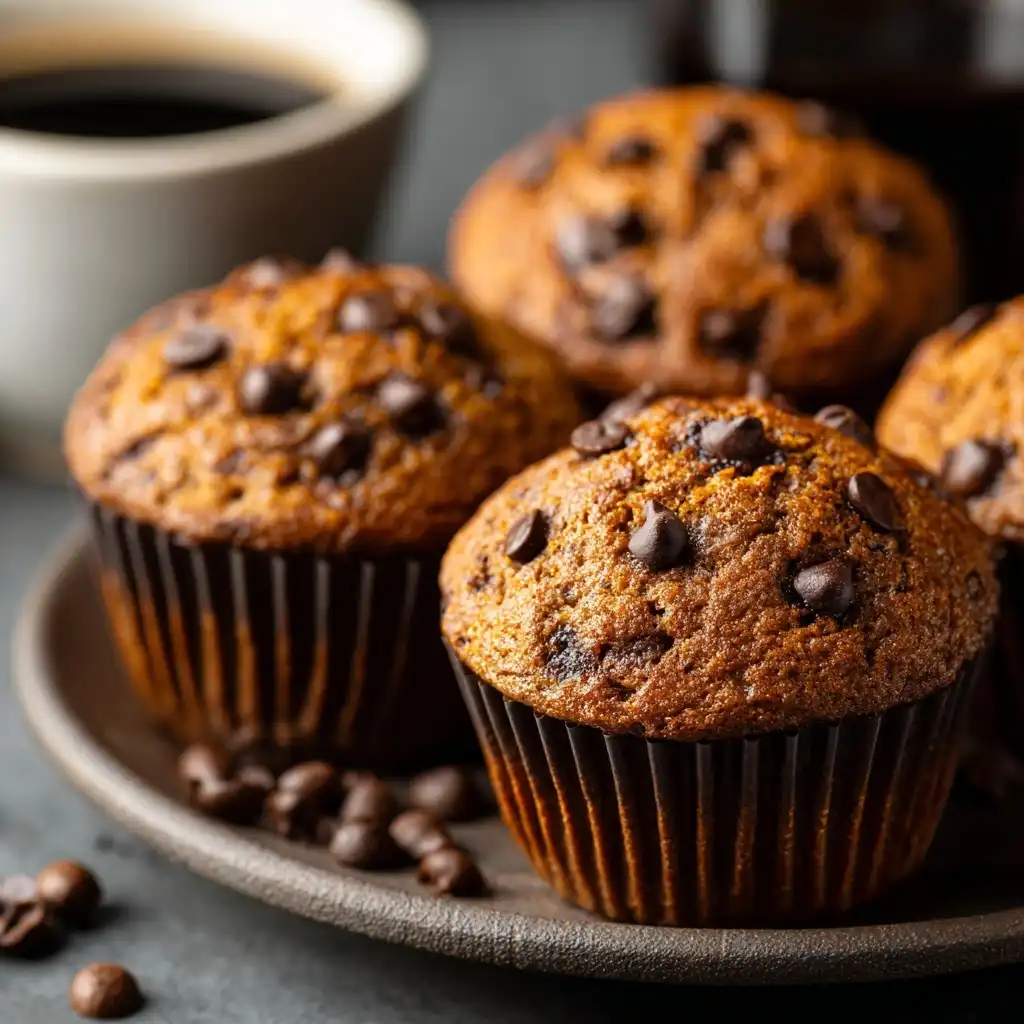
Espresso Chocolate Chip Muffins are the ultimate fusion of bold coffee intensity and rich, melty chocolate—a beloved bakery favorite transformed into an approachable, deeply satisfying homemade treat. These muffins strike a perfect balance: tender, moist crumb with a delicate lift, punctuated by bursts of semi-sweet or dark chocolate and an unmistakable, aromatic espresso depth that lingers without bitterness. Whether enjoyed warm from the oven with a dollop of mascarpone, paired with your morning pour-over, or packed into lunchboxes for an afternoon energy boost, they deliver sophistication in every bite—elegant enough for brunch guests yet humble enough for weekday indulgence.
The History
The evolution of the Espresso Chocolate Chip Muffin is a delicious case study in culinary cross-pollination. While the American muffin—distinct from its British cousin (a type of quick bread)—gained widespread popularity in the early 20th century through standardized recipes and commercial baking powder, the infusion of espresso is far more recent. It emerged prominently in the late 1990s and early 2000s alongside the third-wave coffee movement, as artisanal roasters and specialty cafés began elevating coffee beyond mere caffeine delivery into a nuanced flavor ingredient. Chefs and bakers started experimenting with finely ground espresso powder—not instant coffee granules—as a way to intensify chocolate’s natural bitterness and deepen overall complexity. Simultaneously, premium chocolate chip varieties (like Valrhona Guanaja 70% or Callebaut 60/40) became more accessible to home bakers, encouraging richer formulations. The espresso-chocolate pairing itself draws from centuries-old European traditions—think Italian *caffè mocha* or Viennese *Einspänner*—but its adaptation into a tender, domed muffin reflects distinctly modern sensibilities: less sugar-forward than classic American muffins, more focused on layered flavor, texture contrast, and intentional ingredient sourcing. Today, these muffins appear on menus at acclaimed bakeries from Portland to Paris—and have become a signature item for food bloggers, cookbook authors, and café pop-ups worldwide.
Ingredients Breakdown
Every ingredient in this recipe serves a precise functional and sensory role—no filler, no afterthoughts. Let’s explore them in detail:
- All-Purpose Flour (2½ cups / 315g): Provides essential gluten structure for lift and crumb integrity. We recommend unbleached, soft-wheat flour for optimal tenderness; avoid cake flour (too weak) or bread flour (too chewy).
- Granulated Sugar (¾ cup / 150g): Sweetens, aids browning (Maillard reaction), and tenderizes by interfering with gluten formation. A small portion is reserved for the topping to create a delicate, crackly crust.
- Brown Sugar (¼ cup / 55g, light or dark): Adds moisture retention (thanks to molasses), subtle caramel notes, and enhances chewiness. Dark brown sugar contributes deeper molasses warmth; light offers milder nuance.
- Baking Powder (2 tsp): The primary leavener—double-acting, meaning it releases gas both when mixed with liquid and when heated. Freshness is non-negotiable; test by adding ½ tsp to hot water—if it bubbles vigorously, it’s active.
- Baking Soda (½ tsp): Works synergistically with the acidity in buttermilk and espresso to fine-tune rise and neutralize any harsh alkalinity, yielding a cleaner, more rounded flavor profile.
- Fine Sea Salt (1 tsp): Not just for seasoning—salt heightens sweetness, balances bitterness, and strengthens gluten bonds for better structure. Use finely ground for even distribution.
- Instant Espresso Powder (2 tbsp / 12g): The heart of the recipe. Must be *100% pure instant espresso*—not flavored coffee crystals or generic “instant coffee.” Brands like Medaglia D’Oro, Illy, or Starbucks Via (unsweetened) deliver concentrated, roasted, slightly smoky depth. Dissolve it in the warm buttermilk to fully bloom its oils and aromatics.
- Full-Fat Buttermilk (1 cup / 240ml): Adds tangy brightness, tenderness (acid tenderizes gluten), and moisture. Its lactic acid activates the baking soda while contributing to the muffins’ signature tender-crisp exterior. For best results, use cultured buttermilk—not milk + vinegar substitutes—though the latter works in a pinch.
- Large Eggs (2, room temperature): Bind ingredients, contribute richness and structure via proteins and emulsifying lecithin, and aid in leavening. Room temperature ensures even incorporation and prevents curdling when added to melted butter.
- Unsalted Butter (½ cup / 115g, melted and cooled to 110°F/43°C): Provides unmatched flavor, flakiness in the crumb, and luxurious mouthfeel. Melted (not browned) allows seamless integration; cooling prevents cooking the eggs. Clarified butter may be used for higher smoke point but sacrifices some dairy nuance.
- Pure Vanilla Extract (2 tsp): A high-quality, alcohol-based extract adds floral, creamy top notes that bridge coffee and chocolate—never imitation or vanilla paste here, as heat can make paste overly cloying.
- High-Quality Chocolate Chips or Chunks (1¼ cups / 200g): Opt for 60–70% dark chocolate chips or chopped bars (e.g., Ghirardelli Bittersweet, Scharffen Berger 70%, or Callebaut 60/40). Semi-sweet works beautifully, but avoid milk chocolate—it can seize or become greasy. Mini chips distribute more evenly; standard chunks offer dramatic melty pockets. For gourmet variation, fold in 2 tbsp of cocoa nibs for crunch and bitter-chocolate complexity.
- Optional Topping: Coarse Turbinado Sugar (2 tbsp): Sprinkled just before baking, it creates a delightful textural contrast—sparkling, crunchy, and subtly caramelized.
Step-by-Step Recipe
- Preheat & Prep: Position rack in center of oven. Preheat to 425°F (220°C)—yes, start high! This initial blast encourages dramatic oven spring and tall domes. Line a standard 12-cup muffin tin with parchment paper liners (or grease thoroughly with butter and dust with flour). Do not skip parchment—it ensures clean release and preserves the delicate crumb.
- Bloom the Espresso: In a small heatproof bowl or liquid measuring cup, combine the instant espresso powder and buttermilk. Microwave in 15-second bursts or gently warm on stove until buttermilk is just warm to the touch (~110°F/43°C)—do not boil. Whisk vigorously until espresso is fully dissolved and mixture is smooth and fragrant. Set aside to cool slightly (should remain warm, not hot).
- Dry Ingredients: In a large bowl, whisk together flour, granulated sugar, brown sugar, baking powder, baking soda, and salt until no streaks remain. Ensure thorough blending—especially important for leaveners and salt distribution.
- Wet Ingredients: In a separate medium bowl, whisk the warm espresso-buttermilk mixture until uniform. Add eggs one at a time, whisking well after each addition. Then whisk in melted, cooled butter and vanilla until fully emulsified—no oil separation should occur. The mixture should look cohesive and slightly glossy.
- Combine Gently: Pour the wet ingredients into the dry ingredients. Using a flexible silicone spatula, fold *just until no dry flour remains*. This takes approximately 12–15 strokes. Do not overmix—visible streaks of flour are preferable to a smooth batter. Overmixing develops excess gluten, leading to dense, tunnel-ridden, or rubbery muffins. Batter will be thick, slightly lumpy, and glossy.
- Fold in Chocolate: Add chocolate chips/chunks and fold gently 4–5 times—just enough to disperse evenly. Avoid excessive stirring that could melt or smear the chocolate.
- Portion & Top: Divide batter evenly among 12 lined cups using a large cookie scoop (about ¼ cup per muffin). Fill each liner nearly to the brim—this encourages high, bakery-style domes. Smooth tops lightly with spatula if desired. Sprinkle each generously with turbinado sugar.
- Bake Strategically: Place muffin tin in preheated 425°F oven. Bake for 5 minutes—this critical initial burst sets the outer structure and triggers maximum rise. Without opening the oven door, reduce temperature to 375°F (190°C) and continue baking for 15–18 minutes, or until a toothpick inserted into the center of a center muffin comes out with *moist crumbs* (not wet batter, not completely clean). Total bake time is typically 20–23 minutes. Rotate pan front-to-back halfway through the second stage for even browning.
- Cool with Patience: Remove pan from oven and place on a wire rack. Let muffins cool *in the pan* for exactly 5 minutes—this allows steam to escape and sets the crumb without drying. Then, carefully lift each muffin by the paper liner and transfer to the wire rack to cool completely (about 30 minutes). Resist cutting or eating warm—they’re too fragile and the chocolate is molten. Fully cooled muffins are tender yet sturdy.
Tips
- Measure Flour Correctly: Spoon flour into measuring cup and level with a straight edge—never scoop directly from bag (compacts flour, adding up to 25% extra). Better yet, weigh it (315g) for foolproof consistency.
- Room Temperature Is Key: Cold eggs or buttermilk cause the melted butter to solidify into tiny specks, resulting in uneven texture and poor emulsion. Take ingredients out 60–90 minutes ahead.
- Don’t Skip the High-Heat Start: That first 5 minutes at 425°F is non-negotiable for achieving professional height and a tight, even crumb. Lower temps yield squat, dense muffins.
- Undermix, Then Undermix Again: Stirring past the point of “no dry flour” is the #1 cause of tough muffins. If you see a few tiny flour pockets, leave them—they’ll hydrate during baking.
- Chill the Batter (Optional Pro Tip): For even taller domes and intensified espresso flavor, cover batter and refrigerate for 30–60 minutes before portioning. Cold batter holds shape longer in the oven, delaying spread.
- Rotate, Don’t Open: Opening the oven door before the 5-minute mark risks collapse. Use the timer and rotate only during the lower-temperature phase.
- Test the Center Muffin: Edge muffins bake faster. Always test one from the middle of the pan for accuracy.
- Cool Completely Before Storing: Trapped steam turns muffins soggy. Never seal warm muffins in a container.
- Freeze Like a Pro: Once fully cooled, wrap individually in plastic wrap, then place in a freezer bag. Freeze up to 3 months. Thaw at room temperature or reheat wrapped in foil at 325°F for 8–10 minutes.
Variations and Customizations
This foundational recipe is endlessly adaptable—here’s how to personalize it with confidence:
- Gluten-Free: Substitute 1:1 gluten-free all-purpose flour blend (with xanthan gum included, e.g., King Arthur Measure for Measure or Bob’s Red Mill 1-to-1). Add ½ tsp xanthan gum if your blend doesn’t contain it. Increase buttermilk by 1–2 tbsp for moisture retention.
- Double Chocolate: Whisk ¼ cup (20g) unsweetened Dutch-process cocoa powder into the dry ingredients. Reduce flour by ¼ cup to compensate. Enhances chocolate intensity without overpowering espresso.
- Nutty Delight: Fold in ½ cup toasted walnuts or pecans with the chocolate. Their earthy, buttery notes complement both espresso and dark chocolate beautifully.
- Orange-Espresso: Add 1 tbsp finely grated orange zest to the wet ingredients and substitute 1 tsp orange extract for half the vanilla. Bright citrus lifts the roastiness and cuts richness.
- Vegan: Replace eggs with 2 “flax eggs” (2 tbsp ground flaxseed + 6 tbsp warm water, rested 5 mins); use plant-based butter (e.g., Miyoko’s) and unsweetened almond or soy buttermilk (1 cup plant milk + 1 tbsp lemon juice, rested 5 mins). Ensure espresso powder is vegan-certified.
- Mini Muffins: Portion into a 24-cup mini muffin tin. Bake at 425°F for 4 minutes, then reduce to 375°F for 9–11 minutes total. Perfect for parties or portion control.
- Streusel-Topped: Replace turbinado sugar with a streusel made from ¼ cup flour, ¼ cup brown sugar, 2 tbsp cold butter, ¼ tsp cinnamon, and pinch of salt—rubbed until pea-sized. Press onto batter before baking.
- Espresso Swirl: Reserve 2 tbsp batter. Mix with 1 tsp espresso powder + ½ tsp hot water. Drop spoonfuls onto filled cups and swirl gently with a toothpick for marbled effect.
- Protein Boost: Add 2 scoops (60g) unflavored or chocolate whey protein isolate to dry ingredients. Increase buttermilk by 2 tbsp to maintain hydration.
Health Considerations and Nutritional Value
While undeniably indulgent, these muffins can be thoughtfully integrated into a balanced lifestyle—here’s what you need to know:
- Calorie Context: One standard muffin (approx. 115g) contains ~290–320 calories—comparable to a slice of banana bread or a modest croissant. The majority comes from complex carbs (flour), healthy fats (butter, chocolate), and natural sugars (brown & granulated).
- Espresso Benefits: Pure instant espresso powder delivers antioxidants (chlorogenic acids), polyphenols, and minimal caffeine (~10–15mg per muffin—less than 1 oz of brewed coffee). It supports metabolic function and provides neuroprotective compounds—without added sugar or dairy common in coffee drinks.
- Chocolate’s Superfood Edge: Dark chocolate (70%+) contributes flavanols linked to improved vascular health, reduced inflammation, and enhanced cognitive function. Cocoa nibs add fiber and magnesium.
- Buttermilk Advantage: Rich in probiotics (live cultures), calcium, potassium, and vitamin B12. Its lactic acid improves mineral absorption and supports gut health.
- Refined Sugar Notes: Total added sugar per muffin is ~15–17g—within the FDA’s recommended daily limit of 50g. To reduce further, cut granulated sugar to ⅓ cup and increase brown sugar to ⅓ cup (its molasses adds body without sweetness overload).
- Gluten & Allergen Awareness: Contains wheat, dairy, eggs, and soy (if chocolate has soy lecithin). Naturally nut-free unless customized. Always check labels on chocolate and espresso powder for hidden allergens.
- Not Low-Carb or Keto: With ~38g net carbs per muffin, they’re unsuitable for strict low-carb protocols—but excellent for sustained energy pre-workout or as part of a Mediterranean or flexitarian diet.
- Pairing Wisdom: Serve with Greek yogurt or a small handful of berries to add protein, fiber, and antioxidants—slowing glucose response and enhancing satiety.
Ingredients
- 2½ cups (315g) unbleached all-purpose flour
- ¾ cup (150g) granulated sugar
- ¼ cup (55g) light or dark brown sugar, packed
- 2 tsp aluminum-free baking powder
- ½ tsp baking soda
- 1 tsp fine sea salt
- 2 tbsp (12g) pure instant espresso powder (e.g., Medaglia D’Oro)
- 1 cup (240ml) full-fat cultured buttermilk, room temperature
- 2 large eggs, room temperature
- ½ cup (115g) unsalted butter, melted and cooled to 110°F (43°C)
- 2 tsp pure vanilla extract
- 1¼ cups (200g) high-quality 60–70% dark chocolate chips or chopped chocolate
- 2 tbsp coarse turbinado sugar (for topping, optional)
Directions
- Preheat oven to 425°F (220°C) with rack in center position. Line a 12-cup muffin tin with parchment liners or grease and flour thoroughly.
- In a small bowl, whisk espresso powder into buttermilk until fully dissolved. Set aside to cool slightly (should be warm, not hot).
- In a large bowl, whisk together flour, granulated sugar, brown sugar, baking powder, baking soda, and salt until homogeneous.
- In a medium bowl, whisk the warm espresso-buttermilk mixture, then add eggs one at a time, whisking well after each. Whisk in melted butter and vanilla until smooth and emulsified.
- Pour wet ingredients into dry ingredients. Using a silicone spatula, fold gently just until no dry flour remains—about 12–15 strokes. Do not overmix.
- Fold in chocolate chips with 4–5 gentle strokes.
- Divide batter evenly among 12 prepared cups (fill to top). Sprinkle each with turbinado sugar.
- Bake at 425°F for 5 minutes. Without opening oven, reduce temperature to 375°F (190°C) and bake 15–18 more minutes, rotating pan halfway, until toothpick inserted in center comes out with moist crumbs.
- Cool muffins in pan for 5 minutes, then transfer to wire rack to cool completely (≈30 minutes) before serving or storing.
FAQ
- Can I use regular instant coffee instead of espresso powder?
- Technically yes—but flavor suffers significantly. Regular instant coffee is lighter, more acidic, and lacks the roasted depth and solubility of true espresso powder. If substituting, use 3 tbsp and expect milder, slightly sour notes. For authenticity, seek espresso powder at Italian grocers or online.
- Why did my muffins sink in the middle?
- Sinking usually indicates underbaking (toothpick tested too early), opening the oven too soon during the first 5 minutes, or expired leaveners. Also check oven temperature accuracy with an oven thermometer—many run hot or cold.
- Can I make these ahead for a party?
- Absolutely. Bake the day before, cool completely, and store in an airtight container at room temperature for up to 48 hours. For best texture, refresh in a 325°F oven for 5 minutes before serving. Or freeze as directed and thaw overnight.
- My batter seems too thick—is that normal?
- Yes! This is a deliberately thick, scoopable batter—not pourable like pancake batter. If it’s runny, you likely added too much buttermilk or mis-measured flour. Thick batter is essential for tall, structured domes.
- Can I use brewed espresso instead of powder?
- No. Liquid espresso adds too much water, diluting structure and preventing proper rise. The powder concentrates flavor without altering hydration. Save brewed espresso for drizzling over finished muffins as a glaze!
- Are these suitable for kids?
- Yes—with caveats. Caffeine content is very low (<15mg/muffin), comparable to a square of dark chocolate. However, sensitive children may react. For caffeine-free versions, omit espresso powder and add 1 tsp instant decaf espresso or ½ tsp coffee extract (alcohol-based, heat-volatile).
- How do I prevent chocolate chips from sinking?
- Toss chips in 1 tsp of the measured flour before folding in—this light coating helps them suspend. Also, avoid overmixing after adding them, and don’t let batter sit too long before baking.
- Can I make these in a loaf pan?
- Yes! Pour batter into a greased 9×5-inch loaf pan. Bake at 425°F for 7 minutes, then reduce to 350°F and bake 45–55 minutes, until center tests done. Cool in pan 15 minutes before removing. Slice thickly—it’s decadent!
Summary
Espresso Chocolate Chip Muffins are a masterclass in balance—bold, aromatic espresso deepens and refines rich dark chocolate, while a tender, golden-domed crumb delivers comforting familiarity with sophisticated flair. Baked with precision, respect for ingredient quality, and mindful technique, they transform everyday moments into small, joyful rituals.
Whether you’re a seasoned baker refining your craft or a curious beginner seeking a rewarding first project, this recipe promises consistent, bakery-worthy results—moist, flavorful, and unforgettable—every single time.