Introduction
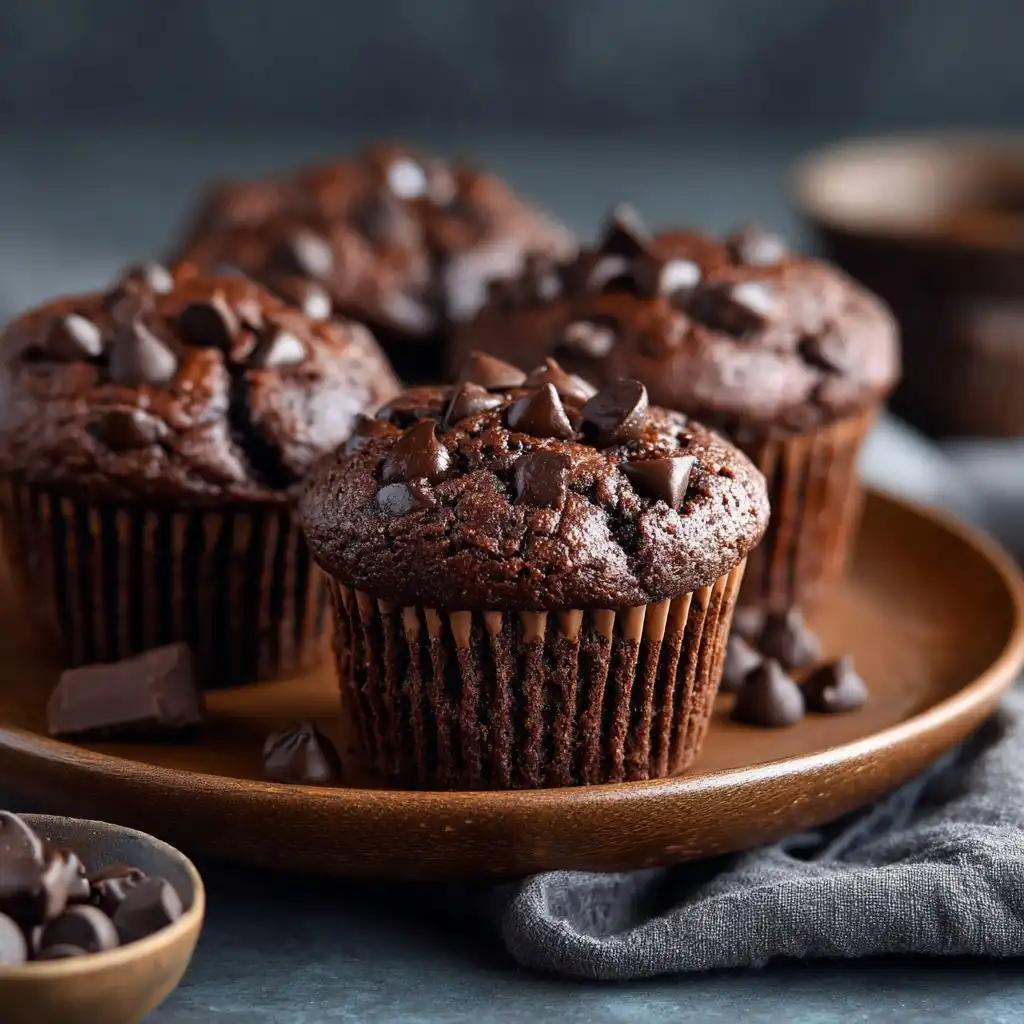
Welcome to the ultimate indulgence—Triple Chocolate Fudge Muffins! These aren’t just muffins; they’re a decadent, moist, deeply chocolatey experience that marries rich cocoa, melty chocolate chips, and velvety fudge swirls into every tender crumb. Whether you’re baking for a special morning treat, a weekend brunch centerpiece, or a crowd-pleasing dessert disguised as breakfast, these muffins deliver luxurious flavor without compromising on texture. With their domed, bakery-style tops, glossy cracked crusts, and molten pockets of fudge, they evoke the nostalgia of artisanal chocolate shops—yet are entirely achievable in your home kitchen. This comprehensive guide goes far beyond a simple recipe: it’s a deep-dive exploration of technique, science, history, customization, and mindful enjoyment—all centered around one irresistible confection.
The History
The muffin’s origins trace back to early 18th-century Britain, where “muffins” referred to soft, yeast-leavened griddle cakes—quite distinct from today’s American-style quick bread muffins. The modern version emerged in the United States during the 19th century, fueled by the advent of chemical leaveners like baking powder (first commercially produced in 1856 by Alfred Bird and later popularized by companies like Rumford and Calumet). As cocoa powder became more widely available following Dutch processing innovations by Coenraad van Houten in 1828—and with the rise of milk chocolate in the late 1800s—chocolate muffins began appearing in regional American cookbooks by the 1920s. However, the *triple chocolate* concept is a relatively modern evolution, gaining traction in the 1990s alongside the gourmet bakery boom and the “more chocolate is always better” cultural shift. Fudge—originally a New England confection dating to the 1880s at Vassar College—was first incorporated into muffins as a marbled swirl in the early 2000s, popularized by food bloggers and café chefs seeking textural contrast and visual drama. Today, Triple Chocolate Fudge Muffins represent a triumphant fusion of three chocolate eras: ancient Mesoamerican cacao traditions, Industrial Revolution cocoa refinement, and contemporary artisanal dessert innovation.
Ingredients Breakdown
Every ingredient in this recipe serves a precise functional and sensory role—no element is arbitrary. Let’s explore them in depth:
- Unsweetened Cocoa Powder (Dutch-Processed): Provides deep, mellow chocolate flavor and rich color without acidity. Dutch-processing neutralizes natural cocoa’s bitterness, allowing smoother integration with dairy and sugar. It also improves solubility and enhances browning reactions (Maillard and caramelization) for a more complex crust.
- Granulated Sugar: Not only sweetens but also tenderizes by interfering with gluten formation, retains moisture via hygroscopic properties, and contributes to crust formation through caramelization. A portion is reserved for the fudge swirl to control its viscosity.
- Brown Sugar (Light or Dark): Adds molasses-derived moisture, subtle caramel notes, and acidity that activates baking soda for optimal lift. Dark brown sugar intensifies fudginess and adds a hint of rum-like complexity.
- All-Purpose Flour: Provides structure via gluten development—but carefully balanced to avoid toughness. Its protein content (~10–12%) yields tender yet cohesive crumb without excessive chew.
- Baking Powder & Baking Soda: A dual-leavening system ensures both immediate lift (soda reacting with acidic brown sugar/cocoa) and sustained oven spring (powder’s double-acting acid). This creates the signature high dome and airy-yet-dense crumb.
- Salt (Fine Sea Salt): Enhances all flavors, suppresses bitterness, and strengthens gluten network subtly—critical for structural integrity amid high fat and sugar.
- Eggs (Large, Room Temperature): Act as emulsifiers, binding fat and water; provide structure via coagulation; add richness and leavening (trapped air expands when heated); and contribute to golden-brown color via Maillard reaction.
- Whole Milk (or Buttermilk Substitute): Adds tenderness, moisture, and subtle tang. Buttermilk (milk + 1 tsp vinegar, rested 5 min) further activates soda and yields even more tender, slightly tangy crumb.
- Vegetable Oil (or Melted Coconut Oil): Ensures unparalleled moistness and shelf stability. Unlike butter, oil remains liquid at room temperature, preventing crumb dryness and delivering consistent fudgy texture.
- Vanilla Extract (Pure, Not Imitation): Contains over 250 aromatic compounds that complement chocolate’s phenolic notes, adding warmth, floral hints, and rounding out sharp edges.
- Mini Semi-Sweet Chocolate Chips: Chosen for size—mini chips disperse evenly, melt partially during baking, and create delightful “chocolate bursts” without overwhelming density. Their lower cocoa butter content prevents excessive greasiness.
- Fudge Swirl Component: Made from melted semi-sweet chocolate, heavy cream, light corn syrup (for gloss and resistance to crystallization), and a pinch of salt. Corn syrup inhibits sugar recrystallization, ensuring a smooth, pliable, non-grainy swirl that stays soft and glossy even after cooling.
Pro Tip: Weighing ingredients (especially flour and cocoa) using a digital kitchen scale ensures reproducible results—volume measurements vary up to 25% depending on scooping method.
Step-by-Step Recipe
- Preheat & Prep: Position oven rack in the center. Preheat oven to 425°F (220°C)—the high initial temperature triggers rapid oven spring for maximum dome height. Line a standard 12-cup muffin tin with parchment liners (or grease thoroughly); set aside. Also prepare a small heatproof bowl for fudge swirl.
- Mix Dry Ingredients: In a large bowl, whisk together 1¾ cups (210g) all-purpose flour, ¾ cup (75g) Dutch-process cocoa powder, 1½ tsp baking powder, ½ tsp baking soda, and 1 tsp fine sea salt until fully homogenized and aerated—this prevents pockets of leavener or salt.
- Cream Wet Base: In a separate medium bowl, vigorously whisk 1 cup (200g) granulated sugar, ½ cup (100g) packed light brown sugar, 2 large eggs, 1 tsp pure vanilla extract, 1 cup (240ml) whole milk (or buttermilk), and ½ cup (120ml) neutral oil (e.g., canola or grapeseed) until emulsified and slightly thickened (~1 minute). The mixture should look uniform and glossy—not separated.
- Combine Wet & Dry: Pour wet mixture into dry ingredients. Using a silicone spatula or wooden spoon, fold gently *just until no dry streaks remain*—approximately 12–15 strokes. Overmixing develops gluten, leading to tunneling and toughness. Batter will be thick, shiny, and slightly lumpy—this is ideal.
- Incorporate Chocolate Chips: Gently fold in 1 cup (175g) mini semi-sweet chocolate chips using 3–4 folds. Avoid overworking; chips should be evenly distributed but not fully dissolved.
- Prepare Fudge Swirl: In a small microwave-safe bowl, combine 4 oz (115g) finely chopped semi-sweet chocolate, ¼ cup (60ml) heavy cream, 1 tbsp (21g) light corn syrup, and ⅛ tsp salt. Microwave in 20-second bursts, stirring between each, until fully melted and smooth (~60–90 sec total). Cool 3 minutes until warm but not hot (about 95–100°F)—too hot will melt batter; too cold will seize.
- Portion & Swirl: Divide batter evenly among 12 lined muffin cups (use a 3-tablespoon scoop for consistency—≈¼ cup per muffin). Top each with 1 tsp cooled fudge. Using a toothpick or skewer, drag gently through center in a figure-eight motion—3–4 passes max. Do *not* over-swirl; aim for visible ribbons, not full incorporation.
- Bake Strategically: Immediately place muffin tin in preheated 425°F oven. Bake for 5 minutes—this “blast bake” sets the exterior and maximizes dome rise. Without opening oven, reduce temperature to 350°F (175°C) and continue baking 15–18 minutes, until a toothpick inserted *near the edge* (not center swirl) comes out with moist crumbs—not wet batter, not clean. Total time: 20–23 minutes.
- Cool with Intention: Remove tin from oven. Let muffins cool *in the pan* for exactly 5 minutes—this allows structure to set and prevents collapse. Then transfer to a wire rack. For best texture and fudge contrast, serve warm (15–30 min post-bake) or fully cooled (2+ hours). Never refrigerate unfrosted muffins—they dry out rapidly.
Tips
- Room-Temperature Eggs & Dairy: Cold eggs cause batter to seize and separate; cold milk inhibits proper emulsification. Let them sit 30 minutes before starting.
- Don’t Skip the 425°F Blast: This step is non-negotiable for professional-grade domes. It creates instant steam expansion before the gluten network fully sets.
- Fudge Temperature Is Critical: Use an instant-read thermometer if unsure. At 95–100°F, fudge swirls beautifully. Above 110°F, it melts into batter; below 85°F, it hardens and tears crumb.
- Undermix, Then Undermix Again: Stirring just until combined preserves air bubbles and prevents dense, gummy centers. Lumps = good. Smooth batter = overmixed.
- Liner Choice Matters: Parchment liners yield cleaner release and prevent sticking better than paper. For ultra-glossy tops, lightly spray liners with non-stick spray before filling.
- Altitude Adjustments: Above 3,000 ft? Increase oven temp by 15–25°F, decrease sugar by 1 tbsp, and add 1–2 tbsp extra milk to counteract drying.
- Batch Consistency Hack: Freeze unused fudge swirl mixture in tablespoon portions on parchment; pop into freezer bag. Thaw 10 min before using for next batch.
- Storage Wisdom: Keep in an airtight container at room temperature up to 3 days. To refresh, warm 10 seconds in microwave. For longer storage, freeze unfrosted muffins up to 3 months—thaw overnight wrapped.
Variations and Customizations
This base recipe is a canvas for creativity—here are rigorously tested adaptations:
- White Chocolate & Raspberry Swirl: Replace fudge with white chocolate ganache (white chocolate + warm cream + pinch of salt); fold in ½ cup fresh or frozen raspberries (tossed in 1 tsp flour to prevent sinking).
- Espresso Double-Chocolate: Add 1 tbsp instant espresso powder to dry ingredients; replace 2 tbsp milk with strong brewed espresso. Enhances chocolate depth without adding bitterness.
- Gluten-Free: Substitute 1:1 gluten-free all-purpose blend (with xanthan gum); add ½ tsp additional xanthan gum if blend lacks it. Increase milk by 1 tbsp. Results match traditional texture closely.
- Vegan: Use flax eggs (2 tbsp ground flax + 6 tbsp water, rested 10 min), almond milk + 1 tsp vinegar (buttermilk substitute), coconut oil (refined for neutrality), and vegan chocolate chips. Fudge swirl becomes coconut cream + vegan chocolate + maple syrup.
- Protein-Packed: Swap ¼ cup flour for unflavored whey or collagen peptides; add 2 tbsp unsweetened cocoa powder for balance. Texture remains moist; protein increases by ~5g per muffin.
- Spiced Mexican Chocolate: Add 1 tsp ground cinnamon, ¼ tsp chipotle powder, and 1/8 tsp ground clove to dry ingredients. Garnish with flaky sea salt and candied pepitas.
- Peppermint Patty: Fold in ½ cup crushed candy canes or peppermint candies; swirl with dark chocolate fudge infused with ¼ tsp peppermint extract.
- Jumbo Bakery Style: Use jumbo muffin tin (6 cups); fill ¾ full. Start at 425°F for 6 min, then reduce to 350°F for 22–26 min. Yields 6 dramatic, café-worthy muffins.
Health Considerations and Nutritional Value
While undeniably indulgent, thoughtful modifications allow for mindful enjoyment. Per standard muffin (1/12th recipe, ~115g):
- Calories: ~320 kcal (base recipe). Reduced to ~260 kcal with ¼ cup less sugar + Greek yogurt substitution for 2 tbsp oil.
- Fat: ~14g total (4.5g saturated). Using avocado oil lowers saturated fat; adding 2 tbsp ground flaxseed introduces heart-healthy omega-3s.
- Carbohydrates: ~46g (32g sugars). Natural sugars come from brown sugar and chocolate; no added syrups beyond corn syrup in fudge (which is minimal and functionally necessary).
- Fiber: ~2.5g (from cocoa and whole wheat option). Boost to 4g+ by substituting ½ cup flour with oat fiber or psyllium husk.
- Protein: ~4g. Easily increased to 7–8g with added egg whites or protein powder.
- Antioxidants: Cocoa is rich in flavanols linked to improved vascular function and cognitive support—especially when minimally processed and unsweetened.
Nutritionist Note: Enjoying one muffin as part of a balanced meal—including protein (e.g., Greek yogurt) and fiber (e.g., berries) mitigates blood sugar spikes. Portion awareness, ingredient quality (organic cocoa, fair-trade chocolate), and frequency—not elimination—are keys to sustainable enjoyment. For those managing diabetes, consult a dietitian before regular consumption; sugar-free versions using erythritol and stevia exist but alter texture and browning significantly.
Ingredients
- 1¾ cups (210g) all-purpose flour
- ¾ cup (75g) Dutch-process unsweetened cocoa powder
- 1½ tsp aluminum-free baking powder
- ½ tsp baking soda
- 1 tsp fine sea salt
- 1 cup (200g) granulated sugar
- ½ cup (100g) packed light brown sugar
- 2 large eggs, room temperature
- 1 tsp pure vanilla extract
- 1 cup (240ml) whole milk or buttermilk (1 cup milk + 1 tsp white vinegar, rested 5 min)
- ½ cup (120ml) neutral oil (canola, grapeseed, or refined coconut oil)
- 1 cup (175g) mini semi-sweet chocolate chips
- For Fudge Swirl:
- 4 oz (115g) semi-sweet chocolate, finely chopped
- ¼ cup (60ml) heavy cream
- 1 tbsp (21g) light corn syrup
- ⅛ tsp fine sea salt
Directions
- Preheat oven to 425°F (220°C) with rack in center. Line 12-cup muffin tin with parchment liners.
- In a large bowl, whisk flour, cocoa powder, baking powder, baking soda, and salt until no lumps remain.
- Pour wet mixture into dry ingredients. Fold with spatula until *just combined*—do not overmix. Batter will be thick and lumpy.
- Gently fold in mini chocolate chips.
- Make fudge swirl: In small microwave-safe bowl, combine chocolate, cream, corn syrup, and salt. Microwave in 20-sec bursts, stirring between, until melted and glossy (60–90 sec). Cool 3 min until 95–100°F.
- Divide batter evenly among liners (≈¼ cup each). Top each with 1 tsp fudge. Swirl gently with toothpick in figure-eight (3–4 passes).
- Bake at 425°F for 5 min. Without opening door, reduce oven to 350°F (175°C). Continue baking 15–18 min until toothpick near edge has moist crumbs.
- Cool in pan 5 min, then transfer to wire rack. Serve warm or cooled.
FAQ
- Can I make these ahead of time?
- Absolutely. Batter (without chips or swirl) can be refrigerated up to 24 hours—stir well before portioning. Baked muffins keep 3 days at room temperature, 1 week refrigerated (though texture dulls), or 3 months frozen (wrap individually in foil + freezer bag).
- Why did my muffins sink in the middle?
- Most common causes: opening oven too early (before 15 min), underbaking (toothpick pulled from center swirl instead of edge), expired leaveners, or overmixing. Always test at edge—and verify baking powder/soda freshness by mixing ½ tsp with hot water: it should bubble vigorously within 30 sec.
- Can I use natural cocoa instead of Dutch-process?
- You can—but adjust leavener. Replace baking powder with 1 tsp baking soda, and omit baking powder. Natural cocoa is acidic and requires soda for proper rise. Flavor will be sharper and lighter in color.
- My fudge swirl disappeared or turned grainy—what went wrong?
- Too-hot fudge melted into batter; too-cold fudge seized or tore crumb. Also, using low-fat cream or skipping corn syrup leads to crystallization. Always use heavy cream and corn syrup for stable swirls.
- How do I get that bakery-style tall dome every time?
- Three keys: 425°F blast bake, filling cups ¾ full (not more), and avoiding overmixing. Also, let batter rest 10 minutes before baking—the gluten relaxes and starches hydrate, yielding taller, more even rise.
- Are these suitable for kids’ lunchboxes?
- Yes—with modifications: reduce sugar by 2 tbsp, use whole wheat pastry flour for added fiber, swap oil for applesauce (½ cup), and omit fudge swirl for simpler chocolate chip version. They’ll still be moist and flavorful!
- Can I bake these as mini muffins?
- Yes! Fill mini muffin tin ⅔ full. Bake at 425°F for 3 min, then 350°F for 8–10 min. Yield: ~36 minis. Perfect for parties or portion control.
- What’s the best way to reheat?
- Wrap in damp paper towel and microwave 10–15 seconds. Or warm in 325°F oven for 5 min on parchment-lined sheet. Restores moisture and re-melts fudge pockets luxuriously.
Summary
Triple Chocolate Fudge Muffins are a masterclass in chocolate harmony—layering unsweetened cocoa’s depth, semi-sweet chips’ melty texture, and hand-swirled fudge’s glossy decadence into a perfectly domed, tender-crumbed muffin achieved through precise temperature staging and gentle mixing.
Backed by culinary history, food science, and flexible customization options—from vegan and gluten-free to protein-enriched and globally spiced—they satisfy both nostalgic cravings and modern dietary needs without sacrificing an ounce of indulgence.