Introduction
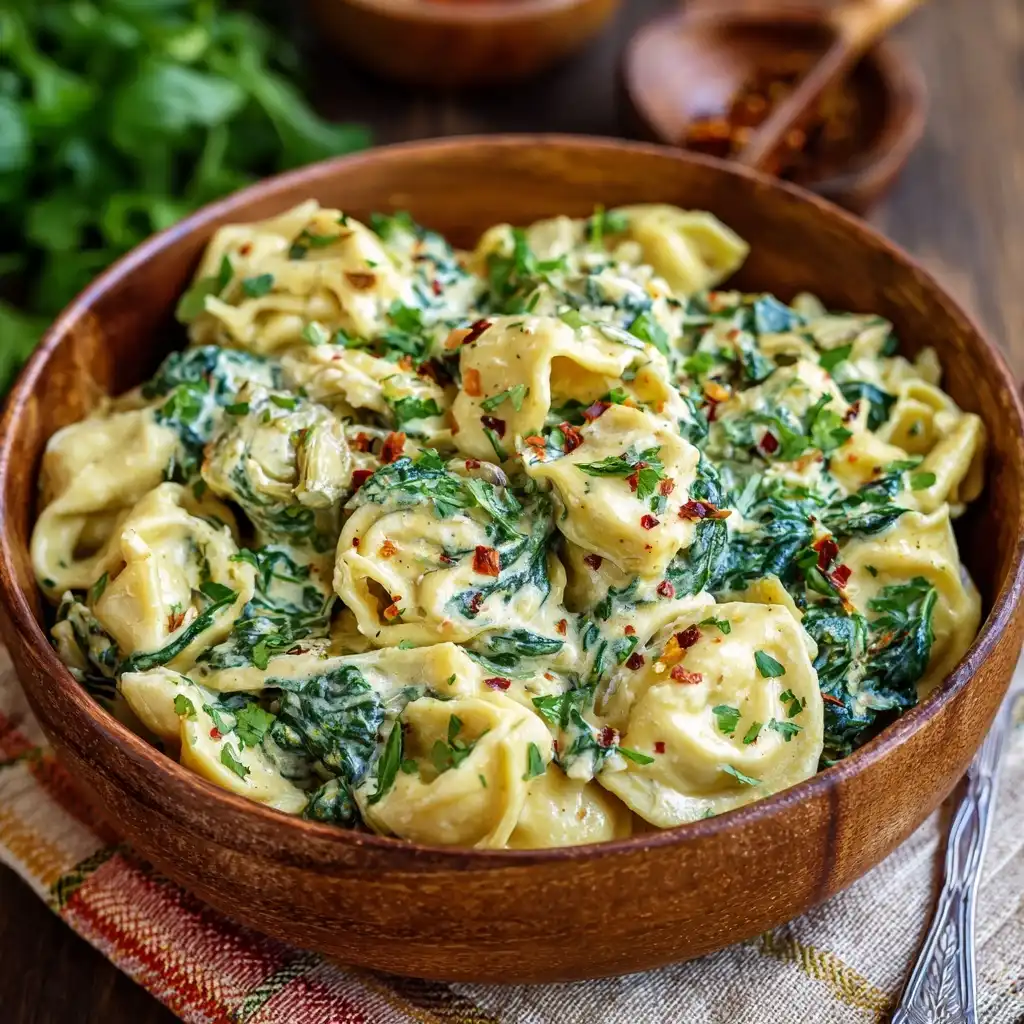
Welcome to a luscious, comforting, and effortlessly elegant dish that bridges the gap between gourmet indulgence and weeknight practicality: Creamy Spinach Artichoke Tortellini. This recipe transforms humble pantry staples—cheesy tortellini, vibrant spinach, and briny artichokes—into a rich, velvety pasta experience reminiscent of upscale bistro fare, yet achievable in under 30 minutes with minimal cleanup. Whether you’re feeding a hungry family after school pickup, impressing guests at a casual dinner party, or treating yourself to a nourishing solo meal, this dish delivers on flavor, texture, and satisfaction without compromise. Its creamy garlic-herb sauce clings luxuriously to tender cheese-filled pasta pockets, while the earthy sweetness of spinach and the bright, tangy pop of marinated artichokes create a dynamic, well-balanced profile that’s both deeply comforting and refreshingly nuanced.
The History
The origins of Creamy Spinach Artichoke Tortellini lie not in a single historical moment, but in the delicious convergence of three beloved culinary traditions. First, tortellini—a ring-shaped stuffed pasta hailing from Emilia-Romagna, Italy—dates back to at least the 13th century, with legends linking its shape to Venus’s navel and its rich fillings (often ricotta, Parmigiano-Reggiano, and nutmeg) to regional abundance and craftsmanship. Second, spinach and artichoke dip, an American appetizer phenomenon born in the 1950s (popularized by restaurants like The Original Soup Man and later cemented by 1980s party culture), brought together creamy dairy, sharp cheeses, and garden-fresh greens in a decadent, crowd-pleasing format. Finally, the rise of refrigerated and frozen gourmet pasta in the 1990s—particularly cheese tortellini brands like Buitoni and Rana—made high-quality, convenient pasta accessible nationwide. Chefs and home cooks alike began experimenting, fusing the dip’s luxurious base with tender pasta as a hearty entrée alternative. By the early 2000s, food blogs and cooking shows elevated this hybrid into a staple, praising its adaptability, speed, and universal appeal. Today, Creamy Spinach Artichoke Tortellini stands as a modern classic—a testament to cross-cultural inspiration, pantry ingenuity, and the timeless allure of creamy, cheesy, vegetable-forward comfort food.
Ingredients Breakdown
Every exceptional dish begins with intentionality—and understanding *why* each ingredient matters elevates both your cooking and your results. Here’s a meticulous breakdown of what makes this recipe sing:
- Fresh Baby Spinach (6–8 oz / ~170–225 g): Chosen for its delicate texture and mild, slightly sweet flavor that wilts evenly without bitterness. Baby spinach retains vibrant color and nutrients better than mature leaves and integrates seamlessly into the sauce without fibrous chew. Organic is recommended for reduced pesticide exposure, especially since it’s consumed raw-to-cooked.
- Marinated Artichoke Hearts (1 (14-oz) jar, drained & roughly chopped): The soul of brightness and acidity. Opt for artichokes packed in olive oil and herbs (not vinegar-heavy brines) for superior depth and richness. The marinade itself—often infused with garlic, oregano, lemon zest, and black pepper—adds layers of complexity; reserve 1–2 tbsp of the liquid to enhance the sauce’s aromatic foundation.
- Cheese Tortellini (16–19 oz / 450–540 g, refrigerated preferred): Refrigerated tortellini offers superior texture—tender yet resilient—compared to dried versions, which can become gummy or overly firm. Look for varieties with whole-milk ricotta, aged Parmigiano-Reggiano, and minimal stabilizers. Gluten-free options (e.g., Bionaturae or Modern Table) work beautifully if needed—just adjust cook time per package instructions.
- Heavy Cream (¾ cup / 180 ml): Non-negotiable for authentic creaminess and emulsification stability. Its high fat content (36–40%) prevents curdling when heated with acid (from artichokes/lemon) and creates a lush, spoon-coating mouthfeel. Half-and-half or whole milk will result in a thinner, less cohesive sauce prone to separation.
- Full-Fat Cream Cheese (4 oz / 113 g, cubed & softened): Adds tangy richness, body, and velvety thickness without heaviness. Softening ensures smooth melting; cold cubes risk creating lumps. Neufchâtel (low-fat cream cheese) is not recommended—it lacks the fat structure needed for proper emulsification.
- Garlic (4 large cloves, minced): Freshly minced—not powdered or jarred—for pungent, aromatic depth. Sautéed gently in olive oil until fragrant (not browned) unlocks allicin compounds responsible for its savory-sweet complexity.
- Shallots (1 large, finely diced): A more refined, subtle allium than onion—adding sweetness, floral notes, and zero harsh bite. Essential for building foundational flavor without overpowering.
- Dry White Wine (¼ cup / 60 ml, e.g., Sauvignon Blanc or Pinot Grigio): Deglazes the pan, lifts caramelized fond, adds brightness and acidity to balance the cream, and evaporates cleanly—leaving only aromatic complexity. Substitute with dry vermouth or additional vegetable broth if avoiding alcohol.
- Grated Parmigiano-Reggiano (½ cup / 45 g, plus extra for garnish): Aged minimum 24 months for crystalline umami, nuttiness, and saltiness that deepens the entire dish. Pre-grated versions contain anti-caking agents (e.g., cellulose) that inhibit melting and create graininess—always grate fresh!
- Fresh Lemon Juice (1½ tbsp / 22 ml) & Zest (from 1 lemon): The critical “lift” that cuts through richness. Juice adds bright acidity; zest contributes volatile citrus oils for aromatic brilliance. Never skip—the dish tastes flat without it.
- Extra-Virgin Olive Oil (2 tbsp): Used for sautéing—choose a mild, fruity, low-acidity variety (e.g., Spanish Arbequina or California Mission) to complement, not compete with, other flavors.
- Sea Salt & Freshly Cracked Black Pepper (to taste): Kosher or flaky sea salt for even distribution; freshly ground Tellicherry or Malabar black pepper for floral heat and essential oils.
- Optional Garnishes: Toasted pine nuts (for crunch & nuttiness), microgreens or arugula (for peppery freshness), roasted cherry tomatoes (for sweet-tart contrast), or a drizzle of high-quality truffle oil (for luxury).
Step-by-Step Recipe
- Prep & Mise en Place (5 minutes): Drain artichokes thoroughly in a fine-mesh strainer, pressing gently with paper towels to remove excess oil/moisture—this prevents sauce dilution. Roughly chop into ½-inch pieces. Wash and spin-dry spinach. Mince garlic, dice shallots, zest and juice lemon, grate Parmigiano-Reggiano, cube and soften cream cheese. Measure all liquids and spices. Having everything ready ensures seamless execution.
- Sauté Aromatics (4–5 minutes): Heat olive oil in a large, heavy-bottomed skillet or Dutch oven (12-inch minimum) over medium-low heat. Add shallots; cook 2 minutes until translucent. Add garlic; stir constantly 60–90 seconds until fragrant—do NOT let brown. Immediately add reserved artichoke marinade (1–2 tbsp); sizzle 30 seconds to bloom herbs.
- Build the Sauce Base (3 minutes): Pour in white wine. Increase heat to medium and simmer vigorously 2 minutes, scraping up browned bits (fond) with a wooden spoon until wine is nearly evaporated and aroma is intensely aromatic.
- Emulsify the Cream (4–5 minutes): Reduce heat to low. Whisk in cream cheese cubes one at a time, allowing each to melt fully before adding the next. Once smooth, gradually whisk in heavy cream in three additions, stirring constantly. Simmer gently (do not boil) 2–3 minutes until slightly thickened to a light coating consistency—like heavy cream, not gravy.
- Incorporate Greens & Cheese (3 minutes): Stir in spinach in batches, allowing each to wilt before adding more. Cook 1–2 minutes total until vibrant green and just tender. Fold in chopped artichokes and ¼ cup Parmigiano-Reggiano. Season with ½ tsp salt and ¼ tsp pepper. Taste and adjust.
- Cook & Combine Pasta (3–4 minutes): While sauce simmers, bring a large pot of well-salted water (2 tbsp kosher salt per 4 quarts) to a rolling boil. Add tortellini and cook 1 minute *less* than package directions (e.g., if 7 mins, cook 6). Reserve ½ cup pasta water, then drain tortellini *thoroughly*. Immediately add hot tortellini to sauce. Gently fold with tongs or silicone spatula for 60–90 seconds to coat and allow starches to bind sauce.
- Finish & Rest (2 minutes): Remove from heat. Stir in lemon juice, lemon zest, remaining ¼ cup Parmigiano-Reggiano, and additional salt/pepper to taste. If sauce is too thick, add reserved pasta water 1 tbsp at a time until silky. Let rest 2 minutes—this allows flavors to marry and sauce to cling perfectly.
- Serve Immediately: Portion into warm bowls. Garnish generously with extra Parmigiano-Reggiano, cracked black pepper, lemon zest, and optional toppings. Serve with crusty bread for scooping every last drop.
Tips
- Don’t Overcook the Tortellini: Undercooking by 1 minute is crucial—it finishes cooking in the hot sauce, preventing mushiness. Overcooked tortellini disintegrates and releases starch that can make the sauce gluey.
- Reserve Pasta Water—Religiously: That starchy, salty liquid is liquid gold. It contains gluten proteins and minerals that act as natural emulsifiers, helping the creamy sauce cling to pasta instead of pooling. Never skip reserving it!
- Low and Slow for Cream Cheese: Melting cream cheese over direct high heat causes separation and graininess. Low heat + constant whisking + gradual cream addition ensures flawless integration.
- Spinach Must Be Dry: Excess water from wet spinach dilutes the sauce, making it thin and bland. Spin-dry thoroughly—even pat with towels.
- Taste Before Final Seasoning: Artichoke marinade, Parmigiano, and tortellini filling all contain salt. Always taste post-combining and adjust incrementally—you can add salt, but you can’t remove it.
- Use a Wide, Heavy Pan: Ensures even heat distribution and maximizes surface area for reducing wine and thickening sauce without scorching.
- Acid is Non-Negotiable: Lemon juice added *off heat* preserves its bright, volatile top notes. Adding it early or boiling it dulls the flavor. Zest provides aromatic lift that juice alone cannot replicate.
- Rest Before Serving: Allowing the dish to sit 2 minutes off heat lets residual heat finish cooking the pasta gently and gives the sauce time to re-emulsify and coat every nook of the tortellini.
- Reheat Gently: If reheating leftovers, do so over low heat with a splash of milk or cream and constant stirring—never microwave uncovered, which causes separation and rubbery pasta.
- Make-Ahead Strategy: Prep aromatics, chop artichokes, and wash/spin spinach up to 24 hours ahead. Store separately in airtight containers in the fridge. Sauce base (steps 1–4) can be made 1 day ahead—cool completely, refrigerate, then gently reheat before adding greens and pasta.
Variations and Customizations
This recipe is a brilliant canvas—adaptable to dietary needs, seasonal produce, pantry constraints, and personal cravings. Explore these inspired twists:
Dietary Adaptations
- Gluten-Free: Use certified GF cheese tortellini (e.g., Simply Nature, Jovial, or Tinkyada). Ensure all sauces, wines, and seasonings are GF-certified (some soy sauces or flavored oils contain hidden wheat).
- Dairy-Free/Vegan: Replace cream cheese with Kite Hill almond-based cream cheese or Miyoko’s cultured version. Swap heavy cream for full-fat coconut milk (light coconut milk lacks fat for emulsification). Use nutritional yeast (3 tbsp) + 1 tsp white miso for umami depth instead of Parmigiano. Add ½ tsp onion powder and ¼ tsp garlic powder for savory lift.
- Lower-Carb/Keto: Substitute tortellini with spiralized zucchini (“zoodles”) or shirataki noodles. Sauté zoodles 2–3 minutes until tender-crisp before adding to sauce. Increase healthy fats—add 1 tbsp butter and 1 tbsp olive oil to sauce.
- High-Protein Boost: Stir in 1 cup shredded rotisserie chicken, cooked shrimp, or pan-seared scallops during the final folding step. For plant-based protein, add ½ cup rinsed white beans (cannellini or navy) or marinated baked tofu cubes.
Flavor & Texture Twists
- Roasted Garlic & Herb: Replace raw garlic with 1 head of roasted garlic (cloves squeezed out). Add 1 tbsp fresh rosemary and 1 tsp thyme with the shallots.
- Smoky Chipotle: Add 1 tsp adobo sauce (from canned chipotles) with the garlic. Garnish with crumbled cotija and pickled red onions.
- Mediterranean Sun-Dried Tomato: Add ⅓ cup chopped oil-packed sun-dried tomatoes (drained) with artichokes. Replace lemon zest with 1 tsp orange zest for brightness.
- Truffle Elegance: Stir in 1 tsp white truffle oil at the finish. Top with shaved black truffle and toasted hazelnuts.
- Spicy Arrabbiata Style: Sauté ½ tsp crushed red pepper flakes with shallots. Finish with fresh basil and a drizzle of Calabrian chili oil.
Seasonal Swaps
- Spring: Swap spinach for baby kale or pea shoots. Add blanched asparagus tips and fresh mint.
- Summer: Incorporate grilled zucchini ribbons and heirloom cherry tomatoes. Use basil-infused olive oil.
- Fall: Add roasted butternut squash cubes and toasted walnuts. Finish with sage brown butter drizzle.
- Winter: Include braised leeks and caramelized fennel. Garnish with pomegranate arils for tart contrast.
Health Considerations and Nutritional Value
Creamy Spinach Artichoke Tortellini balances indulgence with meaningful nutrition—when prepared mindfully. A standard serving (1½ cups) provides approximately:
- Calories: 580–650 kcal (moderate for a main course; energy-dense but satiating)
- Protein: 24–28 g (excellent source—from cheese, eggs in tortellini, and dairy—supports muscle maintenance and prolonged fullness)
- Fat: 32–38 g (primarily unsaturated from olive oil, artichoke marinade, and dairy; includes beneficial CLA from grass-fed dairy options)
- Carbohydrates: 48–54 g (complex carbs from pasta; fiber-rich spinach and artichokes contribute 6–8 g dietary fiber—supporting gut health and stable blood sugar)
- Vitamins & Minerals:
- Vitamin K (110% DV): From spinach—critical for blood clotting and bone metabolism.
- Folate (45% DV): In spinach and artichokes—essential for DNA synthesis and prenatal health.
- Vitamin C (35% DV): Boosted by lemon—supports immunity and iron absorption from greens.
- Calcium (25% DV) & Phosphorus (30% DV): From dairy—synergistic for bone density.
- Iron (18% DV) & Magnesium (22% DV): Plant-based iron (non-heme) enhanced by vitamin C; magnesium aids nerve function and relaxation.
Health-Conscious Tweaks:
- Reduce Sodium: Use low-sodium artichokes (or rinse thoroughly), skip added salt until tasting, and choose unsalted butter if incorporating.
- Boost Fiber: Add 1 tbsp ground flaxseed or chia seeds to sauce off-heat for omega-3s and soluble fiber.
- Heart-Healthy Fats: Replace half the olive oil with avocado oil; use grass-fed dairy for higher omega-3 and conjugated linoleic acid (CLA) content.
- Gut-Friendly Fermentation: Choose naturally fermented artichokes (look for “live cultures” on label) for probiotic benefits.
- Portion Mindfully: Serve with a large side salad (arugula, cucumber, lemon vinaigrette) to increase volume, fiber, and micronutrient diversity without excess calories.
Who Should Modify: Those managing hypertension should monitor sodium sources closely. Individuals with lactose intolerance may tolerate aged cheeses (Parmigiano) and small amounts of cream cheese better than milk—but lactase enzyme supplements or dairy-free swaps offer reliable alternatives. Always consult a registered dietitian for personalized guidance.
Ingredients
- 2 tablespoons extra-virgin olive oil
- 1 large shallot, finely diced (about ½ cup)
- 4 large garlic cloves, minced
- 1–2 tablespoons reserved liquid from marinated artichoke hearts
- ¼ cup dry white wine (e.g., Sauvignon Blanc or Pinot Grigio)
- 4 ounces full-fat cream cheese, cubed and softened to room temperature
- ¾ cup heavy cream (36–40% fat)
- 6–8 ounces fresh baby spinach, washed and thoroughly dried
- 1 (14-ounce) jar marinated artichoke hearts, drained, patted dry, and roughly chopped
- 16–19 ounces refrigerated cheese tortellini (regular or gluten-free)
- ½ cup freshly grated Parmigiano-Reggiano cheese, plus extra for garnish
- 1½ tablespoons fresh lemon juice (from ~1 lemon)
- 1 teaspoon lemon zest (from same lemon)
- Kosher salt and freshly cracked black pepper, to taste
Directions
- Prepare all ingredients as directed in the Ingredients list. Ensure spinach is completely dry and artichokes are well-drained.
- Heat olive oil in a large, heavy-bottomed skillet or Dutch oven over medium-low heat. Add diced shallots and cook for 2 minutes, stirring occasionally, until soft and translucent.
- Add minced garlic and cook for 60–90 seconds, stirring constantly, until fragrant but not browned.
- Pour in reserved artichoke marinade and sizzle for 30 seconds to release aromatic oils.
- Add white wine, increase heat to medium, and simmer vigorously for 2 minutes, scraping up any browned bits from the bottom of the pan, until wine is nearly evaporated.
- Reduce heat to low. Whisk in cream cheese cubes one at a time, allowing each to melt fully before adding the next. Once smooth and uniform, gradually whisk in heavy cream in three separate additions, stirring constantly.
- Continue cooking over low heat for 2–3 minutes, stirring frequently, until sauce thickens slightly to coat the back of a spoon.
- Add baby spinach in batches, stirring until each batch wilts before adding the next. Cook for 1–2 minutes total until vibrant green and tender.
- Fold in chopped artichoke hearts and ¼ cup of the grated Parmigiano-Reggiano. Season with ½ teaspoon salt and ¼ teaspoon black pepper. Taste and adjust seasoning.
- While sauce simmers, bring a large pot of water to a rolling boil. Add 2 tablespoons kosher salt. Add tortellini and cook for 1 minute less than the package’s recommended time.
- Reserve ½ cup of the starchy pasta water, then drain tortellini thoroughly in a colander.
- Immediately add hot, drained tortellini to the skillet with sauce. Gently fold and toss with tongs or a silicone spatula for 60–90 seconds to evenly coat and allow pasta starch to bind the sauce.
- Remove skillet from heat. Stir in lemon juice, lemon zest, remaining ¼ cup Parmigiano-Reggiano, and additional salt and pepper to taste.
- If sauce appears too thick, add reserved pasta water 1 tablespoon at a time until desired silky consistency is reached.
- Let rest off heat for 2 minutes to allow flavors to meld and sauce to settle onto the pasta.
- Serve immediately in warmed bowls, garnished generously with extra Parmigiano-Reggiano, freshly cracked black pepper, lemon zest, and optional toppings such as toasted pine nuts or fresh herbs.
FAQ
- Can I use frozen tortellini?
- Yes—but thaw it first in the refrigerator overnight, then drain well. Frozen tortellini added directly to sauce releases excess water, thinning the sauce and diluting flavor. If cooking from frozen, boil separately as directed, drain thoroughly, and add to sauce at the end.
- Why does my sauce look curdled or grainy?
- This usually happens from overheating cream cheese (causing fat separation) or adding cold dairy to hot sauce. Always soften cream cheese to room temperature, melt over low heat, and incorporate cream gradually. If it occurs, remove from heat, whisk vigorously, and add 1 tsp cold butter or 1 tbsp cold cream cheese to help re-emulsify.
- Can I make this ahead and reheat?
- Absolutely! Prepare sauce (steps 1–9) and store covered in the fridge for up to 3 days. To reheat, gently warm over low heat with 2–3 tbsp milk or cream, stirring constantly. Cook fresh tortellini, drain, and fold in just before serving. Avoid freezing—dairy-based sauces separate upon thawing.
- What’s the best substitute for heavy cream?
- For best texture and stability, full-fat coconut milk is the top non-dairy option. For dairy, use half-and-half *only* if you accept a thinner, less rich sauce—and add 1 tsp cornstarch slurry (1 tsp cornstarch + 1 tbsp cold water) when adding cream to prevent separation.
- My dish tastes bland—what went wrong?
- Blandness typically stems from undersalting (remember: salt enhances all other flavors), skipping lemon (acid brightens and balances), or using pre-grated cheese (which lacks flavor and doesn’t melt smoothly). Always taste after adding lemon and cheese, and adjust salt incrementally.
- Can I add protein like chicken or shrimp?
- Yes! Sear seasoned chicken breast or shrimp separately until just cooked through. Add to the sauce during the final folding step (step 12) to warm through without overcooking. For shredded rotisserie chicken, stir in with the artichokes.
- Is there a way to lighten this dish without sacrificing flavor?
- Yes—substitute half the cream cheese with 2 oz Neufchâtel (reducing fat by ~30%), use whole milk instead of heavy cream (with 1 tsp cornstarch slurry), and increase spinach to 10 oz. Boost umami with 1 tsp white miso paste whisked into the sauce base.
- How do I prevent the tortellini from sticking together?
- Stir tortellini constantly during the first 2 minutes of boiling. After draining, toss immediately with 1 tsp olive oil if not using right away—or better yet, combine directly with hot sauce, where the starch and fat naturally prevent sticking.
- Can I use frozen spinach?
- You can—but thaw completely, then squeeze *aggressively* in a clean kitchen towel to remove *all* moisture. Even 1 tbsp of water will ruin the sauce’s consistency. Fresh spinach is strongly preferred for texture and flavor.
- What wine pairs best with this dish?
- A crisp, high-acid white complements the richness: try Vermentino, Grüner Veltliner, or unoaked Chardonnay. For red lovers, a light-bodied, low-tannin Pinot Noir works surprisingly well—its red fruit notes bridge the artichoke and cheese beautifully.