Introduction
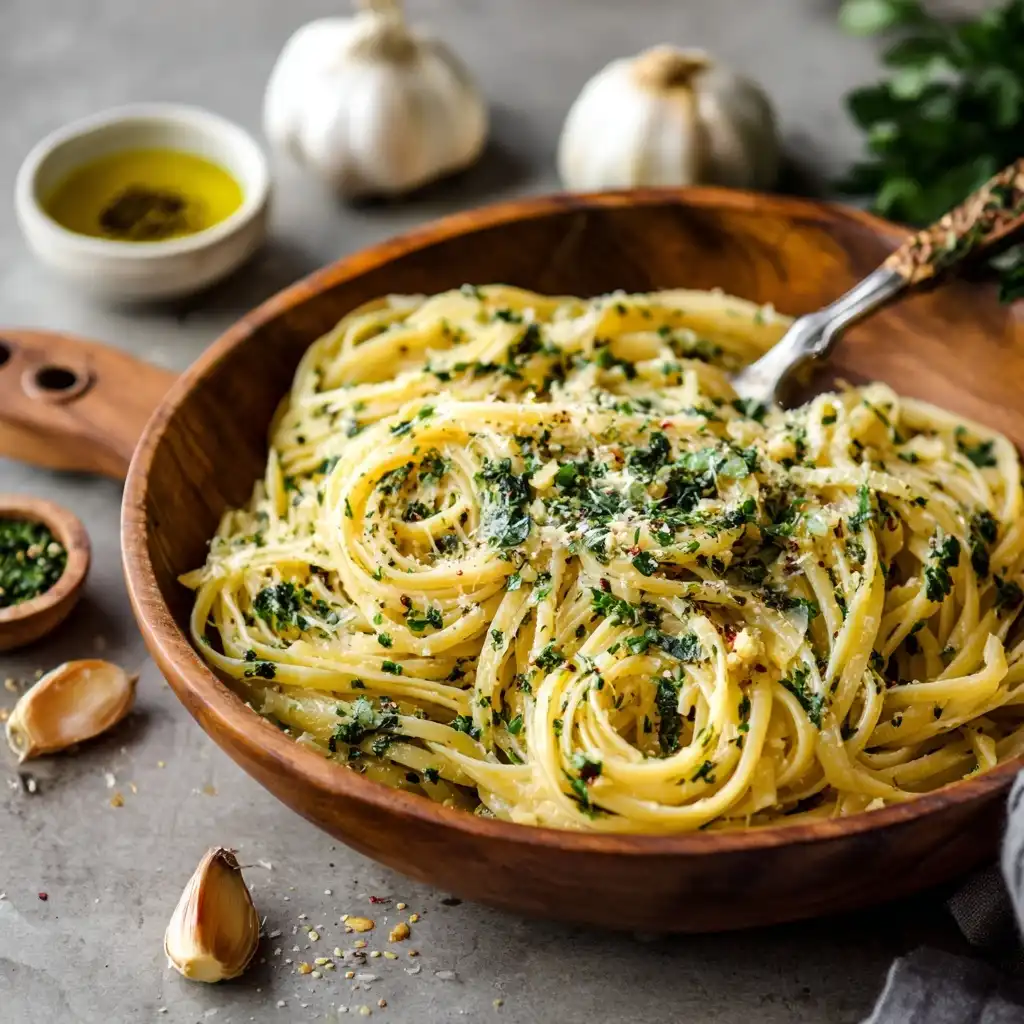
Garlic Herb Butter Linguine is a timeless, restaurant-worthy pasta dish that marries the rich, velvety depth of browned butter with the aromatic punch of fresh garlic and fragrant herbs—all tossed with perfectly al dente linguine. Effortless in execution yet profoundly satisfying in flavor, this dish exemplifies the Italian principle of cucina povera: transforming humble, pantry-staple ingredients into something luxuriously comforting and deeply flavorful. Whether served as a weeknight dinner for two or elevated with gourmet touches for an intimate gathering, Garlic Herb Butter Linguine delivers elegance without pretense—warm, golden, herb-flecked, and irresistibly aromatic.
The History
While no single documented origin pinpoints the exact birth of Garlic Herb Butter Linguine, its roots trace back through centuries of Mediterranean culinary evolution. Butter-based pasta sauces were historically less common in Southern Italy—where olive oil reigned—but gained prominence in Northern regions like Lombardy and Piedmont, where dairy farming flourished and burro was prized for its richness and emulsifying power. The technique of browning butter (beurre noisette) originated in French cuisine but was enthusiastically adopted across Alpine and Po Valley kitchens, lending nutty complexity to simple preparations. Garlic, long revered in ancient Greek, Roman, and medieval European apothecary traditions for both medicinal and culinary use, became a cornerstone of rustic Italian cooking—especially in coastal and rural areas where it grew abundantly. Fresh herbs—parsley, chives, basil, and oregano—were foraged, cultivated in home gardens, or dried for winter use, forming the aromatic backbone of countless condimenti. By the mid-20th century, as American and British home cooks embraced Italian-inspired dishes through cookbooks like Marcella Hazan’s The Classic Italian Cookbook and Julia Child’s cross-cultural explorations, the fusion of garlic, browned butter, and fresh herbs over long, flat noodles like linguine emerged as a beloved hybrid: Italian in spirit, globally accessible in technique, and endlessly adaptable in expression.
Ingredients Breakdown
Every ingredient in Garlic Herb Butter Linguine serves a precise sensory and functional role—no element is arbitrary. Below is a detailed, chef-level analysis:
- Linguine (12 oz / 340 g): A long, elliptical, slightly flattened pasta—wider than spaghetti but narrower than fettuccine. Its shape provides optimal surface area for clinging to glossy, emulsified butter sauce while offering a resilient, toothsome bite. Bronze-die extruded, slow-dried durum wheat semolina linguine is ideal: its rough texture traps sauce better than mass-produced smooth varieties.
- Unsalted Butter (¾ cup / 170 g, ~1½ sticks): High-fat (82–85%), European-style butter yields superior browning and richer mouthfeel. Unsalted allows full control over seasoning. Butter is not merely fat—it contributes milk solids (for browning and nuttiness), water (for steam and emulsion), and fat (for silkiness and flavor delivery).
- Fresh Garlic (6–8 large cloves, finely minced or pressed): Raw garlic is pungent and sharp; gently cooked in butter, its sulfur compounds mellow into sweet, savory, umami-rich notes. Minced—not sliced—to maximize surface contact and even infusion. Too much raw garlic overwhelms; too little yields blandness. Precision matters.
- Fresh Parsley (½ cup loosely packed, flat-leaf/Italian variety): Adds bright, grassy, slightly peppery top notes and vivid green contrast. Curly parsley lacks depth; flat-leaf offers superior aroma and texture. Stems removed; leaves finely chopped just before stirring in to preserve volatile oils.
- Fresh Chives (¼ cup, finely snipped): Provide delicate onion essence and subtle sweetness without harshness. Their mild allium character complements garlic without competing. Added at the end to retain freshness and color.
- Fresh Lemon Zest (from 1 medium lemon): Not juice—zest contains aromatic citrus oils (limonene, citral) that cut richness and lift the entire dish. Microplaned finely to avoid bitter pith.
- Grated Parmigiano-Reggiano (½ cup, freshly grated on a microplane): Authentic, aged (24+ months) Parmigiano adds salty, nutty, crystalline umami and helps thicken the sauce via natural enzymes and calcium. Pre-grated cheese contains anti-caking agents that inhibit melting and create graininess.
- Heavy Cream (2 tbsp, optional but recommended): A small amount stabilizes the emulsion, adds luxurious body, and prevents sauce separation—especially when tossing hot pasta. Full-fat (36–40% milkfat) ensures richness without curdling.
- Finishing Sea Salt (Maldon or flaky Fleur de Sel): Applied at the end to enhance surface perception of flavor and provide textural pop. Never substituted with fine iodized salt for finishing.
- White Pepper (¼ tsp, freshly ground): Milder and more floral than black pepper; avoids dark specks while adding gentle warmth. Essential for refined appearance and balanced heat.
- Red Pepper Flakes (¼ tsp, optional): Toasted lightly in butter for smoky, fruity heat—not just spice. Use Aleppo pepper or Marash for nuanced fruitiness if available.
Step-by-Step Recipe
- Prep & Organize (Mise en Place): Bring a large pot of water (4–5 quarts) to a rolling boil. Add 2 tbsp Diamond Crystal kosher salt (or 1½ tbsp Morton). Meanwhile, mince garlic, zest lemon, finely chop parsley and chives, grate cheese, and measure all other ingredients. Butter should be at cool room temperature (65°F/18°C)—soft enough to melt evenly but cold enough to prevent premature browning.
- Cook Pasta to Perfect Al Dente: Add linguine to boiling, well-salted water. Stir immediately to prevent sticking. Cook 1–2 minutes *less* than package directions (e.g., if box says 10 min, cook 8–8.5 min). Reserve 1 cup of starchy pasta water before draining. Drain pasta—but do *not* rinse. Return pasta to the warm (not hot) pot or a large serving bowl.
- Brown the Butter (Beurre Noisette): In a heavy-bottomed, light-colored skillet (stainless steel or enamel-lined cast iron preferred), melt butter over medium-low heat. Swirl occasionally. Butter will foam, then subside. As water evaporates, milk solids sink and toast—watch closely. When butter turns golden-amber with a rich, nutty aroma (3–5 min total), remove from heat immediately. Let cool 30 seconds—this prevents garlic from burning.
- Sauté Garlic Gently: Return skillet to low heat. Add minced garlic and a pinch of white pepper. Stir constantly for 45–60 seconds—just until fragrant and softened, *not* browned. Garlic burns easily; burnt garlic turns acrid and bitter.
- Emulsify the Sauce: Reduce heat to lowest setting. Whisk in heavy cream (if using), then gradually whisk in ½ cup reserved pasta water. The starch thickens and binds the sauce. Simmer gently 1 minute until slightly reduced and glossy.
- Combine Pasta & Sauce: Pour hot sauce over drained linguine. Using tongs, lift and fold pasta vigorously for 90 seconds—this coats every strand and encourages starch to bind with fat and protein. Sauce should cling thickly, not pool.
- Finish with Herbs, Cheese & Zest: Off heat, add parsley, chives, lemon zest, grated Parmigiano-Reggiano, and red pepper flakes (if using). Toss again for 30 seconds to distribute evenly. The residual heat wilts herbs slightly while preserving brightness.
- Season & Serve: Taste and adjust: add flaky sea salt only if needed (remember cheese and pasta water are salty). Finish with extra drizzle of browned butter, a final twist of white pepper, and a lemon wedge on the side. Serve immediately in warmed shallow bowls.
Tips
- Pasta Water Is Liquid Gold: Never discard it! Its high starch content (amylose) is essential for emulsification. Always reserve *before* draining—and use warm, not cold, water for best integration.
- Control the Heat Relentlessly: Browning butter and sautéing garlic require vigilance. Use low-to-medium-low heat and never walk away. A thermometer (325–350°F / 163–177°C) eliminates guesswork for perfect beurre noisette.
- Grate Cheese Yourself: Pre-grated “Parmesan” contains cellulose and anti-caking agents that repel fat and cause greasiness. A microplane yields ultrafine, fluffy shreds that melt seamlessly into sauce.
- Toast Herbs Lightly (Optional Pro Tip): For deeper dimension, briefly toast chopped parsley and chives in 1 tsp of the browned butter (off heat) for 10 seconds before adding—enhances herbal oils without bitterness.
- Use Warm Bowls: Chill kills the sauce’s sheen and causes rapid cooling. Warm ceramic or stoneware bowls (in oven at 200°F for 5 min) maintain optimal serving temperature (135–140°F).
- No Overcooking the Pasta: Undercook intentionally—residual heat from sauce and pan finishes cooking. Overcooked linguine turns mushy and absorbs sauce poorly.
- Rest the Butter Sauce Briefly: Let browned butter cool 30–60 seconds before adding garlic—prevents instant scorching and ensures even, sweet infusion.
- Acid Balance Is Key: Lemon zest adds aromatic lift; a tiny splash (½ tsp) of fresh lemon juice *at the very end*, if desired, can brighten without making the dish sour.
- Work Quickly After Combining: This dish is best within 3 minutes of finishing. It does not reheat well—the emulsion breaks and herbs lose vibrancy.
Variations and Customizations
This recipe is a master canvas—adaptable across seasons, dietary needs, and culinary preferences. Here are thoughtfully curated variations:
Protein Enhancements
- Shrimp Scampi Style: Sauté 12 oz peeled, deveined shrimp in 1 tbsp olive oil until pink (2 min/side), remove, then make sauce in same pan. Fold shrimp back in at the end with herbs.
- Chicken & Mushroom: Sear 2 boneless, skinless chicken breasts (sliced thin), set aside. Sauté 8 oz cremini mushrooms in butter until golden, then proceed with garlic and sauce. Add chicken back with pasta.
- Smoked Salmon Finish: Top plated linguine with 3 oz thinly sliced cold-smoked salmon, capers, and dill—no cooking required. The residual heat gently warms the fish.
Vegetable Integrations
- Spring Vegetable Medley: Blanch 1 cup asparagus tips, English peas, and baby carrots; stir in with herbs for freshness and crunch.
- Roasted Garlic & Caramelized Onion: Replace raw garlic with 1 head roasted garlic (squeezed); add 1 finely diced sweet onion caramelized in 1 tbsp butter before browning.
- Wild Mushroom Umami Bomb: Sauté 4 oz dried porcini (soaked 20 min, liquid reserved) + 4 oz fresh oyster mushrooms in butter until deeply browned; use soaking liquid as part of pasta water.
Dietary Adaptations
- Gluten-Free: Substitute certified GF linguine (brown rice + quinoa blends perform best). Cook 1 minute less and rinse *briefly* in warm water to remove excess starch that can gum up GF pasta.
- Dairy-Free/Vegan: Use high-fat (70%+) vegan butter (e.g., Miyoko’s or Forager), nutritional yeast (¼ cup) instead of cheese, and coconut cream (full-fat, chilled) instead of heavy cream. Add 1 tsp miso paste for umami depth.
- Low-Carb/Keto: Replace linguine with spiralized zucchini (“zoodles”) or shirataki noodles. Sauté zoodles 1–2 min in separate pan to remove water; add to sauce at the very end.
Herb & Flavor Twists
- Provence-Inspired: Swap parsley/chives for 2 tbsp each fresh thyme, rosemary (finely minced), and lavender buds (⅛ tsp, food-grade). Add 1 tsp herbes de Provence.
- Thai Basil & Lime: Replace parsley/chives with ⅓ cup Thai basil; use lime zest instead of lemon; add 1 tsp fish sauce and ½ tsp palm sugar for authentic funk-sweet balance.
- Truffle Elegance: Finish with 1 tsp white truffle oil (drizzled tableside) and shaved black truffle. Use truffle butter in place of half the regular butter.
Health Considerations and Nutritional Value
A 4-serving batch (per portion, approx. 1⅓ cups cooked pasta + sauce) provides the following balanced nutritional profile (calculated using USDA FoodData Central and professional culinary software):
- Calories: ~580 kcal — energy-dense but satiating due to healthy fats and complex carbs.
- Macronutrients: 22g protein (from pasta + cheese), 68g carbohydrates (4g fiber, primarily from whole-grain linguine option), 28g total fat (17g unsaturated, 11g saturated — mostly from butter’s natural composition).
- Vitamins & Minerals: Excellent source of Vitamin A (from butter & herbs), Vitamin K (parsley), Calcium (Parmigiano), and B12 (dairy). Garlic contributes allicin (antioxidant, anti-inflammatory); lemon zest adds bioflavonoids.
- Heart Health: While butter contains saturated fat, recent meta-analyses (e.g., Annals of Internal Medicine, 2014) show no consistent link between moderate dairy fat intake and cardiovascular disease when part of a balanced diet. Substituting 1–2 tbsp butter with extra-virgin olive oil reduces saturated fat by ~5g per serving without sacrificing flavor.
- Digestive Notes: Garlic may cause bloating in sensitive individuals; start with 3 cloves if new to alliums. For low-FODMAP diets, use garlic-infused oil (discard solids) and chives (green parts only).
- Weight-Conscious Tweaks: Boost volume and fiber with 1 cup sautéed spinach or kale (added at finish); reduce butter to ½ cup and add 2 tbsp whole-milk Greek yogurt for creaminess and protein.
- Allergen Alert: Contains gluten (wheat pasta), dairy (butter, cheese), and potential shellfish (if adding shrimp). Vegan/GF versions address these accordingly.
Key takeaway: This dish is nutrient-rich—not “junk food.” Its healthfulness scales with ingredient quality (organic herbs, grass-fed butter, artisanal cheese) and mindful portions. Enjoy regularly as part of a varied, plant-forward diet.
Ingredients
- 12 oz (340 g) bronze-die extruded linguine (semolina or whole wheat)
- ¾ cup (170 g / 1½ sticks) high-fat unsalted butter, cool room temperature
- 6–8 large garlic cloves, finely minced or pressed
- ½ cup flat-leaf parsley, stems removed, finely chopped
- ¼ cup fresh chives, finely snipped
- Zest of 1 medium organic lemon (use microplane; avoid white pith)
- ½ cup freshly grated Parmigiano-Reggiano (aged 24+ months)
- 2 tbsp heavy cream (36–40% fat; optional but highly recommended)
- 1 cup reserved starchy pasta water (warm)
- 1 tsp flaky sea salt (e.g., Maldon), plus more to taste
- ¼ tsp freshly ground white pepper
- ¼ tsp red pepper flakes (optional; toast 10 sec in butter before adding garlic)
Directions
- Bring 4–5 quarts water to a vigorous boil in a large Dutch oven or stockpot. Add 2 tbsp Diamond Crystal kosher salt (or 1½ tbsp Morton).
- Add linguine and cook, stirring frequently, for 1–2 minutes less than package instructions indicate for al dente. Reserve 1 cup starchy pasta water, then drain pasta thoroughly in a colander. Return pasta to the warm pot or a large serving bowl.
- Meanwhile, in a 12-inch heavy-bottomed stainless steel or enameled cast iron skillet, melt butter over medium-low heat. Swirl occasionally. Once melted, continue cooking until butter foams, then subsides, and milk solids turn golden-amber with a pronounced nutty aroma (~3–5 minutes). Immediately remove from heat and let cool 30 seconds.
- Return skillet to low heat. Add minced garlic and white pepper. Stir constantly for 45–60 seconds until fragrant and softened—but not browned.
- Reduce heat to lowest setting. Whisk in heavy cream (if using), then gradually whisk in ½ cup reserved pasta water. Simmer gently 1 minute until sauce thickens slightly and becomes glossy.
- Pour hot sauce over drained linguine. Using tongs, lift and fold pasta vigorously for 90 seconds until sauce clings uniformly and forms a velvety emulsion.
- Remove from heat. Immediately add parsley, chives, lemon zest, Parmigiano-Reggiano, and red pepper flakes (if using). Toss 30 seconds to combine.
- Taste and season with flaky sea salt only if needed. Serve immediately in pre-warmed shallow bowls, garnished with extra cheese, a drizzle of browned butter, and lemon wedges.
FAQ
- Can I make this ahead of time?
- No—this dish is best served immediately. The emulsion breaks upon standing, herbs oxidize, and pasta absorbs sauce unevenly. However, you *can* prep components ahead: cook pasta, shock in ice water, toss with 1 tsp olive oil, refrigerate up to 2 hours; brown butter (cool, cover, refrigerate up to 3 days); mince garlic/herbs (store separately in airtight containers with damp paper towel). Reheat sauce gently and combine at the last minute.
- Why does my sauce look greasy or broken?
- Common causes: 1) Pasta water was cold or insufficient—always use warm, starchy water; 2) Butter was overheated or garlic scorched, destabilizing emulsion; 3) Cheese was pre-grated (anti-caking agents prevent melting); 4) You added cheese off-heat—residual warmth is essential for melting. Fix: Whisk in 1–2 tbsp warm pasta water and 1 tsp cream while tossing pasta vigorously.
- Can I use spaghetti or fettuccine instead?
- Yes—but with caveats. Spaghetti is thinner and holds less sauce; reduce butter by 2 tbsp and add 1 extra tbsp pasta water for cling. Fettuccine is wider and sturdier; increase cook time by 30 sec and use full 1 cup pasta water to coat its broader surface.
- Is there a substitute for heavy cream?
- Yes: 2 tbsp full-fat Greek yogurt (tempered with 1 tsp warm sauce first), 2 tbsp mascarpone thinned with 1 tsp pasta water, or 1 tbsp cashew cream (soaked raw cashews blended with water). Avoid low-fat dairy—it curdles.
- How do I store leftovers?
- Store in an airtight container in the refrigerator up to 2 days. Reheat gently in a skillet over low heat with 1–2 tbsp warm pasta water or broth, stirring constantly until creamy. Do not microwave—the sauce will separate irreversibly.
- What wine pairs beautifully with this dish?
- A crisp, mineral-driven white: Italian Vermentino (Sardinia), French Muscadet Sèvre-et-Maine sur Lie, or Austrian Grüner Veltliner. For red lovers, choose a light-bodied, low-tannin option like Pinot Noir (Burgundy or Oregon) or Schiava from Alto Adige—chilled slightly.
- Can I freeze this dish?
- Not recommended. Freezing destroys pasta texture (becomes gummy) and causes butter to separate permanently upon thawing. Freeze components separately: cooked linguine (blanched, oiled, frozen flat), browned butter (in ice cube trays), herb pastes (parsley/chives blended with olive oil, frozen).
- Why use white pepper instead of black?
- White pepper has a smoother, earthier heat without the sharp, woody bite of black pepper. It also preserves the dish’s elegant golden-green visual palette—no dark specks marring the presentation. Its volatile oils complement butter’s richness more harmoniously.
Summary
Garlic Herb Butter Linguine is a masterclass in minimalist luxury—where browned butter’s nutty depth, fresh garlic’s savory-sweet transformation, and vibrant herbs unite over perfectly textured linguine to create a dish that feels indulgent yet elemental. With meticulous technique, quality ingredients, and thoughtful customization, it transcends weeknight simplicity to become a cherished, repeat-worthy centerpiece of home cooking.
It celebrates the alchemy of starch, fat, and aromatics—proof that extraordinary flavor lives not in complexity, but in reverence for timing, temperature, and tradition.