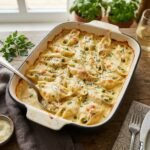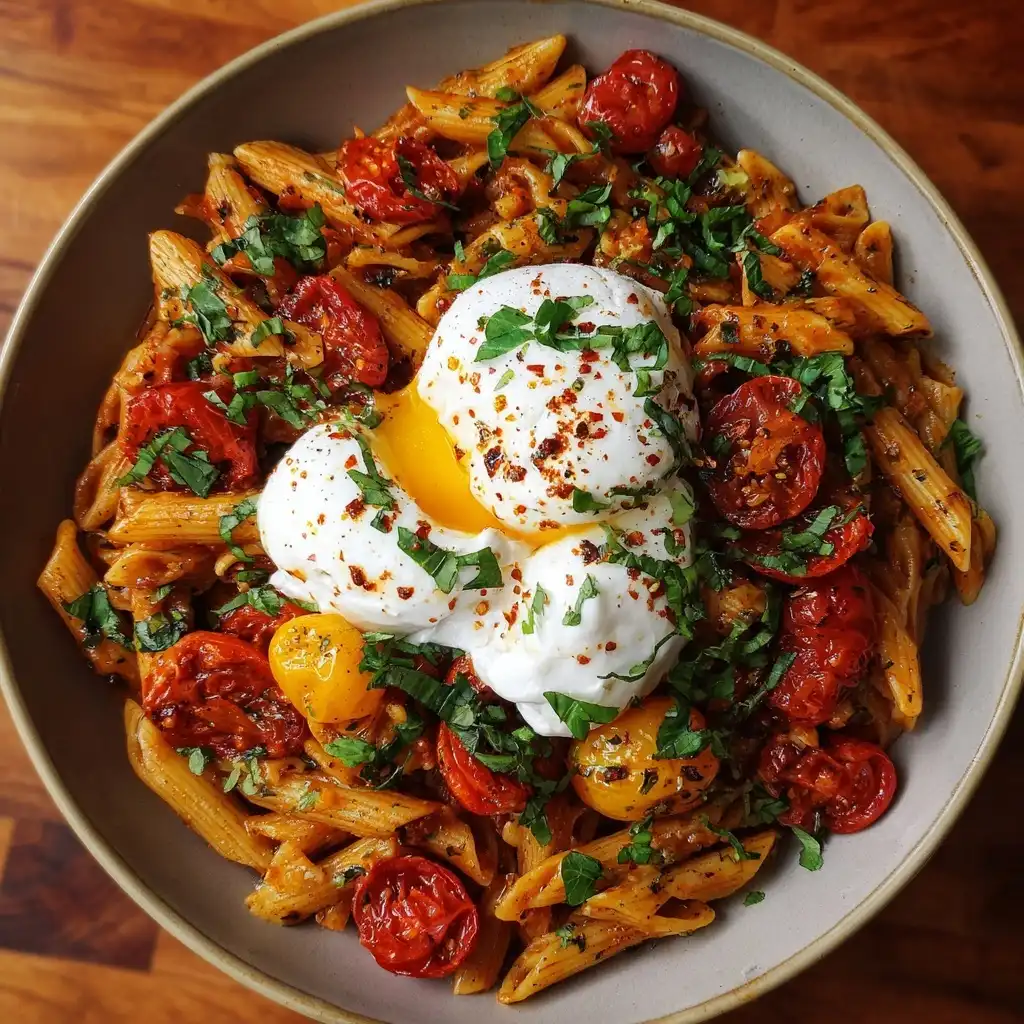
Introduction
Tomato Burrata Pasta is a celebration of simplicity, seasonality, and luxurious texture—a dish that captures the essence of Italian summer in every bite. At its heart lies the vibrant sweetness of ripe, sun-kissed tomatoes, harmonized with the cloud-like richness of fresh burrata cheese, all tossed gently with al dente pasta, fragrant basil, and a bright, emulsified olive oil–tomato dressing. Unlike heavy cream-based pastas or overly complicated preparations, this recipe honors minimalism: it relies on peak-quality ingredients, thoughtful technique, and restrained seasoning to let each element shine. Whether served as a light lunch on a warm afternoon, a stunning starter at an elegant dinner party, or a weeknight meal elevated by just a few artisanal touches, Tomato Burrata Pasta embodies the philosophy that the best dishes are not made—but revealed.
The History
While “Tomato Burrata Pasta” as a named dish is a relatively modern culinary creation—gaining widespread popularity in food media and upscale trattorias from the mid-2010s onward—its roots run deep in the agricultural and gastronomic traditions of Southern Italy, particularly Puglia and Campania. Tomatoes, introduced to Europe from the Americas in the 16th century, were initially met with suspicion but eventually became foundational to Italian cuisine after centuries of acclimatization—especially in the volcanic soils of San Marzano and the sun-drenched plains near Bari. Burrata, invented in the early 20th century (circa 1920) by Lorenzo Bianchino in the town of Andria, was originally a clever way for cheesemakers to repurpose leftover mozzarella curds and cream. The resulting pouch of tender mozzarella stracciatella wrapped in fresh mozzarella dough quickly became a regional treasure, prized for its luscious, custard-like interior and delicate, milky sweetness. For decades, burrata remained a local secret—served alongside ripe figs, drizzled with olive oil, or tucked into panini—until chefs like Massimo Bottura and later, American restaurateurs such as Missy Robbins (Misi, NYC) and Chef Matthew Hyland (Una Pizza, Brooklyn) began showcasing it in composed pasta dishes. The fusion of juicy heirloom tomatoes and burrata over pasta likely emerged organically from home cooks in Salento who combined what was abundant—summer tomatoes, orecchiette or cavatelli, extra-virgin olive oil, and freshly made burrata—and has since evolved into a globally beloved template, continually reinterpreted across continents while staying true to its rustic soul.
Ingredients Breakdown
Every ingredient in Tomato Burrata Pasta plays a deliberate role—not merely as flavor carriers but as textural counterpoints and aromatic anchors. Understanding their purpose empowers confident customization and elevates execution:
- Fresh, In-Season Tomatoes (1½–2 lbs / 700–900 g): Preferably heirloom varieties (Brandywine, Cherokee Purple, Green Zebra) or vine-ripened San Marzano, Campari, or Beefsteak. Their sugar-acid balance, juiciness, and aromatic complexity form the sauce’s backbone. Underripe or hothouse tomatoes lack depth and release excess water, diluting flavor and compromising texture.
- Burrata (1 large or 2 small, ~8–10 oz / 225–280 g): Must be ultra-fresh—ideally purchased the same day—or at most, one day prior. Look for plump, taut, slightly glossy pouches with no discoloration or sour odor. Authentic burrata contains *stracciatella* (shreds of mozzarella soaked in clotted cream) encased in a delicate mozzarella shell. Avoid pre-shredded “burrita” or burrata-style imitations made with gums or stabilizers—they lack the ethereal mouthfeel and clean dairy finish.
- Pasta (12 oz / 340 g): Short, ridged shapes with surface area to cradle sauce: casarecce, campanelle, orecchiette, or gemelli are ideal. Spaghetti or linguine work in a more streamlined version but offer less structural synergy with chunky tomatoes and creamy burrata. Use bronze-die extruded dried pasta or fresh egg pasta for superior sauce adhesion.
- Extra-Virgin Olive Oil (¼–⅓ cup / 60–80 ml): A high-quality, fruity, medium-to-low bitterness oil—preferably from Puglia (Ogliarola, Coratina) or Sicily (Nocellara del Belice). This isn’t just fat—it’s an aromatic catalyst, carrying volatile tomato esters and amplifying burrata’s creaminess. Reserve 1 tbsp for finishing.
- Fresh Basil (1 generous cup, leaves only, packed): Genovese basil preferred—sweet, peppery, with clove-anise top notes. Tear by hand (not chop) to avoid bruising and oxidation; add at the very end to preserve aroma and vibrancy.
- Garlic (1 small clove, finely grated or microplaned): Raw garlic adds pungent brightness, but heat transforms it. For subtlety, lightly crush and infuse in warm oil, then remove before mixing. Never sauté until browned—it turns bitter.
- Red Wine Vinegar or Sherry Vinegar (1 tsp): A tiny amount balances acidity without sharpness. Avoid distilled white vinegar—it lacks nuance and can overpower.
- Flaky Sea Salt (e.g., Maldon or Fleur de Sel) and Freshly Cracked Black Pepper: Salt enhances sweetness and draws out tomato juices; flaky salt provides bursts of salinity. Coarsely ground pepper adds warmth and volatile oils—never pre-ground.
- Optional Enhancements: A splash of tomato passata (strained, uncooked tomato purée) for body; a pinch of dried oregano (Calabrian preferred); toasted breadcrumbs (*mollica*) for crunch; a few drops of aged balsamic glaze for gloss and sweet-tart depth.
Step-by-Step Recipe
- Prepare the Tomatoes: Core and dice tomatoes into ½-inch pieces. Place in a fine-mesh sieve over a bowl; sprinkle lightly with ¼ tsp flaky salt and toss gently. Let drain 15–20 minutes to remove excess water (critical for concentrated flavor and preventing a watery dish). Reserve the fragrant tomato liquid—do not discard!
- Make the Dressing Base: In a large serving bowl, whisk together the drained tomato liquid (about ¼ cup), extra-virgin olive oil, grated garlic, red wine vinegar, ½ tsp flaky salt, and several grinds of black pepper. Whisk vigorously for 30 seconds until emulsified and slightly thickened. Taste and adjust—should taste bright, round, and savory—not sharp or oily.
- Cook the Pasta: Bring 5–6 quarts of water to a rolling boil. Add 2 tbsp kosher salt (it should taste like mild seawater). Add pasta and cook 1–2 minutes *less* than package directions for al dente. Reserve 1 cup of starchy pasta water before draining.
- Combine Hot Pasta & Dressing: Immediately transfer hot, drained pasta to the bowl with dressing. Toss vigorously for 1 minute—this allows the starch to bind oil and tomato liquid into a silky, clingy coating. Gradually add reserved pasta water, 1 tbsp at a time, until sauce coats each strand evenly (usually 3–4 tbsp needed).
- Integrate Tomatoes & Finish: Gently fold in the drained, diced tomatoes and half the torn basil. Let rest 2 minutes—this allows residual heat to soften tomatoes slightly without cooking them. Taste and adjust salt/pepper.
- Add Burrata: Using clean hands or two spoons, tear burrata into generous 1-inch chunks (or gently halve whole burrata). Nestle pieces into the warm pasta—do not stir vigorously. The heat will gently melt the outer layer while preserving the cool, creamy center.
- Final Garnish & Serve: Drizzle with remaining 1 tbsp olive oil. Scatter remaining basil leaves, a final flourish of flaky salt, and several turns of black pepper. Optional: a few drops of balsamic glaze or a spoonful of toasted breadcrumbs. Serve immediately—in warmed shallow bowls—to preserve temperature contrast and texture integrity.
Tips
- Temperature Contrast Is Key: Burrata should be cool (not cold) when added—remove from fridge 10 minutes before use. Serving pasta piping hot against cool, creamy burrata creates an unforgettable sensory experience.
- Never Overmix After Adding Burrata: Stirring aggressively breaks down the delicate structure, causing the stracciatella to disperse and “muddy” the dish. Fold gently once, then let diners break into it at the table.
- Use Pasta Water Strategically: Its starch content is irreplaceable for emulsification. Add it gradually while tossing hot pasta—the sauce should glisten and coat, not pool or slide off.
- Salt Tomatoes Early, But Don’t Rush: Salting draws out water and intensifies flavor, but over-draining (>30 min) can make tomatoes mealy. Monitor closely.
- Choose Your Acid Wisely: If tomatoes are exceptionally sweet, skip vinegar entirely and rely on their natural acidity. If they’re underripe or bland, increase vinegar to 1½ tsp—but always taste first.
- Respect the Burrata’s Integrity: Do not pre-cut or marinate burrata in oil or acid—it will weep and lose its signature silkiness. Always add whole or gently torn at the last possible moment.
- Warm Your Serving Bowl: Rinse with hot water or place in a low oven (200°F) for 5 minutes before assembling. Prevents rapid cooling of pasta and premature burrata melt.
- Work Quickly, But Mindfully: From draining pasta to serving should take under 5 minutes. Have all components prepped (mise en place) before boiling water—the rhythm is everything.
Variations and Customizations
This recipe is inherently adaptable—designed to reflect your pantry, season, and mood—without sacrificing its core identity. Here are thoughtfully developed variations, each preserving balance and intentionality:
- Herb-Forward Summer Version: Replace half the basil with torn mint and chives; add 1 tbsp lemon zest and 1 tsp lemon juice to dressing. Ideal with cherry tomatoes and trofie pasta.
- Umami-Rich “Pugliese” Style: Sauté 2 tbsp chopped shallots and 1 anchovy fillet (mashed to paste) in 1 tbsp olive oil until fragrant but not browned. Cool slightly, then whisk into dressing. Top with crushed Calabrian chiles and grilled eggplant ribbons.
- Grilled Vegetable Integration: Add 1 cup charred zucchini ribbons, blistered shishito peppers, or smoky grilled corn kernels. Toss with pasta *before* adding tomatoes to prevent sogginess.
- Seafood Accent (Non-Traditional but Inspired): Fold in ½ lb seared scallops or chilled poached shrimp *after* tomatoes but *before* burrata. Finish with lemon zest and dill instead of basil.
- Vegan Adaptation (Thoughtfully Executed): Substitute burrata with house-made cashew-cultured “burrata” (blanched cashews, coconut cream, lemon juice, probiotic powder, agar for set) or high-fat almond ricotta. Boost umami with sun-dried tomato paste and white miso (¼ tsp) in dressing. Garnish with toasted pine nuts and preserved lemon.
- Winter Twist (Off-Season Intelligence): Use roasted grape tomatoes (tossed with olive oil, thyme, salt, roasted at 425°F for 20 min until blistered), blended with a spoonful of tomato confit and reduced balsamic. Pair with pappardelle and aged pecorino instead of burrata.
- Pasta-Free “Burrata Board” Interpretation: Arrange heirloom tomato slices, burrata halves, basil, olive oil, and flaky salt on a wooden board. Serve alongside grilled bread rubbed with garlic and grilled vegetables—transforming the concept into an antipasto centerpiece.
- Spice-Infused Modernist Take: Infuse olive oil with crushed pink peppercorns and star anise (gently warmed, then cooled and strained). Use in dressing. Garnish with edible flowers and micro-basil.
Health Considerations and Nutritional Value
Tomato Burrata Pasta, when prepared mindfully, offers a nutritionally synergistic and surprisingly balanced meal—far exceeding the perception of a “rich” or “indulgent” dish. A standard serving (12 oz pasta + 1 large burrata + 2 cups tomatoes + 3 tbsp EVOO + herbs) delivers approximately:
- Calories: ~780–850 kcal (moderate for a main course; highly satiating due to fat-protein-fiber combo)
- Protein: ~28–32 g (from pasta, burrata’s whey and casein, and trace amounts in tomatoes)
- Healthy Fats: ~42–48 g (predominantly monounsaturated fats from EVOO and burrata’s dairy fat—supportive of cardiovascular health and nutrient absorption)
- Dietary Fiber: ~6–8 g (from whole-grain or legume-based pasta options; even semolina pasta provides 3–4 g per serving)
- Lycopene: Up to 15–20 mg (bioavailable lycopene increases significantly when tomatoes are paired with fat—EVOO here boosts absorption by 2–4x versus raw tomatoes alone)
- Vitamin C & K, Potassium, Calcium: Tomatoes contribute vitamin C and potassium; burrata provides bioavailable calcium and vitamin K2 (from fermentation); basil adds vitamin K and antioxidants like eugenol.
Considerations for Dietary Needs:
- Gluten Sensitivity: Easily adapted using certified gluten-free pasta (brown rice, lentil, or chickpea-based). Note: GF pasta often requires shorter cooking and absorbs sauce differently—adjust pasta water accordingly.
- Lactose Intolerance: Burrata contains minimal lactose (<0.5 g per serving) due to fermentation and straining. Most lactose-intolerant individuals tolerate it well. For strict avoidance, see vegan adaptation above.
- Lower-Fat Modifications: Reduce EVOO to 2 tbsp and supplement with 2 tbsp tomato water or vegetable broth for silkiness. Use part-skim burrata (though flavor and texture diminish noticeably).
- Sodium Awareness: Naturally low in sodium (<350 mg/serving without added salt). Control intake by omitting added salt during cooking and relying on finishing flaky salt to taste.
- Glycemic Impact: Moderate—pasta’s resistant starch (especially when cooled slightly) and fat/protein from burrata slow glucose absorption. Opt for whole-grain or legume pasta to further lower glycemic load.
Importantly, this dish exemplifies the Mediterranean dietary pattern: plant-forward, fat-sourced from whole foods, minimally processed, and centered on pleasure-driven eating—a model consistently associated with longevity, reduced inflammation, and metabolic resilience.
Ingredients
- 1½–2 lbs (700–900 g) ripe, in-season tomatoes (heirloom, San Marzano, or vine-ripened), cored and diced into ½-inch pieces
- 1 large or 2 small fresh burrata (8–10 oz / 225–280 g), at cool room temperature
- 12 oz (340 g) short, textured pasta (casarecce, campanelle, orecchiette, or gemelli)
- ¼–⅓ cup (60–80 ml) premium extra-virgin olive oil, plus 1 tbsp for finishing
- 1 small garlic clove, finely grated or microplaned
- 1 tsp high-quality red wine vinegar or sherry vinegar
- 1 generous cup fresh basil leaves (Genovese preferred), torn by hand
- ¾ tsp flaky sea salt (e.g., Maldon), plus more for pasta water
- Freshly cracked black pepper, to taste
- Optional: 1 tsp aged balsamic glaze, ¼ cup toasted breadcrumbs, or pinch of Calabrian chile flakes
Directions
- Place diced tomatoes in a fine-mesh sieve set over a bowl. Sprinkle with ¼ tsp flaky salt and gently toss. Let drain 15–20 minutes. Reserve the collected tomato liquid.
- In a large, warmed serving bowl, whisk together the reserved tomato liquid, ¼–⅓ cup olive oil, grated garlic, vinegar, ½ tsp flaky salt, and 10–12 grinds of black pepper until emulsified and cohesive (about 30 seconds).
- Bring 5–6 quarts water to a vigorous boil. Add 2 tbsp kosher salt. Cook pasta 1–2 minutes less than package direction for al dente. Reserve 1 cup starchy pasta water, then drain pasta thoroughly.
- Immediately add hot pasta to the dressing bowl. Toss vigorously for 60 seconds. Gradually add reserved pasta water, 1 tbsp at a time, until sauce is glossy and clings to pasta (typically 3–4 tbsp).
- Gently fold in drained tomatoes and half the torn basil. Let sit 2 minutes to allow gentle warming of tomatoes.
- Using clean hands or two spoons, tear burrata into 6–8 generous pieces. Nestle into pasta without stirring—let sit 1 minute.
- Drizzle with remaining 1 tbsp olive oil. Scatter remaining basil, a final pinch of flaky salt, and several turns of black pepper. Optional: dots of balsamic glaze or spoonful of toasted breadcrumbs.
- Serve immediately in warmed shallow bowls. Encourage guests to break into burrata at the table.
FAQ
- Can I make this ahead of time?
- No—this dish is fundamentally time-sensitive. Burrata deteriorates rapidly when exposed to heat and acid; pasta absorbs moisture and becomes gummy. Best prepared start-to-finish within 10 minutes of serving. You *can* prep components ahead: dice and drain tomatoes (refrigerate up to 4 hours), make dressing (refrigerate up to 24 hours—bring to room temp before using), toast breadcrumbs, and measure herbs.
- What if my burrata is too firm or doesn’t “ooze”?
- It may be underripe, over-chilled, or low-quality. Let it sit at cool room temperature (65–68°F) for 10–15 minutes before serving. If still tight, gently press the top with your thumb—if no give, it’s likely past peak freshness. Discard if sour-smelling or visibly separated.
- Can I substitute mozzarella di bufala or fresh mozzarella?
- You can—but it’s a different dish. Mozzarella di bufala is tangier and more elastic; fresh fior di latte is milder but lacks burrata’s decadent stracciatella core. For closest approximation, place a small mound of fresh mozzarella in the center of the bowl and top with 1 tbsp heavy cream and a pinch of flaky salt just before serving.
- Why does my sauce look broken or oily?
- Most commonly due to insufficient emulsification (not whisking dressing long enough), adding cold pasta (shocks oil), or using low-quality, high-oleic oil that won’t bind. Ensure pasta is hot, dressing is at room temp, and whisk pasta water in gradually while tossing vigorously.
- Is canned tomato acceptable in winter?
- Only if using high-quality, uncooked, strained San Marzano DOP tomatoes (passata), used raw—never cooked. Drain excess liquid, reduce slightly if watery, and treat like fresh tomato liquid. Avoid canned diced or crushed tomatoes—they’re cooked, acidic, and lack brightness.
- Can I freeze leftovers?
- No—burrata, fresh basil, and emulsified oil-based sauces do not freeze well. Texture collapses, herbs turn black, and oil separates irreversibly. Best enjoyed fresh. Any unused burrata can be stored (unopened) in brine for up to 5 days.
- What wine pairs beautifully with this dish?
- A crisp, mineral-driven Italian white: Falanghina from Campania, Verdeca from Puglia, or a dry Rosato (rosé) from Salento. For red lovers, a chilled, low-tannin Schiava from Alto Adige complements without overwhelming.
- How do I store burrata properly?
- Keep refrigerated in its original whey or in fresh, cold, non-chlorinated water. Change water daily. Consume within 48 hours of opening. Never store burrata wrapped in plastic—it suffocates and promotes off-flavors.
Summary
Tomato Burrata Pasta is a masterclass in minimalist Italian elegance—where sun-ripened tomatoes, luxuriously creamy burrata, perfectly al dente pasta, and golden olive oil converge in effortless harmony, heightened by fragrant basil and flaky sea salt. It celebrates seasonality, respects ingredient integrity, and rewards attention to detail—from salting tomatoes to preserve intensity, to reserving starchy water for silkiness, to adding burrata at the precise moment that balances warmth and coolness, texture and tenderness.
More than a recipe, it’s a ritual: a reminder that profound satisfaction lives in restraint, that luxury need not be heavy, and that the most memorable meals are often those where every element feels inevitable—like summer, captured in a bowl.