Introduction
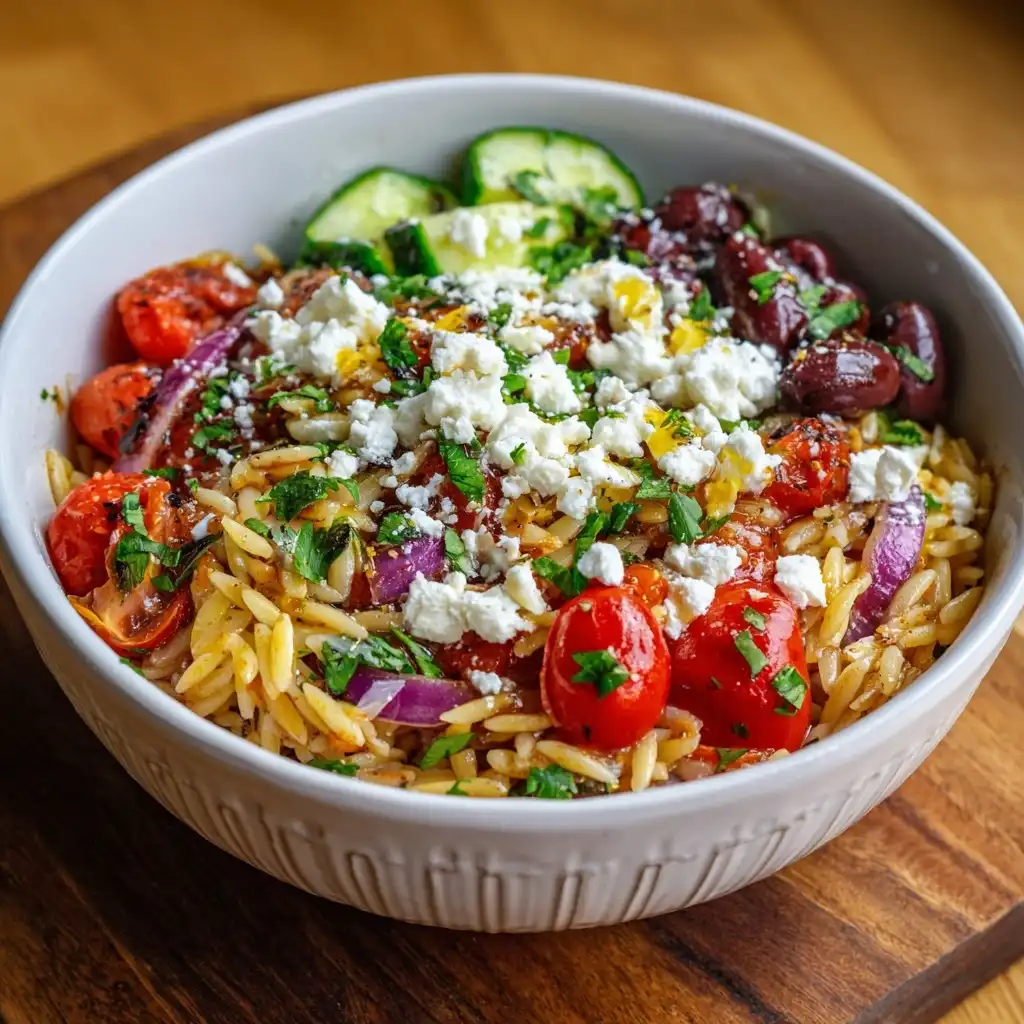
The Mediterranean Orzo Bowl is a vibrant, nutrient-dense, and deeply satisfying dish that captures the essence of sun-drenched coastal cuisines—from Greece and Turkey to Lebanon and Southern Italy. More than just a salad or side, it’s a complete, balanced meal in a bowl: tender orzo pasta serves as the perfect neutral canvas for bold, fresh, and aromatic Mediterranean flavors—think briny olives, creamy feta, zesty lemon, fragrant herbs, crisp cucumbers, sweet cherry tomatoes, and earthy red onions. Light yet hearty, plant-forward yet protein-rich (especially when enhanced with chickpeas, grilled chicken, or flaked fish), this bowl celebrates seasonality, simplicity, and the philosophy of *eating well without excess*. Whether served chilled on a hot summer afternoon, warmed gently for cozy autumn evenings, or packed for lunch, the Mediterranean Orzo Bowl embodies culinary joy, cultural richness, and mindful nourishment—all in one beautifully composed, colorful, and texturally dynamic dish.
The History
While orzo—a small, rice-shaped pasta traditionally made from durum wheat semolina—originated in Italy (its name literally means “barley” in Greek, referencing its grain-like appearance), its integration into Mediterranean cuisine reflects centuries of cross-cultural exchange across the Eastern Mediterranean and Levant. Ancient trade routes carried wheat, olive oil, and herbs between Greece, Anatolia, Egypt, and the Levant; over time, pasta-making techniques traveled eastward, adapting to local ingredients and preferences. In Greece, orzo (known locally as *kritharaki*) became a staple in oven-baked dishes like *orzo pastitsio* and chilled summer salads. In Turkish and Lebanese cooking, similar rice-shaped grains appeared in pilafs and grain-based mezze—often dressed with lemon-tahini or sumac-infused vinaigrettes. The modern “Mediterranean Orzo Bowl” as we know it today emerged in the late 20th and early 21st centuries, popularized by health-conscious chefs, food bloggers, and wellness movements that championed the Mediterranean Diet’s scientifically backed benefits. Its rise coincided with the global embrace of bowl culture—meal-prep-friendly, visually engaging, customizable, and nutritionally transparent—and solidified orzo’s place not just as a pasta, but as a versatile, gluten-containing whole-grain alternative (especially when using whole-wheat or legume-based orzo) that bridges tradition and contemporary dietary values.
Ingredients Breakdown
Every ingredient in this bowl plays a deliberate role—not only for flavor and texture but also for nutritional synergy and authentic regional character:
- Orzo Pasta: The foundational grain—preferably bronze-die extruded for superior sauce adhesion. Whole-wheat orzo adds fiber and B vitamins; gluten-free options (made from brown rice, quinoa, or lentils) make the dish inclusive without sacrificing structure.
- Olive Oil: Extra-virgin, cold-pressed, and robustly fruity—ideally Greek (Koroneiki) or Spanish (Arbequina). It’s the emulsifier, flavor carrier, and heart-healthy monounsaturated fat source.
- Lemon Juice & Zest: Freshly squeezed juice provides bright acidity to balance richness; zest contributes volatile citrus oils that elevate aroma and complexity—non-negotiable for authenticity.
- Garlic: Raw or lightly toasted—adds pungent depth and antimicrobial compounds. Microplaned or finely minced ensures even distribution.
- Cucumber: English or Persian cucumbers (seedless, thin-skinned) offer cool crunch and hydration. Peeled or unpeeled depending on preference—and always seeded if watery to prevent dilution.
- Cherry Tomatoes: Halved or quartered for bursts of sweetness and lycopene. Heirloom varieties (Sun Gold, Sweet 100) add nuanced flavor and color contrast.
- Red Onion: Thinly sliced and quick-pickled in lemon juice or vinegar to mellow sharpness while retaining bite and anthocyanin antioxidants.
- Kalamata Olives: Briny, meaty, and slightly tart—rich in polyphenols and healthy fats. Pitted and roughly chopped for even distribution.
- Feta Cheese: Authentic Greek feta (sheep’s or sheep-goat blend, brined in saltwater) delivers salty tang and creamy crumble. Vegan alternatives include almond- or tofu-based feta marinated in lemon, capers, and nutritional yeast.
- Fresh Herbs: A trio is ideal—dill (anise-tinged freshness), mint (cooling brightness), and flat-leaf parsley (earthy, clean finish). Chopped just before assembly to preserve volatile oils.
- Optional Protein Boosters: Canned or home-cooked chickpeas (fiber + plant protein), grilled shrimp or lemon-herb chicken (lean animal protein), pan-seared halloumi (salty, squeaky cheese), or flaked wild-caught salmon (omega-3s).
- Optional Texture Enhancers: Toasted pine nuts or slivered almonds (crunch + vitamin E), crumbled roasted red peppers (smoky-sweet depth), capers (briny pop), or a sprinkle of za’atar or sumac (tangy, herbal Middle Eastern flair).
Step-by-Step Recipe
- Prepare the Orzo: Bring a large pot of generously salted water (like seawater—~2 tbsp kosher salt per gallon) to a rolling boil. Add orzo and cook according to package directions—typically 8–10 minutes—until *al dente* (firm to the bite, not mushy). Drain immediately in a fine-mesh colander, rinse briefly under cold water to halt cooking and remove excess starch (optional for chilled bowls; skip if serving warm), then spread evenly on a parchment-lined baking sheet to air-dry for 5–7 minutes. This step prevents clumping and ensures optimal absorption of dressing.
- Make the Lemon-Herb Vinaigrette: In a medium mixing bowl, whisk together ⅓ cup extra-virgin olive oil, 3 tbsp freshly squeezed lemon juice, 1 tsp lemon zest, 1 small clove garlic (microplaned or finely minced), ½ tsp dried oregano (preferably Greek), ¼ tsp freshly ground black pepper, and ½ tsp flaky sea salt. Taste and adjust—more lemon for brightness, more oil for silkiness, a pinch of honey or maple syrup if needed to round acidity.
- Prep the Vegetables & Aromatics: While orzo cools, seed and dice 1 English cucumber; halve 1 cup cherry tomatoes; thinly slice ½ small red onion and soak in 2 tbsp lemon juice + 1 tsp water for 5 minutes to temper bite; pit and roughly chop ½ cup Kalamata olives; crumble ¾ cup feta; chop ¼ cup each fresh dill, mint, and flat-leaf parsley.
- Combine & Marinate: In a large, wide mixing bowl, combine the cooled orzo, cucumber, tomatoes, drained red onion, olives, and herbs. Pour the vinaigrette over top. Using a silicone spatula or large spoon, gently fold everything together—avoid overmixing to preserve tomato integrity and herb freshness. Cover and refrigerate for *at least 30 minutes*, ideally 1–2 hours, to allow flavors to meld and orzo to absorb dressing fully.
- Final Assembly & Garnish: Before serving, taste and re-season if needed—often a final squeeze of lemon or flake of salt wakes up the flavors. Transfer to individual shallow bowls. Top generously with crumbled feta, a drizzle of high-quality olive oil, a sprinkle of fresh herbs, and optional toasted nuts or za’atar. Serve chilled, at room temperature, or gently warmed (if adding warm proteins like grilled chicken or shrimp).
Tips
- Don’t Overcook the Orzo: It continues to absorb moisture after draining—undercook by 30–60 seconds to avoid mushiness, especially if marinating ahead.
- Salt the Water Generously: This is your only chance to season the orzo itself—unsalted pasta tastes bland no matter how flavorful the dressing.
- Chill Components Separately for Meal Prep: Store dressed orzo base and fresh toppings (tomatoes, herbs, feta, olives) in separate airtight containers. Assemble within 2–3 hours of serving to maintain texture and vibrancy.
- Toast Your Nuts & Seeds: Even 2–3 minutes in a dry skillet over medium-low heat deepens nuttiness and adds essential crunch—never skip this step for pine nuts, almonds, or sesame seeds.
- Use a Wide, Shallow Bowl for Mixing: Ensures even coating and minimizes breaking delicate ingredients like tomatoes and herbs.
- Let the Dressing Rest: Whisk vinaigrette 10–15 minutes before combining—it allows garlic’s sharpness to mellow and flavors to harmonize.
- Acid Is Your Friend—But Timing Matters: Add lemon juice to the dressing, not directly to raw tomatoes or cucumbers pre-mixing—this prevents premature breakdown and sogginess.
- Reserve Some Herbs & Feta for Garnish: Visual appeal matters—fresh green flecks and snowy white feta crumbles signal freshness and invite the first bite.
- For Creamier Texture Without Dairy: Blend 2 tbsp soaked cashews with 2 tbsp lemon juice, 1 tsp olive oil, and a pinch of salt for a rich, dairy-free “creamy” element.
- Double the Dressing for Leftovers: Orzo soaks up liquid over time—keeping extra vinaigrette on hand ensures day-two bowls remain luscious, not dry.
Variations and Customizations
This bowl is endlessly adaptable—designed to honor pantry availability, seasonal produce, dietary needs, and personal cravings:
- Greek-Inspired: Add diced roasted red peppers, capers, a splash of red wine vinegar, and serve with grilled lamb skewers or lemon-oregano baked chicken.
- Turkish-Inspired: Swap feta for beyaz peynir, add pomegranate molasses (½ tsp) to the dressing, top with pomegranate arils and crushed walnuts, and garnish with dried mint.
- Lebanese-Inspired: Stir in 2 tbsp chopped fresh mint and 1 tbsp chopped flat-leaf parsley, add ¼ cup pickled turnips, and finish with a drizzle of toum (garlic sauce) or tahini-lemon sauce.
- Vegetarian Power Bowl: Fold in 1 cup cooked lentils (green or beluga), ½ cup roasted eggplant cubes, and ¼ cup chopped sun-dried tomatoes (oil-packed, drained).
- Vegan Version: Use vegan feta (almond- or tofu-based), omit honey if used, and boost protein with marinated tempeh cubes, spiced chickpeas, or hemp seeds.
- Gluten-Free Adaptation: Substitute certified GF orzo (brown rice, quinoa, or lentil-based); ensure all packaged ingredients (olives, spices, broth if used) are certified GF.
- Low-Carb/Keto-Friendly: Replace orzo with riced cauliflower (roasted or steamed, then cooled), increase healthy fats (extra olive oil, avocado slices, more olives), and add grilled shrimp or salmon.
- Breakfast Orzo Bowl: Warm the orzo gently, top with a soft-poached egg, sautéed spinach, crumbled feta, and a dusting of smoked paprika.
- Winter Variation: Swap fresh tomatoes for roasted cherry tomatoes, add shredded roasted butternut squash, toasted pecans, and a maple-Dijon vinaigrette.
- Herb-Forward “Green Bowl”: Double the fresh herbs (add chervil, tarragon, or basil), omit olives and feta, and dress with a green goddess–style blend of olive oil, lemon, garlic, and blended herbs.
Health Considerations and Nutritional Value
A well-constructed Mediterranean Orzo Bowl aligns closely with the evidence-based principles of the Mediterranean Diet—consistently ranked #1 by U.S. News & World Report for overall health, heart health, diabetes prevention, and longevity. Per standard serving (about 1.5 cups, without added protein), this bowl delivers approximately:
- Calories: ~380–450 kcal (varies with oil quantity and cheese amount)
- Carbohydrates: ~50–55 g (primarily complex, low-glycemic from whole-wheat orzo and vegetables; fiber ~6–9 g)
- Protein: ~10–12 g (naturally from orzo, olives, feta, and herbs; easily increased to 20–30 g with chickpeas, chicken, or fish)
- Fat: ~16–20 g (predominantly heart-healthy monounsaturated fats from olive oil and olives; minimal saturated fat)
- Vitamins & Minerals: Rich in vitamin C (lemons, tomatoes, cucumbers), vitamin K (parsley, herbs), folate (orzo, spinach if added), potassium (cucumbers, tomatoes, olives), calcium and phosphorus (feta), iron (olives, herbs, orzo), and antioxidant polyphenols (olive oil, oregano, garlic, tomatoes)
- Phytonutrients: Lycopene (tomatoes), oleocanthal (EVOO anti-inflammatory compound), allicin (garlic), anthocyanins (red onion, olives), and apigenin (parsley)—all linked to reduced oxidative stress and chronic disease risk.
Dietary Notes: Naturally vegetarian and can be made vegan, gluten-free, or dairy-free with simple swaps. Low in added sugars and sodium (when olives and feta are used mindfully). Ideal for those managing blood sugar (low glycemic load when paired with healthy fats/fiber), supporting gut health (prebiotic fibers from orzo and vegetables), and reducing inflammation (thanks to omega-3s from fish additions and polyphenol-rich EVOO). Always consult a registered dietitian for personalized guidance—especially for conditions like IBS (FODMAP considerations: limit garlic/onion, use infused oil instead), kidney disease (monitor sodium/potassium), or celiac disease (strict GF verification).
Ingredients
- 12 oz (340 g) orzo pasta (whole-wheat, regular semolina, or certified gluten-free)
- ⅓ cup extra-virgin olive oil (high-quality, fruity)
- 3 tbsp freshly squeezed lemon juice (from ~1–1½ lemons)
- 1 tsp finely grated lemon zest
- 1 small clove garlic, microplaned or minced
- ½ tsp dried Greek oregano
- ¼ tsp freshly ground black pepper
- ½ tsp flaky sea salt (plus more for pasta water)
- 1 English cucumber (about 1 cup, seeded and diced)
- 1 cup cherry tomatoes, halved or quartered
- ½ small red onion, very thinly sliced
- ½ cup Kalamata olives, pitted and roughly chopped
- ¾ cup crumbled feta cheese (authentic Greek preferred)
- ¼ cup fresh dill, chopped
- ¼ cup fresh mint, chopped
- ¼ cup fresh flat-leaf parsley, chopped
- Optional: 1 (15 oz) can chickpeas, rinsed and drained; ½ cup toasted pine nuts or slivered almonds; additional lemon wedges and olive oil for serving
Directions
- Fill a large stockpot with 4–5 quarts of water. Add 2 tablespoons kosher salt and bring to a vigorous boil over high heat.
- Add orzo and cook uncovered, stirring occasionally, until just al dente—typically 8–10 minutes (check package instructions; begin tasting at 7 minutes). Avoid overcooking.
- Drain orzo in a fine-mesh colander. For chilled bowls: rinse briefly under cold running water to stop cooking and cool quickly. For room-temp or warm bowls: skip rinsing—just shake well to remove excess water.
- Spread drained orzo onto a parchment-lined baking sheet in an even layer. Let air-dry for 5–7 minutes—this prevents clumping and improves dressing absorption.
- While orzo cools, prepare the vinaigrette: In a medium bowl, whisk together olive oil, lemon juice, lemon zest, garlic, oregano, black pepper, and sea salt until emulsified.
- In a large mixing bowl, combine cooled orzo, cucumber, cherry tomatoes, drained red onion (rinsed and patted dry), Kalamata olives, dill, mint, and parsley.
- Pour vinaigrette over the mixture. Using a large silicone spatula or spoon, gently fold until evenly coated—about 30 seconds. Do not overmix.
- Cover bowl tightly with plastic wrap or a lid and refrigerate for at least 30 minutes—or up to 2 hours—for optimal flavor development.
- Before serving, taste and adjust seasoning—add another squeeze of lemon, pinch of salt, or drizzle of olive oil as needed.
- Transfer to individual shallow bowls. Top with additional crumbled feta, a final drizzle of olive oil, extra fresh herbs, and optional toasted nuts or lemon wedges. Serve immediately.
FAQ
- Can I make this ahead of time?
- Yes! The base (orzo + dressing + sturdy veggies like cucumber, olives, onion) keeps beautifully refrigerated for up to 3 days. However, for best texture and freshness, add delicate ingredients—fresh tomatoes, herbs, feta, and nuts—within 2–3 hours of serving. Store components separately for maximum flexibility.
- Why does my orzo get mushy?
- Mushiness results from overcooking, insufficient draining, or storing while still hot and steamy. Always cook to *al dente*, drain thoroughly, spread to cool/dry, and avoid sealing warm orzo in an airtight container.
- Is orzo healthy?
- Traditional orzo is refined wheat pasta—but whole-wheat or legume-based versions significantly boost fiber, protein, and micronutrients. Even regular orzo shines nutritionally when paired with vegetables, healthy fats, and lean proteins—as in this bowl—making it part of a balanced, whole-food pattern.
- Can I freeze Mediterranean Orzo Bowl?
- We do not recommend freezing. Orzo becomes gummy and watery upon thawing, and fresh herbs, cucumbers, and feta lose texture and flavor. Instead, double-batch the vinaigrette and cook orzo fresh—it takes under 15 minutes!
- What’s the best way to store leftovers?
- In an airtight container in the refrigerator for up to 3 days. If already assembled, stir in 1 tsp fresh lemon juice and 1 tsp olive oil before serving leftovers to refresh brightness and silkiness.
- How do I make it more filling?
- Add ½–1 cup cooked chickpeas, lentils, or white beans; 4–6 oz grilled chicken breast, shrimp, or flaked salmon; or ½ cup crumbled halloumi or goat cheese. These boost satiety via protein and healthy fats.
- Can I use dried herbs instead of fresh?
- Fresh herbs are non-negotiable for authentic flavor and aroma—dried herbs lack the volatile oils and bright top notes essential to this dish. If absolutely necessary, substitute 1 tsp dried dill + ½ tsp dried mint + ½ tsp dried parsley—but consider it a last-resort compromise.
- What if I don’t like feta?
- Excellent alternatives include crumbled goat cheese (milder, creamier), shaved Parmigiano-Reggiano (nutty, umami), or ricotta salata (firmer, less salty). For vegan options: almond-feta, tofu-feta, or a dollop of lemon-tahini sauce.
- Is this dish suitable for Passover or other religious diets?
- Standard orzo is not kosher for Passover (as it’s wheat-based pasta). However, certified kosher-for-Passover quinoa orzo exists—and many Sephardic traditions permit kitniyot. Always verify certification and consult your rabbi or spiritual leader for observance-specific guidance.
- How can I lower the sodium?
- Rinse olives and feta under cold water before using; choose low-sodium canned chickpeas; reduce added salt in dressing; boost flavor with extra lemon zest, herbs, garlic, and sumac instead of salt.
Summary
The Mediterranean Orzo Bowl is a celebration of vibrant, wholesome, culturally rooted eating—where simple, high-quality ingredients converge to deliver exceptional flavor, texture, and nourishment in every bite. It’s a flexible, forgiving, and endlessly inspiring canvas that honors tradition while adapting effortlessly to modern lifestyles, dietary needs, and seasonal abundance.
Whether enjoyed as a light lunch, a hearty dinner, a picnic centerpiece, or a make-ahead meal-prep staple, this bowl invites you to slow down, savor the colors of the Mediterranean coast, and nourish your body with intention, joy, and timeless culinary wisdom.