Introduction
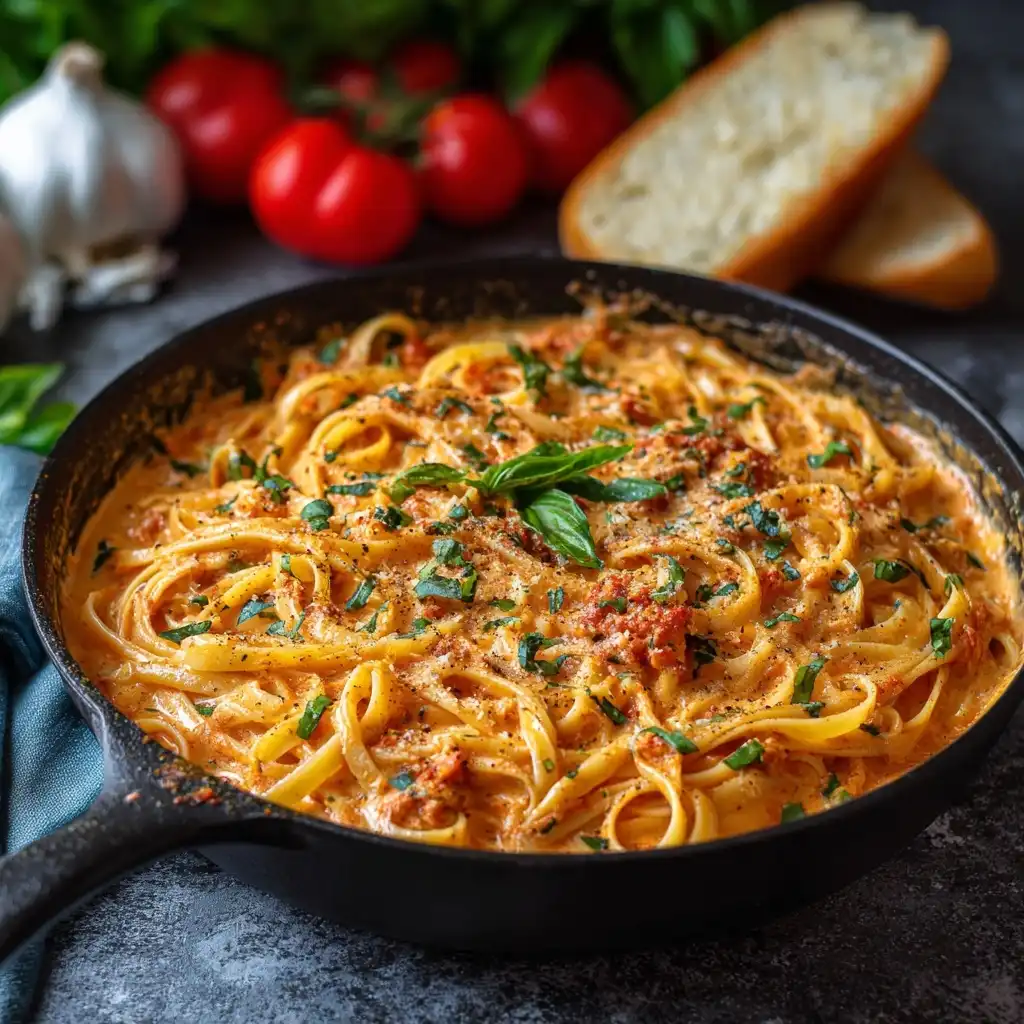
Creamy Tomato Basil Pasta is a beloved modern Italian-inspired dish that marries the bright, tangy depth of ripe tomatoes with the luxurious silkiness of a rich, velvety sauce—and the fresh, aromatic lift of hand-torn basil. Far more than just “pasta with tomato sauce,” this recipe strikes an elegant balance between rustic simplicity and refined comfort: it’s hearty enough for a weeknight dinner yet sophisticated enough to impress guests. Its allure lies in its duality—vibrant acidity from sun-ripened tomatoes or high-quality canned San Marzano varieties, mellowed by slow-simmered aromatics and enriched with dairy (or dairy-free alternatives), all crowned with fragrant, peppery-sweet basil leaves added at the very end to preserve their volatile oils and vivid green hue. Whether served as a cozy solo meal or paired with crusty artisan bread and a crisp arugula salad, Creamy Tomato Basil Pasta delivers soul-warming satisfaction with minimal fuss and maximum flavor.
The History
While no single documented origin claims authorship of “Creamy Tomato Basil Pasta” as a formal dish, its roots are deeply embedded in centuries of Italian culinary evolution—and later, global reinterpretation. Tomatoes, native to South America, were introduced to Europe in the 16th century but met with suspicion for over 200 years due to their association with the nightshade family and perceived toxicity. It wasn’t until the late 18th and early 19th centuries—particularly in southern Italy—that tomatoes began appearing regularly in regional cooking, especially in Campania and Sicily, where fertile volcanic soil yielded exceptionally flavorful varieties like San Marzano and Pomodorino del Piennolo. Traditional preparations were simple: crushed tomatoes simmered with garlic, olive oil, and fresh herbs—a technique still honored today in sauces like marinara and passata.
The “creamy” element, however, represents a significant departure from classic Italian tradition. Authentic Italian cuisine rarely incorporates heavy cream into tomato-based sauces; purists argue that dairy can curdle or mute the bright, clean character of tomatoes. Instead, richness was traditionally achieved through slow reduction, emulsification with pasta water and olive oil, or enrichment with grated cheese like pecorino or Parmigiano-Reggiano. The creamy iteration likely emerged in mid-to-late 20th-century North America and Northern Europe, where home cooks sought luscious mouthfeel and crowd-pleasing mildness—especially for children or those less accustomed to pronounced acidity. Influenced by French techniques (like crème fraîche enrichment) and American pantry staples (half-and-half, heavy cream, cream cheese), this version gained traction in cookbooks, food magazines, and later, digital platforms. Today, it stands as a globally recognized fusion staple—honoring Italian ingredients while embracing international preferences for texture and balance.
Ingredients Breakdown
Understanding each ingredient’s role—not just its presence—is key to mastering this dish. Below is a detailed functional breakdown:
- Tomatoes: The foundation. Canned whole San Marzano DOP tomatoes (preferably imported from Italy and peeled by hand) offer ideal sweetness, low acidity, and dense flesh that breaks down beautifully. Their natural pectin contributes body without needing excessive reduction. Crushed or passata versions work—but whole tomatoes give you control over texture. Fresh vine-ripened tomatoes may be used in peak summer, though they require longer cooking to concentrate flavor and remove excess water.
- Garlic & Onion: Aromatics that build savory depth (soffritto). Yellow or sweet onions provide gentle sweetness; shallots offer a more delicate, wine-friendly nuance. Garlic must be gently sautéed—not browned—to avoid bitterness. Raw garlic added at the end (a chef’s trick) lends a subtle, fresh pungency.
- Olive Oil: Extra-virgin olive oil is non-negotiable—not just for cooking, but finishing. Its polyphenols and fruit-forward notes (think grassy, peppery, or buttery) harmonize with tomatoes and elevate basil. Reserve a high-quality, robust EVOO for drizzling just before serving.
- Dairy Component: This defines the “creaminess.” Heavy cream (36–40% fat) yields the richest, most stable emulsion. Half-and-half offers lighter body but requires careful heat management. For vegan versions, full-fat coconut milk (BPA-free cans, stirred well), cashew cream (soaked raw cashews blended with water), or silken tofu purée provide excellent mouthfeel and neutral backdrops. Avoid low-fat or ultra-pasteurized dairy substitutes—they lack fat structure and may separate.
- Fresh Basil: Not optional—and never dried. Sweet basil (Ocimum basilicum) contains volatile oils (linalool, eugenol, estragole) that deliver its signature aroma and flavor. These compounds degrade rapidly with heat; hence, 95% of the basil is added off-heat or in the final 30 seconds of cooking. Reserve a few perfect leaves for garnish.
- Pasta Water: Often called “liquid gold” by chefs, starchy pasta water (about ¼–½ cup reserved before draining) acts as a natural emulsifier and binder. Its starch content helps the sauce cling to noodles and creates a glossy, cohesive texture without gumminess. Always salt your pasta water generously (2 tbsp kosher salt per gallon)—it’s your only chance to season the pasta itself.
- Grated Cheese: Parmigiano-Reggiano (aged 24–36 months) adds umami, salt, and granular texture. Pecorino Romano offers sharper, saltier bite—ideal if you prefer contrast against sweetness. For vegan versions, nutritional yeast (fortified) mimics cheesiness and adds B12; blended almond-parmesan (almonds + garlic + lemon zest + nori) is a gourmet alternative.
- Acid & Sweetness Balancers: A splash of dry white wine (e.g., Pinot Grigio) deglazes the pan and lifts flavors; a teaspoon of balsamic vinegar adds complexity and subtle sweetness; a pinch of sugar (optional) counters harsh acidity in lower-quality tomatoes—but never substitute for ripe, well-sourced produce.
- Seasonings: Fine sea salt enhances every note; freshly ground black pepper adds warmth and volatility; red pepper flakes (peperoncino) introduce controlled heat—add during sautéing for infused spice, or after for brighter, sharper punch.
Step-by-Step Recipe
- Prep All Ingredients (Mise en Place): Finely dice 1 small yellow onion (¼” pieces). Mince 4 garlic cloves—reserve 1 clove raw and minced separately. Tear 1½ cups fresh basil leaves (stems removed); reserve 12–15 whole leaves for garnish. Grate ½ cup finely grated Parmigiano-Reggiano (use a microplane). Open two 28-oz cans of whole San Marzano tomatoes; crush by hand over a bowl, catching juices. Measure 1 cup heavy cream, ¼ cup dry white wine, 2 tbsp extra-virgin olive oil, 1 tsp balsamic vinegar, ¼ tsp red pepper flakes, and kosher salt to taste.
- Toast Aromatics: Heat 2 tbsp EVOO in a large, heavy-bottomed Dutch oven or wide saucier pan over medium-low heat. Add diced onion and a pinch of salt. Cook gently—stirring occasionally—for 8–10 minutes until translucent and fragrant, but not browned. Add red pepper flakes and cook 30 seconds until aromatic.
- Sauté Garlic (Carefully!): Reduce heat to low. Add 3 minced garlic cloves and stir constantly for 60–90 seconds—just until fragrant and soft, never golden. Overheated garlic turns bitter and dominates the sauce.
- Build Tomato Base: Pour in crushed tomatoes with all their juices. Stir well, scraping up any fond. Add ¼ cup dry white wine. Increase heat to medium and bring to a gentle bubble. Reduce heat to low, partially cover, and simmer uncovered for 25 minutes—stirring every 4–5 minutes—to thicken and deepen flavor. Skim foam if desired. Sauce should coat the back of a spoon.
- Refine Texture (Optional but Recommended): For ultra-smooth silkiness, carefully blend sauce using an immersion blender directly in the pot—pulse 5–6 times until slightly homogenized but still with subtle texture. Alternatively, transfer ⅔ of sauce to a countertop blender, blend until smooth, then return to pot. Avoid over-blending—it can make sauce gluey.
- Incorporate Cream: Lower heat to the lowest possible setting (a bare simmer). Slowly whisk in 1 cup heavy cream in a steady stream. Do not boil once cream is added—heat above 180°F risks curdling. Simmer gently for 6–8 minutes, stirring occasionally, until sauce thickens slightly and takes on a pale coral hue. Taste and adjust salt.
- Prepare Pasta: While sauce simmers, bring 5–6 quarts well-salted water to a rolling boil. Add 1 lb spaghetti, linguine, bucatini, or campanelle (ridged shapes hold sauce best). Cook 1 minute less than package instructions for al dente. Reserve 1 cup starchy pasta water before draining.
- Emulsify & Finish: Add drained hot pasta directly to the sauce pan. Toss vigorously over low heat for 60–90 seconds, adding reserved pasta water 2 tbsp at a time until sauce clings luxuriously to noodles. Remove from heat. Stir in raw minced garlic, 1 cup torn basil, and ½ cup grated Parmigiano-Reggiano. Toss gently—do not overmix.
- Plate & Garnish: Divide among warmed shallow bowls. Drizzle generously with high-quality EVOO. Top with remaining basil leaves, extra cheese, flaky sea salt (like Maldon), and freshly cracked black pepper. Serve immediately.
Tips
- Never Boil the Creamed Sauce: Once dairy is added, maintain temperature below simmer—ideally 160–175°F. Use a thermometer if unsure. Curdling is preventable: cold cream, gradual incorporation, low heat, and constant motion are your safeguards.
- Reserve Pasta Water BEFORE Draining: Starch concentration drops rapidly once pasta cools. Measure while water is still boiling-hot and starchy.
- Basil Timing Is Sacred: Adding basil too early cooks out its essence. Stir in 90% of it off-heat or in the final 30 seconds of tossing. Save pristine leaves for visual appeal and aromatic burst upon first bite.
- Use Room-Temperature Dairy: Cold cream shocks hot sauce and increases separation risk. Let cream sit out 15 minutes before adding.
- Undercook Pasta Intentionally: Even 30 seconds too long leads to mush when tossed in hot sauce. Err on the side of firmness—you’ll finish cooking it in the pan.
- Wine Quality Matters: Use a wine you’d drink. Cooking wines contain salt and preservatives that dull flavor. A crisp, acidic white balances tomato brightness.
- Acid Adjustment Is Essential: After cream is added, taste critically. If flat, add a few drops of lemon juice or balsamic—not more salt. If sharp, a tiny pinch of sugar (⅛ tsp) or ½ tsp honey rounds it perfectly.
- Rest for 2 Minutes Off-Heat: Letting pasta sit covered for 90–120 seconds after tossing allows starches to fully hydrate and sauce to settle into every groove—enhancing cling and mouthfeel.
- Reheat Gently: Leftovers? Reheat in a skillet over low heat with a splash of broth or water—not microwave. Stir constantly to re-emulsify.
- Make-Ahead Strategy: Sauce (without cream or basil) freezes beautifully for up to 3 months. Thaw overnight, reheat gently, then stir in cream and fresh herbs day-of.
Variations and Customizations
This recipe is gloriously adaptable—whether accommodating dietary needs, seasonal availability, or global flavor cravings. Here’s how to personalize it thoughtfully:
- Vegan Creamy Tomato Basil Pasta: Replace heavy cream with ¾ cup full-fat coconut milk (stirred well) + 2 tbsp raw cashew cream (soaked cashews + water, blended ultra-smooth). Skip cheese; use 3 tbsp nutritional yeast + 1 tsp white miso paste for umami depth. Finish with lemon zest and toasted pine nuts.
- Gluten-Free Version: Use certified GF pasta (brown rice, lentil, or chickpea-based). Note: GF pastas release more starch—reduce reserved water to ½ cup and add gradually. Stir more frequently to prevent clumping.
- Protein-Packed: Sauté 12 oz sliced cremini mushrooms until golden before adding onions. Or add 1 cup cooked lentils (Puy or black beluga) during final simmer. For meat lovers: brown ½ lb Italian sausage (casings removed), drain fat, and stir in with tomatoes.
- Roasted Vegetable Upgrade: Toss 1 diced eggplant, 1 cup cherry tomatoes, and 1 zucchini in olive oil, salt, and thyme; roast at 425°F for 25 minutes. Fold into finished sauce just before tossing with pasta.
- Herb Garden Twist: Substitute half the basil with fresh oregano, marjoram, or lemon thyme—add all at the end for brightness. A tablespoon of chopped fresh mint adds surprising coolness.
- Spice-Forward: Infuse oil with 1 star anise and ½ cinnamon stick while toasting onions; remove spices before adding garlic. Finish with harissa swirl or preserved lemon zest.
- Seafood Integration: Sear 12 large shrimp (shelled, deveined) in olive oil with garlic and chili; set aside. Stir into warm pasta just before garnishing. Or fold in 1 cup lump crabmeat at the end.
- “Sun-Dried” Depth: Soak ¼ cup oil-packed sun-dried tomatoes in warm water for 10 minutes; chop finely and stir in with cream. Reserve soaking oil for finishing drizzle.
- White Wine Reduction Sauce: After deglazing with wine, reduce by 75% before adding tomatoes—intensifies fruit and acidity.
- Pasta Shape Swaps: Try trofie (Ligurian twisted pasta), garganelli (quill-shaped), or radiatori (radiators—holds sauce in ridges). Avoid long, slippery pastas like angel hair unless cut short.
Health Considerations and Nutritional Value
A single 1¾-cup serving (made with whole wheat spaghetti, reduced-fat cream, and generous vegetables) provides approximately:
- Calories: ~580 kcal
- Protein: 22 g (from pasta, cheese, and optional legumes)
- Fiber: 8 g (especially with whole grain or legume-based pasta + added veggies)
- Healthy Fats: 24 g (primarily monounsaturated from olive oil and cheese; omega-3s if using walnut oil finish)
- Vitamin C: 28 mg (30% DV) — from tomatoes and basil
- Lycopene: ~12 mg — a potent antioxidant increased 2–3x when tomatoes are cooked with oil
- Vitamin K: 140 mcg (115% DV) — from basil (one of nature’s richest sources)
- Calcium: 220 mg (17% DV) — from cheese and fortified plant milks
Key Health Notes:
- Tomato Benefits: Lycopene absorption improves dramatically when paired with dietary fat (e.g., olive oil, cheese)—making this dish a functional delivery system for heart- and skin-protective phytonutrients.
- Basil Power: Contains eugenol (natural anti-inflammatory), rosmarinic acid (neuroprotective), and volatile oils shown to inhibit bacterial growth (including Staphylococcus aureus).
- Dairy Considerations: Full-fat dairy enhances satiety and nutrient absorption (fat-soluble vitamins A/D/E/K), but moderate portions align with Mediterranean diet patterns linked to longevity. For lactose sensitivity, lactose-free cream or fermented dairy (crème fraîche) are excellent alternatives.
- Sodium Awareness: Most sodium comes from cheese and canned tomatoes. Opt for low-sodium San Marzano brands (e.g., Bianco DiNapoli) and reduce added salt by 25%. Rinsing canned tomatoes is not recommended—it washes away flavor-rich juices and lycopene.
- Glycemic Impact: Using whole grain, legume, or konjac shirataki pasta lowers glycemic load significantly. Pairing with a side of leafy greens further stabilizes blood sugar.
- Anti-Inflammatory Alignment: Rich in polyphenols (tomatoes, basil, olive oil), omega-3s (if using walnut oil or fish), and fiber—this dish fits seamlessly into anti-inflammatory, cardiometabolic, and gut-health-forward eating patterns.
Ingredients
- 2 tbsp extra-virgin olive oil (plus more for finishing)
- 1 small yellow onion, finely diced (about 1 cup)
- 4 garlic cloves, minced (3 for cooking, 1 raw for finishing)
- ¼ tsp red pepper flakes (adjust to taste)
- 2 (28-oz) cans whole San Marzano tomatoes, hand-crushed with juices
- ¼ cup dry white wine (e.g., Pinot Grigio or Verdicchio)
- 1 tsp high-quality balsamic vinegar
- 1 cup heavy cream (36% fat) or full-fat coconut milk (vegan)
- Kosher salt and freshly ground black pepper
- 1 lb spaghetti, linguine, or campanelle (GF or whole grain if preferred)
- 1½ cups fresh sweet basil leaves, torn (plus 12–15 whole leaves for garnish)
- ½ cup finely grated Parmigiano-Reggiano or vegan alternative
- Flaky sea salt (e.g., Maldon) for finishing
Directions
- Bring 5–6 quarts water to a rolling boil. Add 2 tbsp kosher salt. Set aside.
- In a large heavy-bottomed Dutch oven or wide saucier pan, heat olive oil over medium-low heat. Add diced onion and a pinch of salt. Cook 8–10 minutes until soft and translucent, stirring occasionally.
- Reduce heat to low. Add minced garlic (3 cloves) and red pepper flakes. Stir constantly 60–90 seconds until fragrant—do not brown.
- Pour in crushed tomatoes with juices and white wine. Stir, scraping up browned bits. Bring to a gentle bubble, then reduce heat to low. Partially cover and simmer uncovered 25 minutes, stirring every 4–5 minutes.
- (Optional) Use an immersion blender to pulse sauce 5–6 times for silky texture. Or transfer ⅔ to blender, purée, and return.
- Lower heat to lowest setting. Whisk in cream slowly. Simmer gently 6–8 minutes—do not boil—until thickened slightly. Season with salt, pepper, and balsamic vinegar. Taste and adjust.
- Add pasta to boiling water. Cook 1 minute less than package directions. Reserve 1 cup starchy water before draining.
- Add drained pasta to sauce. Toss over low heat 60–90 seconds, adding pasta water 2 tbsp at a time until glossy and clinging.
- Remove from heat. Stir in raw garlic, 1 cup torn basil, and ½ cup cheese. Toss gently.
- Divide into bowls. Drizzle with olive oil, top with remaining basil, extra cheese, flaky salt, and black pepper. Serve immediately.
FAQ
- Can I use fresh tomatoes instead of canned?
- Yes—but only in peak summer when heirlooms (Brandywine, Cherokee Purple) are deeply ripe and sweet. You’ll need ~2½ lbs, peeled, seeded, and crushed. Simmer 45–60 minutes to reduce excess water. Canned San Marzanos remain superior year-round for reliability and depth.
- Why does my sauce break or look curdled?
- Most often due to overheating after adding cream, using ultra-pasteurized dairy, or adding cold cream to very hot sauce. Solution: Keep heat low, warm cream slightly, whisk constantly, and never let it boil post-cream.
- Can I make this ahead of time?
- The tomato base (steps 1–5) reheats beautifully and deepens in flavor overnight. However, add cream, cheese, and basil only day-of. Store sauce separately from pasta.
- What’s the best pasta to use?
- Long shapes with surface area—spaghetti, linguine, or tagliatelle—work well. For maximum sauce adhesion, choose ridged or tubular pastas: campanelle, rigatoni, or fusilli. Avoid delicate pastas like capellini.
- Is there a low-carb option?
- Absolutely. Substitute with spiralized zucchini (zoodles), shirataki noodles (rinse well), or roasted spaghetti squash. Sauté zoodles 2–3 minutes before tossing with warm sauce to avoid sogginess.
- Can I freeze leftovers?
- Sauce-only (no cream/basil/cheese) freezes for 3 months. Cream-based versions separate upon thawing—best enjoyed fresh. Portion before freezing.
- My sauce is too acidic—how do I fix it?
- First, ensure you’re using quality tomatoes. Then, stir in ⅛ tsp sugar or ½ tsp honey. A few drops of lemon juice can paradoxically balance harshness by enhancing perception of sweetness. Never add baking soda—it destroys nutrients and creates off-flavors.
- Can I use dried basil?
- Not recommended. Dried basil lacks volatile oils and tastes dusty, minty, and one-dimensional. If absolutely necessary, use 1 tsp dried basil *with* ¼ cup fresh—added at the end for trace aroma.
- How do I store and reheat?
- Store in airtight container up to 4 days refrigerated. Reheat in skillet over low heat with 1–2 tsp water or broth, stirring constantly until warmed through (~4 minutes). Microwave reheating often causes separation and rubbery texture.
- What wine pairs best?
- A chilled, high-acid Italian white: Falanghina from Campania, Greco di Tufo, or Vermentino. For red lovers, a light, low-tannin option like Schiava or Lambrusco Secco complements without overwhelming.
Summary
Creamy Tomato Basil Pasta is a masterclass in balancing vibrant acidity, luxurious texture, and aromatic freshness—built on centuries of Italian tomato tradition and elevated by modern, globally inspired cream enrichment.
With meticulous attention to ingredient quality, precise heat control, and the sacred timing of fresh basil, it transforms humble pantry staples into a restaurant-worthy, nourishing, and endlessly customizable centerpiece for any table.