Introduction
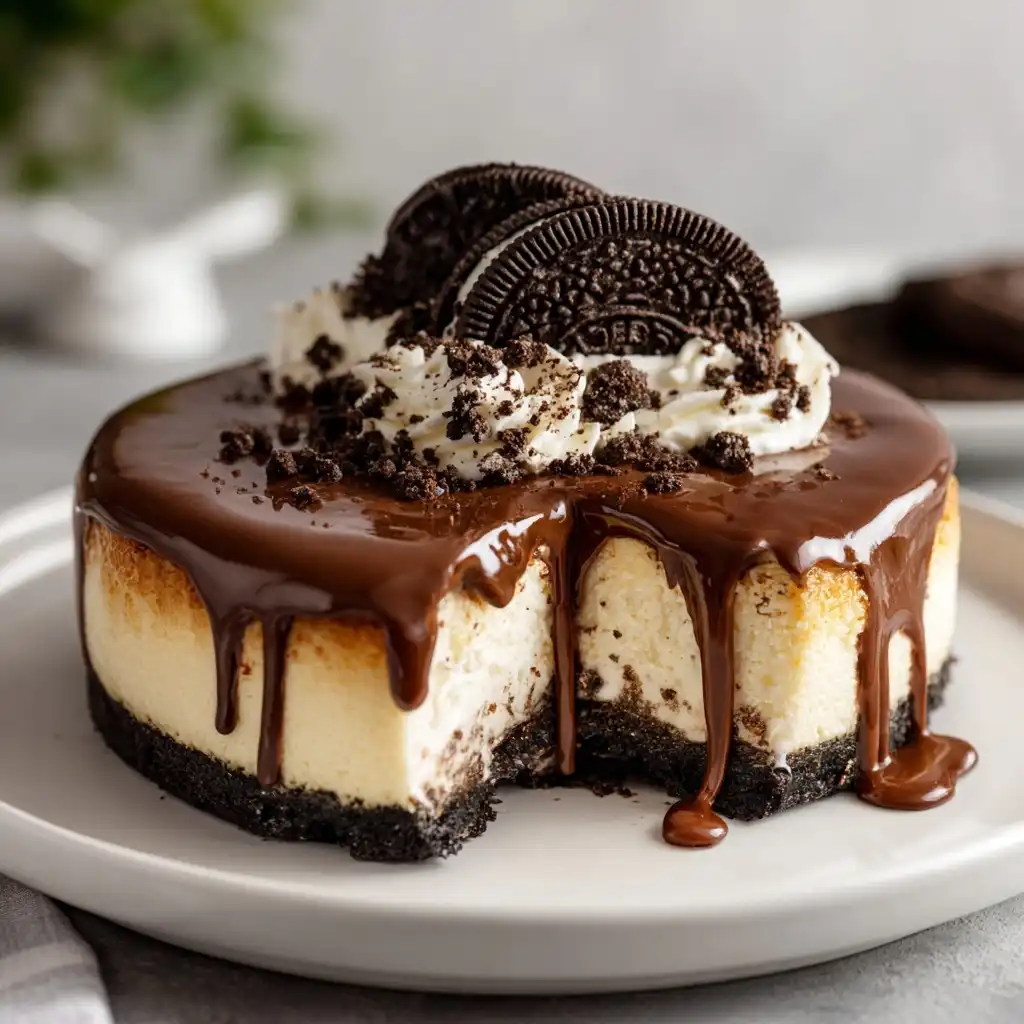
Welcome to the ultimate indulgence: Chocolate Covered Oreo Cheesecake — a decadent, multi-layered dessert that marries the nostalgic crunch of Oreos, the velvety richness of New York–style cheesecake, and the glossy, luxurious embrace of premium chocolate. This isn’t just a dessert; it’s an experience — a symphony of textures and flavors where creamy, crunchy, salty-sweet, and deeply chocolatey notes converge in perfect harmony. Whether you’re preparing it for a milestone celebration, a holiday gathering, or simply treating yourself after a long week, this showstopping confection delivers maximum impact with carefully balanced technique and thoughtful layering. It’s bold enough for the most devoted chocolate lover, yet refined enough to impress even seasoned bakers — all while staying rooted in approachable, step-by-step methodology.
The History
The Chocolate Covered Oreo Cheesecake is a modern dessert evolution born from three iconic American food legacies. The Oreo cookie debuted in 1912 by Nabisco — originally called the “Oreo Biscuit” — and quickly became synonymous with childhood joy, dunking rituals, and the beloved “twist, lick, dunk” mantra. Cream cheese-based cheesecakes trace their lineage to ancient Greece but were reimagined in early 20th-century New York, culminating in the dense, tangy, oven-baked style popularized by Arnold Reuben and later perfected at places like Junior’s and Lindy’s. Meanwhile, chocolate-dipped treats gained mainstream popularity in the 1950s and ’60s, accelerated by brands like Hershey’s and Ghirardelli, and further elevated by artisan chocolatiers emphasizing couverture and tempering precision. The fusion of these traditions began appearing in food blogs and bakery menus around the mid-2010s — first as “Oreo-stuffed chocolate bars,” then as “chocolate-dipped mini cheesecakes,” before evolving into today’s full-scale, layered, freeze-and-dip masterpiece. Its rise reflects broader culinary trends: maximalist desserts, hybridization (brownie + cheesecake + truffle), and the “Instagrammable” aesthetic — glossy sheen, dramatic drizzle, visible cookie strata — making it both a sensory and visual triumph.
Ingredients Breakdown
Every element in this dessert serves a distinct structural, textural, or flavor purpose — nothing is arbitrary. Let’s demystify each component:
- Oreo Crust Base: 30 full-size Original Oreos (not Double Stuf or seasonal variants) provide optimal structure and cocoa depth. The cream filling adds natural sweetness and fat, reducing the need for added sugar in the crust — while the wafer contributes essential gluten-free crispness and structural integrity when chilled.
- Full-Fat Cream Cheese: Use brick-style, pasteurized, full-fat blocks (e.g., Philadelphia) at room temperature — never spreadable or low-fat. Cold cream cheese leads to lumps; low-fat versions contain stabilizers and excess water that cause cracking and graininess. Room-temp softness ensures smooth emulsification with sugar and eggs.
- Sour Cream & Heavy Cream: Sour cream adds subtle tang, moisture retention, and protein structure to prevent shrinkage. Heavy cream (36–40% milkfat) enriches mouthfeel without thinning batter — unlike milk or half-and-half, which introduce too much water and destabilize the custard matrix.
- Real Vanilla Extract & Paste: Pure Madagascar bourbon vanilla extract provides top-note brightness, while a ½ tsp of high-quality vanilla bean paste (with visible specks) adds depth, warmth, and aromatic complexity that imitation vanillin cannot replicate.
- Granulated Sugar: Not just for sweetness — it tenderizes the cheesecake by interfering with protein coagulation, resulting in a silkier set. Confectioners’ sugar is avoided here, as cornstarch can dull flavor and cause grittiness.
- Eggs: Large, room-temperature eggs act as emulsifiers and gentle leaveners. Adding them one at a time ensures complete incorporation and prevents over-aeration — which leads to puffing and collapse during cooling.
- Mini Chocolate Sandwich Cookies (for filling): 12 finely crushed Mini Oreos folded into the batter add bursts of texture and familiar flavor — not just garnish, but integral flavor layering. Their smaller size ensures even distribution without sinking.
- Tempered Dark Chocolate Coating: 18 oz of high-cacao (60–70%) couverture chocolate (e.g., Valrhona Guanaja, Callebaut 60/40) ensures snap, gloss, and clean break. Tempering is non-negotiable — untempered chocolate blooms (white streaks), lacks shine, and feels waxy or greasy. We’ll walk through seeding method in detail.
- White Chocolate Drizzle: High-quality white chocolate (with real cocoa butter, not palm oil) melted separately and drizzled post-dip adds visual contrast, sweet creaminess, and a delicate floral note that offsets dark chocolate’s bitterness.
- Finishing Touches: Flaky sea salt (Maldon or Jacobsen) enhances chocolate’s complexity via contrast; edible gold dust or luster dust adds celebratory shimmer; extra Mini Oreos or chocolate curls serve as elegant, textural garnish.
Step-by-Step Recipe
This recipe yields one stunning 9-inch Chocolate Covered Oreo Cheesecake (14–16 servings), requiring approximately 3 days for optimal texture and finish — though active prep time remains under 2 hours. Patience is part of the craft.
- Day 1 — Crust & Bake Prep (45 min active): Preheat oven to 325°F (163°C). Pulse 30 Oreos (filling included) in a food processor until fine crumbs form (~30 sec). Add 6 tbsp unsalted butter, melted and cooled slightly, and 2 tbsp granulated sugar; pulse until mixture resembles wet sand. Press firmly and evenly into bottom and 1.5 inches up sides of a 9-inch springform pan lined with parchment on bottom and double-wrapped in heavy-duty foil (to prevent water bath leaks). Bake 10 minutes. Cool completely on wire rack — minimum 1 hour.
- Day 1 — Cheesecake Batter & Bake (60 min active + 1.5 hr bake + overnight chill): In stand mixer fitted with paddle attachment, beat 24 oz (3 standard blocks) full-fat cream cheese, 1 cup granulated sugar, and 1 tsp kosher salt on medium-low 3 minutes until fluffy and lump-free. Scrape bowl thoroughly. Add 1 cup full-fat sour cream, ½ cup heavy cream, 2 tsp pure vanilla extract, and 1 tbsp vanilla bean paste; mix 2 minutes until homogenous. Add eggs one at a time, mixing only until yolk disappears (≈15 sec per egg). Fold in 12 crushed Mini Oreos by hand with spatula. Pour batter over cooled crust. Place springform pan into larger roasting pan; pour hot water to reach halfway up sides (water bath). Bake 1 hour 20 minutes — center should jiggle slightly like Jell-O, not ripple like liquid. Turn off oven, crack door 1 inch, let cool inside 1 hour. Remove from water bath, run thin knife around edge, refrigerate uncovered overnight (min. 12 hours, ideally 16–18).
- Day 2 — Unmold & Freeze (20 min + 4–6 hr freeze): Run warm knife around perimeter again. Release springform collar. Carefully slide offset spatula between parchment and cake to loosen. Transfer cake (still on parchment) onto a wire rack set over baking sheet. Freeze uncovered 4–6 hours — until cake is solid and firm to touch (critical for clean chocolate dip without smudging or melting).
- Day 3 — Tempering & Dipping (45 min active + 30 min set): Finely chop 18 oz dark couverture chocolate. Melt ⅔ (12 oz) in heatproof bowl over simmering water (double boiler), stirring constantly until reaches 115°F (46°C) for dark chocolate. Remove from heat. Add remaining 6 oz chopped chocolate (seed), stir vigorously until fully melted and cooled to precise 88–90°F (31–32°C). Test temper: dip spoon tip, let set at room temp 3 minutes — should harden shiny and snap cleanly. If dull or streaky, reheat gently to 90°F and cool again. Place frozen cake on dipping fork or use two forks to lift. Dip fully into tempered chocolate, tap gently to remove excess, place on parchment-lined sheet. Immediately sprinkle with flaky salt and/or gold dust. Refrigerate 15 minutes to set chocolate shell. Repeat with white chocolate (tempered to 86–88°F / 30–31°C) for drizzle using piping bag or zip-top bag with tiny corner snipped.
- Final Assembly & Serve (10 min): Once fully set (chocolate firm, no tackiness), transfer to serving platter. Garnish with additional Mini Oreos, chocolate curls made with vegetable peeler, or fresh raspberries for acidity contrast. Serve chilled — never straight from freezer (too hard) nor fully thawed (chocolate softens, texture blurs). Ideal serving temp: 42–45°F (6–7°C).
Tips
- Room Temperature Is Non-Negotiable: Take cream cheese, sour cream, heavy cream, and eggs out of fridge 4–6 hours ahead — or overnight. Cold ingredients resist emulsification, creating air pockets and uneven baking.
- Water Bath Mastery: Use boiling water (not warm) for the bath — thermal mass ensures stable, even heat. Line roasting pan with towel to prevent springform slippage. Check water level halfway — replenish with hot water if evaporating.
- No Overmixing After Eggs: Once eggs are added, switch to spatula for final folds. Overbeating incorporates air → cracks on surface and potential collapse during cooling.
- Freeze, Don’t Just Chill: Refrigeration alone won’t firm the cake enough for dipping. Freezing locks moisture in and creates ideal thermal gradient: cold interior protects against chocolate melt-through, while surface remains receptive to adhesion.
- Chocolate Quality Dictates Outcome: Avoid candy melts, chocolate chips (contain stabilizers that inhibit proper temper), or low-cocoa chocolates (<55%). Couverture has higher cocoa butter % — essential for fluidity, shine, and snap.
- Humidity Matters: Temper chocolate on dry days (<50% RH). High humidity causes condensation on cold cake → water droplets ruin temper adhesion. If humid, briefly pat cake surface with paper towel pre-dip.
- Knife Technique for Clean Slices: Use a long, thin, non-serrated knife dipped in hot water and wiped dry before each cut. Wipe between slices — this preserves sharp edges and glossy chocolate finish.
- Storage Wisdom: Store covered in fridge up to 5 days. Do not freeze after chocolate coating — condensation forms, causing bloom and texture degradation. For longer storage, freeze *uncoated* cheesecake up to 2 months, then thaw, dip, and serve within 48 hours.
Variations and Customizations
This recipe is endlessly adaptable — honoring its core structure while inviting creativity. Here are chef-tested, crowd-pleasing variations:
- Double Chocolate Crunch: Replace 10 of the 30 Oreos in the crust with chocolate sandwich cookies (e.g., Chips Ahoy! or homemade chocolate shortbread), then fold ¼ cup mini chocolate chips into batter along with Mini Oreos.
- Peppermint Swirl: After pouring batter, drizzle 3 tbsp cooled, strained peppermint syrup (or 1 tsp peppermint extract + 2 tbsp heavy cream) in zigzag pattern. Drag toothpick through for marbling before baking.
- Espresso Fusion: Dissolve 1.5 tbsp instant espresso powder in 1 tbsp hot water; cool completely. Add to batter with vanilla. Sprinkle crust with 1 tsp finely ground espresso beans before baking.
- Golden Oreo Edition: Use Golden Oreos for crust and filling — milder, buttery, and less cocoa-forward. Pair with milk chocolate coating (tempered to 88–90°F) and caramel drizzle instead of white chocolate.
- Vegan & Dairy-Free: Substitute coconut cream (chilled, solid portion only) for sour cream/heavy cream; use soaked cashew cream + tofu base for cheesecake; vegan butter in crust; dairy-free couverture (e.g., Enjoy Life or Pascha). Requires precise hydration adjustment — reduce liquid by 15% and add 1 tsp agar-agar to batter pre-bake.
- Gluten-Free: Use certified GF Oreos (e.g., Kinnikinnick or Glutino) and verify all chocolate is GF-certified (cross-contamination risk is real). No other modifications needed.
- Mini Individual Portions: Bake in lined muffin tins (2 oz capacity). Reduce bake time to 22–25 minutes. Freeze individually, then dip. Perfect for parties, gifts, or portion control.
- Boozy Infusion: Add 2 tbsp bourbon, Kahlúa, or Grand Marnier to batter with vanilla. Reduce heavy cream by 1 tbsp to balance liquid. Pairs exceptionally with dark chocolate and sea salt.
- Seasonal Twists: Pumpkin Spice (add 2 tsp pumpkin pie spice + ¼ cup pumpkin purée, reduce cream by 2 tbsp); Maple Pecan (sub maple syrup for ¼ cup sugar, fold in ½ cup toasted pecans); Strawberry Swirl (swirl ⅓ cup seedless jam pre-bake).
Health Considerations and Nutritional Value
While undeniably indulgent, mindful preparation allows for nuanced nutritional awareness — empowering informed enjoyment rather than guilt-driven restriction. Per standard slice (1/16 of full cake, approx. 180g), values are estimated using USDA FoodData Central and manufacturer specs:
- Calories: ~520–580 kcal (varies by chocolate % and cream cheese brand)
- Total Fat: 34–38 g (18–20 g saturated; 10–12 g monounsaturated; 2–3 g polyunsaturated)
- Cholesterol: 115–130 mg (primarily from eggs and dairy)
- Sodium: 320–380 mg (naturally occurring in Oreos, cheese, and added salt — moderate for most adults)
- Total Carbohydrates: 48–53 g (36–40 g sugars — largely from Oreos, sugar, and chocolate; 1–1.5 g dietary fiber)
- Protein: 8–10 g (from cream cheese, eggs, and small contribution from Oreo wafer)
Nutritional Highlights & Notes:
- Cream cheese provides calcium (12% DV per slice) and vitamin A (15% DV), supporting bone health and vision.
- Dark chocolate (70% cacao) contributes flavonoids — antioxidants linked to improved endothelial function and reduced oxidative stress (studies suggest ≥1 oz daily may support cardiovascular health).
- Oreos offer negligible fiber but do contain iron (1.2 mg/slice) and small amounts of B vitamins from enriched flour.
- Considerations: High saturated fat and added sugar content make this dessert best enjoyed occasionally — not daily. Those managing diabetes should monitor carb load and pair with protein/fat to blunt glycemic response. Lactose-intolerant individuals may tolerate small portions due to fermentation in aged cheeses (cream cheese is low-lactose), but dairy-free versions are recommended for sensitivity.
- Mindful Modifications: Reduce sugar by 2 tbsp (batter holds well down to ¾ cup); swap half the cream cheese for 12 oz low-fat ricotta (adds protein, reduces sat fat); use 85% dark chocolate (cuts sugar by ~3g/slice); omit white chocolate drizzle to save 45 kcal and 5g sugar per slice.
Ingredients
Makes one 9-inch cheesecake (14–16 servings)
- For the Crust:
– 30 Original Oreo cookies (including filling)
– 6 tablespoons (85g) unsalted butter, melted and cooled
– 2 tablespoons (25g) granulated sugar - For the Cheesecake Filling:
– 24 ounces (680g) full-fat brick-style cream cheese, room temperature (3 standard 8-oz blocks)
– 1 cup (200g) granulated sugar
– 1 teaspoon (5g) fine kosher salt
– 1 cup (240g) full-fat sour cream, room temperature
– ½ cup (120ml) heavy cream (36–40% fat), room temperature
– 2 teaspoons (10ml) pure Madagascar bourbon vanilla extract
– 1 tablespoon (15g) high-quality vanilla bean paste (with visible seeds)
– 4 large eggs, room temperature (about 200g total, in shell)
– 12 Mini Oreo cookies, finely crushed (do not include filling — just wafer) - For the Chocolate Coating & Garnish:
– 18 ounces (510g) high-quality dark couverture chocolate (60–70% cacao), finely chopped
– Flaky sea salt (e.g., Maldon), for finishing
– Edible gold luster dust (optional, for shimmer)
– 4 ounces (115g) high-quality white chocolate (real cocoa butter), finely chopped, for drizzle
– Additional Mini Oreos and/or chocolate curls, for garnish
Directions
- Prepare the Crust: Adjust oven rack to middle position and preheat oven to 325°F (163°C). Line the bottom of a 9-inch springform pan with parchment paper. Wrap exterior of pan tightly with two layers of heavy-duty aluminum foil, extending well above the rim to prevent water leakage. In a food processor, pulse Oreos until finely ground into uniform crumbs (about 30 seconds). Transfer crumbs to a medium bowl. Stir in melted butter and 2 tbsp sugar until mixture resembles damp sand. Press mixture firmly and evenly into bottom and 1.5 inches up sides of prepared pan using the back of a measuring cup or flat-bottomed glass. Bake for 10 minutes. Remove from oven and cool completely on a wire rack — at least 1 hour.
- Make the Cheesecake Batter: In the bowl of a stand mixer fitted with paddle attachment, combine cream cheese, 1 cup sugar, and 1 tsp salt. Beat on medium-low speed for 3 minutes, stopping to scrape bowl and paddle thoroughly halfway. Mixture should be pale, fluffy, and completely free of lumps. Add sour cream, heavy cream, vanilla extract, and vanilla bean paste. Beat on medium-low for 2 minutes until smooth and uniform. Add eggs one at a time, beating on low speed just until yolk disappears (about 15 seconds per egg), scraping bowl after each addition. Gently fold in crushed Mini Oreos with a silicone spatula until evenly distributed. Do not overmix.
- Bake Using Water Bath: Pour batter over cooled crust. Smooth top with offset spatula. Place springform pan inside a large, deep roasting pan. Carefully pour boiling water into roasting pan until it reaches halfway up sides of springform pan. Carefully transfer roasting pan to preheated oven. Bake for 1 hour 20 minutes — center should jiggle slightly when gently shaken (like firm Jell-O), not slosh. Turn oven off, crack oven door open 1 inch with wooden spoon handle, and let cheesecake cool inside for 1 hour. Carefully remove roasting pan from oven. Lift springform pan out of water bath. Run thin, flexible knife around inner edge to loosen. Refrigerate uncovered overnight (minimum 12 hours, ideally 16–18 hours).
- Freeze for Dipping: Next day, run warm knife around perimeter again. Release springform collar. Slide thin metal offset spatula between parchment and cake base to fully release. Carefully lift cake (still on parchment) onto a wire rack placed over a baking sheet. Freeze uncovered for 4–6 hours, or until cake is completely firm and solid to the touch — no give when pressed gently.
- Temper and Coat the Chocolate: Finely chop 12 oz of the dark chocolate. Place in heatproof bowl. Set up double boiler: bring 1–2 inches of water to simmer in saucepan; ensure bottom of bowl does not touch water. Place bowl over simmering water and stir constantly with heatproof spatula until chocolate reaches 115°F (46°C). Remove from heat. Add remaining 6 oz chopped chocolate. Stir continuously and vigorously until all chocolate is melted and temperature drops to 88–90°F (31–32°C). Test temper: dip tip of spoon, let set at room temperature (68–72°F) for 3 minutes — should harden glossy and snap cleanly. If not, gently reheat to 90°F and cool again. Place frozen cake on dipping fork or hold with two forks. Dip fully into tempered chocolate, lift, tap gently to remove excess, and place on parchment-lined sheet. Immediately sprinkle with flaky salt and optional gold dust. Refrigerate 15 minutes to fully set chocolate shell.
- Drizzle and Finish: Temper white chocolate to 86–88°F (30–31°C) using same seeding method. Transfer to piping bag or sturdy zip-top bag; snip tiny corner. Drizzle decoratively over set dark chocolate. Refrigerate 10 more minutes. Garnish with Mini Oreos and/or chocolate curls. Serve chilled at 42–45°F (6–7°C) using hot, dry knife.
FAQ
- Can I make this without a water bath?
- No — skipping the water bath dramatically increases risk of cracking, curdling, and uneven baking. The gentle, moist heat is essential for the ultra-smooth, dense-yet-creamy texture. If you lack a roasting pan, use a disposable aluminum foil pan or deep hotel pan. Never substitute steam oven or slow-cooker methods — they lack precise temperature control.
- Why does my chocolate bloom (turn white or streaky)?
- Bloom occurs from either fat separation (storage above 70°F or temperature fluctuations) or sugar crystallization (exposure to moisture/humidity). To prevent: store coated cake at consistent 60–68°F (15–20°C) in airtight container with parchment between layers; never refrigerate *after* dipping unless setting temporarily; always temper correctly and avoid water contact during dipping.
- Can I use low-fat cream cheese or Neufchâtel?
- We strongly advise against it. Low-fat versions contain gums, starches, and excess whey that destabilize the custard matrix, leading to weeping, graininess, and poor chocolate adhesion. Neufchâtel has higher moisture and lower fat — results in softer, less stable cake prone to collapse and smudging during dip.
- My cheesecake cracked — can I still dip it?
- Yes — minor surface cracks are cosmetic and disappear under chocolate. For deeper fissures, fill with melted chocolate before freezing: pipe into crack, freeze 15 minutes, then proceed. The chocolate “glue” reinforces structure and adds flavor.
- How far in advance can I make this?
- Crust and baked cheesecake can be made 3 days ahead and refrigerated (covered). Freeze *uncoated* for up to 2 months. Chocolate coating should be done no more than 2 days before serving — for peak shine and snap. Avoid freezing *after* chocolate application.
- Can I use a different cookie for the crust?
- You can — but expect flavor and texture shifts. Chocolate graham crackers yield drier, less rich crust. Biscoff adds spice and caramel notes (reduce sugar to 1 tbsp). Digestive biscuits create earthier, less sweet base (add 1 tbsp brown sugar). Always maintain 1:3 butter-to-crumb ratio by weight for structural integrity.
- What if I don’t have a thermometer for tempering?
- A digital instant-read thermometer is highly recommended — visual cues alone are unreliable. However, you can use the “seed and test” method: melt ⅔ chocolate, cool by stirring in reserved ⅓, then test on spoon. If it sets shiny and firm in 3 minutes at room temp, it’s ready. If dull or soft, reheat gently and cool again.
- Can I make this gluten-free?
- Absolutely — use certified gluten-free Oreos (e.g., Kinnikinnick brand) and verify your chocolate is GF-certified (many dark chocolates are, but cross-contamination is common). All other ingredients are naturally GF. No other substitutions needed.
- Why does the recipe call for both vanilla extract AND vanilla bean paste?
- Extract provides volatile top notes and brightness; paste delivers deep, resonant, creamy, floral undertones and visible specks that signal quality and enhance mouthfeel. Together, they create dimensional, restaurant-level aroma and flavor — a small investment with outsized impact.
- Can I bake this in a regular cake pan instead of springform?
- Not recommended