Introduction
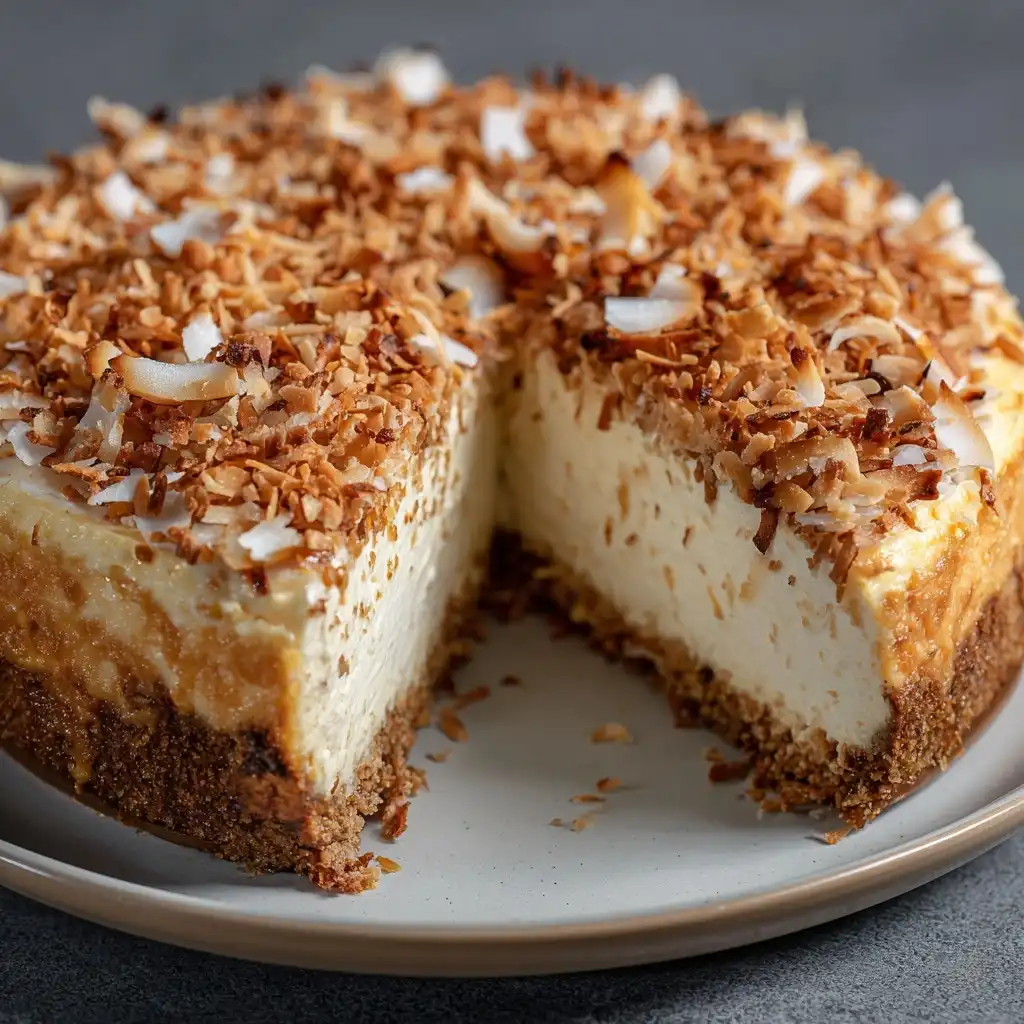
Indulge in the tropical elegance and creamy decadence of Toasted Coconut Cheesecake—a dessert that marries the rich, velvety depth of classic New York–style cheesecake with the warm, nutty aroma and crunchy-sweet allure of perfectly toasted coconut. This isn’t just a variation—it’s a sensory experience: golden-brown coconut shavings crown a luxuriously dense, tangy-sweet filling nestled atop a buttery, crisp graham cracker–coconut crust. Whether served chilled at a summer soirée, gifted as an artisanal dessert box, or savored slowly on a quiet Sunday afternoon, Toasted Coconut Cheesecake evokes vacation vibes, nostalgic comfort, and refined baking craftsmanship—all in one slice. Its balance of texture (crunchy, creamy, tender), temperature (chilled filling against room-temp toasted garnish), and flavor (buttery, citrus-kissed, caramelized, and subtly floral) makes it endlessly captivating—and surprisingly approachable for bakers of all skill levels.
The History
The origins of Toasted Coconut Cheesecake are rooted not in a single moment or inventor, but in the delicious convergence of three culinary traditions: American cheesecake heritage, Southeast Asian coconut culture, and mid-century American baking innovation. Cheesecake itself traces back to ancient Greece—where it was served to athletes at the first Olympic Games in 776 BCE—but the modern American version evolved in the late 19th and early 20th centuries, notably through immigrant bakers in New York City who adapted European quark- and ricotta-based cakes into the dense, cream cheese–driven confection we know today. Coconut, meanwhile, has been cultivated across tropical regions for over 4,000 years—from India and Sri Lanka to the Philippines and Polynesia—valued for its versatility, nutrition, and aromatic oils. Its introduction into mainstream U.S. baking accelerated after World War II, when canned coconut milk and desiccated coconut became widely available, inspiring recipes like coconut cream pie, macaroons, and tropical layer cakes. The deliberate toasting of coconut—once a home cook’s trick to deepen flavor—gained prominence in the 1950s and ’60s, championed by food editors like Poppy Cannon and featured in iconic publications such as Betty Crocker’s Picture Cook Book (1950) and Good Housekeeping’s “Tropical Entertaining” spreads. By the 1980s and ’90s, chefs began experimenting with textural layering, leading to the intentional use of toasted coconut *within* the crust, *folded into* the batter, and *generously scattered over* the finished cake—transforming it from garnish to integral flavor architecture. Today, Toasted Coconut Cheesecake stands as a beloved staple in bakery case displays from Miami to Maui, frequently reimagined by James Beard Award–winning pastry chefs and viral TikTok bakers alike—proving that tradition and innovation can coexist, one golden flake at a time.
Ingredients Breakdown
Every exceptional Toasted Coconut Cheesecake begins with intentionality—not just in measurement, but in ingredient selection, preparation method, and functional role. Below is a meticulous breakdown of each component, including why it matters, what to look for, and common pitfalls to avoid:
For the Toasted Coconut Graham Crust:
- Graham Crackers (1 ½ cups, finely crushed): Use full-sheet, honey-sweetened graham crackers—not low-fat or flavored varieties—for optimal binding and toasty sweetness. Pulse in a food processor until fine, like damp sand—not powdery dust. A small amount of residual texture adds subtle crunch.
- Unsweetened Toasted Coconut Flakes (⅔ cup, medium-shred): Toasted *before* mixing ensures maximum aroma and prevents sogginess. Look for organic, sulfite-free flakes; avoid “sweetened coconut” here—it competes with sugar in the filling and burns easily.
- Granulated Sugar (¼ cup): Balances the slight bitterness of toasted coconut and enhances browning. Brown sugar may be substituted for deeper molasses notes—but reduce liquid elsewhere if using.
- Unsalted Butter (6 tbsp, melted and cooled): Clarified butter yields a crisper, more stable crust, but standard unsalted butter works beautifully when fully cooled (warm butter = greasy, sliding crust).
For the Toasted Coconut Cream Cheese Filling:
- Cream Cheese (24 oz / 3 standard blocks, full-fat, room temperature): This is non-negotiable. Cold cream cheese creates lumps no mixer can fix; overly warm cheese causes separation. Let sit uncovered at room temp for 1.5–2 hours. Philadelphia brand is consistently reliable, but high-fat European-style cheeses (like Kerrygold or President) add extra richness—if used, reduce heavy cream slightly.
- Full-Fat Sour Cream (1 cup, room temperature): Adds tang, moisture, and tenderness without thinning the batter. Avoid low-fat or “light” versions—they contain stabilizers that interfere with texture and often curdle.
- Heavy Whipping Cream (½ cup, cold): Provides silkiness and helps control density. Cold cream emulsifies better into the batter and minimizes air incorporation—critical for crack-free results.
- Granulated Sugar (1 ¼ cups): Not just for sweetness—sugar dissolves into the cream cheese matrix, aiding smoothness and contributing to structure via osmotic pressure. For ultra-luxury, substitute ¼ cup with superfine (caster) sugar for faster dissolution.
- Eggs (4 large, room temperature, plus 1 yolk): Room-temp eggs blend seamlessly and improve volume retention. The extra yolk adds fat, emulsification power, and custardy richness—reducing graininess and improving slice integrity.
- Pure Vanilla Extract (2 tsp) + Coconut Extract (1 tsp): Madagascar bourbon vanilla provides depth and warmth; pure coconut extract (not imitation) delivers authentic tropical nuance. Skip “coconut flavoring”—it’s often alcohol-heavy and harsh.
- Freshly Grated Lime Zest (from 1 large lime) + Fresh Lime Juice (1 tbsp): Bright acidity cuts through fat and enhances coconut’s natural sweetness. Lime is preferred over lemon here—the floral-citrus profile complements coconut more harmoniously.
- Unsweetened Toasted Coconut (⅓ cup, finely chopped): Folded in *after* mixing ensures even distribution without overworking. Toast separately until deep amber—cool completely before adding.
For the Toasted Coconut Topping & Finishing Touches:
- Unsweetened Toasted Coconut Flakes (1 ½ cups, varied sizes—some fine, some medium): Toasted *just before serving* for peak fragrance and crunch. Reserve a small portion raw for visual contrast if desired.
- Coconut Milk Caramel Drizzle (optional but recommended): Simmer ½ cup full-fat coconut milk + ½ cup brown sugar + 2 tbsp butter + pinch sea salt until thickened (12–15 min). Cool slightly before drizzling—it sets into glossy ribbons.
- Edible Dried Lime or Mandarin Peel (garnish): Adds aromatic brightness and visual sophistication.
- Flaky Sea Salt (Maldon or Jacobsen): A whisper on top balances sweetness and elevates every bite.
Step-by-Step Recipe
This meticulously engineered method prioritizes texture integrity, thermal control, and structural stability—ensuring your cheesecake emerges from the oven flawlessly smooth, slices cleanly, and tastes profoundly layered. Total active time: ~90 minutes. Total hands-off time (including chilling): 18+ hours.
Step 1: Toast the Coconut — The Foundation of Flavor (20 minutes, can be done ahead)
- Preheat oven to 325°F (163°C). Line a rimmed half-sheet pan with parchment paper.
- Spread 2 cups unsweetened coconut flakes evenly across the pan in a single layer. Avoid overcrowding—this ensures even browning.
- Toast for 8–12 minutes, rotating pan front-to-back halfway through, until edges begin turning golden and aroma becomes deeply nutty (not burnt or acrid). Watch closely—the final 60 seconds make all the difference.
- Immediately transfer toasted coconut to a cool plate or wire rack. Let cool completely (10–15 min). Once cool, measure out portions: ⅔ cup for crust, ⅓ cup finely chopped for filling, and 1 ½ cups for topping. Store remaining in an airtight container at room temp for up to 3 weeks.
Step 2: Prepare the Crust — Crisp, Cohesive, and Coconut-Forward (15 minutes + 30 min chill)
- In a food processor, pulse graham crackers until fine crumbs form (~15 sec). Add ⅔ cup toasted coconut and ¼ cup sugar; pulse 3–4 times to combine.
- Drizzle in melted, cooled butter while pulsing in short bursts until mixture resembles wet sand and holds together when pinched. Do not overmix—it compacts and hardens.
- Press firmly and evenly into the bottom and 1 inch up the sides of a 9-inch springform pan lined with parchment on the bottom and lightly buttered on the sides. Use the flat bottom of a measuring cup for even, consistent pressure.
- Refrigerate uncovered for at least 30 minutes—or freeze for 15 minutes—to set the fat and prevent bubbling during baking.
Step 3: Make the Filling — Silky, Stable, and Seamlessly Smooth (25 minutes)
- In the bowl of a stand mixer fitted with the paddle attachment (or large bowl + hand mixer), beat room-temperature cream cheese on medium-low for 2 minutes until completely smooth and glossy—scraping down bowl and paddle thoroughly.
- Add sugar in three additions, beating 1 minute after each until fully incorporated and airy—no grittiness should remain. Scrape bowl well each time.
- Add sour cream and beat on medium for 1 minute until unified. Then add heavy cream and beat 30 seconds more.
- One at a time, add eggs—mixing just until yolk disappears (15–20 seconds per egg). Add extra yolk last. Overbeating introduces excess air → cracks.
- Mix in vanilla, coconut extract, lime zest, and lime juice on low speed for 20 seconds. Scrape bowl.
- Fold in ⅓ cup finely chopped toasted coconut by hand with a silicone spatula—just 6–8 strokes. Batter should be homogenous but not agitated.
Step 4: Bake with Precision — The Water Bath Method, Perfected (1 hour 20 min + cooling)
- Preheat oven to 325°F (163°C). Place springform pan inside a larger roasting pan. Wrap the *outside* of the springform pan tightly with two overlapping layers of heavy-duty aluminum foil—going up the sides at least 3 inches to prevent water seepage.
- Place roasting pan on center oven rack. Carefully pour hot (not boiling) water into the roasting pan until it reaches halfway up the sides of the springform pan (~1.5 inches deep).
- Slowly pour batter into chilled crust. Tap pan sharply on counter 3 times to release air bubbles.
- Bake for 75–85 minutes. The cheesecake is done when the outer 2 inches are puffed and set, while the center 3 inches still jiggles slightly like Jell-O—not sloshes. A toothpick inserted 1 inch from edge should come out mostly clean with moist crumbs.
- Turn off oven. Crack door open 1 inch with a wooden spoon. Let cheesecake rest inside for 1 hour—this gradual cooling prevents collapse and surface fissures.
- Remove from water bath. Run a thin knife around inner edge to loosen. Cool completely on wire rack (2–3 hours), then refrigerate uncovered for at least 12 hours—ideally 24–48 hours. This slow, cold maturation firms texture, mellowing acidity and allowing coconut flavor to bloom.
Step 5: Finish & Serve — Texture, Temperature, and Theatricality (10 minutes)
- Just before serving, run a hot, dry knife under boiling water, wipe dry, and slice cleanly—wiping between each cut.
- Toast remaining 1 ½ cups coconut in a dry skillet over medium-low heat, stirring constantly, until fragrant and golden (3–4 minutes). Cool 2 minutes.
- Generously mound toasted coconut over top, letting some cascade down the sides. Drizzle with warm coconut milk caramel. Finish with flaky salt and citrus peel.
- Serve chilled—but allow slices to sit at room temperature for 10 minutes before eating for optimal creaminess and aromatic release.
Tips
- Room Temperature Is Non-Negotiable: Ingredients must be truly room temp—not “slightly cool.” Cold dairy causes micro-separation, resulting in gritty, curdled batter. Test cream cheese: it should yield gently to fingertip pressure, like softened butter—not squishy or melty.
- Scrape Religiously: Scrape bowl, paddle/beaters, and spatula after *every* addition—even sugar. Unincorporated pockets of sugar or unmixed cream cheese become grainy specks or dark streaks.
- Undermix, Not Overmix: Once eggs enter the batter, mix only until just combined. Overbeating incorporates too much air, which expands and collapses during baking—causing cracks and sinking.
- Water Bath Water Must Be Hot, Not Boiling: Boiling water causes violent steam fluctuations and uneven cooking. Heat water to 180–190°F (just below simmer) before pouring.
- No Peeking: Opening the oven door before the 60-minute mark risks sudden temperature drop → cracking. Set a timer and resist temptation.
- Cool Gradually, Chill Deeply: Rushing the cooling process is the #1 cause of cracks and weeping. The 1-hour oven cooldown + 2-hour ambient cool + 12+ hour refrigeration is scientifically calibrated for protein relaxation and starch retrogradation.
- Freeze for Clean Slicing: For ultra-sharp edges and minimal drag, freeze fully chilled cheesecake for 20 minutes before slicing. Knife stays sharper, crust stays intact.
- Toast Coconut in Batches: Overcrowded pans steam instead of toast. Work in ½-cup increments for maximum surface exposure and even color.
- Acid Balance Matters: If your coconut tastes bland or dusty, increase lime zest to 2 tsp or add ½ tsp fresh orange zest for brightness. Acid lifts and clarifies coconut’s inherent flavors.
- Crust Too Crumbly? Try This: Add 1 tsp corn syrup or honey to butter before mixing—it acts as a natural binder without altering flavor.
Variations and Customizations
Toasted Coconut Cheesecake is a masterclass in adaptable luxury—elegant enough for weddings, playful enough for birthday parties, and versatile enough for seasonal reinvention. Below are chef-tested, home-baker-approved variations—each preserving structural integrity while introducing new dimensions of flavor, texture, and visual drama.
Tropical Swirl Variation
After pouring batter into crust, dollop ⅓ cup mango purée (strained, no fibers) and 2 tbsp passionfruit pulp over surface. Drag a skewer in figure-8 patterns to create gentle marbling. Bake as directed. Adds vibrant acidity, jewel-toned contrast, and a juicy burst with every bite.
Coconut-Cardamom Espresso Crust
Replace 2 tbsp graham cracker crumbs with 1 tbsp finely ground cardamom pods + 1 tsp instant espresso powder. Toast coconut with ½ tsp ground cinnamon. Yields a warmly spiced, aromatic base that grounds the tropical sweetness.
Vegan & Dairy-Free Version
Crust: Use gluten-free vegan graham crackers + coconut oil (refined for neutral taste). Filling: Blend 2 cups raw cashews (soaked 6 hrs), 1 cup full-fat coconut milk (canned), ⅓ cup maple syrup, ¼ cup coconut cream (solid part only), 2 tbsp lime juice, 1 tsp coconut extract, and ½ tsp xanthan gum. Pour into pre-baked crust. No-bake option: Chill 12+ hours. Note: Texture is softer, more mousse-like—but equally lush.
Mini Mason Jar Cheesecakes
Scale recipe to ⅔. Press crust into 8 oz wide-mouth mason jars (½ inch deep). Fill ¾ full with batter. Bake in water bath at 325°F for 32–38 minutes. Chill 8+ hours. Top with toasted coconut + edible orchid. Perfect for gifts, bridal showers, or portion-controlled indulgence.
Black Sesame–Toasted Coconut Fusion
Toast 2 tbsp black sesame seeds with coconut flakes (reduce coconut to 1 ½ cups total). Grind half the toasted mixture into fine powder; fold into batter. Use remaining whole for crust and topping. Earthy, nutty, visually stunning—especially with black sesame caramel drizzle.
Boozy Tropical Version
Add 2 tbsp dark rum or coconut rum (plus ½ tsp additional lime juice to balance) to batter after eggs. Soak ¼ cup toasted coconut in rum for 10 minutes before folding in. Adds sophisticated depth and aromatic warmth—ideal for adult dessert tables.
Gluten-Free Adaptation
Crust: Replace graham crackers with GF gingersnaps or almond flour–coconut flour blend (1:1 ratio). Filling: All standard ingredients are naturally GF—just verify cream cheese and extracts are certified. Bake time remains identical.
Low-Sugar / Keto-Friendly Option
Crust: Almond flour (1 cup) + toasted coconut (½ cup) + erythritol (¼ cup) + melted coconut oil (3 tbsp). Filling: Full-fat cream cheese, sour cream, heavy cream, ¾ cup powdered erythritol + monk fruit blend, eggs, extracts, zest/juice. Add 1 tsp unflavored gelatin (bloomed in 1 tbsp cold water) for added stability. Chill 18+ hours.
Health Considerations and Nutritional Value
A single generous slice (1/12th of a 9-inch cake, approx. 220g) contains roughly:
- Calories: 485 kcal
- Total Fat: 36g (22g saturated)
- Cholesterol: 138mg (46% DV)
- Sodium: 325mg (14% DV)
- Total Carbohydrates: 32g (including 24g sugars)
- Dietary Fiber: 2.5g
- Protein: 8g
Nutrient Highlights & Functional Benefits:
- Medium-Chain Triglycerides (MCTs): From coconut, MCTs are rapidly absorbed and converted into ketones—supporting sustained energy and cognitive function. Studies suggest potential benefits for metabolic health when consumed in moderation.
- Calcium & Phosphorus: Cream cheese and graham crackers contribute ~12% DV calcium and 18% DV phosphorus per slice—key for bone mineralization and ATP production.
- Lactic Acid & Probiotics (in full-fat sour cream): Naturally occurring cultures support gut microbiome diversity—especially beneficial when paired with fiber-rich toppings like fresh mango or toasted coconut.
- Phytonutrients from Lime Zest: Limonene and flavonoids act as antioxidants, supporting cellular repair and reducing oxidative stress.
Considerations for Sensitive Diets:
- Lactose Sensitivity: While cream cheese contains less lactose than milk, those with severe intolerance may opt for lactose-free cream cheese or cultured cashew alternatives.
- FODMAPs: Standard recipe is high in oligosaccharides (from graham crackers, coconut) and lactose. Low-FODMAP adaptation: GF oat crust + lactose-free cream cheese + reduced coconut (2 tbsp) + maple syrup (low-FODMAP in 1-tbsp servings).
- Added Sugars: Contains 24g added sugar per slice—well within the AHA’s recommended max of 36g/day for men, but exceeds the 25g/day limit for women. Reduce sugar by 25% with no structural loss—sweetness perception increases with toasted coconut’s caramel notes.
- Allergens: Contains dairy, wheat (in graham crackers), and tree nuts (coconut is botanically a fruit, but FDA classifies it as a tree nut allergen).
Mindful Enjoyment Guidelines:
Pair with antioxidant-rich black tea or hibiscus infusion. Serve with a side of grilled pineapple or papaya for digestive enzymes and vitamin C synergy. One slice satisfies deeply—no need for second helpings. View not as “guilt-free,” but as “nutrient-dense celebration food.”
Ingredients
Makes one 9-inch cheesecake (12–14 servings)
- For the Crust:
• 1 ½ cups graham cracker crumbs (about 12 full sheets)
• ⅔ cup unsweetened toasted coconut flakes, cooled
• ¼ cup granulated sugar
• 6 tablespoons unsalted butter, melted and cooled - For the Filling:
• 24 oz full-fat cream cheese, room temperature (3 standard 8-oz bricks)
• 1 cup full-fat sour cream, room temperature
• ½ cup heavy whipping cream, cold
• 1 ¼ cups granulated sugar
• 4 large eggs + 1 large egg yolk, room temperature
• 2 teaspoons pure vanilla extract
• 1 teaspoon pure coconut extract
• Zest of 1 large lime (about 1 tbsp)
• 1 tablespoon fresh lime juice
• ⅓ cup unsweetened toasted coconut flakes, finely chopped and cooled - For the Topping & Finishing:
• 1 ½ cups unsweetened coconut flakes, for toasting
• Coconut milk caramel (optional; see recipe above)
• Flaky sea salt, for finishing
• Edible dried lime or mandarin peel, for garnish
Directions
- Toast the Coconut: Preheat oven to 325°F. Spread 2 cups coconut on a parchment-lined sheet pan. Bake 8–12 minutes, rotating halfway, until golden and fragrant. Cool completely. Measure out portions.
- Make the Crust: Pulse graham crackers in food processor until fine. Add ⅔ cup toasted coconut and sugar; pulse to combine. Drizzle in melted butter; pulse until moistened. Press firmly into 9-inch springform pan. Chill 30 minutes.
- Prepare Filling: Beat cream cheese until smooth. Add sugar in 3 batches, beating 1 minute after each. Add sour cream, then heavy cream. Add eggs one at a time, then yolk. Mix in vanilla, coconut extract, lime zest, and lime juice. Fold in chopped toasted coconut.
- Bake: Preheat oven to 325°F. Place springform pan in roasting pan. Wrap outside with double-layer foil. Pour hot water into roasting pan halfway up sides. Bake 75–85 minutes until edges are set, center jiggles slightly. Turn off oven; crack door; rest 1 hour.
- Cool & Chill: Remove from water bath. Loosen edges. Cool completely on rack (2–3 hrs). Refrigerate uncovered 12–48 hours.
- Finish & Serve: Toast remaining coconut in skillet. Slice cheesecake with hot knife. Top generously with toasted coconut, drizzle with caramel, sprinkle with sea salt and citrus peel.
FAQ
- Can I make this cheesecake without a water bath?
- Technically yes—but not recommended. Skipping the water bath dramatically increases risk of cracking, uneven baking, and dry, crumbly edges. If absolutely necessary, place a shallow pan of boiling water on the lowest oven rack and tent cheesecake loosely with foil—but expect minor surface fissures and less velvety texture.
- Why does my crust stick to the pan?
- Three main causes: (1) Insufficient chilling before baking—always refrigerate at least 30 min; (2) Not lining the bottom with parchment—non-negotiable for clean release; (3) Removing the ring while cake is still cold—let sit at room temp 15 minutes before unclipping.
- Can I freeze Toasted Coconut Cheesecake?
- Absolutely—and it freezes exceptionally well! Fully chilled, uncut cheesecake (in springform pan, wrapped tightly in plastic + foil) keeps for 3 months. Thaw overnight in