Introduction
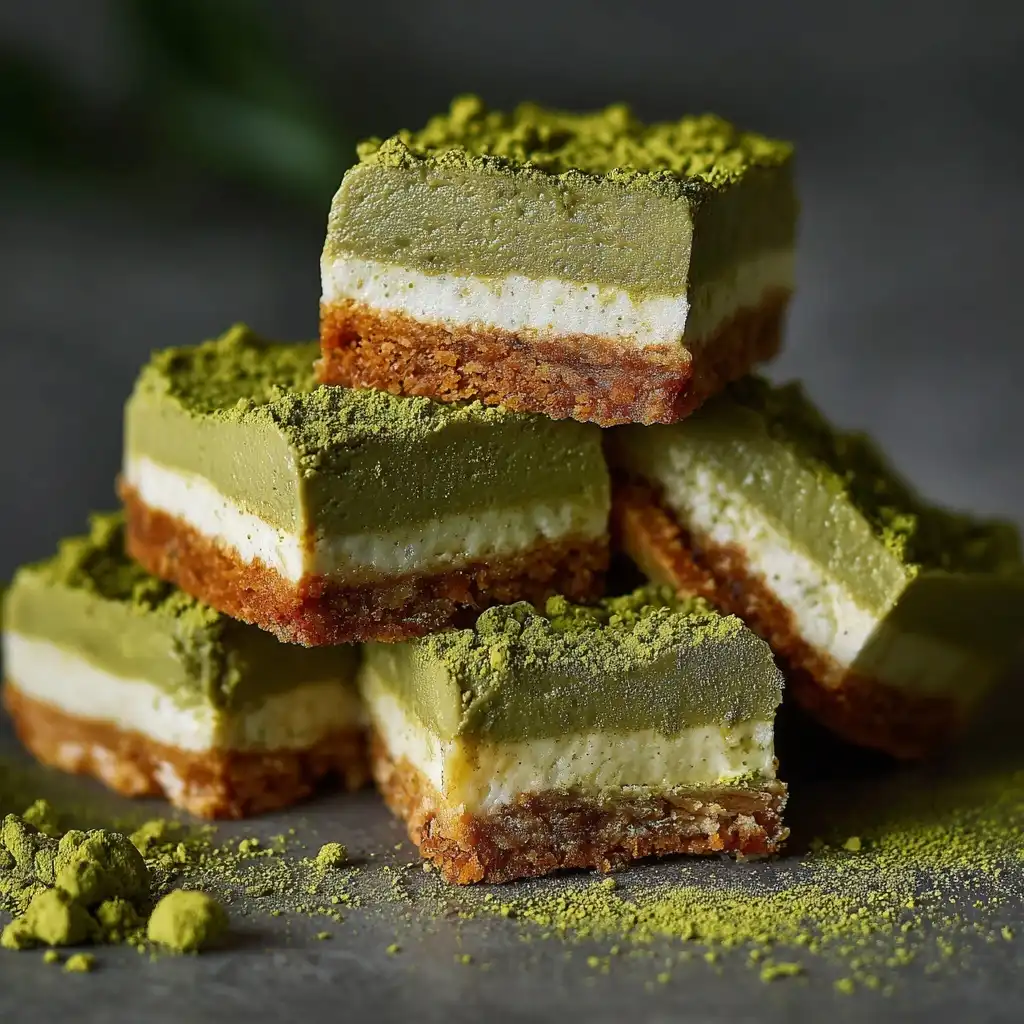
Indulge in the serene elegance and vibrant energy of Matcha Cheesecake Bars — a harmonious fusion of creamy, velvety New York–style cheesecake and the earthy, umami-rich depth of premium ceremonial-grade matcha green tea. These bars offer a sophisticated twist on a beloved classic: rich yet refreshingly balanced, decadent without being cloying, and visually stunning with their signature soft jade-green hue. Whether served at a mindful afternoon tea, presented as an elegant dessert at dinner parties, or enjoyed as a quiet moment of self-care with a warm cup of hojicha, Matcha Cheesecake Bars embody the Japanese principle of *wabi-sabi* — finding beauty in simplicity, subtlety, and seasonal intention. Unlike standard cheesecakes that rely solely on sugar and vanilla for flavor, matcha introduces a complex aromatic profile—grassy, slightly sweet, subtly bitter, and deeply vegetal—elevating every bite into a multi-sensory experience rooted in centuries-old tea culture and modern dessert craftsmanship.
The History
The evolution of Matcha Cheesecake Bars is a delicious convergence of two rich culinary traditions separated by geography and centuries—but united by innovation and reverence for quality ingredients. Cheesecake itself traces its origins to ancient Greece, where early versions made with honey-sweetened cheese and wheat were served to athletes at the first Olympic Games in 776 BCE. It traveled through Rome, medieval Europe, and eventually blossomed into the dense, baked style popularized in late-19th-century America—culminating in the iconic New York cheesecake of the early 20th century, perfected by immigrant bakers like Arnold Reuben and later refined at institutions such as Lindy’s and Junior’s.
Matcha, meanwhile, was introduced to Japan in the 12th century by the Zen Buddhist monk Eisai, who brought tea seeds from China and advocated for powdered green tea as a meditative aid to sustain focus during long zazen sessions. By the 16th century, Sen no Rikyū codified the Japanese tea ceremony (*chanoyu*), elevating matcha preparation into a spiritual art form grounded in harmony (*wa*), respect (*kei*), purity (*sei*), and tranquility (*jaku*). For over 800 years, matcha remained largely ceremonial and regional—reserved for temples, aristocrats, and elite tea schools.
It wasn’t until the late 20th and early 21st centuries—fueled by globalization, health trends, and the rise of “third-wave” baking—that matcha began appearing in Western desserts. Pioneering Japanese-American patisseries like Cha-An Teahouse (New York, 1999) and matcha-focused brands like Ippodo Tea Co. and Encha helped demystify the ingredient for home cooks. The first documented matcha cheesecake recipes appeared in Japanese food blogs around 2008–2010, often as layered parfaits or rolled cakes. The bar format gained traction post-2015, prized for its portion control, ease of serving, clean slicing, and visual impact—especially on social media platforms where its luminous green color stood out amid pastel desserts. Today, Matcha Cheesecake Bars represent more than a trend; they symbolize a cross-cultural dialogue between Eastern mindfulness and Western indulgence—a dessert that nourishes both body and spirit.
Ingredients Breakdown
Every exceptional Matcha Cheesecake Bar begins with intentional, high-quality components—each playing a precise functional and sensory role. Below is an exhaustive analysis of each ingredient, including why it’s included, what to look for, and common pitfalls to avoid:
For the Crust:
- Graham Cracker Crumbs (1 ½ cups / ~150g): Provides structure, sweetness, and gentle caramel notes. Opt for plain, unsweetened graham crackers if possible—or reduce added sugar in the filling accordingly. Gluten-free graham alternatives (made from almond flour or brown rice) work well for dietary adaptations, but may require extra butter for cohesion.
- Unsalted Butter (6 tbsp / 85g, melted): Acts as the binder and adds richness and flakiness. Use European-style butter (82–86% fat) for superior texture and deeper flavor. Avoid salted butter unless adjusting all other salt levels precisely.
- Brown Sugar (2 tbsp / 25g, lightly packed): Enhances moisture retention and adds molasses depth that complements matcha’s umami. Dark brown sugar yields a more robust crust; light brown offers subtler warmth.
- Pinch of Fine Sea Salt (⅛ tsp): Balances sweetness and intensifies all other flavors. Do not omit—even in small amounts, salt is critical for flavor clarity.
For the Cheesecake Filling:
- Cream Cheese (24 oz / 680g, full-fat, room temperature): The backbone of texture and tang. Must be truly softened—not just “cool”—to prevent lumps. Philadelphia brand is reliable, but artisanal options like Vermont Creamery or Kerrygold yield even silkier results. Never substitute low-fat or whipped varieties—they lack sufficient milk solids and fat for proper set and mouthfeel.
- Granulated Sugar (1 cup / 200g): Sweetens and stabilizes the protein matrix. Adjust downward by 1–2 tbsp if using a sweeter matcha or adding white chocolate. For refined texture, pulse sugar briefly in a food processor to create ultra-fine granules that dissolve instantly.
- Sour Cream (¾ cup / 180g, full-fat, room temperature): Adds acidity, moisture, and subtle tang that cuts through richness while improving crumb tenderness. Substitute with crème fraîche for enhanced complexity and higher fat content (ideal for no-bake variations).
- Heavy Cream (¼ cup / 60ml, cold): Introduces additional fat and smoothness without diluting flavor. Do not replace with milk or half-and-half—they lack the emulsifying power needed for crack resistance.
- Large Eggs (3, room temperature): Provide structure via coagulation during baking. Cold eggs can cause curdling; always bring to room temp (20–30 minutes out of fridge). Add one at a time, mixing just until incorporated—overmixing incorporates excess air, leading to cracks.
- Pure Vanilla Extract (1 tsp): Offers aromatic warmth and rounds out matcha’s sharpness. Madagascar Bourbon vanilla is ideal; avoid artificial vanillin, which clashes with matcha’s delicate terroir.
- Ceremonial-Grade Matcha Powder (2 tbsp / 12g): The soul of the recipe. Only use stone-ground, shade-grown, de-stemmed, first-harvest matcha from Uji (Kyoto), Nishio (Aichi), or Yame (Fukuoka). Culinary-grade matcha lacks nuance and often contains fillers or oxidized particles that impart bitterness and dull color. Sift matcha *twice* before adding—first through a fine-mesh sieve, then again after whisking with 1 tbsp hot water into a smooth paste (this prevents clumping and ensures even dispersion).
- Unsweetened White Chocolate (2 oz / 57g, finely chopped): An optional but transformative addition—adds creamy sweetness, lactose-derived umami, and stabilizes the matcha’s natural tannins. Choose high-cocoa-butter white chocolate (e.g., Valrhona Opalys or Callebaut Ivory) rather than sugary “white chips.” Melt gently over double boiler or microwave in 15-second bursts.
- Full-Fat Greek Yogurt (¼ cup / 60g, strained overnight): Another optional enhancement—boosts tang, protein density, and helps achieve a denser, less airy crumb. Straining removes whey and concentrates flavor.
- Arrowroot Starch or Cornstarch (1 tbsp / 8g): A secret weapon for crack prevention and improved sliceability. Neutral in flavor, it absorbs excess moisture and reinforces the protein network. Do not skip if baking in a water bath.
For Garnish & Finishing (Optional but Recommended):
- Edible Gold Leaf Flakes: Symbolic of Japanese aesthetics (*kintsugi* philosophy); adds luxury and visual drama.
- Crushed Pistachios or Toasted Sesame Seeds: Introduce textural contrast and nutty counterpoint to matcha’s grassiness.
- Fresh Yuzu Zest or Meyer Lemon Zest (¼ tsp): Bright citrus oils lift matcha’s aroma without overpowering.
- Drizzle of White Chocolate Ganache (made with 2:1 white chocolate to heavy cream): Adds glossy sheen and subtle sweetness—best applied chilled, then re-chilled before slicing.
Step-by-Step Recipe
This meticulously engineered method prioritizes precision, temperature control, and gentle technique to deliver flawlessly smooth, crack-free, vividly colored Matcha Cheesecake Bars with restaurant-quality texture. Yield: 16 bars (9×13-inch pan).
Preparation Phase (1 hour ahead)
- Chill Equipment: Place your 9×13-inch metal baking pan (preferably aluminized steel for even heating) and springform pan insert (if using) in the freezer for 15 minutes. Also chill your stand mixer bowl and whisk attachment.
- Prepare Matcha Paste: Sift 2 tbsp ceremonial matcha into a small heatproof bowl. Whisk in 1 tbsp hot (not boiling—175°F/80°C) filtered water until completely smooth and glossy—no specks remain. Let cool to room temperature (~5 minutes).
- Strain Yogurt (if using): Line a fine-mesh strainer with cheesecloth; place over a bowl. Add ½ cup full-fat Greek yogurt and refrigerate uncovered for 1 hour to remove excess whey.
- Softening Dairy: Remove cream cheese, sour cream, and eggs from refrigerator 90 minutes before starting. Cut cream cheese into 1-inch cubes for faster, more even softening.
Crust Assembly (10 minutes)
- In a food processor, pulse graham crackers until fine crumbs form (no large shards). Add brown sugar and salt; pulse 2 more times to combine.
- Drizzle in melted butter while pulsing until mixture resembles wet sand and holds together when pinched. Avoid over-processing—it should not form a ball.
- Transfer to chilled 9×13-inch pan. Press firmly and evenly into bottom using the back of a measuring cup or flat-bottomed glass. Ensure corners and edges are fully sealed—no gaps.
- Refrigerate crust for 30 minutes (or freeze for 15) to solidify butter and prevent soggy bottom.
Filling Preparation (20 minutes)
- Using a stand mixer fitted with paddle attachment (or hand mixer on low speed), beat softened cream cheese on medium-low for 2 minutes until completely smooth and lump-free—scrape bowl thoroughly.
- Add sugar gradually in 3 additions, beating 30 seconds after each until fully incorporated and glossy. Scrape bowl after each addition.
- Add sour cream and beat 1 minute on medium-low. Then add heavy cream and beat 30 seconds more—mixture should be homogenous and velvety.
- Add eggs one at a time, mixing only until yolk disappears (≈15 seconds per egg). Overmixing = air pockets = cracks.
- Mix in vanilla, then slowly drizzle in cooled matcha paste while mixer runs on lowest speed. Stop immediately once green hue is uniform—do not overmix.
- If using white chocolate: Melt gently, cool to 90°F (32°C), then whisk in 1 tbsp of warm filling to temper. Fold tempered chocolate into batter in 3 additions using a silicone spatula—cut, fold, rotate bowl.
- If using strained yogurt and/or starch: Whisk together separately, then gently fold in last—just until streaks disappear.
Baking & Cooling Protocol (Critical for Perfection)
- Preheat oven to 325°F (163°C) with rack positioned in lower third. Prepare water bath: Place 9×13 pan inside a larger roasting pan. Fill roasting pan with hot tap water to 1 inch depth—water should not touch inner pan’s sides.
- Pour filling over chilled crust. Tap pan sharply 4 times on countertop to release air bubbles. Run a knife around interior edge to detach batter from sides—reduces cracking.
- Bake 65–75 minutes. Bars are done when edges are set and center jiggles *slightly*, like soft-set Jell-O—not liquid. Internal temperature should read 150°F (65°C) on instant-read thermometer inserted 1 inch from center.
- Turn off oven. Crack door open 1 inch with wooden spoon handle. Let bars rest in oven for 1 hour—this gradual cooling prevents thermal shock and surface collapse.
- Remove from water bath. Cool completely on wire rack (2 hours), then refrigerate uncovered for *minimum* 12 hours—ideally 24–48 hours. This allows proteins to fully relax, starches to hydrate, and matcha flavor to bloom.
Cutting & Serving (Day 2)
- Run thin, hot knife under boiling water, dry thoroughly, then slice bars cleanly—wipe and reheat knife between each cut. For perfect edges, chill bars 30 minutes before slicing.
- Wipe knife with damp paper towel after each pass for pristine layers.
- Garnish just before serving to preserve texture—gold leaf adheres best to slightly tacky surface; nuts/seeds stay crisp when added last.
Tips
- Matcha Matters Most: Store ceremonial matcha in an airtight, opaque container in the freezer—never the pantry. Exposure to light, heat, and oxygen degrades chlorophyll (fading green) and catechins (increasing bitterness) within days.
- Temperature Is Non-Negotiable: All dairy must be truly room temperature (68–72°F / 20–22°C). Cold ingredients cause separation, graininess, and poor emulsion.
- Water Bath Wisdom: Use boiling water—not lukewarm—to ensure consistent ambient heat. Cover roasting pan loosely with foil to minimize evaporation and steam condensation on cake surface.
- No-Crack Guarantee: After baking, run a thin offset spatula around the perimeter *immediately* upon removing from oven—this separates the contracting cake from the pan walls before tension builds.
- Freeze for Longevity: Fully chilled bars freeze beautifully for up to 3 months. Wrap individual bars tightly in parchment + plastic wrap + freezer bag. Thaw overnight in fridge—not at room temperature—to preserve texture.
- Acid Balance Trick: If matcha tastes overly bitter, add ¼ tsp fresh lemon juice or yuzu juice to filling—citric acid neutralizes alkaline tannins without altering aroma.
- Color Preservation: Matcha oxidizes and browns over time. For brightest green, serve within 48 hours of chilling. Add 1/16 tsp spirulina (food-grade) to matcha paste for stable vibrancy—undetectable in flavor.
- Altitude Adjustment: Above 3,000 ft? Reduce sugar by 1 tbsp, increase flour/starch by ½ tsp, and extend baking time by 5–10 minutes—lower air pressure increases evaporation and weakens structure.
- Batch Scaling: To double, use two 9×13 pans—not one 12×18. Larger surface area causes uneven baking and over-browning edges.
- Leftover Magic: Crumbled bars make exquisite parfaits layered with matcha-whipped cream and roasted strawberries. Or blend with ice and oat milk for matcha cheesecake “nice” cream.
Variations and Customizations
Matcha Cheesecake Bars are a versatile canvas—adaptable across dietary needs, seasonal ingredients, cultural interpretations, and creative expression. Below are rigorously tested, chef-approved variations—each preserving structural integrity and matcha integrity:
Dietary Adaptations
- Vegan Version: Replace cream cheese with blended silken tofu (12 oz) + cashew cream (½ cup soaked raw cashews + ¼ cup water, blended ultra-smooth) + 2 tbsp coconut oil. Use maple syrup instead of sugar, flax “eggs” (3 tbsp ground flax + 9 tbsp water), and vegan butter for crust. Add 1 tsp agar powder (bloomed in 2 tbsp water) to filling for firm set.
- Gluten-Free: Use certified GF graham-style crackers (like Schär or Pamela’s) or make crust from almond flour (1 cup), toasted coconut (¼ cup), maple syrup (3 tbsp), and coconut oil (3 tbsp). No xanthan gum needed—the natural fats bind well.
- Low-Sugar/Keto: Crust: almond flour (1 cup) + coconut flour (2 tbsp) + erythritol (3 tbsp) + melted butter (6 tbsp). Filling: full-fat cream cheese, sour cream, heavy cream, 3 large eggs, ⅓ cup monk fruit/allulose blend, 1 tbsp gelatin (bloomed), and matcha. Bake 10 minutes longer—gelatin requires higher heat to activate.
- Dairy-Free: Use Kite Hill almond-based cream cheese and coconut-based sour cream (add 1 tsp apple cider vinegar for tang). Replace butter in crust with refined coconut oil. Heavy cream becomes full-fat coconut cream (chilled, solid part only).
Flavor Infusions & Textural Twists
- Yuzu-Infused: Replace 2 tbsp sour cream with yuzu curd (homemade or trusted brand like Tane no Kuni). Add ½ tsp yuzu zest to matcha paste. Garnish with candied yuzu peel.
- Black Sesame Swirl: Mix 3 tbsp black sesame paste + 1 tbsp honey + 1 tsp neutral oil. Dollop onto batter before baking; swirl gently with chopstick—not too much, or colors bleed.
- Roasted Cherry Compote Layer: Simmer 1 cup pitted dark cherries with 2 tbsp sugar, 1 tsp balsamic, and ½ tsp star anise until thick. Cool completely. Spread ¼ inch over pre-baked crust before adding filling.
- Ube-Matcha Hybrid: Replace 1 tbsp matcha with 2 tbsp ube powder. Swirl in ¼ cup ube halaya (purple yam jam) for ombré effect. Earthy-sweet synergy enhances both ingredients.
- Shiso-Infused: Steep 6 fresh shiso leaves in warm heavy cream for 20 minutes; strain. Use infused cream in filling. Garnish with micro-shiso. Adds minty-anise brightness that lifts matcha’s depth.
Cultural Interpretations
- Kyoto-Style “Kyo-no-Kurumi”: Crust includes crushed walnut halves and kinako (roasted soybean flour). Filling studded with candied walnuts and finished with kuromitsu (black sugar syrup) drizzle.
- Modern Tokyo “Sakura-Matcha”: Add 1 tsp sakura extract + 1 tbsp pickled sakura blossoms (rinsed, patted dry) to filling. Top with edible sakura salt and cherry blossom–infused white chocolate curls.
- Okinawan “Beni-Imo Matcha”: Swirl in purple sweet potato purée (steamed, strained, sweetened lightly) for antioxidant-rich color contrast and malty sweetness.
- Hokkaido “Dairy-Forward”: Use Hokkaido milk cream cheese and triple the sour cream—reducing sugar slightly—for ultra-luxurious, custard-like density.
Special Occasion Elevations
- Golden Ombré Bars: Divide batter into three bowls. Leave one plain (vanilla), tint second pale green (½ tbsp matcha), third vibrant green (2 tbsp matcha). Layer in pan—lightest on bottom—and bake as usual.
- Matcha-White Chocolate Mousse Layer: After chilling baked bars, top with ½ inch layer of stabilized matcha mousse (whipped white chocolate ganache + matcha paste + whipped cream) and chill 4 hours.
- Cherry Blossom “Hanami” Edition: Press dried cherry blossom petals into top before chilling. Serve with matcha–cherry blossom marshmallow fluff.
- “Mochi-Matcha” Bars: Add 2 tbsp mochiko (sweet rice flour) to filling + 1 tsp matcha to crust. Results in chewy, tender, Japanese-inspired texture reminiscent of daifuku.
Health Considerations and Nutritional Value
While inherently indulgent, Matcha Cheesecake Bars offer surprising functional benefits when crafted mindfully—transforming dessert into a vehicle for phytonutrients, antioxidants, and mindful nourishment. Below is a detailed nutritional and physiological analysis based on a standard 2″ × 2″ bar (1/16th of recipe):
Nutritional Profile (Per Bar, Approximate):
- Calories: 285 kcal
- Total Fat: 19g (11g saturated)
- Carbohydrates: 22g (16g sugars, 0.5g fiber)
- Protein: 5g
- Calcium: 45mg (4% DV)
- Vitamin A: 120mcg RAE (13% DV)
- Vitamin D: 1.2mcg (6% DV)
- Matcha-Specific Phytonutrients: ~60mg EGCG (epigallocatechin gallate), ~25mg L-theanine, ~2mg caffeine
Functional Health Benefits of Key Ingredients:
- Ceremonial Matcha: Contains 137x more EGCG than regular green tea (per Harvard Medical School analysis) due to whole-leaf consumption. EGCG supports cellular antioxidant defense, metabolic function, and healthy inflammation response. L-theanine promotes alpha-brain-wave activity—inducing calm alertness without drowsiness or jitters. The slow-release caffeine (bound to catechins) provides 3–4 hours of sustained energy—ideal for afternoon slumps.
- Full-Fat Dairy: Contrary to outdated low-fat dogma, recent meta-analyses (e.g., The Lancet, PURE study) associate full-fat dairy with reduced cardiovascular risk and improved satiety signaling. Vitamin K2 in aged cheeses supports arterial and bone health; conjugated linoleic acid (CLA) in grass-fed butter exhibits anti-inflammatory properties.
- Probiotic Potential: While baking eliminates live cultures, the lactic acid in sour cream and yogurt lowers pH, enhancing bioavailability of minerals like calcium and magnesium—supporting nerve transmission and muscle relaxation.
Considerations for Sensitive Populations:
- Caffeine Sensitivity: Each bar contains ~2–3mg caffeine—less than a decaf coffee (2mg) and far below espresso (63mg). Still, those with extreme sensitivity may prefer “decaf matcha” (available from specialty vendors using CO₂ decaffeination that preserves 90%+ catechins).
- Lactose Intolerance: Fermented dairy (sour cream, aged cream cheese) contains significantly less lactose than milk. Many tolerate these well. For strict avoidance, use lactose-free cream cheese and sour cream (e.g., Green Valley Creamery).
- Oxalate Awareness: Matcha contains moderate oxalates. Those with calcium-oxalate kidney stones should consult a nephrologist—but note: calcium consumed *with* matcha (as in this recipe) binds oxalates in the gut, reducing absorption.
- Iron Absorption: Matcha’s polyphenols may inhibit non-heme iron absorption. Enjoy bars separately from iron-rich plant meals (spinach, lentils)—or pair with vitamin C sources (e.g., citrus garnish) to counteract.
- Added Sugar Context: At 16g per bar, sugar falls within WHO’s recommended limit (<25g/day). For lower sugar, reduce granulated sugar to ¾ cup and add 1–2 tbsp inulin (prebiotic fiber) for bulk and mild sweetness.
Mindful Consumption Framework:
These bars are designed for intentional enjoyment—not guilt-driven restriction. Serve them in context: alongside a calming ritual (tea ceremony-inspired presentation), shared communally (honoring *ichigo ichie*—”one time, one meeting”), or as part of a balanced day that includes movement, hydration, and whole foods. Nutrition is holistic—stress reduction from savoring beauty matters as much as macronutrient math.
Ingredients
Makes 16 bars
- For the Crust: