Introduction
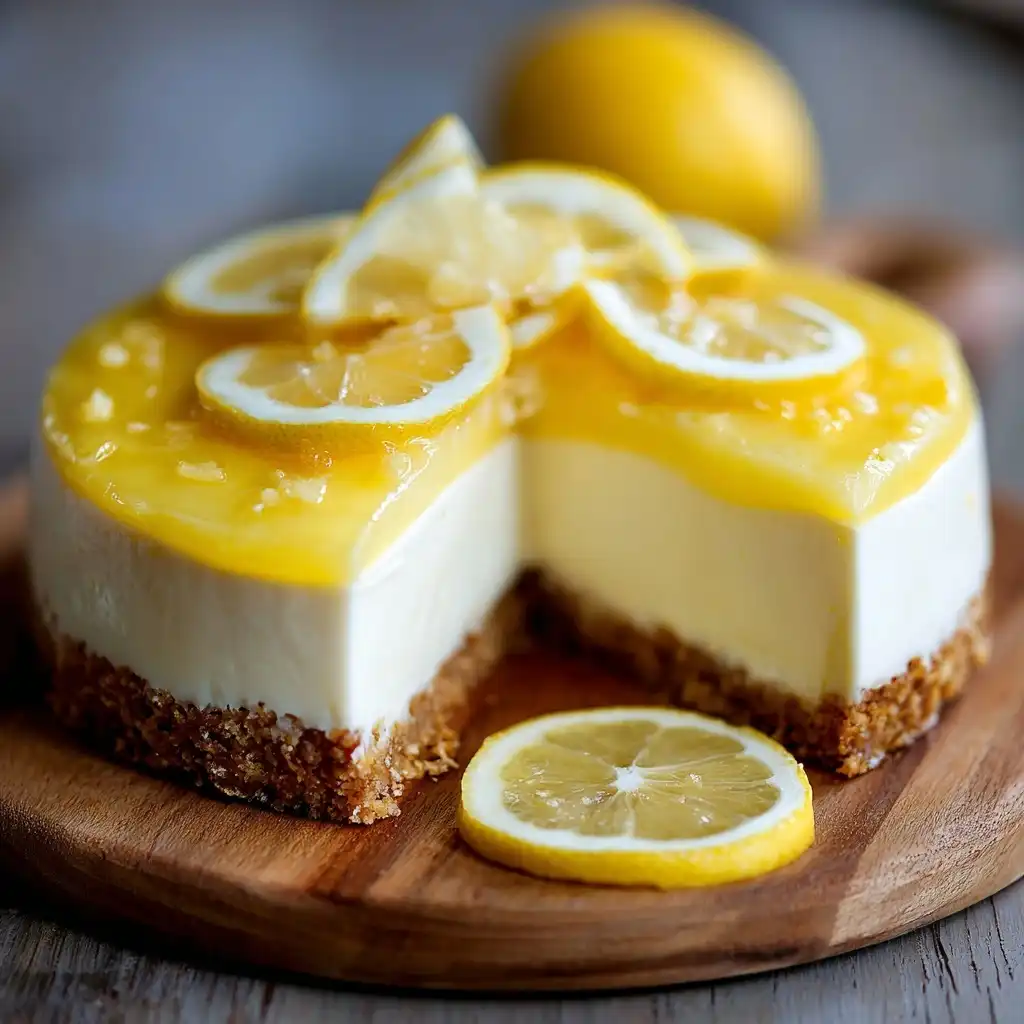
Welcome to the ultimate guide for crafting a luscious, velvety, and refreshingly bright No-Bake Lemon Cheesecake — a showstopping dessert that requires zero oven time, minimal equipment, and delivers maximum flavor and elegance. Whether you’re hosting a summer garden party, preparing a stress-free holiday treat, or simply craving a tangy-sweet indulgence after a long day, this no-bake masterpiece is your answer. With its creamy, cloud-like filling balanced by zesty lemon brightness, a buttery graham cracker crust, and a silky smooth texture achieved entirely through chilling—not baking—it’s the perfect marriage of simplicity and sophistication. No more worrying about water baths, cracked surfaces, or oven temperature fluctuations: just mix, press, chill, and savor.
The History
The origins of cheesecake trace back over 2,000 years to ancient Greece, where early versions were made with fresh cheese, honey, and wheat, often served to athletes at the first Olympic Games in 776 BCE as an energy-boosting delicacy. Over centuries, the recipe evolved across Rome, medieval Europe, and eventually the United States—where the iconic New York-style baked version gained fame in the early 20th century. However, the no-bake iteration emerged as a practical innovation during the mid-20th century, coinciding with the rise of modern refrigeration, accessible cream cheese (popularized by Philadelphia Cream Cheese in 1872), and convenient stabilizers like whipped topping and gelatin. Lemon cheesecake itself became especially beloved in post-war America and the UK, where citrus flavors offered a refreshing contrast to richer, heavier desserts. Its no-bake adaptation surged in popularity in the 1960s–70s via women’s magazines and community cookbooks, championed for its accessibility, make-ahead convenience, and family-friendly appeal—solidifying its place as a timeless, pantry-driven classic that continues to evolve with contemporary tastes and dietary preferences.
Ingredients Breakdown
Every exceptional no-bake lemon cheesecake begins with thoughtfully selected, high-quality components—each playing a precise functional and flavor role:
- Graham Cracker Crumbs (1 ½ cups): Provides structure and a subtly sweet, toasted, slightly caramelized base. The fine texture ensures a firm yet tender crust when bound with melted butter. Gluten-free graham crackers or digestive biscuits are excellent alternatives for dietary adaptations.
- Unsalted Butter (6 tbsp, melted): Acts as the binding agent for the crust—its fat content seals the crumbs and creates a cohesive, sliceable foundation upon chilling. Clarified butter or coconut oil (refined for neutral flavor) can be substituted for dairy-free needs.
- Cream Cheese (16 oz / 2 standard blocks, full-fat, room temperature): The cornerstone of richness and body. Full-fat is non-negotiable for proper emulsification, stability, and luxurious mouthfeel. Low-fat or whipped varieties introduce excess air and moisture, leading to weeping, splitting, or graininess.
- Powdered Sugar (1 cup, sifted): Adds sweetness while contributing to smoothness (due to cornstarch content) and aiding in thickening. Sifting prevents lumps and ensures seamless integration into the creamy filling.
- Fresh Lemon Juice (⅓–½ cup, approx. 4–6 medium lemons): Delivers vibrant acidity and authentic citrus aroma. Bottled juice lacks brightness and contains preservatives that can dull flavor and interfere with setting. Adjust quantity based on desired tartness—start with ⅓ cup and add incrementally.
- Lemon Zest (from 3–4 lemons, finely grated): Contains aromatic lemon oils concentrated in the peel’s outer layer—this is where the true essence lives. Always zest before juicing; avoid the bitter white pith.
- Heavy Whipping Cream (1 cup, cold, 36–40% fat): Provides airy lift and silkiness when whipped to soft peaks. Its high fat content stabilizes the filling and prevents separation. Ultra-pasteurized cream may take longer to whip but works well; avoid light or low-fat creams.
- Unflavored Gelatin (1 ½ tsp, or 1 packet): A critical structural agent that ensures clean slices and prevents weeping or slumping—even after extended chilling. Bloomed properly in cold water, then gently dissolved in warm (not boiling) lemon mixture, it forms an invisible, flexible network throughout the filling.
- Vanilla Extract (1 tsp, pure): Enhances depth and rounds out sharp acidity without adding detectable vanilla flavor—think of it as the “umami” of desserts.
- Salt (¼ tsp, fine sea salt): A subtle but essential counterpoint that balances sweetness and intensifies all other flavors.
- Optional Garnishes: Fresh berries (raspberries, blueberries), edible flowers (violets, pansies), mint leaves, lemon curls, toasted coconut flakes, or a delicate drizzle of lemon curd or white chocolate ganache.
Step-by-Step Recipe
- Prepare the Crust: In a food processor or sturdy zip-top bag with a rolling pin, pulse or crush graham crackers into fine, uniform crumbs (no large shards). Transfer to a medium bowl; stir in melted butter until all crumbs are evenly moistened and resemble wet sand. Press firmly and evenly into the bottom and up the sides of a 9-inch springform pan using the bottom of a measuring cup or flat glass. Chill uncovered in the refrigerator for at least 30 minutes (or freeze for 15) to fully set.
- Bloom the Gelatin: In a small heatproof bowl, sprinkle gelatin over 2 tablespoons of cold water. Let sit undisturbed for 5–7 minutes until it becomes opaque, spongy, and doubled in volume (“bloomed”). This step is vital for even dissolution and prevents granular texture.
- Warm the Lemon Mixture: In a small saucepan, combine ¼ cup of the fresh lemon juice (reserve the rest), lemon zest, and 2 tablespoons of water. Heat over low heat—do not boil—just until warm to the touch (~110°F / 43°C). Remove from heat and whisk in the bloomed gelatin until completely dissolved and no granules remain (about 30 seconds of vigorous whisking).
- Cream the Base: In a large stand mixer fitted with the paddle attachment (or using a hand mixer), beat softened cream cheese on medium speed for 2–3 minutes until completely smooth, lump-free, and slightly fluffy. Scrape down the bowl thoroughly. Gradually add sifted powdered sugar in two additions, beating on low until incorporated, then increase to medium for 30 seconds to aerate. Add lemon zest, vanilla, and salt; mix until combined.
- Incorporate the Lemon-Gelatin Blend: With mixer on low, slowly stream in the warm lemon-gelatin mixture. Mix just until fully blended—do not overmix, as excessive air incorporation can cause bubbles or separation. Scrape bowl again.
- Whip the Cream: In a separate chilled bowl, whip cold heavy cream on medium-high speed until soft peaks form—when the whisk is lifted, peaks should curl slightly at the tip and hold their shape without collapsing. Do not over-whip to stiff or grainy stages.
- Fold with Precision: Using a large silicone spatula, gently fold one-third of the whipped cream into the cream cheese mixture to lighten it. Then, carefully fold in the remaining whipped cream in two additions, using slow, sweeping motions from the bottom up—rotating the bowl as you go. Stop folding as soon as no white streaks remain; over-folding deflates air and compromises texture.
- Assemble & Chill: Pour the filling over the chilled crust. Use an offset spatula or the back of a spoon to spread evenly, smoothing the top. Tap the pan sharply 3–4 times on the counter to release air bubbles. Cover loosely with plastic wrap (avoid touching the surface) or use a lid if available. Refrigerate for a minimum of 8 hours—but ideally 12–16 hours—for optimal firmness, clean slicing, and flavor melding. For best results, chill overnight.
- Unmold & Serve: Run a thin, flexible knife around the inner edge of the springform pan to loosen. Carefully release the clamp and remove the outer ring. If serving directly from the base, slide a thin metal spatula underneath to lift onto a cake stand or platter. Garnish just before serving to preserve freshness and visual appeal.
Tips
- Temperature Matters: Ensure cream cheese is truly at room temperature (65–70°F)—not just “softened.” Cold cream cheese will seize, curdle, or leave stubborn lumps even after prolonged mixing.
- Strain Your Juice: Always strain freshly squeezed lemon juice through a fine-mesh sieve to remove pulp and seeds—this guarantees a flawlessly smooth filling.
- Chill All Equipment: Chill your mixing bowl and whisk/beaters before whipping cream. Even a few minutes in the freezer helps achieve faster, more stable peaks.
- Patience with Folding: Folding is not stirring—it’s a gentle, deliberate motion designed to preserve air. If you see streaks, fold 2–3 more times. If the mixture looks deflated, it’s likely over-folded; next time, stop earlier.
- Crust Consistency Check: When pressing the crust, aim for uniform thickness (⅛–¼ inch) and compact density. A loose crust will crumble when sliced; too-thick a base overpowers the filling.
- Avoid Condensation: To prevent a watery film on top after chilling, place the covered cheesecake on a wire rack inside the fridge—not directly on a shelf—and avoid opening the door frequently during the first 4 hours.
- Knife Technique: For clean slices, dip a sharp, thin-bladed knife in hot water, wipe dry, and cut with a gentle sawing motion—reheating and drying between each slice.
- Freezing Friendly: This cheesecake freezes beautifully for up to 3 months. Wrap tightly in plastic, then foil, and thaw overnight in the fridge—not at room temperature—to maintain texture and prevent sweating.
- Taste Before Setting: While the filling is still fluid, taste a tiny amount (remember it contains raw egg-free ingredients) to adjust balance: add a pinch more zest for aroma, ½ tsp more juice for tang, or 1 tbsp more powdered sugar for sweetness.
- Altitude Adjustment: At elevations above 3,000 ft, increase gelatin by ¼ tsp and extend chilling time by 2–4 hours due to slower setting dynamics.
Variations and Customizations
This versatile canvas invites endless creativity—without compromising integrity or texture:
- Gluten-Free: Use certified GF graham crackers or almond flour + coconut flour crust (1 cup almond flour, ¼ cup coconut flour, 3 tbsp maple syrup, 4 tbsp melted butter).
- Dairy-Free/Vegan: Substitute full-fat coconut cream (chilled overnight, solid part only) for cream cheese and whipped cream; use agar-agar (1 tsp boiled in 2 tbsp water) instead of gelatin; bind crust with coconut oil and dates.
- Protein-Boosted: Fold in 2 scoops of unflavored or lemon whey protein isolate (blended with 1 tbsp warm milk first) after gelatin incorporation—adds ~15g protein per slice without grittiness.
- Herbal Infusion: Steep lemon zest + 2 sprigs of fresh thyme or lavender in warm lemon juice for 10 minutes before straining and adding to gelatin—adds sophisticated complexity.
- Layered Elegance: Swirl in ¼ cup seedless raspberry or blueberry compote before chilling—or create distinct layers: plain cheesecake, lemon layer, berry layer—chilling 1 hour between each.
- Crust Alternatives: Try crushed shortbread cookies (buttery richness), Biscoff cookies (caramelized spice), gingersnaps (warm contrast), or activated charcoal-infused Oreos (dramatic black crust).
- Tropical Twist: Replace 2 tbsp lemon juice with fresh passionfruit purée and garnish with toasted coconut and lime zest.
- Matcha-Lemon Fusion: Whisk 1–1½ tsp culinary-grade matcha into powdered sugar before adding to cream cheese for earthy balance and stunning pale green hue.
- Mini Individual Servings: Spoon crust into lined muffin tins; portion filling with an ice cream scoop. Chill 6 hours. Perfect for parties or portion control.
- Boozy Upgrade: Add 1–2 tbsp premium limoncello or elderflower liqueur to the lemon-gelatin mixture—enhances aroma and adds subtle warmth (alcohol evaporates minimally since uncooked, so retain for adult servings).
Health Considerations and Nutritional Value
While undeniably indulgent, this no-bake lemon cheesecake can be enjoyed mindfully—with awareness of its nutritional profile and adaptable wellness features:
- Caloric Profile (per standard slice, 1/12 of 9-inch cake): Approximately 320–360 calories—moderate for a dessert, with ~22g total fat (14g saturated), 28g carbohydrates (22g sugars), 4g protein, and 180mg sodium. The absence of baking preserves heat-sensitive nutrients like vitamin C from lemon and natural enzymes.
- Sugar Conscious Options: Reduce powdered sugar to ¾ cup and compensate with 1–2 tbsp monk fruit or erythritol blend (ensure it measures 1:1). Avoid stevia drops, which can impart bitterness.
- Lower-Fat Adaptation: Replace half the cream cheese with equal parts low-fat cottage cheese (blended until ultra-smooth) and reduce heavy cream to ½ cup—results in ~25% fewer calories and added protein, though texture becomes denser.
- Nutrient Highlights: Lemons provide vitamin C (immune support, collagen synthesis), flavonoids (antioxidant activity), and citric acid (natural preservative and digestion aid). Graham cracker crust contributes small amounts of B vitamins and iron; adding ground flaxseed (1 tbsp to crust) boosts fiber and omega-3s.
- Allergen Notes: Naturally nut-free and soy-free (check cream cheese label). Contains dairy and gluten (unless substituted). Not suitable for those with severe lactose intolerance (though cream cheese is low-lactose); lactase enzyme supplements may help.
- Gut-Friendly Potential: Probiotic-rich cream cheese (e.g., organic, cultured varieties) and lemon’s prebiotic properties support microbiome health—especially when paired with a fiber-rich crust.
- Mindful Serving Suggestions: Pair a modest slice with antioxidant-rich fresh berries and a cup of herbal tea (chamomile or ginger) to enhance satiety and digestion. Avoid consuming late at night to support metabolic rhythm.
- Portion Awareness: Because of its richness and density, smaller portions (1/16th slice or mini version) deliver full sensory satisfaction without excess intake.
Ingredients
- 1 ½ cups (150g) graham cracker crumbs (about 12 full sheets)
- 6 tablespoons (85g) unsalted butter, melted and slightly cooled
- 16 ounces (454g) full-fat brick-style cream cheese, at room temperature
- 1 cup (120g) powdered sugar, sifted
- ⅓–½ cup (80–120ml) freshly squeezed lemon juice (from 4–6 medium lemons)
- Zest of 3–4 lemons (about 2 tablespoons), finely grated
- 1 cup (240ml) cold heavy whipping cream (min. 36% fat)
- 1 ½ teaspoons (4g) unflavored gelatin powder
- 2 tablespoons (30ml) cold water (for blooming)
- 1 teaspoon (5ml) pure vanilla extract
- ¼ teaspoon (1g) fine sea salt
- Optional garnishes: fresh raspberries, lemon curls, mint leaves, edible flowers
Directions
- Prepare a 9-inch springform pan by lightly greasing the bottom and wrapping the *outside* tightly with two layers of aluminum foil (to prevent leaks during chilling—optional but recommended for peace of mind).
- In a food processor, pulse graham crackers until fine crumbs form (approx. 15–20 seconds). Transfer to a bowl and stir in melted butter until fully combined and resembling wet sand.
- Press mixture firmly and evenly into the bottom and 1.5 inches up the sides of the springform pan. Use the flat bottom of a measuring cup for consistent pressure. Refrigerate for 30 minutes.
- In a small bowl, sprinkle gelatin over 2 tablespoons cold water. Let bloom for 5–7 minutes.
- In a small saucepan, combine ¼ cup lemon juice, all lemon zest, and 2 tablespoons water. Warm over low heat (do not simmer or boil) until just steaming (~110°F). Remove from heat and whisk in bloomed gelatin until fully dissolved (30 seconds). Set aside to cool slightly—but do not let it set.
- In a large mixing bowl, beat cream cheese with an electric mixer on medium for 2–3 minutes until completely smooth and creamy. Scrape bowl thoroughly.
- Add sifted powdered sugar gradually, mixing on low until incorporated, then beat 30 seconds on medium. Add vanilla, salt, and lemon zest; mix until combined.
- With mixer on low, slowly drizzle in the warm lemon-gelatin mixture. Mix just until uniform—about 20 seconds. Scrape bowl.
- In a separate *chilled* bowl, whip cold heavy cream on medium-high until soft peaks form (peaks bend slightly when whisk is lifted). Do not over-whip.
- Using a silicone spatula, gently fold one-third of whipped cream into cream cheese mixture to lighten. Then, fold in remaining cream in two additions until no streaks remain—approximately 15–20 folds per addition.
- Pour filling into prepared crust. Smooth top with offset spatula. Tap pan firmly on counter 4 times to release air bubbles.
- Cover loosely with plastic wrap (ensuring it doesn’t touch filling surface) and refrigerate for at least 12 hours—or preferably 16–24 hours—for ideal firmness and flavor development.
- To serve: Run a thin knife around inner edge. Release springform clamp. Carefully remove outer ring. Slide a thin metal spatula under crust to lift onto serving plate. Garnish as desired and slice with a hot, dry knife.
FAQ
- Can I make this ahead of time?
- Absolutely! This cheesecake improves with time. It keeps beautifully refrigerated for up to 5 days—flavors deepen, texture firms, and lemon notes mellow. Prepare it 1–3 days in advance for stress-free entertaining.
- Why did my filling weep or leak liquid?
- Weeping usually occurs due to: 1) Under-chilled filling (needs full 12+ hours), 2) Overmixing after adding gelatin (causes breakdown), 3) Using low-fat or whipped cream cheese (lacks stabilizing fat), or 4) Excess moisture from unstrained lemon juice or damp zest. Always blot zest gently with paper towel before using.
- Can I use store-bought lemon curd instead of fresh juice/zest?
- Not recommended as a full substitute—the high sugar and egg content in curd alters setting and texture. However, you *can* swirl 3–4 tbsp into the filling *after* folding in whipped cream for a layered effect—just don’t heat or mix vigorously.
- Is there a substitute for gelatin?
- Yes—agar-agar (vegetarian): Use 1 tsp agar powder dissolved in 2 tbsp water, brought to a simmer for 1 minute, then cooled slightly before adding. Note: agar sets firmer and colder than gelatin; chilling time remains the same.
- My crust is soggy—what went wrong?
- Sogginess stems from: 1) Filling poured over a warm or unchilled crust, 2) Excess moisture in lemon mixture not fully cooled before mixing, or 3) Skipping the initial 30-minute crust chill. Always chill crust *before* adding filling—and ensure lemon-gelatin blend is warm, not hot, when added.
- Can I use lime or orange instead of lemon?
- Yes! For lime: Use same volume of fresh juice/zest—expect a sharper, tropical profile. For orange: Use navel or blood orange; reduce juice slightly (to ¼ cup) as oranges are less acidic—add ½ tsp citric acid if needed for balance.
- What if I don’t have a springform pan?
- You can use a 9-inch regular cake pan lined with *overhanging parchment paper* (create a sling). After chilling, grip parchment ends to lift cake out cleanly. Or make bars in an 8×8-inch pan—cut into squares after chilling.
- Can kids help make this?
- Yes—it’s one of the safest, most engaging desserts for young bakers! Kids can measure crumbs, stir the crust, zest lemons (with supervision), squeeze juice (using a handheld reamer), and fold whipped cream. Zero stove or oven required!
- How do I prevent cracks or air bubbles on the surface?
- Air bubbles form from overmixing or pouring too vigorously. Prevent them by tapping the pan firmly after pouring and smoothing with a spatula. Cracks don’t occur in no-bake versions—but surface imperfections vanish with a final gentle torch pass (kitchen torch) or steam wipe (damp cloth over warm pan rim).
- Is this safe for pregnant individuals?
- Yes—this recipe contains no raw eggs, alcohol (unless added), or unpasteurized dairy (assuming pasteurized cream cheese and cream are used). Always verify labels for pasteurization.
Summary
This No-Bake Lemon Cheesecake is a masterclass in effortless elegance: a buttery graham cracker crust cradles a luxuriously smooth, intensely lemony filling stabilized by gelatin and lifted by perfectly whipped cream—all set to perfection through patience and refrigeration—not heat. It’s refreshingly tart, delicately sweet, incredibly versatile, and reliably impressive for any occasion.
With customizable variations, mindful ingredient swaps, and foolproof techniques grounded in food science, this dessert transcends trendiness to become a cherished, multi-generational staple—proving that the most memorable treats are often the ones that ask for nothing more than time, care, and a squeeze of sunshine in citrus form.